

Banner
Menu

Category: Uncategorized

Homes Still Affordable In Majority Of Counties


Home prices have been increasing for a while now. But that doesn’t necessarily mean homeownership is unaffordable. In fact, according to a recent report from ATTOM Data Solutions, buying a home in today’s market is still more affordable than historical averages in 52 percent of counties. That means, a majority of the country’s housing stock is within reach. Todd Teta, ATTOM’s chief product officer, says low mortgage rates have helped. “The past year certainly has been an odd one for the U.S. housing market,†Teta said. “Home prices surged at a remarkable pace even as the virus pandemic damaged the U.S. economy, which dropped historical affordability levels. But average workers untarnished by the pandemic were still able to afford the typical home because wages and rock-bottom interest rates worked to their favor in a big way.†The report determined affordability by calculating the amount of income needed to pay homeownership expenses on a median-priced home and comparing it to average wage data. Among the 552 counties included in the report, counties in the Chicago, Houston, Dallas, San Antonio, and Detroit area were the most affordable. (source)


Comparison of authentic and counterfeit one-dollar bills.

Pending Home Sales Slow In February


The National Association of Realtors’ Pending Home Sales Index measures the number of contracts to buy homes that are signed each month. Because contract signings precede closings by several weeks, the index can be a good predictor of future home sales numbers. In February, the NAR found pending home sales down 10.6 percent from the month before but virtually unchanged from where they were one year earlier. Lawrence Yun, NAR’s chief economist, says the month-over-month decline is mostly due to the fact that there are too few homes for sale. “The demand for a home purchase is widespread, multiple offers are prevalent, and days-on-market are swift but contracts are not clicking due to record-low inventory,†Yun said. “Potential buyers may have to enlarge their geographic search areas, given the current tight market.†Fortunately, Yun says recent mortgage-rate increases don’t appear to have affected prospective home buyers. And, with the spring market just beginning, homes for sale should start to pick up, which will help bring balance to the market and slow price increases. (source)

Close-up of a real estate sign showing 'Sale Pending'.

Mortgage Rate Decline Is First In Seven Weeks


According to the Mortgage Bankers Association’s Weekly Applications Survey, average mortgage rates fell last week from one week earlier. Rates were down across all loan categories, including 30-year fixed-rate loans with both conforming and jumbo balances, loans backed by the Federal Housing Administration, and 15-year fixed-rate loans. The decline was the first after seven consecutive weeks of increases. Joel Kan, MBA’s associate vice president of economic and industry forecasting, said rates are still higher than they were at the start of the year and buyers are noticing. “Many prospective home buyers this spring are feeling the effects of higher rates and rapidly accelerating home prices,†Kan said. “Record-low inventory is pushing home-price growth at double the rate from a year ago, and even above the 10 percent growth rates seen in 2005. The housing market is in desperate need of more inventory to cool price growth and preserve affordability.†The MBA’s weekly survey has been conducted since 1990 and covers 75 percent of all retail residential mortgage applications. (source)

A white arrow pointing down on a red background with partial white text.

More Renters Are Ready To Buy Homes

When it comes time to make a move, you first have to decide whether you’ll rent or buy your next place. For most of us, this decision is primarily a financial one. Surveys consistently show a majority of Americans say they hope to own their own home one day. Which means, many renters are doing so because they aren’t financially ready yet to buy a home. It also means that, among current renters, there are many who are making plans to buy someday soon. And it seems, for an increasing number of them, that day has come. In fact, according to new research from Freddie Mac, renters were more likely than existing homeowners to buy homes last year, especially during the late summer and early fall. Additionally, Freddie Mac found that the likelihood that current homeowners would sell their homes has held steady at 18 percent since the beginning of the year, while the likelihood that renters would look to purchase a home has hovered around 35 percent. In other words, a lot of the current demand for homes is coming from renters who are now ready to buy. (source)

Home Buyer Migration Hits Record High


Traditionally, your job had a lot to do with where you lived. After all, if you have to go somewhere almost every day, you probably want to live closer to it than farther away. And so, most of us factored in our commute to work when making home buying decisions. But when the coronavirus hit and many Americans began working remotely, things changed. There was an increase in the number of buyers looking to move to rural and suburban areas. There was also an increase in the number of buyers hoping to find a place in an entirely different metro area. Now, a year later, the trend doesn’t seem to have waned. In fact, according to one recent report, the number of buyers looking for a home in a different city hit 31.2 percent in January and February, that’s up from 26.1 percent during the same time period last year. It’s also a record high. Whether buyers are moving metros to be closer to family, to find something more affordable, or just for better weather, it’s clear that remote work has allowed Americans to live where they want, even if that means leaving town. (source)

Close-up of California on a detailed road map showing cities and highways.

Rates To Remain Low Despite Increases


Mortgage rates have recently started to increase again, after hovering at or just above record lows for months. And with most economists predicting the economy will boom – as more Americans are vaccinated and COVID-related restrictions are lifted – there is an expectation that they’ll climb even higher. But despite those expectations, Fannie Mae’s Economic and Strategic Research Group says it shouldn’t be a major concern. “At the moment, economists’ eyes are on interest rates given the size of the recent increases to Treasury and mortgage rates and the short time period over which those changes occurred,†Doug Duncan, Fannie Mae’s senior vice president and chief economist, said. “Perspective is helpful here: While we forecast some continued upward movement, mortgage rates remain historically low, as they are still 0.8 percentage points below the 2019 average.†In other words, though rates have increased, they are still low when compared to what’s been typical in years past. Fannie Mae expects any upcoming rate increases won’t affect housing activity in the near term, though they do expect refinance demand to dip. (source)

Close-up of a red percentage symbol on a blurred background.

New Home Sales Tumble Into Spring


The latest New Residential Sales Report from the U.S. Census Bureau and the Department of Housing and Urban Development shows sales of new homes fell 18.2 percent in February. The decline, which was significant – and more than economists expected, was caused by a few different factors. Harsh winter weather certainly played a role in slowing sales during the month. But sales were also hindered by rising lumber costs and material shortages, which caused construction delays and affected supply. Demand, on the other hand, remains high. For one, new-home sales are still 8.2 percent above last year’s pre-pandemic pace. Additionally, the report found the number of new homes sold before construction was up 20 percent year-over-year – a good indication that home building delays, rather than a lack of interest from buyers, drove the sales decline. Also in the report, the median sales price of new homes sold in February was $349,400. The average sales price was $416,000. (source)

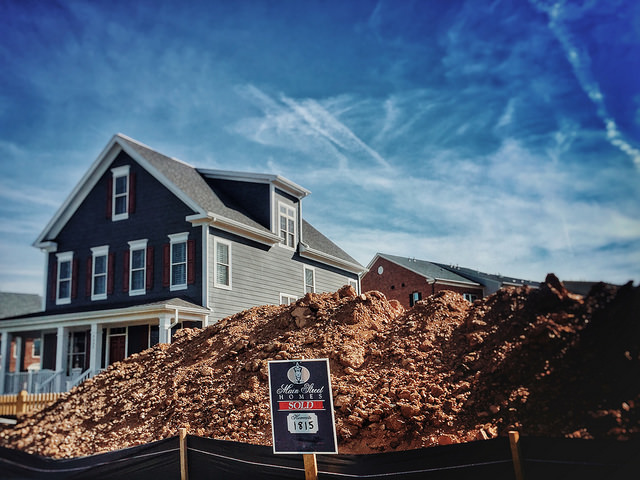
A large pile of dirt in front of a house under construction.

Demand For Home Loans Up 26% Over Last Year


According to the Mortgage Bankers Association’s Weekly Applications Survey, demand for loans to buy homes was up 3 percent last week from the week before. The improvement puts the MBA’s Purchase Index 26 percent above where it was during the same week one year ago. Joel Kan, MBA’s associate vice president of economic and industry forecasting, says demand for purchase loans has been rising. “Purchase applications were strong over the week driven both by households seeking more living space and younger households looking to enter homeownership,†Kan said. “The purchase index increased for the fourth consecutive week and was up 26 percent from last year’s pace. The average purchase loan balance increased again, both by quickening home-price growth and a rise in higher-balance conventional applications.†Also in the report, average mortgage rates were up across all loan categories. The rate increase caused a drop in refinance demand, which was down 5 percent. The MBA’s weekly survey has been conducted since 1990 and covers 75 percent of all retail residential mortgage applications. (source)

A white arrow painted on a green pavement pointing forward.

The Best Strategies For Winning A Bidding War


In a today’s market, buyers have to compete for available homes. That means, finding ways to make your offer stand out from others. Put simply, you can’t expect to win a bidding war, if you aren’t prepared to offer more than the next buyer. However, it’s not just a matter of offering more money – though that’s certainly part of it. There are other strategies as well, like waiving contingencies or promising a faster close. How you approach making your offer can be the difference between disappointment and purchasing your dream home. So what’s the best strategy for winning a bidding war? Well, according to one recent analysis an all-cash offer improves a buyer’s chances by 290 percent. This isn’t surprising. It also isn’t an option for most home buyers. The second most effective strategy was waiving the financing contingency, which protects the buyer in case they aren’t able to secure a mortgage in time. But while it may improve your chances by 66 percent, it has its risks, including losing your earnest money deposit. Other popular strategies – including escalation clauses and waiving the inspection – are less risky but also less effective. Mostly, though, that’s due to the fact that they’re more common in a seller’s market, where buyers are trying to outmaneuver each other. (source)

Close-up of various US dollar bills spread out.

Typical House Sells In 20 Days In February


The typical home for sale was on the market just 20 days in February, according to new data released by the National Association of Realtors. That’s a record low and down from 36 days last year at the same time. But while elevated demand from buyers plays a role, too few homes for sale is the chief reason homes are selling so quickly. The NAR’s report shows that – while the number of homes for sale did improve month-over-month – nationally, it’s down nearly 30 percent from where it was one year ago. According to Lawrence Yun, NAR’s chief economist, low inventory is also contributing to declining home sales. In fact, February sales of existing homes fell 6.6 percent from January. “Despite the drop in home sales for February – which I would attribute to historically low inventory – the market is still outperforming pre-pandemic levels,†Yun said. It’s true. Despite slowing in February, sales are still 9.1 percent higher than last year. And with expectations that both inventory and the economy will improve as the year goes on, there’s hope that home sales and listings will too.

Close-up of a 'For Sale' sign outdoors.

Thank you for your upload