

Banner
Menu

Category: Uncategorized

Home Building Halts, But Is The Setback Temporary?


New data released by the U.S. Census Bureau and the Department of Housing and Urban Development shows the number of new homes that began construction in February was 10.3 percent lower than the month before. The decline marked the second consecutive month home building slowed. In a housing market starved for additional inventory, this may seem like discouraging news. After all, if home building slows and the number of homes for sale doesn’t pick up, prices will continue to spike, affordability will suffer, and hopeful home buyers will have a harder time finding homes to buy. Fortunately, the numbers may be deceiving. How so? Well, for one, bitter cold and winter storms affected much of the country in February. And more than just typical winter weather in states accustomed to a February freeze, the storms and cold reached into Texas and much of the South. Because this likely caused home builders to pause construction, economists expect the setback will be temporary and new residential construction will rebound in the months ahead. (source)
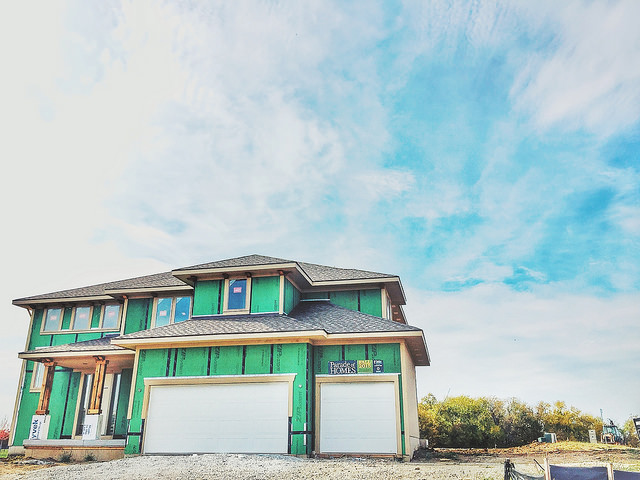

Newly constructed modern house with a green exterior under a blue sky.

36% Of Homes Sold Above List Price In February


The price a home is listed for isn’t necessarily the price its buyer will pay. That’s especially true when the number of homes for sale is low, as it is now. In short, when there are fewer homes for sale it makes competition among buyers more likely. And when there’s competition, there are bidding wars. So how common is it these days that a prospective home buyer will have to offer more than the homeowner is asking in an effort to beat offers from other buyers? Well, according to new numbers from one recent analysis, it’s more common than ever before. In fact, in February, 36 percent of the homes sold during the month went for more than their asking price – a record high. That means, if you’re a home buyer looking at listings and calculating what you can afford, you should also calculate how affordable those homes would be if the price were to go up. The good news, though, is that market conditions are expected to change in the coming months. As more homes are listed for sale this spring and summer, the market will be better balanced and the share of homes sold above their list price should come down. (source)

A clear sky over residential buildings and trees.

Mortgage Rates Up Slightly In Weekly Survey


According to the Mortgage Bankers Association’s Weekly Applications Survey, average mortgage rates were up slightly last week from the week before, with increases seen for 30-year fixed-rate loans with conforming loan balances, loans backed by the Federal Housing Administration, and 15-year fixed-rate loans. Jumbo loans were flat from one week earlier. But though rates are now at their highest point since last June, demand for home purchase loans continues to rise. Last week, it was up 2 percent week-over-week pushing it 5 percent higher than last year. At the same time, higher rates have hurt refinance demand, which fell 4 percent from the week before. Joel Kan, MBA’s associate vice president of economic and industry forecasting, says there are a few factors helping drive buyer demand. “The purchase market helped offset the slump in refinances,†Kan said. “Activity was up 5 percent from a year ago, as the recovering job market and demographic factors drive demand, despite ongoing supply and affordability constraints.†The MBA’s weekly survey has been conducted since 1990 and covers 75 percent of all retail residential mortgage applications.

A bold percentage symbol on a textured beige background.

Builder Confidence Still High Despite Lumber Prices


When there’s a lack of homes for sale, new home construction plays an important role in balancing the market. Not only does building more new homes help provide buyers with options, it also helps keep price increases from spiking. That’s why the National Association of Home Builders conducts a monthly survey to gauge how confident home builders are in the market for new homes. If builders are optimistic, it’s good news for prospective home buyers, since it likely means more new homes – and a better balanced market – are on the way. The NAHB’s survey is scored on a scale where any number above 50 indicates more builders view conditions as good than poor. In March, the survey fell two points to 82, mostly due to concerns over the cost of lumber. Lumber prices have risen nearly 200 percent over the past year and the added costs have made it more difficult for builders to build homes affordably. However, despite the supply-side issues, high buyer demand has kept confidence near all-time highs. In fact, the index is currently just eight points below its record high of 90, reached last November. (source)

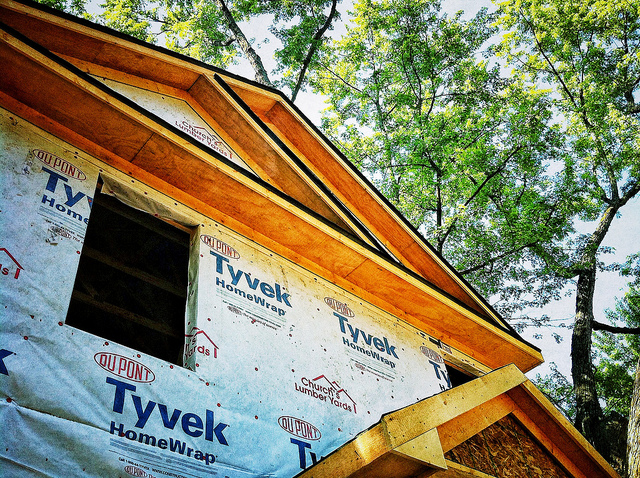
House under construction wrapped in Tyvek with wooden framing and green trees.

Lenders See Stable Credit, Higher Demand Ahead


Each quarter, Fannie Mae asks senior mortgage executives for their views on the upcoming mortgage market. Their Mortgage Lender Sentiment Survey can be a good predictor of what’s ahead for housing. So what are mortgage execs saying about the coming spring and summer market? Well, for starters, they expect access to credit to remain stable. After tightening last spring, credit standards have eased over the past year and are now at pre-COVID levels. That means, qualified buyers should feel confident in their ability to be approved for a loan. Lenders also expect buyer demand to remain high this year. In fact, the survey found “demand expectations over the next three months rose significantly across all loan types from last last quarter and remained similar to the levels seen in Q1 2020.†In short, lenders are expecting a hot purchase market. However, though optimistic about demand from buyers, lenders aren’t as confident in refinance activity. With mortgage rates expected to increase from all-time lows, they predict there will be fewer homeowners looking to refinance as the year progresses. (source)

Scrabble tiles spelling the word 'LOANS' on a red background.

Millennials Say They’re Comfortable Buying Online


Traditionally, before you make an offer on a house, you go see it in person. After all, buying a home is a major financial transaction. You wouldn’t want to make that kind of commitment without seeing exactly what you were purchasing. But these days, there are other ways to see a property and home buyers are becoming increasingly comfortable with them. In fact, digital and online tools have become more widely accepted among buyers since the coronavirus pandemic began – especially, younger ones. For example, according to a newly released survey, 59 percent of millennial buyers now say they would be, at least, somewhat confident making an offer on a home they only toured virtually. Additionally, 39 percent said they’d be comfortable buying a home entirely online. That’s a significant percentage of buyers. But while substantial, it still leaves a majority of home buyers who wouldn’t be comfortable making an offer sight unseen. Which means, most buyers probably prefer a mix of virtual and traditional access to the homes they’re interested in seeing. It also means digital tools, like 3D-virtual tours, digital-floor plans, and self-tour technology, are likely here to stay. (source)

Open silver MacBook Air laptop with black keyboard and screen.

A Look At The Market One Year Into COVID


The housing market has done pretty well in the year since the coronavirus’ onset. Following an initial slowdown, home buyers bounced back in the months after the pandemic began. Then, the market benefited from record low mortgage rates and remote work – which helped fuel Americans’ interest in making a move. As a result, buyer demand surged and stayed high through the end of 2020 and into 2021. But while most measures of the market show it now surpassing pre-pandemic levels, new listings are one that continues to lag. In fact, according to a new report from the National Association of Realtors’ consumer website, new listings were nearly 30 percent lower than last year at the beginning of March. And when the number of available homes falls that far behind the number of interested buyers, price increases accelerate. Fortunately, Danielle Hale, the website’s chief economist, says the gap between supply and demand should ease in the months ahead. “The housing market’s lopsided momentum could ease in the coming months,†Hale said. “We expect the vaccine’s rollout to alleviate some sellers’ anxieties, which could help the supply crunch.†As that happens, and the market becomes more balanced, prices and competition should begin to wane. (source)

Bright red houses under a clear blue sky.

Loans To Buy Homes See Pre-Spring Spike


According to the Mortgage Bankers Association’s Weekly Applications Survey, average mortgage rates increased last week from the week before. In fact, rates were up across all loan categories, including 30-year fixed-rate loans with both conforming and jumbo balances, loans backed by the Federal Housing Administration, and 15-year fixed-rate loans. As a result, demand for refinance applications fell 5 percent from the week before. Demand for loans to buy homes, however, increased 7 percent. Joel Kan, MBA’s associate vice president of economic and industry forecasting, said it was the purchase market’s best week in a month. “With the spring buying season at the doorstep, the purchase market had its strongest showing in four weeks, with gains in both conventional and government applications,†Kan said. “Overall activity was 2.4 percent higher than a year ago, and loan sizes moderated for the second straight week – potentially a sign that more first-time buyers are entering the market.†The MBA’s weekly survey has been conducted since 1990 and covers 75 percent of all retail residential mortgage applications. (source)

White arrow pointing upward on a red background.

Median Down Payment Reaches New High

To buy a house, you need to make a down payment. But how much of a down payment you decide to make depends on a lot of factors, including your savings, the price of the house you’re buying, and the terms of your loan. Which means, the amount varies from one buyer to the next. There are, however, some new numbers that can help give prospective home buyers a rough idea of what to expect when the time comes. According to ATTOM Data Solutions’ fourth-quarter 2020 U.S. Residential Property Mortgage Origination Report, the median down payment on single-family homes and condos at the end of last year was $24,500. Based on the median sales price of homes sold in the fourth quarter, that represents a nearly 8 percent down payment. It’s also a new high and a significant jump from where it was one year earlier, when the median down payment was $13,441. Why the increase? Put simply, home prices. Already low inventory was driven lower last year by the pandemic and the lack of available homes for sale has driven prices higher. Those increases have caused down payments to grow as well. As the market balances and prices moderate, however, down payments should too. (source)

How Much Income Do You Need To Buy A House?


It’d be easy to get the impression that buying a house is becoming unaffordable. After all, home price increases only seemed to accelerate after last year’s hot summer market. In fact, one recent report from the National Association of Realtors found that 88 percent of metro areas saw double-digit price gains during the fourth quarter of last year. But despite those price gains, the same report also found that the income required to afford a 30-year fixed-rate mortgage with a 20 percent down payment hadn’t changed all that much from the year before. That’s mostly due to favorable mortgage rates, which have helped keep affordability levels from getting out of reach. So how much money do you need to make to comfortably buy a house in today’s market? Well, the NAR found that you’d need to make $49,908, which is only up slightly from 2019 when it was $48,960. Additionally, their analysis showed that in 71 percent of the included metro areas a family could pay their mortgage with an income of less than $50,000 per year. Of course, where you’re buying matters. For example, that number more than doubles if you want to live somewhere like Los Angeles or Boulder, Colo. And, if you want to live in the San Jose-Sunnyvale area, you’ll need to make almost $225,000 to afford your mortgage comfortably. (source)

Close-up of scattered twenty-dollar bills.

Thank you for your upload