

Banner
Menu

Category: Uncategorized

Are Urban Markets Starting To Heat Up Again?


The coronavirus caused a shift in home buying preferences. Mitigation efforts led to more Americans working from home, which then caused buyers to look for houses in areas where they could get more space and privacy for their money. Naturally, that shift caused home prices in rural and suburban markets to begin growing at a faster rate – even outpacing prices in urban centers. But, according to one recent analysis, things may be changing. That’s because, for the first time since the pandemic began, prices in cities are once again rising faster than they are in suburban and rural neighborhoods. Why the change? Well, one theory is that there is growing hope that life will soon get back to normal once the coronavirus vaccine has been distributed more widely. That hope, in turn, has caused growing interest in single-family homes in walkable urban areas close to recreation and amenities. So far, the trend has been more pronounced in metros like Baltimore, Detroit, and Cleveland where prices are up nearly 40 percent year-over-year. More expensive cities like New York, DC, and San Francisco, on the other hand, have seen much more modest increases. (source)


City skyline under a bright blue sky with scattered clouds.

First-Time Buyers Pull Average Loan Lower


According to the Mortgage Bankers Association’s Weekly Applications Survey, demand for loans to buy homes was 2 percent higher last week than it was the week before. It is now 1 percent higher than it was last year at the same time. But while a relatively modest increase isn’t that noteworthy, who was behind it might be. That’s because, the increase may be coming from first-time home buyers – who haven’t been as active in the market the past few years. Joel Kan, MBA’s associate vice president of economic and industry forecasting, says the proof is the average loan size. “The housing market is entering the busy spring buying season with strong demand,†Kan said. “Purchase applications increased, with a rise in government applications – likely first-time buyers – pulling down the average loan size for the first time in six weeks.†The average loan amount had been rising, as affordability challenges and the economic impact of the coronavirus caused younger buyers to delay plans to buy. Indications that they may be returning to the market are a positive sign for the spring and summer season. The MBA’s weekly survey has been conducted since 1990 and covers 75 percent of all retail residential mortgage applications. (source)

Close-up of a loan application under a pen.

Mortgage Rates Help Keep Buying Affordable


If you’re trying to figure out whether or not you can afford something, you typically only have to consider its price. Buying a home, however, is a bit more complicated. When you buy a house, there are variables to consider beyond the list price. You have to take things like insurance and taxes into consideration as well. That’s why, despite the fact that home prices have been rising lately, buying is still a good deal in many markets. How is that possible? Well, it’s mostly due to mortgage rates. According to a recently released analysis from the National Association of Realtors’ consumer website, historically low interest rates have helped keep the median monthly mortgage payment relatively flat over the last year. In fact, the monthly cost to purchase a median priced home increased just 0.2 percent year-over-year, despite double-digit home price growth during the same period. Danielle Hale, the website’s chief economist, says the news is encouraging but conditions can change. “With interest rates expected to rise over the coming months, buyers may need to act sooner than later to take advantage of today’s affordability or be prepared to adjust their target purchase price,†Hale said. (source)

Close-up of George Washington's portrait on a U.S. dollar bill.

Vaccine Distribution Could Help The Housing Market


Last year was a surprisingly good year for the housing market. Despite the coronavirus and its economic impact, residential real estate was hot. Buyer demand was high and homes for sale sold quickly. Still, there were plenty of people who delayed their plans to buy or sell a home because of the uncertainty caused by the pandemic. Whether or not they return to the market this year will play a big role in determining what conditions look like for prospective home buyers and sellers. According to one new survey, it might come down to how quickly the coronavirus vaccine is distributed. For example, survey results show 52 percent of respondents said they’d feel comfortable moving to a new home right now. However, that number rises to 70 percent when asked if they’d feel comfortable after widespread vaccine distribution. Similarly, among homeowners who said the vaccine would factor into whether they decided to sell their home or not, almost 80 percent said it’d make them more likely to move. In short, it looks like there’s a significant number of Americans who’ll be ready to make a move once the vaccine has been distributed. How quickly that happens will have an effect on everything from inventory to affordability. (source)

A close-up of a medical syringe with a needle on a blue background.

Contract Signings Hit All-Time High For January

When a home seller accepts an offer and a contract to buy is signed, that home’s sale is considered pending until it closes weeks later. Because of the gap between contract signings and closings, pending sales can be a good indicator of future home sales. That’s why the National Association of Realtors tracks them each month. In January, their Pending Home Sales Index hit an all-time high for the month, despite dropping almost 3 percent from December. Contract signings are now up 13 percent from last year at the same time. Lawrence Yun, NAR’s chief economist, says they’d be even higher if there were more homes for sale. “Pending home sales fell in January because there are simply not enough homes to match the demand on the market,” Yun said. “That said, there has been an increase in permits and requests to build new homes.” Regionally, the West and Northeast saw significant declines month-over-month, while the South and Midwest were relatively flat from one month earlier. (source)

New Home Sales 19% Higher Than Last Year


Sales of newly built, single-family homes rose more than expected in January, according to new numbers released by the U.S. Census Bureau and the Department of Housing and Urban Development. Sales were up 4.3 percent from December’s pace, which is significantly better than the 2.1 percent improvement economists expected. The combination of a lower-than-normal number of homes for sale and a higher-than-normal level of buyer demand has new-home sales booming this winter. In fact, they are 19.3 percent higher than they were last year at the same time. The report found sales were mostly in the $200,000 to $749,000 price range. Also, prices rose 5.3 percent from one year earlier, with the average sales price reaching $408,800 in January. The median sales price of new homes sold during the month was $346,400. At the end of the month, there was a seasonally-adjusted estimate of 307,000 new homes for sale. That represents a 4-month supply at the current sales pace. (source)

A beige two-story house under a clear blue sky.

Mortgage Rates Up In Latest Survey


According to the Mortgage Bankers Association’s Weekly Applications Survey, average mortgage rates increased last week from the week before. Rates were up for 30-year fixed-rate mortgages with both conforming and jumbo balances, loans backed by the Federal Housing Administration, and 15-year fixed-rate loans. As a result, demand for mortgage applications fell from the previous week. Joel Kan, MBA’s associate vice president of economic and industry forecasting, says the housing market remains strong. “The housing market in most of the country remains strong, with activity last week 7 percent higher than a year ago,†Kan said. “The average loan size of purchase applications increased to a record $418,000, in line with the accelerating home-price growth caused by very low inventory levels.†The week-over-week decline in application demand was also due, in part, to severe weather in Texas. The state saw a more than 40 percent drop in application demand last week. The MBA’s weekly survey has been conducted since 1990 and covers 75 percent of all retail residential mortgage applications.

Red surface with a gold arrow and text "THIS SIDE UP".

Home Prices Have Best Year Since 2013


The S&P Case-Shiller Home Price Indices has collected home price data for the past 30 years and is considered among the leading measures of U.S. home values. Their most recent release, which covers data through the end of 2020, shows last year’s home-price performance was one of the best in index history. Craig J. Lazzara, managing director and global head of index investment strategy at S&P, says prices have been accelerating since June of last year. “As COVID-related restrictions began to grip the economy in early 2020, their effect on housing prices was unclear,†Lazzara said. “Price growth decelerated in May and June, and then began a steady climb upward, and December’s report continues that acceleration in an emphatic manner. 2020’s 10.4 percent gain marks the best performance of housing prices in a calender year since 2013.†Phoenix, Seattle, and San Diego were the cities reporting the biggest year-over-year price gains – though all but one of the included metros reported price increases over the previous year. (source)

Close-up of a bright green dollar sign on a dark background.

When Will Housing Market Begin To Cool?


High buyer demand and low for-sale inventory have made for a hot housing market. Homes are selling quickly and buyers are having to compete for available listings. But, according to the most recent outlook from Fannie Mae’s Economic and Strategic Research Group, the market is expected to cool off at some point this year. When that happens is still a little uncertain, however. “While housing is still expected to moderate in the new year from its unsustainably high pace in the second half of 2020, the ESR Group did upwardly revise its 2021 sales forecast on new data suggesting that the expected cooling will occur over a longer time frame than previously anticipated,†the group writes. In some ways, the economy and housing market’s behavior this year is dependent on how quickly and effectively the coronavirus vaccine can be distributed. The ESR group expects that its distribution will help boost economic growth and support high levels of interest from home buyers. (source)

Palm trees stand tall beside an orange house under a clear sky.

71% Of Homes Sell In Less Than A Month


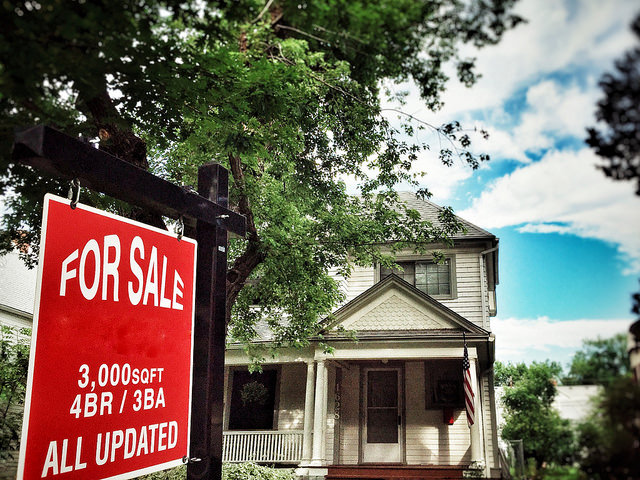
The typical home for sale was on the market for just 21 days in January, according to the National Association of Realtors. That’s down from 43 days one year earlier. It’s yet another sign that fewer homes for sale has caused the homes that are for sale to sell quickly. So quickly, in fact, that 71 percent of the homes that sold in January were on the market for less than a month. Lawrence Yun, NAR’s chief economist, says home-buyer demand has started the year off strong . “Home sales continue to ascend in the first month of the year, as buyers quickly snatched up virtually every new listing coming on the market,†Yun said. “Sales easily could have been even 20 percent higher if there had been more inventory and more choices.†Low inventory continues to be the housing market’s biggest issue. The lack of homes for sale has caused more competition for available listings, higher prices, and fewer options for buyers. According to the NAR, total housing inventory is now at a 1.9-month supply. A six-month supply is considered a healthy market.

A charming house with a 'For Sale' sign in the front yard under a partly cloudy sky.

Thank you for your upload