

Banner
Menu

Category: Uncategorized

Homes For Sale Are Selling Quickly


Buying a home takes a while. But though the process takes several weeks, you won’t necessarily have a lot of time to deliberate once you’ve found a house you like. In most cases, you have to make an offer quickly or you’ll risk losing the home to another buyer. That’s because, in the current market, inventory is low. The number of homes for sale was already lower than normal before the coronavirus and, since the onset of the pandemic, it’s fallen further. So, when you’ve found a house that fits your budget and lifestyle, chances are someone else has found it too. And competition from other buyers means you have to be prepared to move fast. How fast? Well, according to one new analysis, the typical home sold in June had an offer accepted within 22 days of it being listed. That’s the fastest homes have sold since the summer of 2018. And, while there are some cities where homes stay on the market longer, 29 of the 35 largest metros are seeing homes sell faster than they were last year at the same time. That means, in most markets, there are more buyers than homes for sale. So, if you’re planning on buying this summer, you should also plan to move quickly when you find the house you want. (source)
A red 'Home For Sale' sign against a partly cloudy sky.

Mortgage Rates Mostly Flat Last Week


According to the Mortgage Bankers Association’s Weekly Applications Survey, average mortgage rates were mostly flat last week. In fact, rates for 30-year fixed-rate loans with conforming loan balances were unchanged from the week before. Rates for jumbo loans and those backed by the Federal Housing Administration saw slight increases. But despite mortgage rates still hovering near record lows, demand for loan applications fell week-over-week. Joel Kan, MBA’s vice president of economic and industry forecasting, says the purchase market remains strong. “Even with high unemployment and economic uncertainty, the purchase market is strong. Activity has climbed above year-ago levels for five straight weeks and was 18 percent higher than a year ago last week,†Kan said. “One factor that may potentially crimp growth in the months ahead is that the release of pent-up demand from earlier this spring is clashing with the tight supply of new and existing homes on the market.†The MBA’s weekly survey has been conducted since 1990 and covers 75 percent of all retail residential mortgage applications. (source)

Close-up of the word 'MORTGAGE' on a financial document.

New Home Buyers Lead Sales Rebound


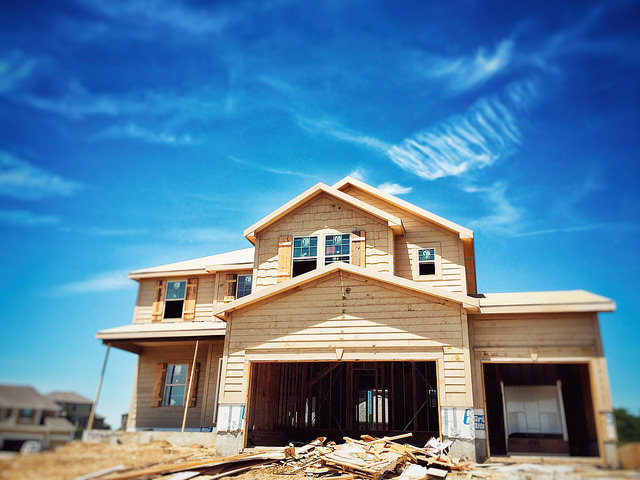
New home sales are a good indicator of what’s currently happening in the housing market. This is due to the fact that they’re counted when a contract to buy is signed, rather than at closing like existing-home sales. That’s also why new numbers from the U.S. Census Bureau and the Department of Housing and Urban Development are good news for the market’s recovery. According to the most recent results, sales of newly built single-family homes rose 16.6 percent in May from the month before and are now 12.7 percent higher than they were last year at the same time. The strength of the rebound was unexpected, as economists were predicting gains but thought sales would rise just 2.9 percent month-over-month. That the improvement was as strong as it was is an indication that home buyers – many of whom were sidelined by coronavirus shutdowns in March and April – became much more active in May. Along with other recent data showing signs of a rebound, May’s new-home sales numbers are reason to be optimistic that the housing market’s recovery will continue to gain strength as the summer goes on. (source)

Newly constructed two-story house under a bright blue sky.

Existing Home Sales Fall In May

Sales of previously owned homes fell in May, according to new numbers from the National Association of Realtors. Completed transactions were down 9.7 percent from the month before and 26.6 percent below last year at the same time. It was the third consecutive month of decreasing sales since the coronavirus’ first impact in March. But despite the declines, Lawrence Yun, NAR’s chief economist, is optimistic that things will rebound soon. “Sales completed in May reflect contract signings in March and April – during the strictest times of the pandemic lockdown and hence the cyclical low point,” Yun said. “Home sales will surely rise in the upcoming months with the economy reopening, and could even surpass one-year ago figures in the second half of the year.” His optimism is most likely based in other recent housing data showing buyers are returning to the market faster than originally expected. But while rebounding buyer interest is encouraging, it could put upward pressure on prices, if it outpaces the number of homes available for sale. As it is, the median existing-home price rose 2.3 percent year-over-year in May.

Sold-16

The Importance Of A Good Credit Score


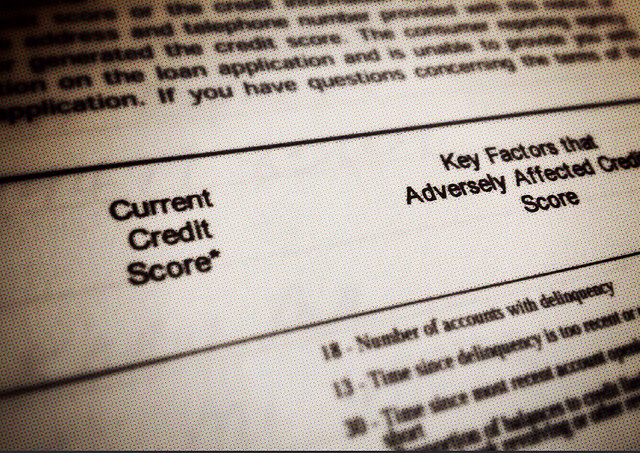
Without credit, buying a house becomes much more difficult. After all, not many of us have enough money in the bank to be able to write a check for a couple hundred thousand dollars. And, if you can’t pay cash, you’ll need a loan. Which is why your credit score is so important. It’s one of the ways a lender gets a feel for your financial habits and how responsible you are with your money. In short, your credit score will affect, not only the terms of the loan and your interest rate, but whether or not you even qualify at all. So you’re going to want to enter the home buying process with as good a score as you can. The first step is knowing what yours is, then checking your history for any errors or issues that can be fixed. But, once you’ve done that, how do you know where you stand? Well, typically a score over 700 is considered good, with anything over 800 considered excellent. Most scores will fall somewhere between 600 and 750. Overall, Americans’ credit has been improving lately. In fact, according to Ellie Mae’s most recent Origination Insight Report, FICO scores on all loans last month increased to 750. (source)

Close-up of a credit score report showing current credit score details.

Home Builders Optimistic After Demand Rebounds


If you want to know how the housing market is doing, ask a home builder. Their livelihood depends on knowing what, where, and when people are ready to buy a home. So they’re generally a pretty good indicator of where things are headed. That’s why the National Association of Home Builders conducts a monthly survey asking builders to score the market on a scale where any number above 50 indicates more builders view conditions as good than poor. In June, their Housing Market Index surged 21 points to 58. Robert Dietz, NAHB’s chief economist, says home builders are seeing signs of momentum. “Housing clearly shows signs of momentum as challenges and opportunities exist in the single-family market,†Dietz said. “Builders report increasing demand for families seeking single-family homes in inner and outer suburbs that feature lower density neighborhoods. At the same time, elevated unemployment and the risk of new, local virus outbreaks remain a risk to the housing market.†Among index components, those measuring buyer traffic and expectations for the next six months saw the biggest improvement. (source)

A rusty claw hammer with a wooden handle.

Mortgage Rates Fall To Another Survey Low

According to the Mortgage Bankers Association’s Weekly Applications Survey, average mortgage rates for 30-year fixed-rate mortgages with conforming loan balances fell to another all-time survey low last week. Rates also declined for jumbo loans, loans backed by the Federal Housing Administration, and 15-year fixed-rate loans. The drop led to an 8 percent increase in mortgage application demand over one week earlier. Both purchase activity and refinance activity were up week-over-week. Joel Kan, MBA’s associate vice president of economic and industry forecasting, says pent-up demand and low mortgage rates are fueling the gains. “Purchase applications increased to the highest level in over 11 years and for the ninth consecutive week. The housing market continues to experience the release of unrealized pent-up demand from earlier this spring, as well as a gradual improvement in consumer confidence,” Kan said. “Mortgage rates dropped to another record low in MBA’s survey, leading to a 10 percent surge in refinance applications.” Refinance demand is now 106 percent higher than it was last year at this time. The MBA’s weekly survey has been conducted since 1990 and covers 75 percent of all retail residential mortgage applications.

Arrow-Down

Housing Market On Track For A Quick Recovery


When the housing market crashed in 2008, the road to recovery was a long and gradual one. But while the market’s current downturn looks to be the worst since then – with home sales predicted to suffer the biggest year-over-year decline in 12 years – expectations for its recovery are far more optimistic. In fact, according to one recent analysis from Nationwide, home sales could be back to 2019 levels as soon as next year. Of course, the speed at which the market rebounds will largely depend on the coronavirus’ spread and available treatments. But real-estate market fundamentals were strong at the beginning of the year and a combination of low mortgage rates, favorable demographics, and solid household formations should help fuel a quick recovery. David W. Berson, Nationwide’s senior vice president and chief economist, says current data is already showing signs of a rebound. “New home sales unexpectedly increased for April, suggesting some consumers continued to shop while on lockdown,†Berson said. “Record-low mortgage rates have also helped to buoy the housing market, and mortgage applications for purchase have surged since bottoming out in early April.†If those trends continue, the market should quickly gain strength and be well positioned for a turnaround. (source)

Railroad tracks extending into the distance with autumn foliage.

Expensive Homes Dominate Available Listings


Housing market conditions can vary from one location to the next. They can also vary depending on the price range you’re shopping in. For example, a prospective buyer looking for an affordable starter home may find more competition and fewer choices than someone shopping for a more expensive house. This is the case in today’s market. Following coronavirus-related shutdowns and stay-at-home orders, the number of homes available for sale declined – as homeowners who were planning on selling their home this spring put their plans on hold. But the economic uncertainty caused by the pandemic affected the market for affordable homes much more than it did more expensive homes. In fact, one of the driving forces behind the current median list price – which, according to one analysis, is now $333,372, up 4.2 percent from last year – is the fact that more expensive listings are now a greater percentage of the overall number of homes available for sale than they were just a few weeks ago. As the market recovers, and more homeowners list their homes for sale, this should begin to even out and bring greater balance to the market. (source)

Historic building with green roof under a bright blue sky and trees.

How Has The Pandemic Affected Buyer Demand?


When stay-at-home orders became widespread in March, it would’ve been safe to assume that the economic shutdown and ensuing uncertainty would cause prospective home buyers to put their plans on hold. And they did, for a while. But now, just a few months later, it looks like staying in has caused buyers to be even more ready for a move. In fact, according to one new survey, 53 percent of home buyers say they are more likely to buy a home in the next year because of the pandemic – compared to 27 percent who said they hadn’t changed their plans and 20 percent who said they’d be less likely to buy. But why would the coronavirus make home buyers more enthusiastic to buy? Well, the vast majority said mortgage rates. Rates were already favorable to start the year but are now at record lows. That makes buying more affordable and presents movers with an opportunity to lock in a historically low rate. Another reason is Americans have been able to save money during lockdown because they’ve been spending less. That means more money set aside for a down payment. Perhaps the most relatable reason survey respondents gave, though, belongs to the 28 percent who said they were ready to make a move because they’d been stuck in their small space for so long. (source)

Chimney on a rooftop under a clear blue sky with faint clouds.

Thank you for your upload