

Banner
Menu

Category: Uncategorized

Favorable Conditions Cause Pending Sales Spike

The National Association of Realtors’ Pending Home Sales Index tracks the number of contracts to buy homes that are signed each month. The index is a good indicator of where home sales are headed because contract signings precede closings by a number of weeks. In January, the PHSI rose 5.2 percent from the month before and is now up 5.7 percent over last year at the same time. Lawrence Yun, NAR’s chief economist, says conditions are favorable for home buyers right now and it may lead to an increase in buying activity as we approach the spring sales season. “With housing starts hovering at 1.6 million in December and January, along with the favorable mortgage rates, among other factors, 2020 has so far presented a very positive sales climate,” Yun said. “Moreover, the latest stock market correction could provide exceptional, even lower mortgage rates for a few weeks, and that would help bring about a noticeable upturn in the coming months.” (source)

When Is The Best Time To Sell Your Home?


Spring is traditionally thought of as the start of home buying season. Harsh winter weather begins to fade and interested buyers become more active. Because of this, homeowners who hope to sell often wait for spring to list their home. But what is the best time to put your home up for sale, if you want to get the best price for it? Well, it depends on where you are in the country. Naturally, in warmer parts of the country, it comes earlier than in others. For example, late March is the best time for selling in San Diego, but Cincinnati homeowners do better in early July. Generally speaking, though, the first two weeks of May brings the highest premium for homeowners with a house for sale. In fact, according to one recent analysis, sellers who list their home during the first half of May get $2,100 more for their house. Of course, the right time for you will likely depend on your particular circumstance but, if you’re able to time it, you might want to consider listing your home in early May. (source)

Close-up of a Timex watch showing the time and date.

New Homes Sales Start The Year Off Strong


New home sales are an important barometer for the housing market. When they’re selling quickly, home builders build more homes, which helps balance inventory and keeps home prices from spiking. In other words, if you want to know how the housing market is doing, new home sales are a good place to check. That’s why new numbers from the U.S. Census Bureau and the Department of Housing and Urban Development are encouraging. Their January New Residential Sales report shows a spike in sales, which are now at their highest level since July 2007. The gains were better than expected. Economists polled by Reuters had predicted a 3.5 percent gain from December, but the report shows sales up 7.9 percent. So what does this mean? Well, it likely means that the recent improvements in new home construction and building permits will continue. And that means added inventory at a time when it’s lower than normal in many markets. This could help reverse recent home price trends, which have shown prices beginning to rise more quickly after a period when they were slowing down. (source)

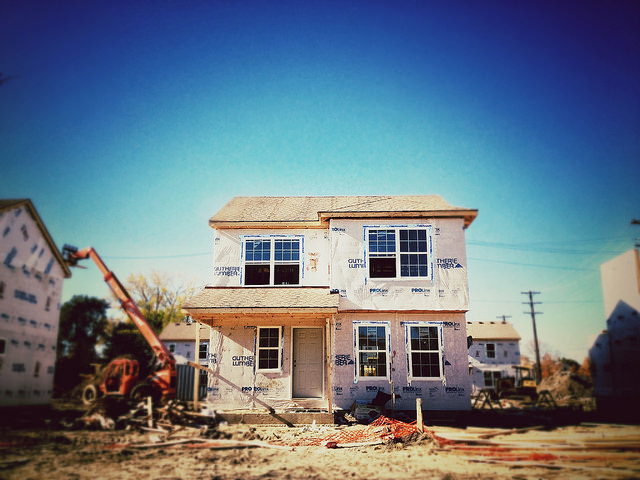
Under-construction two-story house with construction equipment nearby.

Mortgage Rate Drop Pushes Demand Higher


According to the Mortgage Bankers Association’s Weekly Applications Survey, average mortgage rates fell last week across all loan categories, including 30-year fixed-rate loans with both conforming and jumbo balances, loans backed by the Federal Housing Administration, and 15-year fixed-rate loans. The drop caused a slight increase in overall mortgage demand, with refinance and purchase activity combining for a 1.5 percent improvement over the week before. Mike Fratantoni, MBA’s senior vice president and chief economist, says the coronavirus will have an impact on markets in the coming weeks. “As fears regarding the coronavirus have increased, Treasury yields have dropped to record lows this week amid the ensuing financial market volatility,†Fratantoni said. “Next week’s results will show the impact this drop in Treasuries had on mortgage activity.†Also in the report, purchase activity rose 6 percent last week, which puts demand 10 percent higher than last year at the same time. The MBA’s weekly survey has been conducted since 1990 and covers 75 percent of all retail residential mortgage applications.

Wooden blocks spelling out 'MORTGAGE' on a wooden surface.

Home Prices Up 3.8% Year Over Year


The latest results from the S&P Case-Shiller Home Price Indices show prices up 3.8 percent year-over-year. And while that’s a fairly normal annual increase compared to long-term averages, when compared to the previous month’s results, it represents an acceleration. For example, S&P showed annual gains of 3.5 percent in November. Craig J. Lazzara, managing director and global head of index investment strategy at S&P, says prices have now been rising for eight straight years. “The U.S. housing market continued its trend of stable growth in December,†Lazzara said. “This marks eight consecutive years of increasing housing prices (an increase which is echoed in our 10- and 20-city composites). At the national level, home prices are 59 percent above the trough reached in February 2012, and 15 percent above their pre-financial crisis peak.†But while price increases sped up at the end of last year, Lazzara says it’s too soon to say whether it represents a new trend upward or is just a bump in the long-term trend. (source)

Three colorful dollar signs on a dark red background.

Housing Market Gains To Continue Through 2021


The housing market continues to grow stronger. And, according to Fannie Mae’s most recent outlook from their Economic and Strategic Research Group, there are a few factors driving the improvement. Among them, low mortgage rates and a strong labor market are near the top of the list. Americans are feeling more financially secure and, combined with favorable rates, they’re increasingly convinced that now’s a good time to buy a home. Doug Duncan, Fannie Mae’s chief economist, says the improvements will likely continue through next year. “Our updated housing market forecast shows greater strength in essentially every part of the housing market extending through the first half of 2021,†Duncan said. “The limiting factor for home sales, as well as the primary driver of home price appreciation, remains the supply shortage. Barring an uptick in the inventory of existing homes put on the market, in the near term we’re forecasting relatively flat home sales until higher construction activity can be sustained, which we foresee will be the case later this year.†In other words, the outlook is good and will likely get better as more new homes are built and listed for sale. (source)

A modern house with a tall chimney against a blue sky.

January Home Sales Up Nearly 10% Over Last Year


New numbers from the National Association of Realtors show sales of previously owned homes up nearly 10 percent over last year at the same time. The January report also shows inventory, home prices, and time on market up during the month. Lawrence Yun, NAR’s chief economist, says the outlook is promising. “Existing-home sales are off to a strong start at 5.46 million,†Yun said. “The trend line for housing starts is increasing and showing steady improvement, which should ultimately lead to more home sales.†But while home sales are up significantly from last year, they were relatively flat from the month before. In fact, most regions showed little or no change from December. Also, home prices have now increased on an annual basis for 95 consecutive months. The median existing-home price for all housing types was $266,300 in January, which is up from $249,400 one year ago. Still, low mortgage rates have helped balance affordability levels and – with new home construction expected to improve this year – inventory gains could help slow additional home-price increases as the year goes on.

Blue signboard with the word SOLD in white letters.

New Home Building Boom Is Good For Buyers


With the number of available homes for sale lower than normal in many markets, there’s been an understandable focus on how many new homes are being built. After all, the quickest way to fix a supply issue is to add more supply. That’s why new numbers from the U.S. Census Bureau and the Department of Housing and Urban Development are encouraging. Because, though they show a month-over-month decline in the number of new homes that began construction in January, year-over-year estimates are up 21.4 percent. Additionally, the number of building permits surged to a near 13-year high. And, since building permits are a good indicator of future housing starts, that’s a good sign that the construction boom will continue over the coming months and into the spring sales season. So what does this mean for home buyers? Well, as more new homes are built, markets will see a better balance between the number of interested buyers and the number of available homes. This will help slow price increases and give home buyers more options when they head out to find a home to buy – whether they’re looking to buy a new house or an existing one. (source)

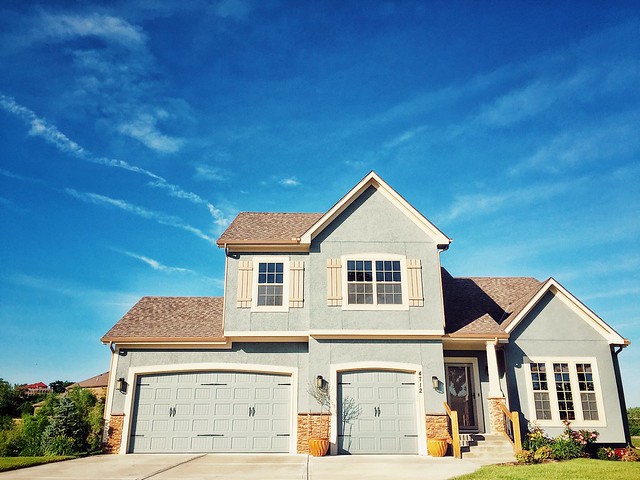
Two-story suburban house with a double garage under a clear blue sky.

Mortgage Rates Rise But Remain Near Lows


According to the Mortgage Bankers Association’s Weekly Applications Survey, average mortgage rates were up last week from the week before, with increases seen for 30-year fixed-rate loans with both conforming and jumbo balances, loans backed by the Federal Housing Administration, and 15-year fixed-rate mortgages. The rate increase caused a drop in mortgage applications, which fell 6.4 percent from the previous week. Joel Kan, MBA’s associate vice president of economic and industry forecasting, says the number of prospective buyers looking for loans to buy homes is still higher than last year but may be slowed by inventory issues. “Purchase applications fell 3 percent last week, as there continues to be some pullback after a strong January,†Kan said. “Activity was still 10 percent higher than a year ago, but too few options – especially at the lower portion of the market – are slowing some would-be buyers.†Refinance activity also fell, though it remains 165 percent higher than at the same time last year. The MBA’s weekly survey has been conducted weekly since 1990 and covers 75 percent of all U.S. retail residential mortgage applications.

Bright yellow arrow pointing upward on a blue background.

Builder Confidence Sees Best Stretch In Years


The National Association of Home Builders conducts a monthly survey to measure how confident builders are in the market for newly built, single-family homes. After all, if builders – whose livelihood depends on selling new homes – are optimistic about the market, chances are good that conditions are favorable for buyers too. According to the most recent results, builder sentiment over the past three months has been higher than at any time since December 2017. In fact, February’s results scored a 74 on a scale where any number above 50 indicates more builders feel conditions are good than poor. Dean Mon, NAHB’s chairman, says there are a number of positive factors that are keeping builders optimistic, but there are some lingering challenges as well. “Steady job growth, rising wages, and low interest rates are fueling demand but builders are still grappling with increasing construction and development costs,†Mon said. Those increasing costs make it challenging for builders to build affordable new homes, which are important right now since there are fewer entry-level homes available for sale in many markets. Still, a high level of optimism from home builders is a good sign for the 2020 housing market. (source)

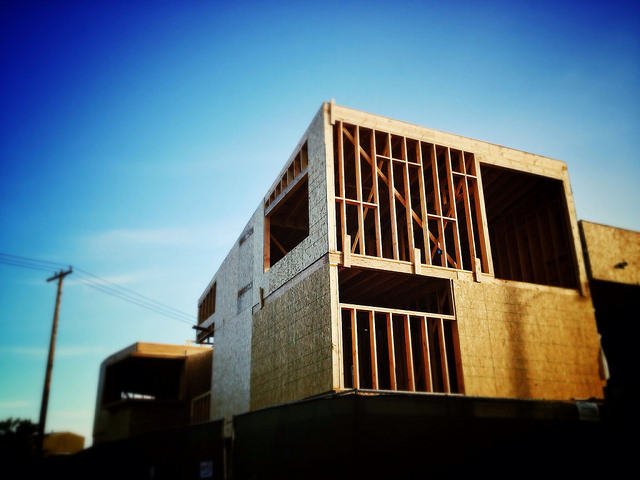
Wood-framed building under construction against a clear blue sky.

Thank you for your upload