

Banner
Menu

Category: Uncategorized

Homes Stayed On The Market Longer In November

The real estate market is typically slower in the fall and winter. So, it’s not that surprising to see homes for sale are staying on the market longer than they were a few months ago. But according to the National Association of Realtors’ most recent existing home sales report, not only was the typical listing on the market for 42 days in November, home price increases are beginning to moderate as well. In other words, the market’s slowed down and it’s good news for potential home buyers. The report shows buyers have already begun to take notice. Sales of previously owned homes were up nearly 2 percent in November and it was the second consecutive month of gains. “The market conditions in November were mixed, with good signs of stabilizing home sales compared to recent months, though down significantly from one year ago,” Lawrence Yun, NAR’s chief economist, said. “Rising inventory is clearly taming home price appreciation.” In short, the balance between available homes and the number of interested buyers is beginning to even out, which is leading to more favorable conditions. If the trend continues, better prices and more choices will make the winter housing market a good deal for house shoppers. 

For-Sale

Average Mortgage Rates Fall To 3-Month Low

According to the Mortgage Bankers Association’s Weekly Applications Survey, average mortgage rates fell last week across all loan categories, including 30-year fixed-rate loans with both conforming and jumbo balances, loans backed by the Federal Housing Administration, and 15-year fixed-rate mortgages. The decline brought rates to their lowest level since September and continued a trend downward that began last month. But though rates dropped, demand for mortgage applications did as well. Joel Kan, MBA’s associate vice president of economic and industry forecasting, says economic uncertainty outweighed the effects of favorable mortgage rates. “Despite mortgage rates falling across the board last week to their lowest levels in three months, mortgage applications also declined, as more potential borrowers likely stayed away because of ongoing financial market volatility and economic uncertainty,” Kan said. Demand for loans to buy homes remained above last year’s levels, however. In fact, purchase loan activity was up 2 percent from where it was at the same time last year. The MBA’s weekly survey has been conducted since 1990 and covers 75 percent of all retail residential mortgage applications. More here.

Arrow-Down

Is The Housing Market Positioned To Take Off?

The end of the year is typically the time when experts and prognosticators make predictions for the year ahead. And while it’s not easy to see into the future, year-end forecasts can give us an idea of which scenarios are likely to play out. Take Fannie Mae’s most recent forecast from their Economic and Strategic Research Group. Its experts say economic growth will begin to slow in 2019 but the real estate market may actually be well positioned. And that could be good news for home buyers. Doug Duncan, Fannie Mae’s chief economist, says mortgage rates and home sales will stabilize next year. “We maintain our call that the Fed will hike rates once more in December and two more times in 2019, despite rising market expectations of fewer hikes amid stock market volatility,†Duncan said. “If mortgage rates trend sideways next year, as we anticipate, and home price appreciation continues to moderate, improving affordability should breath some life into the housing market.†In other words, though conditions may still be challenging, home buyers should see a calmer market next year and the beginning of some relief. More here.

Airplane flying in a cloudy sky.

Builders Report Increase In Affordability Concerns

In some ways, builders are good predictors of where the housing market is headed. Since their business is dependent on knowing whether or not consumers are interested in buying homes, they are among the first to see changes in buyer traffic and interest. Because of this, the National Association of Home Builders tracks builder confidence as part of their monthly Housing Market Index. In December, the index fell to 56 on a scale where any number above 50 indicates more builders view conditions as good than poor. And, while that means builders still see market conditions as favorable, the four-point decline is an indication that builders are seeing some changes in buyers’ attitudes. Robert Dietz, NAHB’s chief economist, says the issue is affordability. “The fact that builder confidence dropped significantly in areas of the country with high home prices shows how the growing housing affordability crisis is hurting the market,†Dietz said. “This housing slowdown is an early indicator of economic softening, and it is important that builders manage supply-side costs to keep home prices competitive for buyers at different price points.â€Â 

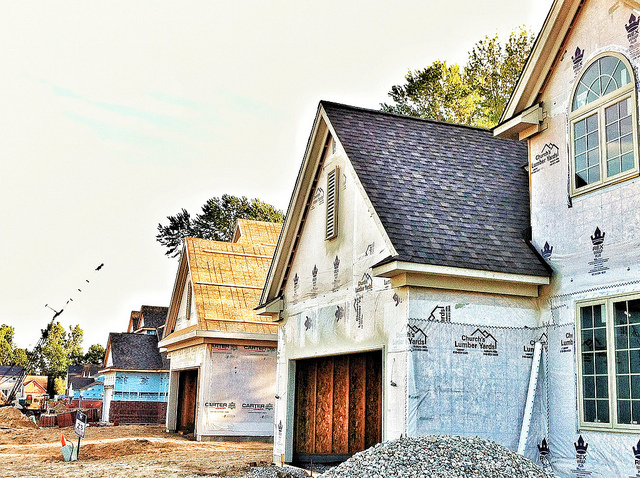
Renovation in progress on a house exterior with new window installation.

Do Buyers Need To Have A 20% Down Payment?

There’s a fairly common misconception among prospective home buyers that they’ll need a 20 percent down payment before they can buy a house. This, of course, isn’t true. It’s recommended since it’ll help you avoid paying mortgage insurance, reduce your monthly payment, and get you a lower mortgage rate. But, depending on the terms of your loan, how much money you put down is flexible. So what do most home buyers put down and how do they get it? Well, according to one recent report, just 43 percent of buyers nationally put down 20 percent or more, which means more than half of all home buyers opt for a smaller down payment. Seventy percent of buyers said they used savings as part of their down payment. But proceeds from a home sale and gifts from family or friends were also popular sources for down payment funds. Other sources included investments and retirement accounts. In short, the amount and source of a buyer’s down payment will be unique to their financial situation and the home they’re hoping to buy. However, it’s important to go over how much you can afford to put down and what costs will be associated with a smaller investment, as it could have a long-term effect on your financial future. More here.

Close-up of scattered twenty-dollar bills.

The Rising Share Of Single Women Home Buyers

Traditionally, homeownership has been seen as part of settling down. Getting married and starting a family went hand-in-hand with buying a home and planting roots in a community. But though they’re still common motivating factors, marriage and children aren’t the only reasons someone might want to become a homeowner. And so there are an increasing number of single home buyers active in the housing market. Among them, women are outpacing men. In fact, according to the National Association of Realtors’ most recent numbers, 65 percent of home buyers in 2017 were married couples but 18 percent were single women. And while that may not seem like a lot, the percentage has risen in each of the last three years and has nearly doubled over the past 35 years. Additionally, single women home buyers outpace single men by a wide margin. One recent study found that in the country’s 50 largest metropolitan areas, single women own more than 70,000 more homes than single men, with cities like New Orleans, Miami, and Birmingham, Ala., showing more than a quarter of households owned and occupied by single women. More here.

Close-up of a metallic key on a wooden surface.

Mortgage Rate Decline Is Biggest In A Year

According to the Mortgage Bankers Association’s Weekly Applications Survey, average mortgage rates fell last week across all loan categories, including 30-year fixed-rate loans with both conforming and jumbo balances, loans backed by the Federal Housing Administration, and 15-year fixed-rate loans. The decline was the largest single-week drop since last year. Joel Kan, MBA’s associate vice president of economic and industry forecasting, said trade worries drove rates down. “Mortgage rates fell across the board last week, driven by a similar slide in Treasuries,†Kan said. “Trade fears dominated investors’ concerns, and this was amplified by data released by the U.S. Commerce Department showing a widening trade deficit.†Lower rates helped boost demand for mortgage applications, which were up over the previous week. In fact, purchase application demand rose 3 percent and was 4 percent higher than at the same time last year. The MBA’s weekly survey has been conducted since 1990 and covers 75 percent of all retail residential mortgage applications. More here.

Miniature houses with 'mortgage' text symbolizing home loans.

Lagging Construction Creates Issues For Buyers

If you compare the number of people who want to buy homes to the number of homes available to buy, you can get a pretty good sense of where the housing market is headed. For example, a new analysis from Freddie Mac shows that there were 90 million Americans between the ages of 15 and 34 in 2016. That’s 6 million more than the number of people between ages 35 and 54. That means, there are a lot of younger Americans who are at, or are quickly approaching, the age of the typical first-time home buyer. This points to increasing demand for homes in the near future. But, at the same time, there have been fewer new homes built in recent years. In fact, Sam Khater, Freddie Mac’s chief economist, says construction levels have rarely been lower. If it stays that way, Khater says buyers should expect homeownership to get more expensive. “From 1968 to 2008, a span of 40 years, there was only one year in which fewer new housing units were built than in 2017 – and this despite rising demand in a growing economy,†Khater said. “We estimate that over the next decade, young adults will add about 20 million households – and those households will need a place to live. Until construction ramps up, housing costs will likely continue rising above income, constricting household formation and preventing homeownership for millions of potential households.†More here.

Wood-framed building under construction against a clear blue sky.

Rising Rates Haven’t Slowed Millennial Buyers

When mortgage rates started to trend upward earlier this year, a lot of the focus turned to how it would affect first-time home buyers. Because they have their own unique set of challenges, first-time buyers were expected to be hit harder by increasing rates. However, new numbers from Ellie Mae’s Millennial Tracker show that changing affordability factors haven’t deterred young Americans from pursuing their dream of buying a home. They have adjusted their price range, though. In fact, the numbers show that the average home loan amount for millennial buyers fell from $192,005 to $189,686 between September and October. Joe Tyrell, Ellie Mae’s executive vice president of corporate strategy, says knowing more about their financing options could encourage even more young Americans to pursue homeownership. “Although housing prices and interest rates are still rising at a faster pace in 2018 than they have in previous years, those trends are not yet stopping millennials from purchasing homes and putting down roots,†Tyrell said. “It is important for lenders to educate millennials on the value of FHA loans that bring lower down payments and can allow these new home buyers to stretch their dollar a little further even with rising interest rates.†More here.

A sold sign in front of a house on a sunny day.

Optimism About Income Helps Housing Sentiment

For a while now, there’s been a balance between the feeling that buying a home is becoming less affordable and the perception that the economy is getting stronger. Americans are concerned about rising home prices and mortgage rates but, at the same time, they’re also seeing more job opportunities and higher wages. How this might affect a decision about making a move is fairly obvious. In short, your feelings about whether or not it’s a good time for you to buy a house are likely tied to your feelings about your job security and income. If you’re feeling confident in your money, you’re more likely to consider buying. Which is part of the reason Fannie Mae’s monthly Home Purchase Sentiment Index has been relatively unchanged over the past several months. The index – which measures Americans perceptions of the housing market, economy, and their personal financial situation – was virtually flat in November from the month before. Doug Duncan says housing sentiment has cooled but it’s been offset by optimism about the economy. “Consumers perceptions of growth in their household income reached a survey high this month, helping to absorb some of the impact of increasing mortgage rates on housing market activity,†Duncan said. “Meanwhile, the net share of consumers expecting home prices to increase over the next 12 months continues to moderate, dropping by 13 percentage points since this time last year.†More here.

Close-up of various US dollar bills, prominently featuring a $20 bill.

Thank you for your upload