

Banner
Menu

Category: Uncategorized

Mortgage Rate Decline Breaks Upward Trend


According to the Mortgage Bankers Association’s Weekly Applications Survey, average mortgage rates fell last week, reversing an upward trend seen over the past several weeks. Though the decline was slight, it affected all loan categories except those backed by the Federal Housing Administration. Joel Kan, MBA’s associate vice president of economic and industry forecasting, says rates slowed due to economic concerns. “Treasury rates declined last week, as equity markets continued to see large swings amidst investor concerns over global economic growth,†Kan said. “As a result, mortgage rates inched back across most loan types, including the 15-year fixed-rate mortgage, 5/1 ARM, and 30-year jumbo mortgage rate. The 30-year fixed rate-mortgage also declined, stopping a run of six straight weekly increases.†Decreasing rates helped boost demand for loans to buy homes, which rose 3 percent higher than the previous week. Refinance activity, however, remained down, falling 5 percent. The MBA’s weekly survey has been conducted since 1990 and covers 75 percent of all retail residential mortgage applications. More here.

A bold red arrow pointing downward on a light background.

New Home Market Reacts To Rising Mortgage Rates


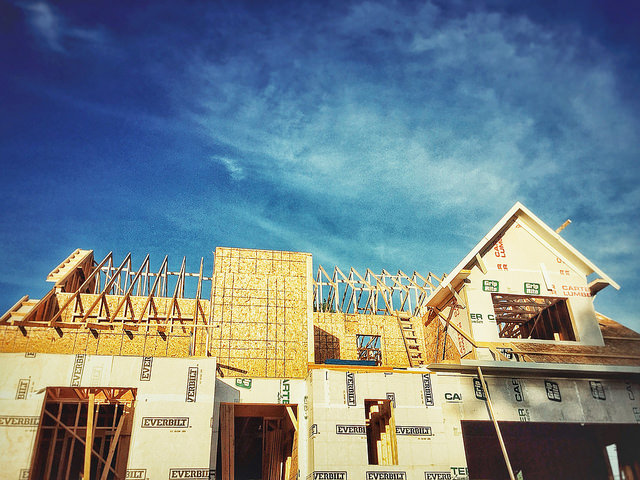
For most of this year, new home builders have been optimistic. With high buyer demand and a stronger economy, the market for newly built homes was building some momentum. But, according to the most recent Housing Market Index from the National Association of Home Builders, conditions are changing and builders are reacting. In fact, the index – which measures builder confidence on a scale where any number above 50 indicates more builders view conditions as good than poor – dropped eight points in November. Robert Dietz, NAHB’s chief economist, says it’s partly due to increasing mortgage rates. “For the past several years, shortages of labor and lots along with rising regulatory costs have led to a slow recovery in single-family construction,†Dietz said. “While home price growth accommodated increasing construction costs during this period, rising mortgage interest rates in recent months coupled with the cumulative run-up in pricing has caused housing demand to stall.†Still, despite a drop this month, the index remains in positive territory at 60. Which means, though builders are concerned that mortgage rate increases may hurt demand for new homes, they still see market conditions as good. In fact, the index component measuring expectations for the next six months was at 65 in November. More here.

Construction of a wooden framework on a house under a blue sky.


How Student Loan Debt Impacts Home Buyers


Young Americans want to own a home. Research consistently shows large majorities who say they aspire to one day become homeowners. And yet, the number of first-time home buyers active in the market has been lower than what is historically normal for several years. So why aren’t more young Americans buying houses? Well there are a number of factors at play but, among them, student loan debt is a big one. According to one recent study, the average monthly student debt payment for current renters who say they’d like to buy a home in the next year is $388. Naturally, an extra $400 a month to devote to a mortgage payment could go a long way. In fact, with that money, a buyer could afford a house that cost almost $100,000 more. But though that may seem discouraging, the same report also found that prospective buyers with student loan debt can still afford 52.3 percent of homes currently listed for sale. And, in areas where there are more affordable homes available for sale, it’s even easier to find something in a price range that works. In St. Louis, for example, a buyer with student loan debt can still afford nearly 75 percent of currently listed homes. More here.

Close-up of a US $100 bill showing detailed security features.

Number Of Listings With Price Cut Up In October


One good way of measuring where home prices are headed is to look at how many homes for sale have had to adjust their initial listing price. If there are a lot of homes in your area with price reductions, it could be a sign that the local market is softening. And, according to one national report, it likely is. That’s because, new numbers show 31.3 percent of homes for sale in October had at least one price cut of more than 1 percent. By comparison, last year at the same time just 25 percent of homes had previously dropped their price. That means an increasing number of homeowners with homes for sale are adjusting their price to attract home buyers. Whether this is due to a seasonal slow down, a reaction to recent mortgage rate increases, or the beginning of a better balanced market remains to be seen. But with fewer than half of the metro areas included in the report showing month-over-month price gains, it’s definitely good news for prospective home buyers this fall and winter. More here.

Green-handled scissors with serrated blades on a white surface.

Majority Of Recently Sold Homes Were Affordable


Naturally, affordability is a big consideration for anyone buying a home. After all, it’s a significant purchase and you want to be sure you’re getting a good deal. For that reason, recent reports of higher prices and rising mortgage rates may give you the impression that buying a house is out of reach. But new data from the National Association of Home Builders shows otherwise. That’s because, their Housing Opportunity Index found that the majority of “new and existing homes sold between the beginning of July and end of September were affordable to families earning the U.S. median income of $71,900.†In fact, 56.4 percent of homes sold during the third quarter were affordable. But, though that’s encouraging news, it is down from the previous quarter when 57.1 percent of the homes sold were considered affordable. Robert Dietz, NAHB’s chief economist, said the economy is helping keep homes within reach of the typical buyer but affordability trends are still a concern. “Ongoing job and economic growth provide a solid backdrop for housing demand amid recent declines in affordability,†Dietz said. “However, housing affordability will need to stabilize to keep forward momentum from diminishing as we move into the new year.†More here.

A sign with bold red letters saying SOLD and a slogan below.

Rising Rates, Stock Volatility Slow Mortgage Demand


According to the Mortgage Bankers Association’s Weekly Applications Survey, demand for loans to buy homes fell last week. In fact, purchase application demand was down 2.3 percent from one week earlier. Joel Kan, an MBA economist, told CNBC there are a couple of factors that could be contributing to the decline. “Recent volatility in the financial markets and increasing rates continue to adversely impact mortgage application activity, even as the general economic outlook remains positive,†Kan said. In other words, potential home buyers are feeling cautious, despite being relatively confident about their financial situation and the overall economy. Part of that has to do with rising mortgage rates and the recent ups-and-downs of the stock market. Another factor could be the normal sales slowdown that usually follows the summer season. Whatever the case, purchase demand is now 3 percent lower than at the same time last year. The MBA’s weekly survey has been conducted since 1990 and covers 75 percent of all retail residential mortgage applications. More here.

White downward arrow on an orange background.

Softening Market May Be Opportunity For Buyers


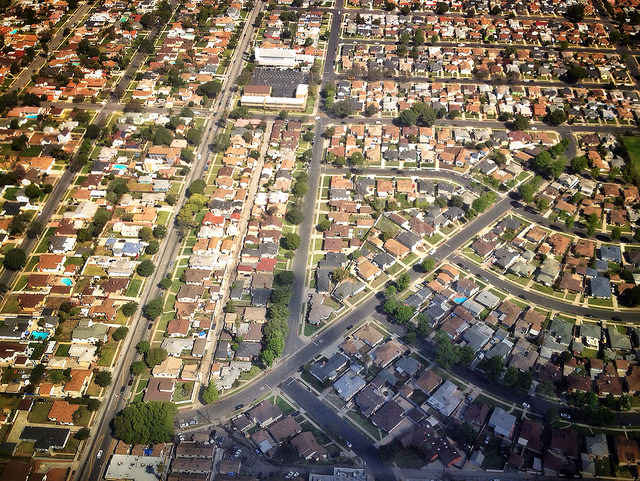
The housing market has been hot for a while. As the number of buyers outpaced the number of houses for sale, competition and prices rose. But just as competition helps push prices higher, higher prices help motivate homeowners to sell. Which is where we are today. Americans feel now is a good time to sell a house and, as more homeowners decide to list theirs, prices and competition will begin to slow down. That should start making conditions more favorable for buyers. But when will the seller’s market become more buyer friendly? Well, that depends on a number of factors. One new survey shows the tide may have already started to turn. That’s because survey results show 75 percent of Americans feel their local housing market is “cooling off†and an almost equal number report competition easing. Which means, the number of buyers and the number of available homes has become more balanced, which is good news for home buyers looking to make a move in the coming months. More here.

Aerial view of a dense urban neighborhood with a mix of residential and commercial buildings.

Number Of Equity Rich Properties Hits New High

Homeownership isn’t a get rich quick scheme. So you shouldn’t buy a house expecting its value to skyrocket and your wealth to instantly rise. The housing market will have its ups-and-downs and there are no guarantees. Which means, you probably shouldn’t buy a house hoping it’ll make you rich. And while that’s generally good advice, it doesn’t mean owning a home won’t benefit your bottom line. For example, according to ATTOM Data Solutions’ Q3 2018 U.S. Home Equity & Underwater Report, there are now nearly 14.5 million equity rich properties across the country. Equity rich refers to when the amount owed on the mortgage is less than 50 percent of a property’s market value. And the new numbers are not only good news, they represent a new high and an increase of 433,000 from one year ago. Daren Blomquist, senior vice president of ATTOM, says part of the improvement is the fact that people are staying in their homes longer. “As homeowners stay put longer, they continue to build more equity in their homes despite the recent slowing in rates of home appreciation,” Blomquist said. In other words, the longer you stay in a house, the more likely you’ll see a return on your investment. More here.


Financial Confidence Fuels Home Buying Interest


How much money you spend is dependent on how much money you have. This is a simple equation and one that explains the current housing market. That’s because, though home prices and mortgage rates have gone up recently, home buyer demand remains high. And the most likely explanation for this is that the economy is stronger and people feel more secure financially. In short, they have more money so they’re able to afford more. Take Fannie Mae’s most recent Home Purchase Sentiment Index. The survey asks Americans for their perception of the current housing market, prices, rates, the economy, etc. According to the most recent results, 30 percent of Americans who say it’s a good time to buy a house cited favorable economic conditions as the reason they felt like the time was right. This is a good indication that financial confidence is helping to fuel interest in buying a home. However, though the economy may be helping keep buyers interested, affordability conditions are having an effect. In fact, the overall index fell 2 points from the month before with five of the six components seeing declines. More here.

Close-up of U.S. $100 bills with visible security features.

Good News On Jobs Leads To Rate Increase

According to the Mortgage Bankers Association’s Weekly Applications Survey, average mortgage rates were up last week from one week earlier. The increase is a continuation of a recent trend upward that has been propelled by improved economic conditions. As the economy has grown stronger, interest rates have grown along with it. Joel Kan, MBA’s associate vice president of economic and industry forecasts, told CNBC last week’s increase was due, in part, to newly released employment numbers. “Rates increased slightly last week, as various job market indicators showed a bounce back in job gains and an acceleration in wage growth in October,” Kan said. Naturally, increasing rates have had an effect on mortgage demand and last week was no different. The number of requests for loans to buy homes fell 5 percent from the week before. But despite the drop, purchase application demand remains virtually unchanged from where it was at the same time last year, when rates were lower. This is an indication that there is still a high level of demand from home buyers. The MBA’s weekly survey has been conducted since 1990 and covers 75 percent of all retail residential mortgage applications. More here.



Thank you for your upload