

Banner
Menu

Category: Uncategorized

New Home Sales Continue To Improve


New numbers from the U.S. Census Bureau and the Department of Housing and Urban Development show new home sales rose again in February, increasing 1.1 percent from the month before. The improvement was the third consecutive monthly gain and could be a sign that buyer demand is beginning to climb as the spring season approaches. However, the gains could also be due to mortgage rates, which declined in January and February after peaking at the end of last year. The new home market is also likely benefitting from the lack of existing homes available for sale. The inventory of previously owned homes remains lower than normal and could be pushing home shoppers to look at newly built options. Those shoppers need to be prepared, though. New homes are generally more expensive than existing homes. And, according to the report, they’ve gotten even more expensive, with the median price of new homes sold in February reaching $438,000, up from $427,500 the month before. (source)
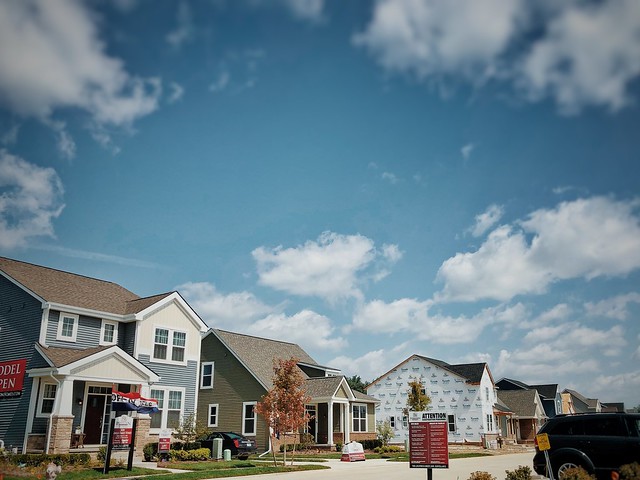

A suburban neighborhood with colorful houses under a partly cloudy sky.

Spring Housing Market Could Be Competitive


February definitely isn’t spring, but it is the month when the spring housing market begins to ramp up. So what does February’s data tell us about what to expect this spring season? Well, according to one newly released report, the early numbers show home sellers are off to a slow start and it could lead to a competitive spring. The number of homes for sale – though up 17 percent from its bottom last winter – is still well below pre-pandemic norms. Also, new listings are 22 percent lower than last year at the same time. That means, while there has been some improvement in the overall number of homes for sale, buyers should still expect there to be competition for good homes that are priced correctly. Put simply, attractive homes will sell quickly. In February, for example, the median number of days homes for sale went under contract was 17. That’s not as fast as it was last year or the year before, but it’s still fast enough that spring buyers should be prepared, pre-approved, and ready to move when they find a house that fits their needs. (source)

Bright yellow daffodils blooming against a textured wall.

Mortgage Rates Fall To Lowest Level In A Month


According to the Mortgage Bankers Association’s Weekly Applications Survey, average mortgage rates fell last week from one week earlier. Rates were down across all loan categories, including 30-year fixed-rate loans with both conforming and jumbo balances, loans backed by the Federal Housing Administration, 15-year fixed-rate loans, and 5/1 ARMs. Joel Kan, MBA’s vice president and deputy chief economist, says the decline was due to concerns about the banking sector. “Treasury yields declined last week, driven by uncertainty over the health of the banking sector and worries about the broader impact on the economy,†Kan said. “Mortgage rates declined for the second week in a row, with the 30-year fixed rate dropping to .. the lowest level in a month.†The drop led to an increase in demand for mortgage applications, with both refinance and purchase loan activity up from the week before. The MBA’s weekly survey has been conducted since 1990 and covers 75 percent of all retail residential mortgage applications. (source)

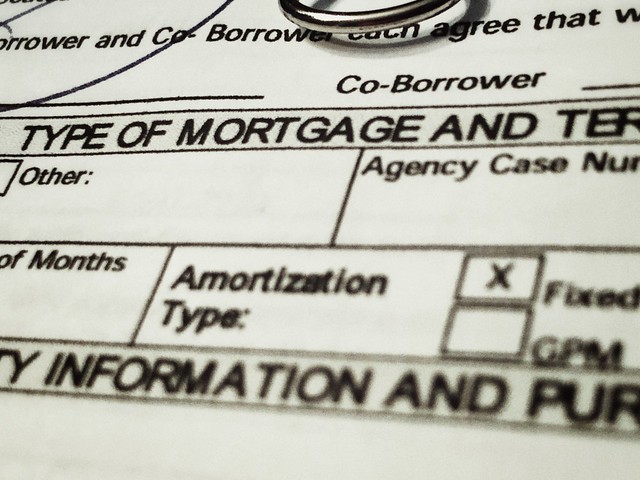
Close-up of a mortgage application form with typed text and checkboxes.

Sales See Biggest Monthly Increase Since 2020


Sales of previously owned homes surged 14.5 percent in February, according to newly released numbers from the National Association of Realtors. It was the first improvement in 12 months and the largest month-over-month gain since July 2020. Lawrence Yun, NAR’s chief economist, says buyers capitalized where affordability conditions improved. “Conscious of changing mortgage rates, home buyers are taking advantage of any rate declines,†Yun said. “Moreover, we’re seeing stronger sales gains in areas where home prices are decreasing and the local economies are adding jobs.†Sales were up most in the West and South, though the Midwest also saw double-digit increases in February. Still, despite the gains, sales of existing homes remain lower than last year, with overall numbers down 22.6 percent year-over-year. Also in the report, the number of existing homes available for sale remains low. At the current sales pace, there is only a 2.6-month supply of homes for sale. A 6-month supply is considered a healthy market. (source)

Red arrow sign indicating a home for sale.

Are Housing Starts A Sign Of Better Days Ahead?


It isn’t always easy to gauge where the housing market is headed – especially in times of transition. So it’s not surprising that some potential home buyers are feeling uncertain after last year’s market volatility. Fortunately, though, if you’re wondering where things will head from here, there are places to look for hints. One good gauge is home builders. If home builders are building homes, it’s because they believe they can sell them. Which means, it’s an encouraging sign when builders are active and optimistic about the market. Recently, the National Association of Home Builders’ measure of builder confidence increased for the third straight month. That’s one indication that builders are feeling more optimistic. Another can be found in new numbers released by the U.S. Census Bureau and the Department of Housing and Urban Development. The data shows housing starts, building permits, and housing completions all rose in February. Each saw a significant increase month over month, with permits to build new single-family homes up 7.6 percent from the month before. That’s a good sign that home builders are feeling better about the market, which is a good sign for potential buyers. (source)

A beige house with a brown roof under a clear blue sky.

When Is The Best Time To Sell A House?


Getting ready to sell a home can be a lot of work. Depending on the condition of the house, there may be a need for some repairs, touchups, and upgrades before it hits the market. Which is to say, selling a house requires a plan. It’s not something you do on a whim. However, for those of you who have been planning to sell your house this spring and are wondering when exactly you should list it, a new report from the National Association of Realtors’ consumer website has your answer. According to their analysis, the week of April 16-22 is the best time this spring to sell a home. Why? The combination of high buyer demand, fewer homes for sale, higher prices, and faster sales is best in early spring. Danielle Hale, chief economist for the website, explains. “Many home shoppers kick off their search in the early spring and they often beat the majority of home sellers to the punch,†Hale said. “For this reason, sellers who list on the earlier side will get more buyer attention and therefore be more likely to sell quickly and for a higher price.†(source)

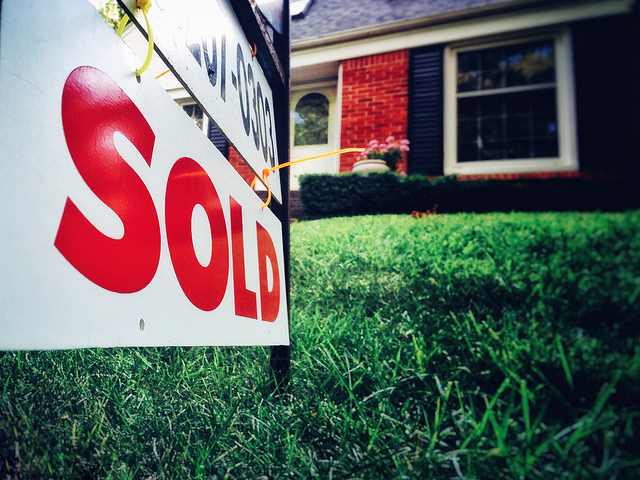
A sold sign on a lawn in front of a house.

Low Inventory Pushes Demand For New Homes


When there are too few homes for sale, the new home market can help fill the gap and give buyers more options. That’s certainly the case today, as the available inventory of existing homes for sale remains low. Which means, buyers who haven’t had success finding a previously owned home may consider buying new. And, according to the latest Housing Market Index from the National Association of Home Builders, that has home builders feeling more optimistic. “Even as builders continue to deal with stubbornly high construction costs and material supply chain disruptions, they continue to report strong pent-up demand as buyers are waiting for interest rates to drop and turning more to the new home market due to a shortage of existing inventory,†Alicia Huey, NAHB’s chairman, says. The NAHB’s index – which surveys home builders and scores their answers on a scale where any number above 50 indicates more builders see conditions as good than poor – found builder optimism up for the third consecutive month in March – though still low overall at 44. (source)

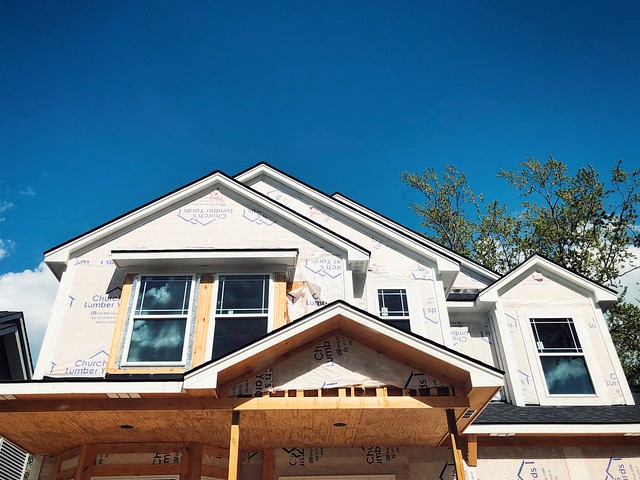
Newly constructed white house under clear blue sky.

Mortgage Rate Decline First In Weeks

According to the Mortgage Bankers Association’s Weekly Applications Survey, average mortgage rates fell last week from the week before. Rates were down for 30-year fixed-rate loans with both conforming and jumbo balances, 15-year fixed-rate loans, and 5/1 ARMs. Interest rates for loans backed by the Federal Housing Administration saw a small increase. Joel Kan, MBA’s vice president and deputy chief economist, says demand for loans to buy homes rose as a result. “Home-purchase applications increased for the second straight week but remained almost 40 percent below last year’s pace,” Kan said. “While lower rates should buoy housing demand, the financial market volatility may cause buyers to pause their decisions.” Market concerns over recent bank closures were partly responsible for rates falling last week. Whether it’ll slow buyer demand remains to be seen, but last week buyers pushed demand for home purchase loans up 7 percent from the week before. The MBA’s weekly survey has been conducted since 1990 and covers 75 percent of all retail residential mortgage applications. (source)

Arrow-Down-10

Where Are The Most New Homes Being Built?


You can tell a lot about where Americans want to live by paying attention to where home builders are building the most homes. Builders respond to buyer demand – so if residential construction is rising in any particular area, the number of interested buyers is also likely increasing. That’s why the National Association of Home Builders’ Home Building Geography Index tracks building conditions and permits in various markets across the country. The data can be a good gauge of where Americans – and current housing trends – are moving. According to the most recent release, which covers the fourth quarter of 2022, home building slowed pretty much everywhere at the end of last year, but the index did find one area growing while others fell. Compared to pre-pandemic levels, rural markets showed growth while more densely populated areas in the core counties of large and small metro areas saw declines. In other words, there’s been a clear shift in buyer preferences toward more spacious, less populated areas further from city centers. (source)

A rusty claw hammer with a wooden handle.

Number of Million Dollar Cities Falls From Peak


A million dollar city – as defined by a recent analysis of home values – is any area where the typical home is worth $1 million or more. Last year, the number of million dollar cities hit a record high, reaching 522 in July when the housing market peaked. In subsequent months, though, the market has slowed and the number of million dollar cities has fallen. In fact, the most recent numbers show there are 58 fewer million dollar cities than there were last summer. Currently, there are 464 million dollar cities, with 190 of them in California alone. The drop is due largely to the fact that high-end housing markets have seen bigger price cuts than more affordable areas. In million dollar cities, for example, the typical home’s value has fallen 6.3 percent, equaling an average loss of $114,500. But while that means home sellers may not get as much for their homes as they would’ve had they sold earlier, qualified buyers looking for a house to buy in these areas may see it as an opportunity. (source)

A green house token on stacked coins on a Monopoly board near Luxury Tax.

Thank you for your upload