

Banner
Menu

Category: Uncategorized

Most Movers Prefer To Stay Closer To Home


The thought of moving to a far-off destination can be tempting. But while the fantasy of moving somewhere new is exciting, the reality is most of us prefer to stay closer to home. There are many reasons for this, some of which are obvious like family, friends, and work. Having connections to a place – not to mention the expensive of a long-distance move – keeps the vast majority of American movers close to where they already call home. In fact, according to one recent analysis, 83 percent of recent movers looked to stay in the state where they lived. That’s a little bit lower than it was a few years ago, when it was close to 85 percent. Still, it’s pretty solid evidence that, though we may dream of packing up and hitting the road, most home buyers are looking for a house somewhere close to home. Among states, the two with the highest percentage of in-state movers were Michigan and Texas. The states with the highest percentage of movers who were looking to leave were New York and Hawaii. (source)


Close-up of California on a detailed road map showing cities and highways.

Demand For Home Purchase Loans Increases


According to the Mortgage Bankers Association’s Weekly Applications Survey, demand for loans to buy homes increased last week for the first time in more than a month. The improvement was slight and, when combined with a 4 percent drop in refinance activity, meant the MBA’s Market Composite Index – which measures overall mortgage demand – was virtually unchanged from the previous week. Joel Kan, MBA’s vice president and deputy chief economist, says demand remains low. “Purchase applications increased for the first time after six weeks of declines but remained close to 2015 lows, as home buyers remained sidelined by higher rates and ongoing economic uncertainty,†Kan said. “Refinances continued to fall, with the index hitting its lowest level since August 2000.†That demand has slowed isn’t surprising, especially since mortgage rates continue to climb. Last week, rates were up across most loan categories, including 30-year fixed-rate loans with conforming balances, loans backed by the Federal Housing Administration, 15-year fixed-rate loans, and 5/1 ARMs. The MBA’s weekly survey has been conducted since 1990 and covers 75 percent of all retail residential mortgage applications. (source)

A close-up of a metallic button with a white right arrow on a black background.

What Are Home Buyers’ Biggest Misconceptions?


Home buyers are more likely to be focused on their budget, the latest listings, and the details of their upcoming move than they are the ups-and-downs of the housing market. Because of this, prospective buyers sometimes have misconceptions about what’s happening in the market and what’s likely to happen in the weeks and months ahead. So what are the biggest misconceptions today’s buyers have about the market? Well, according to one recent survey of real-estate agents, many of today’s aspiring buyers mistakenly believe home prices are about to suffer a significant decline. In a slowing market, it’s a legitimate concern. However, it’s unlikely since there continues to be a lack of available homes for sale and that lack of supply will still be putting upward pressure on home prices for the foreseeable future. The other common misconception, according to surveyed agents, is that it’s better to wait for mortgage rates to fall before buying. Right now, though, buyers have more options and more negotiating power. If rates were to fall, other sidelined buyers would return, resulting in a market with more competition, quicker sales, and more bidding wars. (source)

Blue house roof with window and bright sky.

Survey Asks Americans About The Housing Market


Each month, Fannie Mae surveys Americans about their perceptions of the housing market, whether it’s a good time to buy or sell a home, their job, income, and expectations for home prices and mortgage rates. The results form its Home Purchase Sentiment Index, which has been tracking how we feel about the housing market and economy since 2011. According to the most recent results, Americans are feeling less confident these days. In fact, October’s survey found a declining number of participants who say now is a good time to buy or sell a home. Doug Duncan, Fannie Mae’s senior vice president and chief economist, says the survey is an indication that consumers are feeling pessimistic. “Consumers are feeling increasingly pessimistic about both home buying and home selling conditions,†Duncan said. “Amid persistently high home prices and unfavorable mortgage rates, the ‘bad time to buy’ component increased to a new survey high this month, while the ‘good time to sell’ component continued its downward trend.†(source)

House with autumn foliage and a partly cloudy sky.

Share Of Homes With Price Reduction Rises


Higher mortgage rates have home buyers feeling more hesitant. But if you’re a buyer who’s concerned about declining affordability conditions, there may be some encouraging news in a recent release from the National Association of Realtors’ consumer website. The data shows a rising number of homes for sale have had a price reduction. In fact, the share of homes with price reductions was up 10.3 percent to 20.9 percent in October. For comparison, price reductions were at 17 percent in 2019 and 21.2 percent in 2018. In other words, the current number is fairly normal and in line with pre-pandemic levels, but certainly higher than it was the past two years when home prices were skyrocketing. Regionally, price reductions were most common in the West and South, with Phoenix, Austin, and Las Vegas leading the list of metros with the highest share of price cuts. But while the number of price reductions has grown significantly, prices remain high. In October, the median listing price was $425,000. (source)

A large suburban house under a clear blue sky.

Rate Drop First In More Than Two Months

According to the Mortgage Bankers Association’s Weekly Applications Survey, average mortgage rates were mostly down last week. Rates for 30-year fixed-rate loans with conforming loan balances, loans backed by the Federal Housing Administration, 15-year fixed-rate loans, and 5/1 ARMs all fell from the week before. It was the first time mortgage rates decreased in more than two months. Joel Kan, MBA’s vice president and deputy chief economist, says higher rates have been holding back demand. “These elevated rates continue to put pressure on both purchase and refinance activity and have added to the ongoing affordability challenges impacting the broader housing market, as seen in the deteriorating trends in housing starts and home sales,” Kan said. Last week, though, demand was relatively flat from one week earlier, with overall mortgage application demand 0.5 lower week-over-week. The MBA’s weekly survey has been conducted since 1990 and covers 75 percent of all retail residential mortgage applications. (source)

Percentage 3

Is A Buyers’ Market Just Around The Corner?


The past few years have favored home sellers. Fewer homes available for sale pushed competition between buyers and drove home prices higher. It was clearly a sellers’ market. It still is. In fact, according to one recent analysis, the majority of markets continue to favor sellers, with 51 of the country’s largest 100 housing markets remaining sellers’ markets. Among them, smaller metros were more likely to favor sellers than areas with populations more than 1 million people. But with affordability conditions in flux and buyer demand slowing nationwide, is a change on the way? Possibly. In just the past few months, the number of sellers’ markets has fallen from 83 in August to 51 today. It’s expected to fall further in 2023. By next September, of the same 100 markets, 27 are expected to favor buyers, 30 will be neutral, and 43 will be sellers’ markets. In other words, home buyers may soon find themselves in better position than they’ve been in years. (source)

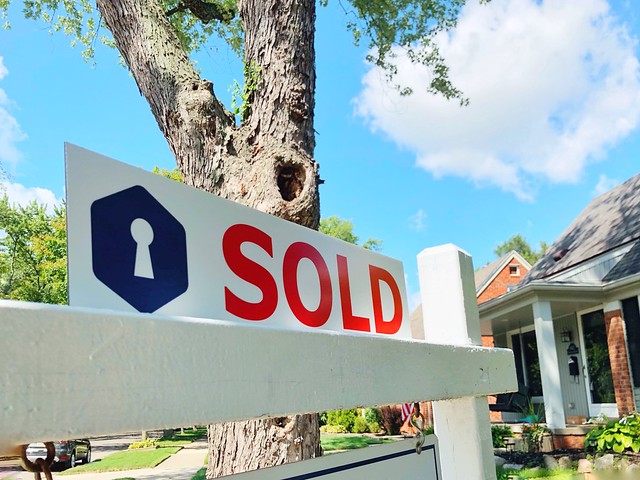
A sold sign is displayed on a white fence with a tree and blue sky in the background.

Age Of Inventory Rises 45% From Last Year


Homes that sell are still selling quickly. The typical home that went pending in September found a buyer in just 19 days. But when you look at the inventory of homes for sale – including those that haven’t yet found a buyer – the number of days on market is a bit higher. In fact, it’s currently closer to 54 days, which is a 45 percent increase from last year at this time. Why does this matter? Well, because it indicates that homes for sale are beginning to linger on the market a little longer. That’s good for buyers, who will have more time to make buying decisions. It may also mean home sellers have to do more to attract buyers than they did last year at this time. But while homes for sale may be on the market longer than they’ve been in the recent past, they’re still selling much faster than they did pre-pandemic. For example, in 2018 and 2019, for-sale homes were typically on the market for 100 days, roughly twice as long as they are today. (source)

Tall trees frame a brick building under a blue sky with scattered clouds.

Median Mortgage Payment Up In September


The Mortgage Bankers Association’s Purchase Applications Payment Index measures the national median payment applied for by prospective home buyers. In September, the median payment increased from August, rising to $1,941 from $1,839. The increase follows four straight months of declines from the index’s peak in May. Edward Seiler, MBA’s associate vice president of housing economics, says challenging affordability conditions have led borrowers to seek smaller loans. “With mortgage rates continuing to rise, the purchasing power of borrowers is shrinking,†Seiler said. “The median loan amount in September was $305,550 – much lower than the February peak of $340,000.†The index found payments up across all loan categories, with lower-payment mortgages seeing an increase from $1,210 in August to $1,271 in September. Loans backed by the Federal Housing Administration rose to $1,566. Regionally, mortgage payments were highest in Nevada, Idaho, Arizona, Utah, and Florida. (source)

Close-up of several silver coins scattered on a white surface.

How Many Showings Does The Typical Listing Have?


Home showings are a good indicator to watch, if you want to get a feel for what’s happening in the housing market. After all, what better way is there to gauge how much interest home sellers can expect when they list their home or how much competition buyers will face from other buyers? Knowing the number of home showings the average home for sale garners can tell you a lot about the current market. So how many showings does the typical listed home host? Well, according to one recent analysis, a majority of listings averaged between four and nine showings in September. That’s down from double-digit showings during the peak of last year’s market, but still a solid number. Fewer markets saw a rising number of showings month-over-month, though – indicating demand has slowed as affordability challenges have increased. That means the housing market is less competitive these days, offering today’s home shoppers more time to make decisions and more available options to consider. (source)

A bright red and white house for sale sign outdoors.

Thank you for your upload