

Banner
Menu

Category: Uncategorized

Average Mortgage Rates Fall From Previous Week

According to the Mortgage Bankers Association’s Weekly Application Survey, average mortgage rates fell last week. Rates were down from one week earlier across all loan categories, including 30-year fixed-rate loans with both conforming and jumbo balances, loans backed by the Federal Housing Administration, and 15-year fixed-rate loans. But despite the decline, demand for mortgage applications also fell, with both refinance and purchase activity slowing from the week before. Joel Kan, MBA’s associate vice president of economic and industry forecasting, says affordability conditions may be to blame. “Prospective home buyers have been put off by the higher rates and worsening affordability conditions,” Kan said. “Furthermore, general uncertainty about the near-term economic outlook, as well as recent stock market volatility, may be causing some households to delay their home search.” The drop in mortgage applications was the first in three weeks. Conducted since 1990, the MBA’s weekly survey covers 75 percent of all retail residential mortgage applications. (source)

Arrow-Down

Home Builders React To Growing Challenges

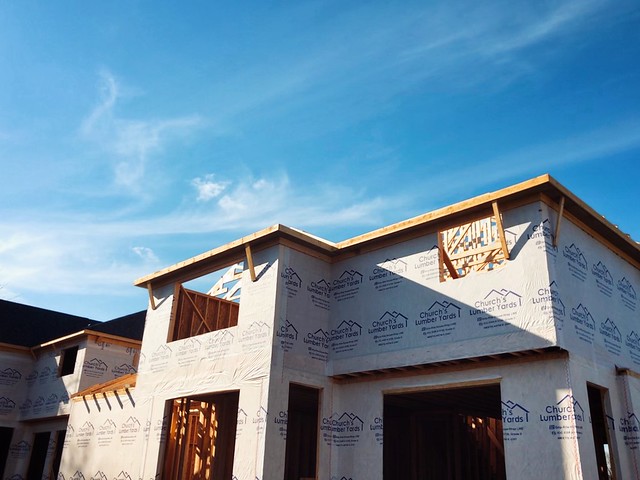
Home builders are a reliable barometer of housing market health, since their business depends on being able to anticipate buyers’ needs. That’s why the National Association of Home Builders’ monthly Housing Market Index – which measures builder confidence – is a closely watched industry metric. The index is scored on a scale where any number above 50 indicates more builders view conditions as good than poor. In May, the index fell for the fifth straight month, dropping to 69. Though still a positive result, it’s an indication that builders are starting to feel the effects of numerous challenges facing the market, including higher mortgage rates. “The housing market is facing growing challenges,” Robert Dietz, NAHB’s chief economist, said. “Building material costs are up 19 percent from a year ago, in less than three months mortgage rates have surged to a 12-year high and based on current affordability conditions, less than 50 percent of new and existing home sales are affordable for a typical family.” But while the market has become more challenging, all three index components remain in positive territory, including the gauge of current sales conditions which scored a 78 in May. (source)

Construction

Mortgage Credit Tightens For Gov’t Loans

The standards lenders use to determine whether or not a borrower is approved for a loan aren’t fixed. That means there are times when it’s easier to get a mortgage and times when it’s more difficult. Because of this, the Mortgage Bankers Association tracks mortgage credit availability from month to month. An increase in the MBA’s index indicates that standards are loosening, while a decline means they’ve tightened. According to the most recent results, mortgage credit availability tightened in April. Joel Kan, MBA’s associate vice president of economic and industry forecasting, says the decline was mostly due to changes in refinance activity. “With the rate/term refinance business drying up, lenders have reduced the availability of government streamline refinancing programs, which are no longer as relevant of an option for many borrowers,” Kan said. This led to a 6.5 percent decline in the component measuring credit availability for government loans. Components measuring conventional loans, on the other hand, rose slightly from the month before. (source)

House

Affordability Improves Due To Income Gains


Whether or not buying a home is considered affordable depends on a number of factors. Home prices, mortgage rates, and income all play a role. That’s why, despite mortgage rate increases during the first quarter of the year, the share of homes considered affordable actually rose from the previous quarter. How’s that possible? Well, a closer look at the numbers shows it’s mostly due to Americans making more money. According to the National Association of Home Builders’ Housing Opportunity Index, 56.9 percent of new and existing homes sold between January and the end of March were considered affordable to families earning the U.S. median income of $90,000. That’s about $10,000 more than Americans were making one year earlier. Naturally, that made buying a home a little easier. But Jerry Konter, NAHB’s chairman, cautions that, with costs continuing to rise, affordability gains aren’t likely to continue. “The first quarter reading is a backward gauge, as surging interest rates, ongoing building material supply chain constraints and labor shortages continue to raise construction costs and put upward pressure on home prices,†Konter said. (source)

Stack of US $50 bills featuring Ulysses S. Grant.

Share Of Equity Rich Homes Continues To Climb


One of the primary benefits of owning a home is equity. Put simply, equity is the difference between what you owe on your mortgage and what your home is worth. Which means, you build it as you pay down your loan each month. It also grows when your home’s value increases. It’s homeownership’s main financial benefit and, these days, homeowners have more of it than ever. In fact, according to ATTOM Data Solutions’ most recent U.S. Home Equity & Underwater Report, nearly half of all mortgaged residential properties are now considered equity rich – meaning the combined amount of loan balances secured by those properties is no more than 50 percent of their value. Rick Sharga, ATTOM’s executive vice president of market intelligence, says equity is at record levels. “Homeowners continue to benefit from rising home prices,†Sharga says. “Record levels of home equity provide financial security for millions of families, and minimize the chance of another housing market crash like the one we saw in 2008.†The share of mortgaged homes considered equity rich was at 44.9 percent in the first quarter of 2022, that’s up from 31.9 percent one year earlier. (source)

A green house token on stacked coins on a Monopoly board near Luxury Tax.

Buyers Push Mortgage Applications Higher


According to the Mortgage Bankers Association’s Weekly Applications Survey, average mortgage rates increased again last week, with rates up from one week earlier for 30-year fixed-rate loans with both conforming and jumbo balances, loans backed by the Federal Housing Administration, and 15-year fixed-rate loans. Despite the increase, though, home buyers remained active. In fact, demand for loans to buy homes was up 5 percent from the week before. Joel Kan, MBA’s associate vice president of economic and industry forecasting, says it looks like spring buyers aren’t deterred by higher rates. “Despite a slow start to this year’s spring home buying season, prospective buyers are showing some resiliency to higher rates,†Kan said. “Purchase activity has now increased for two straight weeks.†Demand for home purchase loans is now 8 percent below where it was last year at the same time. The MBA’s weekly survey has been conducted since 1990 and covers 75 percent of all retail residential mortgage applications. (source)

Bright orange directional arrow painted on pavement.

Are Active Listings Ready To Rebound?

The lack of available homes for sale has been an issue for years now. It’s pushed prices higher and led to a fast-moving market, where attractive listings only last a few days before they’ve collected multiple offers from competing buyers. Put simply, it’s been challenging for home shoppers. But a new analysis from the National Association of Realtors’ consumer website offers some encouragement for buyers who may need the good news. The website’s most recent monthly Housing Trends Report found that the number of active listings in April posted the smallest year-over-year decline since December 2019. Of course, that means inventory is still down from one year ago. But the 12.2 percent drop from last April is a big improvement over the month before, when the decline was nearly 19 percent. Danielle Hale, chief economist for the website, says the trend is positive. “April data suggests a positive turn of events is on the horizon for weary buyers: If the trends we’re seeing now hold true, we could potentially see year-over-year inventory growth within the next few weeks,” Hale said. That’s great news for prospective buyers, as it would mean more choices, less competition, and slower price increases. (source)

Home Purchase Sentiment Down In April


Fannie Mae’s Home Purchase Sentiment Index is based on a monthly survey of Americans. The survey asks respondents whether they think now is a good time to buy or sell a home, where they think home prices and mortgage rates are headed, and how they feel about their financial situation and job prospects. According to the most recent results, rising mortgage rates have led to increased concern about housing affordability, which has caused a 5 percent drop in the number of participants who say they think now is a good time to buy. Doug Duncan, Fannie Mae’s senior vice president and chief economist, says younger respondents were most likely to express concern about market conditions. “The current lack of entry-level supply and the rapid uptick in mortgage rates appear to be adversely impacting potential first-time home buyers in particular, evidenced by the larger share of younger respondents (aged 18 to 34) reporting that it’s a ‘bad time to buy a home,’†Duncan said. But while respondents expressed concern about affordability, the share who felt home prices will rise over the next 12 months dropped and a majority of respondents said they feel secure in their jobs and income. (source)

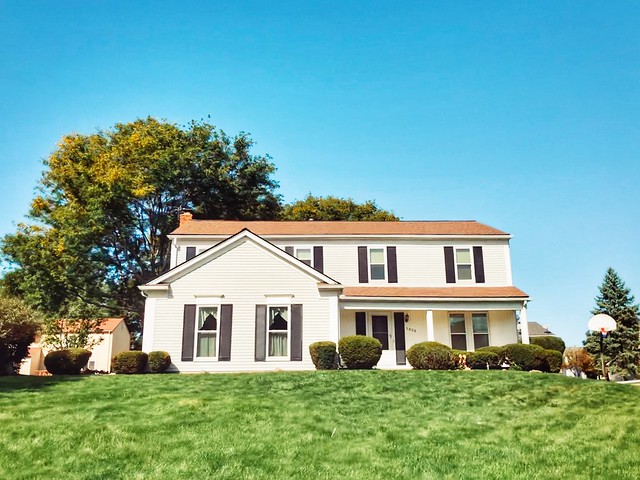
A two-story house with a spacious green lawn under a clear blue sky.

How Have Higher Rates Affected Monthly Payments?


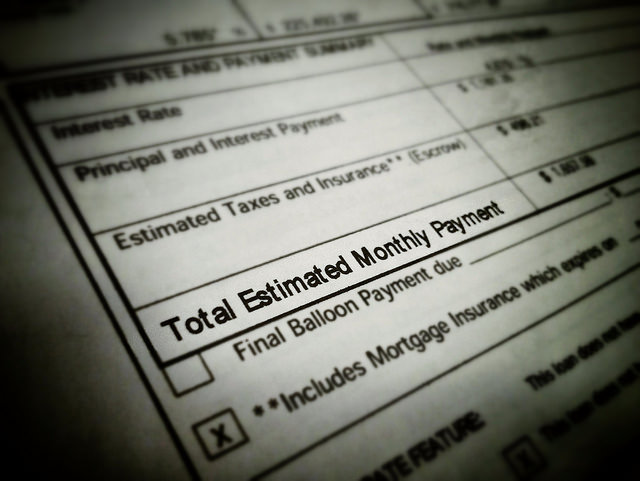
Mortgage rates have been moving higher in recent months. Which means, if you’re currently shopping for a home, your prospective monthly mortgage payment has too. But with rates moving quickly, it can be hard to keep up with what it means for your budget. So what should you know about recent mortgage rate increases and how they’ve affected monthly payments? Well, the Mortgage Bankers Association’s new Purchase Applications Payment Index tracks median mortgage payments and how they change from month to month. According to the index – which covers data through the end of March – the national median mortgage payment was $1,653 in February. In March, it moved up to $1,736. With rates up about a point over the same time period, that may be less than you expected. Of course, an extra $83 a month makes a difference, especially for first-time buyers. Fortunately, though, the increase was even less for buyers with smaller loans. In fact, the index found borrowers applying for lower-payment mortgages only saw a $35 increase month over month. (source)

Close-up of a mortgage loan document showing estimated monthly payment details.

Spring Offers Best Months To Sell A Home


If you have a home to sell and have been wondering about the best time to list it, ATTOM Data Solutions has your answer. Each year, they release an analysis of the best days of the year to sell a home. They compare home valuations with 11 years of sales data to determine the days when sellers got the best price for their house. According to this year’s analysis, there’s no better time than right now. In fact, the month of May ranks as the best month to sell a home, with a seller premium of 12.6 percent. The top five days of the year were all in May, with the 23rd topping the list as the single best day of the year to sell a house. Rick Sharga, ATTOM’s executive vice president of market intelligence, says the next couple of months offer sellers their best opportunity. “April showers may bring May flowers, but May brings home sellers the best opportunities to watch their profits grow,†Sharga said. “Homeowners looking to maximize the price premium they can claim on their homes should sell their properties in May, June, and July when buying activity is at its peak.†(source)

Cluster of vibrant pink flowers blooming among dry leaves.

Thank you for your upload