

Banner
Menu

Category: Uncategorized

Mortgage Rates Mostly Flat Last Week


According to the Mortgage Bankers Association’s Weekly Applications Survey, average mortgage rates were relatively flat last week after a long stretch of consecutive increases. In fact, rates even fell slightly for 30-year fixed rate loans with conforming loan balances and loans backed by the Federal Housing Administration. With rates calm for the first time in weeks, borrower demand for mortgage applications rose. Joel Kan, MBA’s associate vice president of economic and industry forecasting, says demand for loans to buy homes was up 4 percent week over week. “Purchase applications increased for conventional, FHA, and VA loans and were up 4 percent overall,†Kan said. “This is potentially a good sign for the spring home buying season, which has seen a slow start thus far.†Still, Kan cautions that the market remains challenging, with low inventory, rising prices, and increasing rates pushing monthly mortgage payments higher for spring buyers. The MBA’s weekly survey has been conducted since 1990 and covers 75 percent of all retail residential mortgage applications. (source)
Close-up of a printed percentage symbol on paper.

Typical Home Sale Generates More Than $100,000


A housing market with too few homes for sale can be frustrating for home buyers. For home sellers, though, it’s an opportunity. Evidence of this can be found in ATTOM Data Solutions most recent U.S. Home Sales report. The report covers the first quarter of 2022 and shows the typical single-family home sold at the beginning of the year generated a gross profit of $103,000. That’s up from $75,000 one year ago at the same time. Rick Sharga, ATTOM’s executive vice president of market intelligence, says though rapidly rising prices have pushed profits higher, they’re likely to slow down soon. “Home prices simply can’t continue to go up as rapidly as they have for the past few years …†Sharga said. “Ultimately, as affordability worsens, price appreciation should slow down, and we may even see modest price corrections in some markets.†It may have already started. ATTOM’s report found home seller profits actually fell from the previous quarter. In fact, during the fourth quarter of 2021, the typical home sale generated $107,000. (source)

A US one-dollar bill with three pennies lying on it.

New Home Sales Slide In March


The U.S. Census Bureau and Department of Housing and Urban Development’s most recent New Residential Sales report covers how many new homes were sold in March. According to the data, sales fell 8.6 percent from the month before and are now 12.6 percent lower than they were last year at the same time. New home sales are an important barometer of housing market health, since they are counted when the contract to buy is signed rather than when the sale is closed. Because of this, they offer an early glimpse of where the market may be headed. However, they’re also frequently revised. For example, while this month’s report shows a significant drop from February’s rate, February sales have been updated and now show more new homes sold than was previously reported. So what does this mean? It means sales activity most likely slowed in March but we shouldn’t read too much into the severity of the decline. (source)

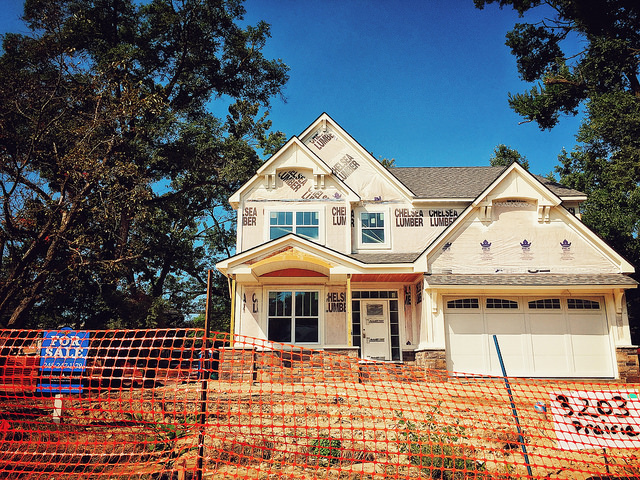
Newly constructed two-story house behind an orange safety fence.

How Quickly Are You Willing To Make An Offer?


There is an expectation that this year’s market won’t be quite as competitive as last year’s. In 2021, homes sold quickly, bidding wars were common, and buyers had to be prepared and decisive when they found a house that fit their needs. A significant share of homes sold were on the market for just weeks and, in some cases, only days before being swept up by an interested buyer. But while the housing market may not be as hot as last year, it will still be hot. In other words, home buyers should be ready to act fast, if they find a good house. But how fast are you willing to be? How long after seeing a house would you need to think it over before making an offer? One recent survey of prospective home buyers found two thirds of respondents willing to make an offer within three days of viewing a home. Some were willing to move even faster, with 20 percent saying they’d make an offer immediately. It’s a good question for potential buyers. How comfortable are you making an offer on a home without time to deliberate and debate its pros and cons? (source)

Close-up of a clock face focusing on the number 6 and minute hand.

Pending Sales Report Signals Calmer Market


There are two ways of looking at today’s housing market. On the one hand, buying conditions have gotten more challenging, as prices and mortgage rates have risen. On the other hand, the market looks like it’s starting to cool off, after an overheated year where the number of interested buyers far outpaced the supply of homes for sale. The National Association of Realtors most recent Pending Home Sales Index is evidence of this. The index shows the number of contracts to buy homes fell 1.2 percent in March, the fifth consecutive month of declining activity. Lawrence Yun, NAR’s chief economist, says declining buyer activity may help reduce competition and bidding wars, which would be welcome news for spring home shoppers. “The falling contract signings are implying that multiple offers will soon dissipate and be replaced by much calmer and normalized market conditions,†Yun said. A calmer market would also help slow the rate of price increases, which could offset some of the effects of rising mortgage rates.

A red and white pending sign in a suburban neighborhood.

Popularity Of Adjustable Rate Mortgages Rises


According to the Mortgage Bankers Association’s Weekly Applications Survey, average mortgage rates rose again last week, moving up from the week before across all loan categories, including 30-year fixed-rate loans with both conforming and jumbo balances, loans backed by the Federal Housing Administration, and 15-year fixed-rate loans. With rates continuing to rise, more borrowers are opting for adjustable rate mortgages. ARM loans typically offer a lower rate for a fixed period of time but then, after that initial period, adjust to the current market rate. Joel Kan, MBA’s associate vice president of economic and industry forecasting, says their popularity has doubled in recent weeks. “In a period of high home-price growth and rapidly increasing mortgage rates, borrowers continued to mitigate higher monthly payments by applying for ARM loans,†Kan said. “The ARM share of applications last week was over 9 percent by loan count … At 9 percent, the ARM share was double what it was three months ago.†The MBA’s weekly survey has been conducted since 1990 and covers 75 percent of all retail residential mortgage applications. (source)
Scrabble tiles forming the words 'LOAN' and 'LOANS' on a white background.

Are Home Price Increases About To Slow Down?


Home prices have spiked over the past year. The most recent S&P Case-Shiller Home Price indices, for example, shows, in the 12 months ending in February, prices rose at the third fastest pace in the 35 years they’ve been tracking them. S&P’s index – which is considered among the leading measures of U.S. home prices – found prices up in every region and at an accelerating pace from the previous month’s report. But while the data could seem discouraging for hopeful spring home shoppers, there may be good news on the horizon. According to Craig J. Lazzara, managing director at S&P, rapidly rising home prices may soon begin to slow. “The macroeconomic environment is evolving rapidly and may not support extraordinary home price growth for much longer,†Lazzara said. “The post-COVID resumption of general economic activity has stoked inflation, and the Federal Reserve has begun to increase interest rates in response. We may soon begin to see the impact of increasing mortgage rates on home prices.†(source)

Red dollar sign on white square paper.

Don’t Expect Higher Rates To Deter Buyers


The housing market hasn’t been easy on home buyers the past few years. Even before the pandemic, the inventory of homes for sale was lower than normal and pushing home prices higher. The coronavirus’ onset made those issues even more pronounced. But despite the challenging environment, home buyers have remained active. Demand for homes has been elevated the past two years regardless of buying conditions or world events. More often than not, industry experts pointed to low mortgage rates as the reason for this. Rates were lower than normal and motivating buyers to get into the market despite obvious challenges. So now that mortgage rates have begun rising, should we expect that buyers will retreat? Not exactly, according to one new report. While mortgage rates are higher than they’ve been in a while, home buyers are expected to remain active this year. In fact, the report forecasts little change in total home sales from 2021. That means, buyers should still be prepared for a competitive market, regardless of rates and prices. (source)

White house corner with tree against clear blue sky.

Rising Number Of Buyers Look To Move Metros


The number of home buyers looking to move to a new area continues to climb, according to a recently released report. The trend began when the pandemic first started early in 2020. The share of prospective home buyers thinking about moving metros grew as mitigation efforts changed the way we lived our day-to-day lives. Locations in the suburbs and exurbs saw an influx of interested buyers as remote work made the daily commute less of a factor in home buying decisions. Now, two years later, the share of relocating home buyers continues to grow. In fact, new numbers show that 32.3 percent of online home shoppers looked to move to a new city in the first quarter of this year. That’s up from 31.5 percent last year at the same time, and 26 percent in 2019. Of course, the option to work from home has something to do with it, but it’s not the only factor. Affordability also ranks high among the reasons buyers are weighing options farther from home. With prices and mortgage rates rising, more buyers are opting for areas where they can get more for their money. They’re also opting for sunshine, as the list of cities most popular with migrating buyers includes Miami, Phoenix, Tampa, Sacramento, and Las Vegas. (source)

Sunlit residential street with palm trees and parked cars.

Inventory Improves As Home Sales Slow

New numbers from the National Association of Realtors show sales of previously owned homes fell 2.7 percent in March, pushing sales 4.5 percent lower than they were last year at the same time. It was the second straight month home sales slowed. Lawrence Yun, NAR’s chief economist, says homes are still selling quickly despite the decline. “The housing market is starting to feel the impact of sharply rising mortgage rates and higher inflation taking a hit on purchasing power,” Yun said. “Still, homes are selling rapidly, and home price gains remain in the double-digits.” It’s true. While sales declined, listings continued to sell quickly. In March, for example, 87 percent of homes sold in less than a month. But while higher prices and fast sales continue to challenge home buyers, there are signs that a better balanced market is on the way. In fact, the number of homes for sale at the end of March was up nearly 12 percent from the month before, a sign that for-sale inventory is beginning to rebound. As more homes become available, prices will moderate and buyers will have more choices and encounter fewer bidding wars. (source)

For-Sale

Thank you for your upload