

Banner
Menu

Survey Finds Gen Z Most Ready To Buy


There are a nearly limitless number of reasons you might be thinking about making a move this year. Among that long list, though, age is probably the biggest factor motivating your move. After all, the younger you are, the more likely you are to be changing jobs, getting married, and starting a family – all things that rank high on the list of reasons someone would be looking to buy a home. When you’re older, you’re more likely to have already settled in somewhere and less likely to have a reason to move. Perhaps that explains a new survey of Americans that found the youngest respondents the most likely to say they’re looking to buy. According to the results, 67 percent of Gen Z respondents said they plan to purchase a home this year, compared to 51 percent of Millennials and 49 percent of Gen X participants. On the other end of the spectrum, Baby Boomers were the least likely to say they’re planning to buy at 22 percent. Overall, the survey found 47 respondents are planning to buy this year, with 41 percent saying they believe conditions are favorable for buyers this year. (source)

Close-up of a red 'For Sale' sign with realty company details.

What Makes A Real Estate Market Hot?


While you’ve undoubtedly heard talk about “hot†real-estate markets, you may not know what that exactly means. After all, is a market hot because it’s in a desirable location, because its conditions are ripe for buyers, or because competition is high and it’s good for sellers? Well, according to Danielle Hale, chief economist for the National Association of Realtors’ consumer website, hotness is a measure of supply versus demand. “Looking at markets by hotness tells us the strength of demand versus supply in each area relative to others and which markets heavily favor sellers,†Hale said. In other words, a hot market is one where homes sell quickly, list prices are climbing, and price reductions are falling. Hot markets generally see homes selling in fewer than the 66-day national average and garner between two and four times the number of viewers as homes in markets elsewhere. These days, the hottest markets are found in the Northeast and Midwest, where affordable prices and fewer available listings have raised the temperature heading into the spring season. (source)

Bright orange flames flickering against a dark background.

What Do Americans Think About Mortgage Rates?


For most of last year, there was an assumption that mortgage rates were about to fall. And they did, briefly. In late summer, average rates started to decrease and ended their slide in mid-September about a point lower than they were. But unfortunately for prospective home buyers and refi-ready homeowners, lower rates only lasted a week or two before they began climbing back up. Now, according to the latest results from Fannie Mae’s Home Purchase Sentiment Index, Americans have begun to look past an expected rate drop. In fact, the number of respondents who said they expect rates to fall over the next year slipped 5 percent from the month before, while the share who say rates will stay the same is up 3 percent. Mark Palim, Fannie Mae’s senior vice president and chief economist, says Americans are acclimating to elevated rates but it has affected home buying sentiment. “In February, the HPSI saw its first year-over-year decline in nearly two years, which was mostly due to a shrinking share of consumers expressing optimism about the direction of mortgage rates,†Palim said. (source)

Bright red building roof against a clear blue sky.

Median Mortgage Payment Up $71 Year-Over-Year


The typical monthly mortgage payment applied for by borrowers spiked in January. In fact, according to the Mortgage Bankers Association’s Purchase Applications Payment Index – which tracks payment amounts – the median payment rose to $2,205 from $2,127 the month before. But even after the month-over-month jump, the MBA’s index shows payments just $71 higher than last year at the same time. Edward Seiler, MBA’s associate vice president, housing economics, and executive director, Research Institute for Housing America, says the MBA expects improvement this year, despite affordability challenges. “Home buyer affordability conditions declined further in January as volatile mortgage rates and high home prices continue to impact many prospective buyers’ purchasing power,†Seiler said. “Even with persisting affordability challenges, MBA is forecasting a small increase in purchase originations in 2025, with activity increasing 16 percent to $2.1 trillion.†(source)

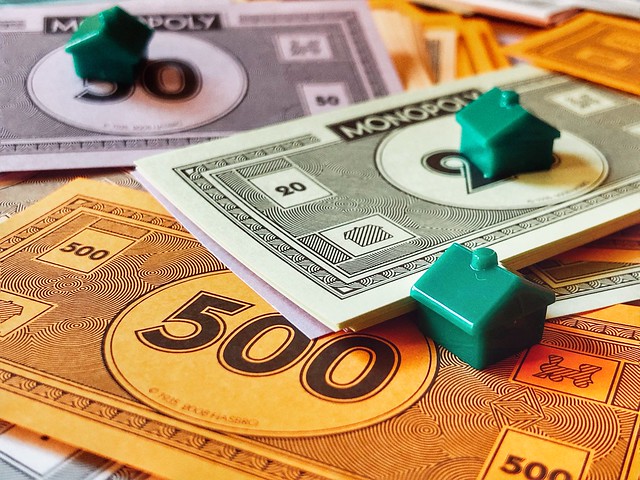
Monopoly game pieces on colorful property and money cards.

Mortgage Rates Fall To Lowest Level This Year

According to the Mortgage Bankers Association’s Weekly Applications Survey, average mortgage rates fell last week to the lowest level so far this year. Rates were down from one week earlier for 30-year fixed-rate loans with both conforming and jumbo balances, loans backed by the Federal Housing Administration, 15-year fixed-rate loans, and 5/1 ARMs. The improvement helped push demand for home purchase loans 9 percent higher week-over-week. It also drove up refinance activity, which spiked 37 percent higher than the week before. Joel Kan, MBA’s vice president and deputy chief economist, says economic uncertainty has caused rates to decline. “Mortgage rates declined last week on souring consumer sentiment regarding the economy and the increasing uncertainty over the impact of new tariffs levied on imported goods into the U.S.,” Kan said. “Those factors resulted in the largest weekly decline in the 30-year fixed rate since November 2024 … The rate is now at its lowest level since December 2024.” The MBA’s weekly survey has been conducted since 1990 and covers 75 percent of all retail residential mortgage applications. (source)
Arrow-Down-10

Housing Market Headed Toward Better Balance


Housing market conditions are largely determined by the balance of homes for sale and interested home buyers. When demand for homes outpaces the supply of homes, prices and competition increase. That’s been the story in recent years, as inventory hit historic lows while buyer demand soared. But, according to a new analysis from the National Association of Realtors’ consumer website, the dynamic may be changing, and it could benefit buyers. Danielle Hale, the website’s chief economist, says a combination of newly listed homes and home seller price cuts may be a sign. “While rates remain elevated, we are beginning to see green shoots in the market as sellers grow tired of waiting for significant changes in interest and mortgage rates,†Hale said. “If these trends continue for the next few months, we could see a market that is entering into more balanced terrain, with rising inventory and a potential future slowdown in price growth. While the market does not look like it did before the pandemic, we are moving away from the ultrahigh demand, low inventory period we saw in 2021 and 2022.†(source)

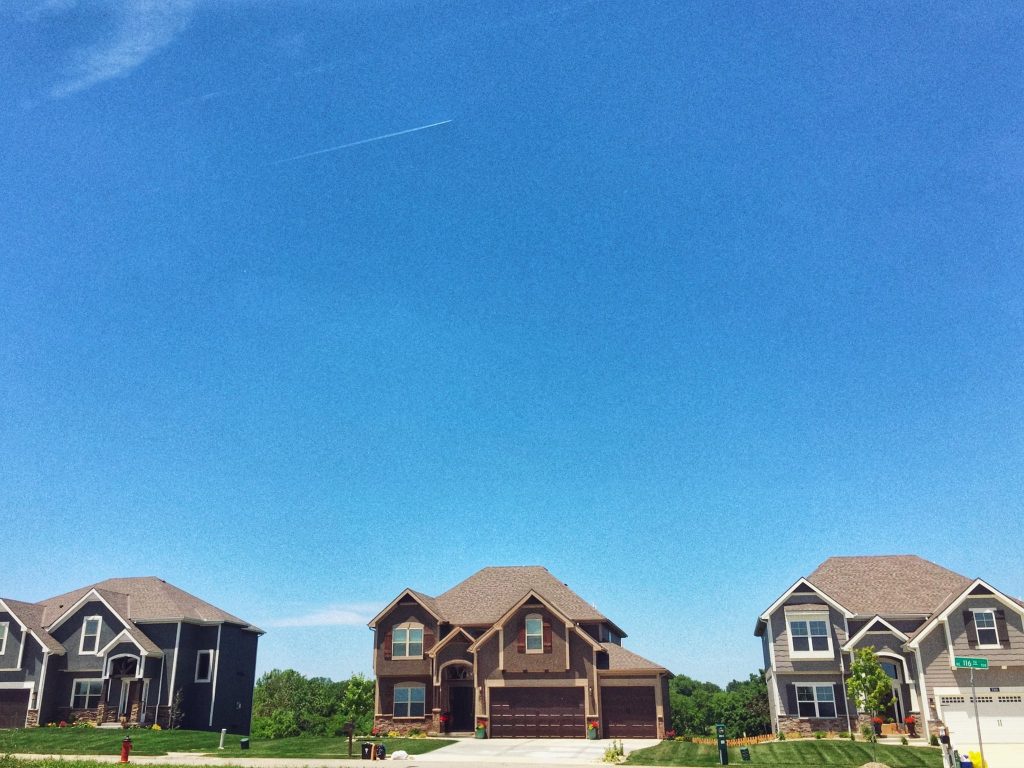
Three wooden houses under a clear blue sky on a sunny day.

How Much House Can You Buy For $1 Million?


The housing market has been through some changes over the past five years. For one, home values have risen 45.3 percent since February 2020. That’s more than 10 years of typical price growth in half the time. Naturally, that’s had big impact on how much house you can buy for your money. Even $1 million doesn’t go as far as it did only a few years ago. So what can you buy for $1 million today? Well, one new analysis looked at the data. It found the typical million-dollar home is about 70 square feet smaller than it was in 2020. They still have four bedrooms and three baths but, at 2,388 square feet, million-dollar homes are smaller. In some locations, significantly so. For example, in Indianapolis, Hartford, and Nashville, the typical million-dollar house is more than 1,000 square feet smaller than it was just five years ago. But while the houses have gotten smaller, the number of them has grown. There are now 989,000 more homes worth $1 million or more than there were before the pandemic. (source)

Close-up of scattered twenty-dollar bills.

Home Price Increases Slow But Still Climbing


During their pandemic-era peak in 2021, home prices were up 18.9 percent year-over-year at one point. Fortunately, for prospective home buyers, those days are over. Home prices these days are increasing at a much slower pace. But while they aren’t rising as fast as they were a few years ago, they are still climbing. In fact, according to the latest results from the S&P Case-Shiller Home Price Index, national home prices ticked up at the end of last year, posting a 3.9 percent annual gain in December after recording a 3.7 percent increase the previous month. That’s below-trend growth when compared to the more than 30-year history of the index but it’s still growth. Brian D. Luke, CFA, head of commodities, real & digital assets at S&P Dow Jones Indices, says today’s homeowners have done well. “Through this recent market cycle, the ability of Americans to grow wealth by participating in the upside of the U.S. housing market, particularly if done through a leveraged position by securing a mortgage, has proven to be historically beneficial,†Luke said. (source)

Close-up of a green dollar sign painted on a white wall.

What’s Behind The Decline In New Home Sales?


Sales of newly built single-family homes tumbled in January, falling 10.5 percent from the month before, according to new numbers from the U.S. Census Bureau and the Department of Housing and Urban Development. That’s a significant decline but there may be more to the decrease than initially meets the eye. How so? Well, for one, new home sales are often volatile and frequently corrected. For example, last month’s totals were revised upward from the originally reported annual rate of 698,000 units to 734,000 units, making December’s increase even larger. Also, a look at regional numbers shows – much like residential construction data in January – the areas of the country that were hit by winter storms and frigid temperatures during the month saw bigger declines than were seen elsewhere. In fact, sales were down 20 percent in the Northeast but rose 7.7 percent in the West. What does this mean? It means January’s new home sales decline may not be an accurate reflection of the health of the new home market. Put another way, new home sales are just 1.1 percent lower than they were last year at the same time. (source)

House under construction with a large dirt pile in front.

Rates Fall To Lowest Level Since December


According to the Mortgage Bankers Association’s Weekly Applications Survey, average mortgage rates fell to the lowest level since mid-December last week. Rates were down from the week before across all loan categories, including 30-year fixed-rate loans with both conforming and jumbo balances, loans backed by the Federal Housing Administration, 15-year fixed-rate loans, and 5/1 ARMs. The drop, however, failed to spur demand for mortgage applications. “Treasury yields moved lower on softer consumer spending data as consumers are feeling somewhat less upbeat about the economy and job market. This pushed mortgage rates lower with the 30-year fixed-rate decreasing to … the lowest rate since mid-December,†Joel Kan, MBA’s vice president and deputy chief economist, said. “Applications were about one percent lower for the week, which included the President’s Day holiday, as purchase applications stayed flat from a week ago while refinance applications saw a small decline.†The MBA’s weekly survey has been conducted since 1990 and covers 75 percent of all retail residential mortgage applications. (source)

Close-up of a percentage symbol on textured paper.

Thank you for your upload