

Banner
Menu

Single-Family Permits Climb Amid January Downturn


New home construction numbers aren’t the first thing prospective home buyers check when thinking about buying a home. Current listings, home prices, and mortgage rates are more likely starting points. But the number of new homes being built affects buyers, whether they know it or not. For one, the pace of new home construction can help moderate price increases, as more new homes add to overall supply, which reduces competition and limits price spikes. In other words, if more new homes are being built, it’s good for buyers whether they are shopping for a new or an existing home. So what’s happening in the new home market these days? Well, according to the latest numbers from the U.S. Census Bureau and the Department of Housing and Urban Development, new residential construction fell in January. A large share of the downturn was due to declining multi-family construction. Single-family home construction was also down but the number of permits authorized to build new homes increased 1.5 percent from the month before. Rising permits are an indicator of future construction numbers which means the increase could be a sign that winter construction declines may soon turn into gains as spring approaches. (source)
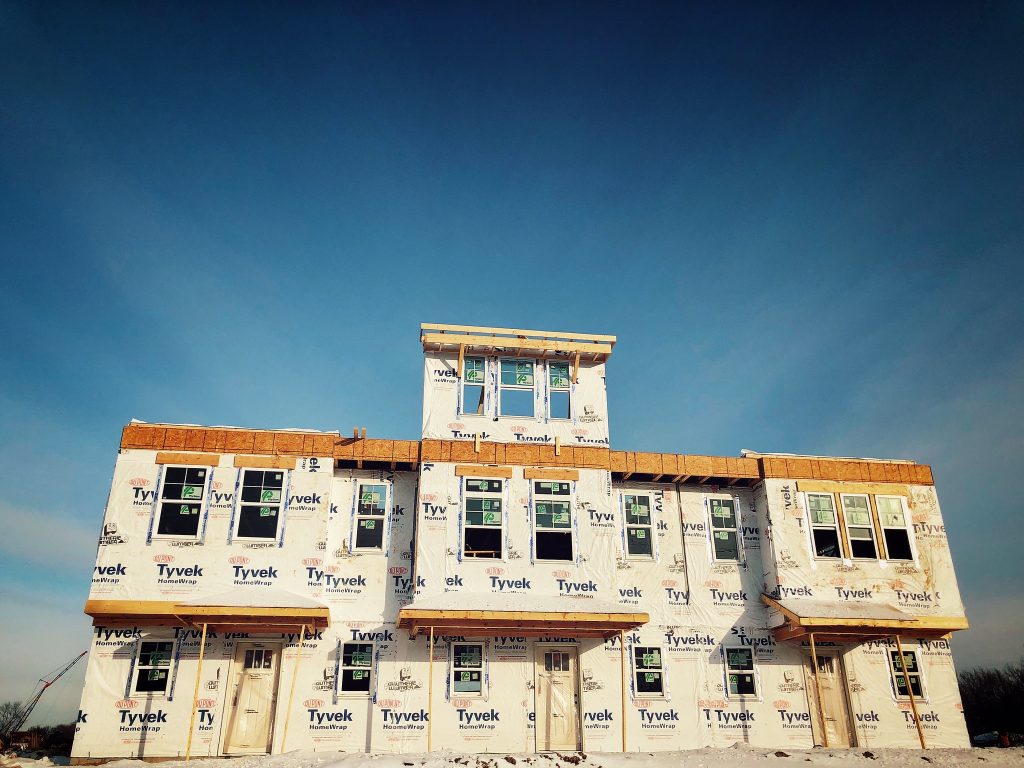
A building under construction with insulation panels installed and a clear blue sky.

Home Builder Confidence Continues To Rise


Home builders know the housing market. They have to, after all. Their business depends on knowing where and what buyers want. That’s why the National Association of Home Builders takes a monthly measure of how confident home builders feel about the market. The NAHB’s Housing Market Index measures builder confidence on a scale where any number above 50 indicates more builders view conditions as good than poor. In February, the index saw its third consecutive monthly increase, rising four points to 48. Alicia Huey, NAHB’s chairman, says decreasing mortgage rates have boosted optimism. “Buyer traffic is improving as even small declines in interest rates will produce a disproportionate positive response among likely home purchasers,†Huey said. “And while mortgage rates still remain too high for many prospective buyers, we anticipate that due to pent-up demand, many more buyers will enter the marketplace if mortgage rates continue to decline this year.†(source)

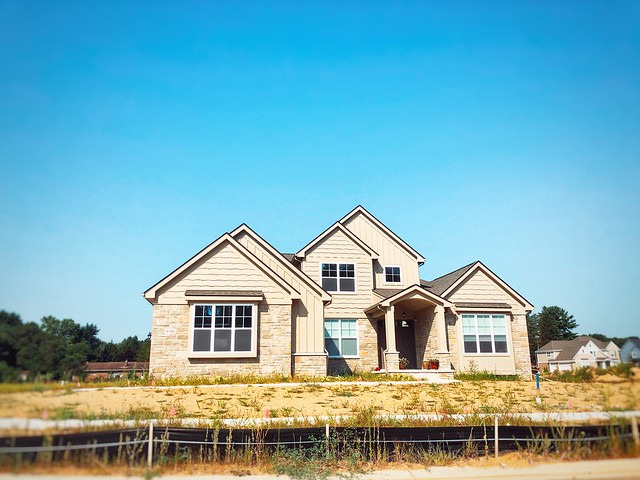
A modern beige house under a clear blue sky in a spacious yard.

Average Rates Move Higher In Latest Survey


Average mortgage rates moved higher last week, according to the Mortgage Bankers Association. Its Weekly Applications Survey found rates up for 30-year fixed-rate loans with both conforming and jumbo balances, loans backed by the Federal Housing Administration, 15-year fixed-rate loans, and 5/1 ARMs. The increases contributed to a 2.3 percent drop in mortgage application demand for both refinance and purchase loans. Joel Kan, MBA’s vice president and deputy chief economist, says rates are now at the highest level so far this year. “Application activity was weaker last week, as mortgage rates moved higher across the board,†Kan said. “The 30-year fixed mortgage rate was up to … the highest rate since early December 2023.†The MBA’s weekly survey has been conducted since 1990 and covers 75 percent of all retail residential mortgage applications. (source)

A white arrow painted on a green pavement pointing forward.

Mortgage Credit More Available In January


The Mortgage Bankers Association’s monthly measure of credit availability keeps track of how easy or difficult it is for borrowers to get a loan. Any increase in the Mortgage Credit Availability Index indicates that credit has loosened, while a decline means lending standards and loan programs have tightened. In other words, if the index is increasing, that’s good for prospective borrowers, and according to the most recent results, it is. In fact, the MBA’s index saw a 0.7 percent increase in January. Joel Kan, MBA’s vice president and deputy chief economist, says credit supply improved but remains tight. “There was a slight increase in credit availability in January, driven by a greater number of conventional loan program offerings,†Kan said. “However, overall credit availability remained close to 2012 lows, and the conventional index was close to its record low in the series dating back to 2011.†(source)

Close-up of U.S. dollar bills in various denominations.

Rising Foot Traffic A Good Sign For Spring


Foot traffic is a great way to measure how active home buyers are in the market. You can tell a lot about where buyers are looking to live, and the homes they’re most interested in, by looking at how many home showings are being scheduled. The National Association of Realtors tracks home showings each month in an effort to gauge buyer demand and market activity. According to the most recently released numbers, foot traffic was up at the end of last year. In fact, showings were 5 percent higher year-over-year in December. The numbers show the greatest gains were in the South, where home showings rose 12 percent from year-before levels. The Midwest followed with an 8 percent gain. The increased activity is an encouraging sign, as buyer demand typically slows in the winter – and especially during the holidays. It’s also an indication that Americans are eager to shop for homes, which bodes well for the upcoming spring season when buying activity typically heats up. (source)

Worn white sneakers with black and red stripes on a plain background.

Affordability Improves After Last Year’s Lows


Naturally, affordability is a top factor among home buyers. After all, whether or not you can afford to buy a home is the first question you have to answer before beginning the buying process. That’s why 2023 was a slow year for the housing market. Affordability was at a low. In fact, according to the National Association of Home Builders’ Housing Opportunity Index, affordability during the fourth quarter of last year was at its lowest level in more than a decade. Fortunately, though, conditions have already improved. Alicia Huey, NAHB’s chairman, says she expects further gains this year. “Affordability conditions should show some gradual improvement this year, as mortgage rates peaked in the fourth quarter of 2023 …†Huey said. It’s true. Rates peaked in October of last year and have fallen significantly over the past few months. That, along with expected inventory gains this year, has most market forecasts calling for improved affordability conditions this spring selling season and beyond.

Two beige houses with peaked roofs and trees in the background.

Survey Finds Americans Optimistic About Rates


Fannie Mae’s most recent Home Purchase Sentiment Index finds Americans optimistic about mortgage rates. In fact, the survey – which asks respondents for their opinions on buying and selling a home, mortgage rates, home prices, their job, and their financial situation – found 36 percent of participants say they expect mortgage rates to fall over the next 12 months. That’s an all-time survey high and it helped push overall housing market sentiment to its highest level in two years. Doug Duncan, Fannie Mae’s senior vice president and chief economist, says Americans are feeling better about the market. “Mortgage rate optimism increased markedly again in January, with a survey-high percentage of consumers anticipating mortgage rate declines over the next year,†Duncan said. “For the first time in our National Housing Survey’s history, a greater share of consumers believe mortgage rates will decrease over the next year, rather than increase. Consumers also expressed greater confidence in their job situations this month, another sign that housing sentiment may continue to improve in 2024.†(source)

Bright blue house exterior with white-trimmed windows under a partly cloudy sky.

Mortgage Rates Hold Steady Into February

According to the Mortgage Bankers Association’s Weekly Applications Survey, average mortgage rates held steady last week, with only slight changes seen across all loan categories including 30-year fixed-rate loans with both conforming and jumbo balances, loans backed by the Federal Housing Administration, 15-year fixed-rate loans, and 5/1 ARMs. Steady rates helped drive demand for mortgage applications, which saw a 3.7 percent increase from one week earlier. Joel Kan, MBA’s vice president and deputy chief economist, says rates have been steady since the beginning of the year. “Mortgage rates have stayed close to where they started the year, despite swings in Treasury yields because of slowing inflation offset by stronger than expected readings on the job market,” Kan said. “Rates at these levels have not prompted much of a reaction in the refinance market, as most homeowners have mortgages with much lower rates. However, purchase activity has been strong to start 2024 compared to the final quarter of 2023.” The MBA’s weekly survey has been conducted since 1990 and covers 75 percent of all retail residential mortgage applications. (source)

Percentage-1

Home Price Index Finds Widespread Gains


The S&P Case-Shiller Home Price Indices is considered among the leading measures of U.S. home prices. It tracks home values across all nine census divisions and has been collecting data for more than 27 years. Its most recent release shows home prices up over year-before levels in every region of the country. Brian Luke, head of commodities, real & digital assets at S&P, says the gains were widespread. “The Northeast and Midwest recorded the largest gains with returns of 6.4 percent and 6.3 percent, respectively,†Luke said. “Other regions are not far behind with the slowest gains in the West of 3 percent. This month’s report revealed the narrowest spread of performance across the nation since the first quarter of 2021.†In other words, home prices have been pretty consistent lately, no matter where you look. But while prices continue to move higher than year-before levels, month-over-month data found them slowing – an indication that annual gains may also slow in the months ahead. (source)

A series of white price tags with dollar signs on a black background.

Median Mortgage Payment Falls Again


Each month, the Mortgage Bankers Association tracks the national median mortgage payment. Its Purchase Applications Payment Index looks at the prospective payments of home buyers applying for loans to determine whether affordability is improving or worsening. According to its most recent release, mortgage payments are falling. In fact, the median payment fell to $2,055 at the end of last year, down from $2,137 in November. Edward Seiler, MBA’s associate vice president, housing economics, and executive director, Research Institute for Housing America, says affordability should only get better as conditions improve. “Home buyer affordability improved for the second consecutive month in December as interest rates declined significantly from recent highs,†Seiler said. “While the average median purchase application amount increased to $306,450, MBA expects that affordability conditions will continue to improve as mortgage rates fall further and as housing inventory continues to increase.†(source)

Close-up of a mortgage application form with typed text and checkboxes.

Thank you for your upload