

Banner
Menu

Nearly Half Of All Homes Are Equity Rich


Forty-six percent of mortgaged residential properties were considered equity rich in the fourth quarter of 2023, according to ATTOM Data Solutions’ most recent U.S. Home Equity & Underwater Report. A property is equity rich when the combined amount of loan balances secured by it is no more than half its estimated market value. Needless to say, owning an equity-rich property is a good situation for homeowners to be in, and a lot of them are. Homeowners have benefited from years of rising home prices. In fact, 95 percent of homeowners have built up some equity, even if their home isn’t considered equity rich. But while homeowners have had it good in recent years, there are signs the market has begun to cool. Rob Barber, ATTOM’s CEO, says the upcoming buying season will determine by how much. “There are increasing signs suggesting that the extended period of prosperity in the U.S. housing market may be showing signs of easing,†Barber said. “This year’s peak buying season will tell us a lot about whether things really have settled down long-term.†(source)

Close-up of a hundred-dollar bill with Benjamin Franklin's portrait.

Number Of Homes For Sale Is Growing


When there aren’t enough homes for sale, the market is more challenging for home buyers. For one, there aren’t as many options to choose from, which means buyers will have a harder time finding a house that fits their needs. Beyond that, too few available homes puts upward pressure on prices due to bidding wars and increased competition. That’s why new data from the National Association of Realtors’ consumer website is good news for potential buyers. The website’s January Housing Report found the number of homes actively for sale was up 7.9 percent in January, with newly listed homes up 2.8 percent. The increases are a much-needed boost, as the number of homes for sale still trails pre-pandemic levels. Danielle Hale, the site’s chief economist, says buyers and sellers are ready. “We are seeing increases in inventory and, importantly, gains in newly listed homes for sale indicating sellers are more ready to make moves,†Hale said. “Time on market fell, signaling that buyers are ready to make offers on these new options.†(source)

Row of charming suburban houses under a blue sky.

Mortgage Rates Largely Unchanged Last Week


According to the Mortgage Bankers Association’s Weekly Applications Survey, average mortgage rates were largely unchanged last week from the week before. Rates were flat for 30-year fixed-rate loans with both conforming and jumbo balances. Loans backed by the Federal Housing Administration, 15-year fixed-rate loans, and 5/1 ARMs all saw slight increases. Joel Kan, MBA’s vice president and deputy chief economist, says rates were flat but application demand still fell. “Mortgage rates changed little last week, with the 30-year fixed rate … close to where it has been for the past month, but lower than the recent peak in October 2023,†Kan said. “Applications decreased compared to a holiday-adjusted week, driven by a decline in purchase applications that offset a slight increase in refinance activity.†Also in the report, the average loan size last week was $444,100, the highest it’s been since May 2022. The MBA’s weekly survey has been conducted since 1990 and covers 75 percent of all retail residential mortgage applications. (source)

Large white percentage symbol on a red background.

Signed Contracts To Buy Increased 8% In December


Tracking the number of signed contracts to buy homes is a good way of determining how active home buyers are in the current market. If signings are rising, buyers are active and home sales are likely to see increases soon. That’s why the National Association of Realtors tracks contract signings each month with its Pending Home Sales Index. The index is considered a good indicator of future home sales, since signings precede closings by several weeks. According to the most recent release, the NAR found signings up in December. In fact, the index was up 8.3 percent from the month before. Lawrence Yun, NAR’s chief economist, says the housing market is headed in the right direction. “The housing market is off to a good start this year, as consumers benefit from falling mortgage rates and stable home prices,†Yun said. “Job additions and income growth will further help with housing affordability, but increased supply will be essential to satisfying all potential demand.†(source)

A bright SALE PENDING sign in bold red letters on a window.

New Home Market Stays Hot Into Winter


Sales of new single-family homes increased 8 percent in December from the month before, according to new numbers from the U.S. Census Bureau and the Department of Housing and Urban Development. The improvement pushed sales 4.4 percent higher than they were at the same time one year earlier and put total sales for the year 4.2 percent higher than in 2022. Put simply, the new home market has been thriving at a time when the market for older homes has slowed. So what’s behind the increasing interest in new homes? Well, it mostly comes down to inventory. The continuing shortage of existing homes for sale has the new home market drawing buyers who may’ve otherwise purchased a previously owned home. And fortunately for interested home shoppers, prices for new homes are improving. The median sales price of new houses sold in December was $413,200, down from $432,100 at the same time in 2022. (source)

Two-story suburban house with a double garage under a clear blue sky.

Typical Home Seller Profit Was $121,000 Last Year


Home prices have mostly increased over the past 10 years. Outside of a few dips and small declines, values have been rising fairly consistently. This has been good for homeowners, who have built up significant equity in their homes. In fact, according to ATTOM Data Solutions’ Year-End 2023 U.S. Home Sales Report, homeowners who sold a home last year saw near record-high profits. Rob Barber, ATTOM’s CEO, says home seller profits are more than double what they were even five years ago. “Last year certainly stood out as another very good year for home sellers across most of the United States,†Barber said. “Typical profits of over $120,000 and margins close to 60 percent were still more than double where they stood just five years earlier.†In 2023, the typical home sale resulted in a $121,000 profit, generating a 56.5 percent return on investment. That’s down slightly from 2022, when profits were $122,600 and returns were closer to 60 percent. (source)

Close-up of a 'SOLD' sign on a white post with trees in the background.

Buyers Drive Surging Demand For Loans


According to the Mortgage Bankers Association’s Weekly Applications Survey, demand for loans to buy homes rose 8 percent last week from the week before. The improvement helped push total application demand nearly 4 percent higher week-over-week. Joel Kan, MBA’s vice president and deputy chief economist, says the gains extend a recent trend. “Mortgage rates increased slightly last week but, there continues to be an upward trend in purchase activity,†Kan said. “Conventional and FHA purchase applications drove most of the increase last week as some buyers moved to act early this season.†Average mortgage rates were fairly steady last week, though up from the week before. Increases were seen for 30-year fixed-rate mortgages with both conforming and jumbo balances, loans backed by the Federal Housing Administration, 15-year fixed-rate loans, and 5/1 ARMs. The MBA’s weekly survey has been conducted since 1990 and covers 75 percent of all retail residential mortgage applications. (source)

White arrow pointing upward on a red background.

Construction Of New Homes Up 4.5% Last Year


Despite the ups-and-downs of the housing market over the past few years, some things have remained constant. The lack of available homes for sale, for example. Low inventory has been an issue for most of the past decade and got considerably worse during the pandemic. These days, the number of homes for sale is improving but continues to trail normal levels, leading to ongoing frustration for home buyers and upward pressure on prices. Fortunately, though, 2024 may bring about a change. Many market forecasts see improved inventory levels ahead due to falling mortgage rates and rising new home construction. Building new homes is the fastest way to add supply to the market and home builders have been doing their part. In fact, according to newly released numbers from the U.S. Census Bureau and the Department of Housing and Urban Development, the number of new housing units completed in 2023 was 4.5 percent higher than the year before. And, with building permits up 6.1 percent year-over-year in December, further gains can be expected as more homes begin construction and hit the market. (source)

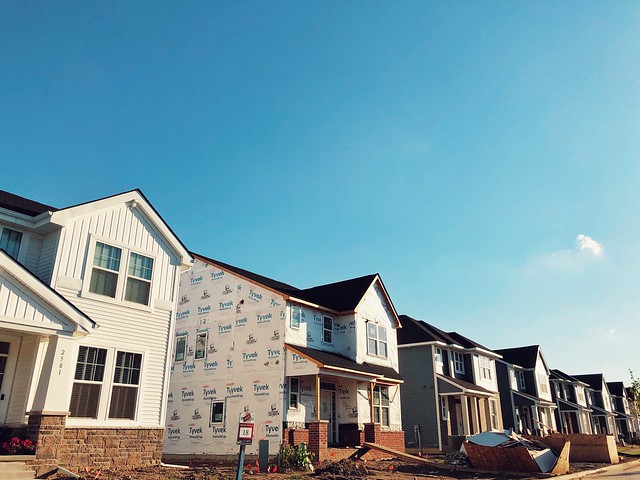
New houses under construction on a sunny day with clear blue sky.

Outlook Sees Affordability Gains In The Future


Fannie Mae’s first forecast for 2024 should be encouraging for anyone considering buying a home this year. That’s because its Economic and Strategic Research Group – which releases a monthly outlook for the housing market and overall economy – sees affordability conditions easing, with lower mortgage rates and slower home-price increases in the months ahead. In fact, the group says prices will rise just 3.2 percent this year, compared to 7.1 percent in 2023. Doug Duncan, Fannie Mae’s senior vice president and chief economist, says potential rate cuts should also help home buyers. “In 2024, we expect home sales and mortgage origination activity to begin a gradual recovery in the presence of a slow-growing economy,†Duncan said. “Inflation’s decline and the resultant Fed pivot to signaling future rate cuts lead us to believe that home sales and mortgage originations likely bottomed out in the second half of 2023 and that a gradual improvement is now underway.†Duncan believes this year will be better for buyers, with the existing-home market beginning to normalize and more new home construction helping to add to the inventory of homes for sale. (source)

Close-up of U.S. $100 bills with visible security features.

Home Sales Slow Before Expected Improvement


Sales of previously owned homes fell 1 percent in December, according to newly released numbers from the National Association of Realtors. The decline was driven by slower sales in the Midwest and South, while sales increased in the West and were flat in the Northeast. Lawrence Yun, NAR’s chief economist, says improvement is on the way. “The latest month’s sales look to be the bottom before inevitably turning higher in the new year,†Yun said. “Mortgage rates are meaningfully lower compared to just two months ago, and more inventory is expected to appear on the market in upcoming months.†As it is, the number of existing homes available for sale was 4.2 percent higher than year-before numbers at the end of December. But while the year-over-year improvement is positive, inventory is still low. In fact, the NAR’s report found a 3.2-month supply of unsold homes available at the end of the month. A 6-month supply is considered healthy for the housing market. (source)

Close-up of a 'For Sale' sign with warm lighting.

Thank you for your upload