

Banner
Menu

Location Matters When Assessing Market Outlook


National housing market trends can give you an idea where things are heading generally but every local market has its own dynamic. That means, conditions will vary somewhat from one region to the next, between states, and even within metro areas. Proof of this can be found in ATTOM Data Solutions’ Special Housing Impact Report. The report looked at counties across the country to determine which were strongest and which were most vulnerable according to things like affordability, underwater mortgages, foreclosures, and unemployment. What it found was housing markets in the South were the most stable while areas in the Northeast and around Chicago had the most vulnerable markets. ATTOM’s CEO, Rob Barber, says despite vulnerabilities even at-risk markets aren’t in danger of an imminent crash. “As with earlier reports, it doesn’t mean any one area or cluster of areas is about to crash,†Barber said. “The overall market and the economy remain way too strong for imminent warnings to be sounded. But there are weak spots that are still popping up as areas to watch, especially if the market turns back downward.†(source)


Close-up of California on a detailed road map showing cities and highways.

Permits To Build Homes Rise While Starts Fall


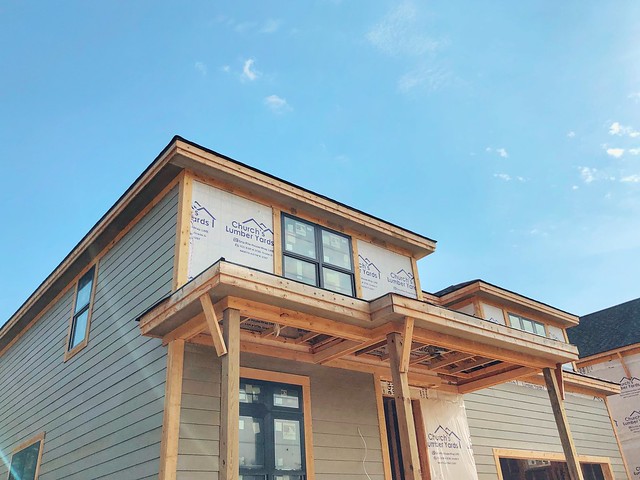
The new home market was hot this summer. A lack of available existing homes led more buyers to explore purchasing a new house, which supported both sales and home building activity. In August, though, things slowed. In fact, the number of new homes that began construction fell sharply, according to newly released numbers from the U.S. Census Bureau and the Department of Housing and Urban Development. Mostly, the decline was due to a drop in multi-family construction, though single-family home building also saw a 4.3 percent decline. The slowdown was largely attributed to elevated mortgage rates. But, while current construction activity was slower in August, the number of permits authorized to build new homes was up 6.9 percent, which points to the market’s continued strength. It also indicates August’s numbers may only be a temporary setback before building activity is back on the rise. (source)

Newly constructed two-story house under a bright blue sky.

72% Of Homes Sold In Under A Month In August


Housing market conditions have changed drastically over the past couple of years but some things have remained constant. The pace of home sales, for example. The vast majority of homes for sale are still selling in less than a month. In fact, according to new numbers from the National Association of Realtors, 72 percent of homes sold in August were on the market less than 30 days, with the typical home selling in 20 days. That’s slower than last year but only by a few days. The reason? The inventory of homes for sale remains low, leading homes for sale to go quickly. Lawrence Yun, NAR’s chief economist, says low inventory is also the reason home prices continue to increase. “Home prices continue to march higher despite lower home sales,†Yun said. “Supply needs to essentially double to moderate home price gains.†As long as the inventory of homes for sale remains low, home prices will continue to move higher and the homes that are for sale will find buyers quickly. (source)

Close-up of a 'For Sale' sign with a blurred background.

Mortgage Application Demand Climbs Higher


According to the Mortgage Bankers Association’s Weekly Applications Survey, demand for mortgage applications rose 5.4 percent last week from one week earlier. The improvement included a 13 percent increase in refinance activity and a 2 percent gain in demand for loans to buy homes. Joel Kan, MBA’s vice president and deputy chief economist, says challenging conditions have kept demand below last year’s level. “Purchase applications increased for conventional and FHA loans over the week but remained 26 percent lower than the same week a year ago, as home buyers continue to face higher rates and limited for-sale inventory, which have made purchase conditions more challenging,†Kan said. “Refinance applications also increased last week but are still almost 30 percent lower than the same week last year.†Still, rising demand is an encouraging sign, especially during a week when average rates rose for 30-year fixed-rate loans with both conforming and jumbo balances. Loans backed by the Federal Housing Administration also saw increases, while 15-year fixed-rate loans and 5/1 ARMs fell. (source)

A red arrow pointing upward on a white surface.

Market Forecast Sees Little Change Ahead


Fannie Mae’s Economic and Strategic Research Group sees little change ahead for the housing market, according to its most recent monthly forecast. The group’s September release says they believe the economy will slow as we head into early 2024 but they see little downside risk to home sales due to continued demand from buyers. In today’s market, home sales are being driven more by life events than discretionary factors, the group says. That means demand should remain steady and – with the ongoing shortage of available homes for sale – it’ll help support home values while also contributing to the strength of the new home market. Doug Duncan, Fannie Mae’s senior vice president and chief economist, says interest rate policy will keep things from changing too drastically in the near future. “We expect that total housing market activity will remain at a low level into 2024 as the Federal Reserve continues to hold the line on interest rates against inflation,†Duncan said. (source)

Tall trees frame a brick building under a blue sky with scattered clouds.

Share Of Builders Cutting Prices Reaches 2023 High


The National Association of Home Builders’ monthly Housing Market Index is based on a survey of builders. The survey asks builders for their perception of the current market for newly built, single-family homes and scores their responses on a scale where any number over 50 indicates more builders view conditions as good than poor. In September, the index fell below 50 for the first time in five months, dropping to 45. Robert Dietz, NAHB’s chief economist, says mortgage rates have slowed buyers. “High mortgage rates are clearly taking a toll on builder confidence and consumer demand, as a growing number of buyers are electing to defer a home purchase until long-term rates move lower,†Dietz said. In response, more home builders are cutting prices to lure buyers. In fact, 32 percent of builders reported cutting home prices in September, up from 25 percent in August and the highest share yet this year. (source)

A house under construction with exposed framing and blue sky.

Inventory Is Top Factor Holding Buyers Back


Affordability is always a top factor for potential buyers when deciding whether or not it’s time to buy a house. After all, you have to know what you can and can’t afford before you head out to buy. That’s certainly true in today’s market. With mortgage rates and home prices up, it’s as important as ever for buyers to be aware of market conditions and what options they have. But while cost is always a factor, it’s not the number one thing currently giving buyers pause, according to a new survey from the National Association of Realtors. In fact, survey respondents named lack of inventory as the top reason they’ve yet to buy a home, with 34 percent of prospective buyers saying inventory is the reason they haven’t purchased a house yet. Mortgage rates and prices were next on the list, though, with 18 percent saying they’re waiting for rates to drop and 9 percent hoping prices will fall. (source)

Two charming houses with blue sky backdrop.

Mortgage Credit Availability Increases In August


Access to credit isn’t fixed. There are times when it’s easier for a borrower to get approved for a loan and times when it’s more difficult. That’s why the Mortgage Bankers Association keeps a monthly measure of mortgage credit availability. Its Mortgage Credit Availability Index measures whether or not lending standards are loosening or tightening. If the index increases, it means standards have loosened, making it easier for borrowers to secure financing. If it decreases, standards have tightened and borrowers will have to be better financially prepared if they hope to be approved for a loan. In August, the index saw a slight increase, rising 0.3 percent from the month before. According to Joel Kan, MBA’s vice president and chief economist, the improvement was driven by an increase in loan programs. “The overall increase was driven by an increased number of loan programs that included parameters such as cash-out refinances and mid-range credit scores,†Kan said. It was also driven by gains in the component measuring jumbo loans. The jumbo MCAI was up 2.7 percent over the month before. (source)

A fan of U.S. $100 bills spread out on a white surface.

Demand For Home Purchase Loans Rises


According to the Mortgage Bankers Association’s Weekly Applications Survey, demand for loans to buy homes increased last week from one week earlier. The 1 percent improvement was slight but welcome, as it came during a week when rates moved higher. Joel Kan, MBA’s vice president and deputy chief economist, says overall demand is muted. “Purchase applications increased over the week despite the increase in rates, pushed higher by a 2 percent gain in conventional loans,†Kan said. “Given how high rates are right now, there continues to be minimal refinance activity and a reduced incentive for homeowners to sell and buy a new home at a higher rate.†Overall, demand for mortgage applications was down 0.8 percent week-over-week. Rates, on the other hand, were up across all loan categories, including 30-year fixed-rate loans with both conforming and jumbo balances, loans backed by the Federal Housing Administration, 15-year fixed-rate loans, and 5/1 ARMs. The MBA’s weekly survey has been conducted since 1990 and covers 75 percent of all retail residential mortgage applications. (source)

A yellow arrow on the ground points forward with the words 'THIS WAY'.

Autumn Buyers To Find Easing Conditions


Temperatures rise in the summer then start to fall as autumn approaches. The housing market follows a similar pattern. The number of home buyers active in the market starts to climb in spring and peaks sometime in early summer. By September, things are typically beginning to cool off, as buyer activity slows. That, however, doesn’t mean it isn’t a good time to shop for a house. In fact, according to one new analysis, home buyers may find improving conditions as we head into fall, making it an ideal time to be looking to buy. Why? Well, for one, fewer buyers in the market means less competition for available homes, at a time when inventory is low. That’ll give active buyers a little more breathing room and time to make decisions. It’ll also mean price increases begin to moderate. They already have. In fact, the typical home value rose just 0.2 percent from July to August. Combined with the fact that new listings are rising – at a time of year they usually fall – slower prices and less competition could add up to an opportunity for buyers gearing up to shop houses this fall. (source)

A single red maple leaf on a white background.

Thank you for your upload