

Banner
Menu

Housing Market Dynamic Unlikely To Change Soon


Fannie Mae’s Economic and Strategic Research Group releases a monthly outlook covering what they believe is ahead for the housing market and overall economy. According to its August commentary, the group still expects the economy to slow at some point in coming months, despite data continuing to show it stronger than expected. Doug Duncan, Fannie Mae’s senior vice president and chief economist, says they expect a mild recession, though they don’t expect it will affect the housing market much. “Our base case forecast is a mild recession, and it looks as though the alternative is a soft landing, which is slow growth with only a small increase in unemployment,†Duncan explained. “The difference between those two alternative outcomes is not expected to make much difference to home sales.†The group believes that, whether or not the economy avoids a recession, housing market dynamics are unlikely to change due to offsetting issues of available inventory, affordability, wage growth, and consumer confidence. (source)
Brick house with chimney under a clear blue sky beside a palm tree.

New Home Sales Continue Summer Surge


In a lot of ways, there are two housing markets. There’s the market for previously owned homes and the market for new homes. These days, the existing-home market is struggling with low inventory and slow sales, but the new home market is in the midst of a summer boom. In fact, new home sales in July, according to the most recent estimates from the U.S. Census Bureau and the Department of Housing and Urban Development, were up 31.5 percent from the same time last year and 4.4 percent higher month-over-month. The reason? Well, a lot of it has to do with the existing-home market’s recent struggles. Home buyers having trouble finding an older home are increasingly looking at new homes as an alternative. That’s spurred sales and also boosted new home construction. Now newly built homes are a growing share of the current inventory of available homes and sales are surging while, at the same time, existing home sales have stalled. (source)

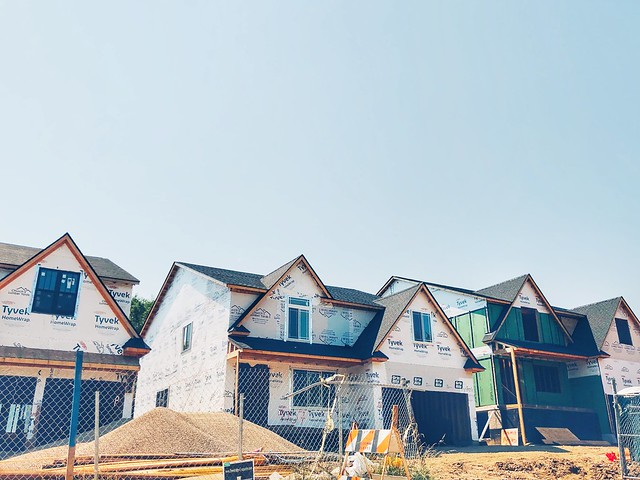
New houses under construction on a clear day.

As Mortgage Rates Rise, So Does Share of ARMs


According to the Mortgage Bankers Association’s Weekly Applications Survey, average mortgage rates increased last week from the week before. Rates were up across all loan categories, including 30-year fixed-rate loans with both conforming and jumbo balances, loans backed by the Federal Housing Administration, 15-year fixed-rate loans, and 5/1 ARMs. Joel Kan, MBA’s vice president and deputy chief economist, says last week’s increases drove interest in adjustable rate mortgages higher. “The ARM share of applications increased to 7.6 percent, the highest level in five months, and the number of ARM applications picked up by 4 percent last week,†Kan said. “Some home buyers are looking to lower their monthly payments by accepting some interest rate risk after the initial fixed period.†Overall, higher mortgage rates led to a 4.2 percent decline in demand for mortgage applications last week, including a 5 percent drop in demand for loans to buy homes. The MBA’s weekly survey has been conducted since 1990 and covers 75 percent of all retail residential mortgage applications. (source)

Close-up of a black percentage symbol on a textured beige background.

Home Sales Slip But Inventory Improves


Sales of previously owned homes slipped 2.2 percent in July from the month before, according to new numbers from the National Association of Realtors. It was the second consecutive monthly decline and put sales 16.6 percent below last year at the same time. Lawrence Yun, NAR’s chief economist, says there are two main factors slowing sales right now. “Two factors are driving current sales activity – inventory availability and mortgage rates,†Yun said. “Unfortunately, both have been unfavorable to buyers.†But while the inventory of homes for sale remains low, it did see improvement in July. In fact, total housing inventory was up 3.7 percent from June. That means more homes for sale and less upward pressure on home prices. Yun says now the market needs mortgage rates to moderate. Retreating rates will “bring more buyers and sellers to the market and get Americans moving again,†Yun said. (source)

Bright red For Sale sign outside a residential home with colorful trees.

Mortgage Credit Availability Mostly Flat In July

The Mortgage Bankers Association’s monthly Mortgage Credit Availability Index measures how easy or difficult it is for borrowers to access credit. Any increase in the index indicates loosening credit while declines are a sign that credit is becoming tighter. There are a number of factors that affect whether availability has loosened or tightened, including current lending standards and available loan programs. In July, the MCAI was mostly flat, falling just 0.3 percent from the month before. Joel Kan, MBA’s vice president and deputy chief economist, says the decline was mostly due to fewer cash-out refi programs. “One key driver of this month’s decline was a drop in cash-out refinance loan programs,” Kan said. “The 30-year fixed mortgage rate averaged … more than a percentage point higher than July 2022, and this has significantly discouraged cash-out refinance activity, as borrowers turn to home equity and consumer loans instead.” Kan also noted a decline in the number of loan programs offered by jumbo lenders. (source)

Money-34

Have Home Prices Already Seen Their Bottom?


When mortgage rates started to increase last year, there was fear that home prices might soon crash. The expectation was that buyers would retreat and declining demand would cause values to tumble. That fear, though, seems to have been unfounded. There were declines, of course – in some locations more than others – but prices overall held steady and even began climbing again earlier this year. But can we say for sure that home prices bottomed? According to one recent analysis, it looks that way but may be too soon to say. The lack of available homes for sale combined with continuing demand from buyers has largely kept prices afloat. That dynamic doesn’t seem likely to change in the near future. However, the analysis makes clear that mortgage rates have remained high and continue to cause affordability challenges for home buyers. Where affordability heads from here will determine whether or not prices adjust somewhere down the line. (source)

Three colorful dollar signs on a dark red background.

Construction of New Homes Sees Summer Surge


When there are too few homes for sale, the quickest solution is to build more homes. New home construction offers buyers more options and helps alleviate upward pressure on prices of existing homes. In other words, it’s exactly what the housing market needs right now, since the inventory of homes for sale remains well below its pre-pandemic norm. Fortunately, according to new numbers from the U.S. Census Bureau and the Department of Housing and Urban Development, it looks like home builders are on the case. In fact, new residential construction statistics show the number of new, single-family homes that began construction in July was 6.7 percent higher than the month before. That’s a significant mid-summer surge and an encouraging sign for shoppers of both new and existing homes. It also puts single-family housing starts nearly 10 percent above where they were last year at the same time. Regionally, the data shows home building strongest in the West and Midwest, with the Northeast and South both seeing month-over-month declines. (source)

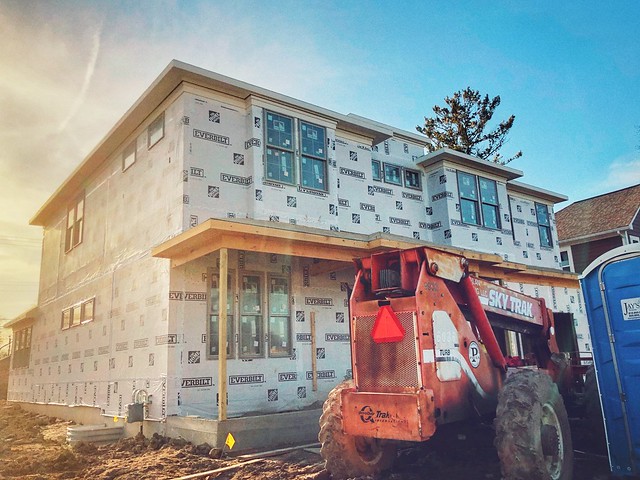
A house under construction with exposed sheathing and a tractor in front.

Demand Holds Steady As Mortgage Rates Rise


According to the Mortgage Bankers Association’s Weekly Applications Survey, average mortgage rates moved higher last week for 30-year fixed-rate loans with both conforming and jumbo balances. Rates were also up for 15-year fixed-rate mortgages, though they fell for FHA loans and 5/1 ARMs. Joel Kan, MBA’s vice president and deputy chief economist, says the economy has been resilient and it’s pushing rates upward. “Treasury rates were elevated again last week following mixed data on inflation and more indication of resiliency in the economy, which may pose a challenge to the Federal Reserve’s efforts to lower inflation,†Kan said. Still, despite higher rates, demand for loans to buy homes was flat from the week before and there was a 2.4 percent week-over-week increase in government purchase applications, as demand for both FHA and VA loans rose. The ARM share of applications was also up, hitting its highest level since April. The MBA’s weekly survey has been conducted since 1990 and covers 75 percent of all retail residential mortgage applications. (source)

Wooden blocks spelling out 'MORTGAGE' on a wooden surface.

Home Builder Confidence Dips In August


The National Association of Home Builders’ Housing Market Index is based on a monthly survey of builders. The index gauges builders’ confidence in the new home market using a scale where any number above 50 indicates more builders view current conditions as good than poor. In August, the index fell to 50, six points lower than the previous month. Alicia Huey, NAHB’s chairman, says builder sentiment declined but demand for new homes remains strong. “While this latest confidence reading is a reminder that housing affordability is an ongoing challenge, demand for new construction continues to be supported by a lack of resale inventory, as many homeowners elect to stay put because they are locked in at a low mortgage rate,†Huey said. The survey found a rising number of home builders countering higher costs by offering incentives to buyers. In fact, 25 percent of survey respondents reported reducing prices to bolster sales. (source)

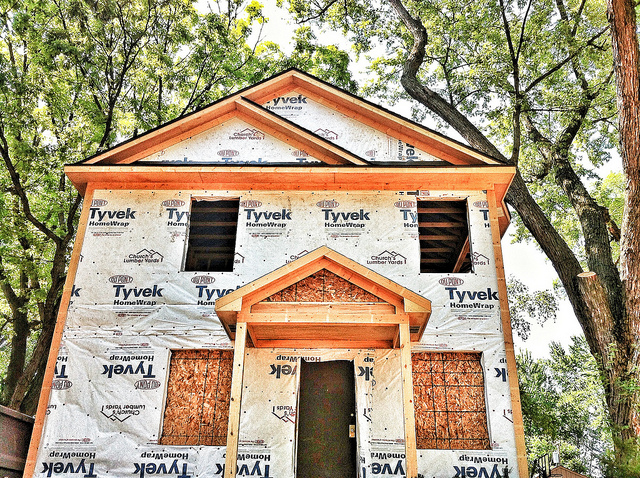
A house under construction wrapped in Tyvek material surrounded by trees.

How Many Homes Are Worth $1 Million?


For most of the past decade, home prices have been rising steadily. A historically low number of homes for sale matched with historically low mortgage rates caused an imbalance in the housing market. Particularly during the pandemic, low rates pushed home buyer demand higher and the competition for available homes led to skyrocketing prices. For home buyers, years of surging home prices can make it feel like every house must now cost $1 million or more. But how many million dollar houses are there really? Well, one recent analysis crunched the numbers and, though the number of million dollar homes has definitely jumped since the pandemic, it’s beginning to cool off. In fact, the share of single-family homes worth more than $1 million fell from an all-time high of 8.6 percent one year ago down to 8 percent now. In 41 of the 99 most populous metro areas, the number of million-dollar homes has fallen and, in the 55 metros where it’s risen, the increase was less than one percent. Whether the trend continues is anyone’s guess but, for now at least, the number of million dollar homes is actually on the decline. (source)

Large white house with triangular roof peaks against a blue sky.

Thank you for your upload