

Banner
Menu

Homeownership Tenure Falls To 12-Year Low


Buying a home is a big undertaking. So when you purchase a house, you typically plan to stay a while. But for how long? The average number of years a homeowner lives in their home before selling tends to vary over time. As recently as a few years ago, homeownership tenure was growing. It hovered around eight years for a long time, with it occasionally reading closer to 10. But these days, it’s headed in the opposite direction. In fact, according to ATTOM Data Solutions’ first-quarter 2023 U.S. Home Sales Report, homeowners who sold at the beginning of this year had owned their homes an average of 5.59 years. That’s down from 5.81 years at the end of last year and is the shortest tenure has been since the middle of 2011. Among individual metros, tenure dropped the most from last year in Atlantic City, which saw it fall 27 percent. Other cities where homeowners are on the move included Dayton, Tallahassee, Chattanooga, and St. Louis. Homeownership tenure was longest in the Northeast and West, with Honolulu leading the list with an average tenure of 8.21 years. (source)
Bright blue sky above classic city townhouses with ornate facades.

New Home Sales Soar In March


If the pace of new home sales is any indicator, the housing market is about to pick up steam. New numbers from the U.S. Census Bureau and the Department of Housing and Urban Development show sales of new single-family homes rose 9.6 percent in March from one month earlier. The improvement pushed sales to their highest level in a year and far exceeded economists’ expectations. In fact, forecasts had new home sales falling from February’s pace. So why did sales spike? Well, there are a few reasons behind surging sales. One is mortgage rates, which were mostly lower in March. Another is the lack of existing homes for sale, which has caused more home buyers to look for newly built options. Combine that with still-high levels of buyer demand and the start of the spring home sales season, and the nearly 10 percent jump isn’t as surprising. (source)

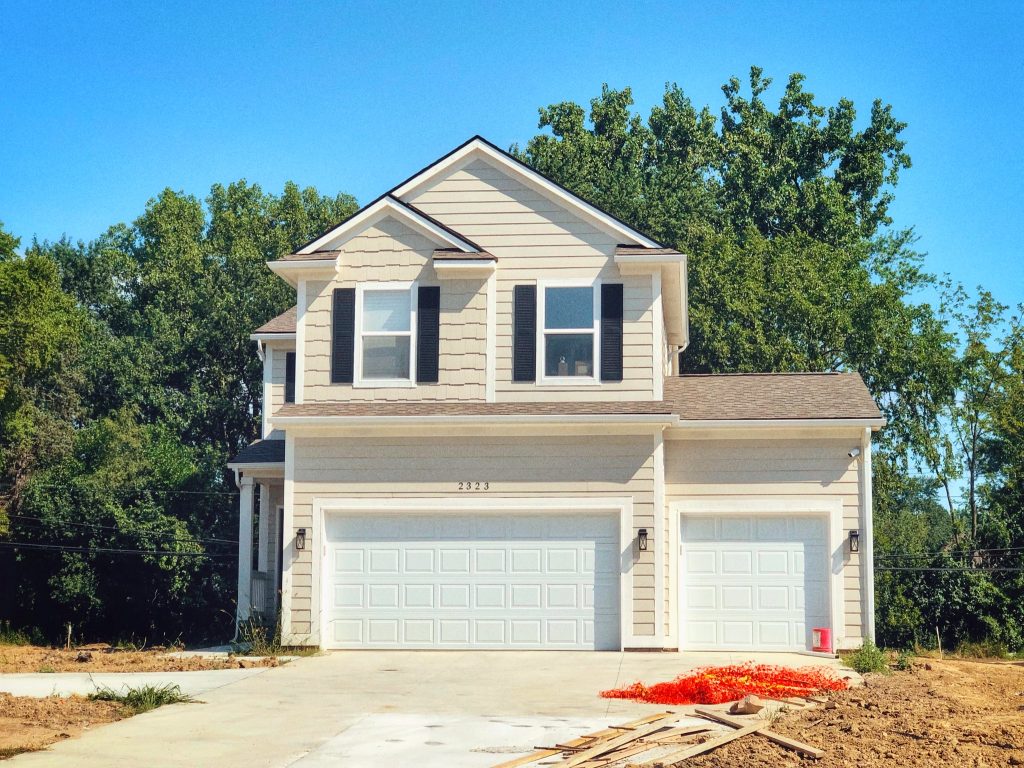
A two-story beige house with three garages and a clear blue sky.

Buyers Continue To Outpace Homes For Sale


The number of contracts to buy homes signed in March was 5.2 percent lower than the month before, according to new numbers from the National Association of Realtors. The data, from the NAR’s latest Pending Home Sales Index, shows pending sales – which measure contracts, not closings – were down for the first time since last November. Lawrence Yun, NAR’s chief economist, says buyer demand is still outpacing the inventory of available homes for sale. “The lack of housing inventory is a major constraint to rising sales,†Yun said. “Multiple offers are still occurring on about a third of all listings, and 28 percent of homes are selling above list price. Limited housing supply is simply not meeting demand nationally.†Yun expects things to brighten up in the months ahead, though. In fact, he says sales in the second half of the year should be considerably better, as job gains and lower mortgage rates are expected. (source)

A close-up of a red and white 'Sale Pending' sign outdoors.

Mortgage Demand Moves Higher


According to the Mortgage Bankers Association’s Weekly Applications Survey, demand for mortgage applications moved higher last week from one week earlier. Gains were seen in both purchase and refinance activity, with overall demand up 3.7 percent week-over-week. The improvement came even as average mortgage rates rose. In fact, rates were up from the week before for 30-year fixed-rate loans with both conforming and jumbo balances, loans backed by the Federal Housing Administration, and 15-year fixed-rate loans. Joel Kan, MBA’s vice president and deputy chief economist, says rates moved higher because of Treasury yields. “Although incoming data points to a slowdown in the U.S. economy, markets continue to expect that the Fed will raise short-term rates at its next meeting, which have pushed Treasury yields somewhat higher,†Kan said. “As a result of the higher yields, mortgage rates increased for the second straight week to their highest level in over a month.†The MBA’s weekly survey has been conducted since 1990 and covers 75 percent of all retail residential mortgage applications. (source)

A yellow arrow painted on a rough concrete surface pointing forward.

New Home Construction Offers Hope For Housing

The number of new homes under construction can be a good indicator of housing market health. After all, home builders aren’t likely to be building homes if they feel buyer demand is about to plummet. So, if residential construction numbers are on the way up, it’s likely a sign that the housing market is too. That’s why new numbers from the U.S. Census Bureau and the Department of Housing and Urban Development are good news for anyone looking to get into the market in the coming months. The data, from the most recent New Residential Construction report, shows the number of homes that began construction in March was 2.7 percent higher than the month before. Similarly, permits to build single-family homes rose 4.1 percent. Both are signs that home builders are feeling confident in the market. They are also signs that the inventory of new homes for sale will increase in the months ahead. (source)

Construction 31

Housing Resilient Amid Affordability Crunch


The housing market remains unexpectedly strong, according to the latest outlook from Fannie Mae’s Economic and Strategic Research Group. The group’s monthly forecast notes that buyer demand and home prices have shown resilience in the wake of last year’s mortgage rate hikes. Partly, that resilience is due to the still lower-than-normal number of homes for sale. The inventory of available existing homes for sale is low, which helps support home prices – even when demand dips. Demand, though, has largely persisted. Doug Duncan, Fannie Mae’s senior vice president and chief economist, says home buyers’ response to affordability conditions gives the group confidence housing can help cushion expected economic volatility. “The greater-than-expected resilience in the housing sector to the affordability pressures of higher home prices and mortgage rates is central to our expectation that the recession will be modest,†Duncan said. “However, the rapid response of hopeful homeowners to periodic declines in mortgage rates, even from the currently higher rates, gives us additional confidence in our use of the word ‘modest.’†(source)

A bright sunny day with a white house under a clear blue sky.

Bidding Wars Most Likely For Affordable Homes


The type of home you’re shopping for may determine how much competition you face from other home buyers this spring, according to one new analysis. The analysis split the housing market into three tiers based on price. What it found was the bottom third of the housing market is much more competitive than the middle and top tiers. That means, entry-level home buyers are more likely to find themselves in a bidding war than buyers of more expensive homes. The effect can be seen in recent home price increases. The most expensive houses have seen prices fall 1 percent over the past year, while the least expensive homes have seen an 8 percent increase. Why is there such a big difference? There are fewer affordable homes available for sale. Since last year, the available inventory of upper-tier homes has risen 13 percent. By comparison, there was only a 1 percent increase in entry-level homes for sale. (source)

A stack of various US dollar bills with a $50 bill on top.

Majority Of Homes Still Sell In Under A Month


New numbers from the National Association of Realtors show 65 percent of homes sold in March were on the market for less than a month. That’s a significant share and proof that spring home shoppers should be ready for a fast-moving market. But while homes are still selling relatively quickly, things have improved for buyers. In fact, according to the NAR’s numbers, the typical property was on the market 29 days in March. Last year at the same time, homes were generally only on the market 17 days. That’s a big improvement and should give buyers a little more time to consider their options. Lawrence Yun, NAR’s chief economist, says this year’s market is unique. “Home sales are trying to recover and are highly sensitive to changes in mortgage rates,†Yun said. “Yet, at the same time, multiple offers on starter homes are quite common, implying more supply is needed to fully satisfy demand. It’s a unique housing market.†(source)

Close-up of a 'For Sale' sign outdoors with trees in the background.

Rates Bump Up After Hitting Two-Month Low


According to the Mortgage Bankers Association’s Weekly Applications Survey, average mortgage rates moved higher last week. Rates were up from the week before for 30-year fixed-rate loans with both conforming and jumbo balances, loans backed by the Federal Housing Administration, 15-year fixed-rate loans, and 5/1 ARMs. The increase follows recent declines, which brought rates to a two-month low the week before. Joel Kan, MBA’s vice president and chief economist, says higher rates caused some first-time buyers to hesitate. “Last week’s increase in mortgage rates prompted a pullback in application activity,†Kan said. “With more first-time home buyers in the market, we continue to see increased sensitivity to rate changes.†Last week, there was a 10 percent drop in FHA purchase applications and the average loan size reached its highest level in a month – both signs of slower activity among younger buyers. The MBA’s weekly survey has been conducted since 1990 and covers 75 percent of all retail residential mortgage applications. (source)

Red surface with a gold arrow and text "THIS SIDE UP".

Index Finds First Quarter Home Prices Up 4.7%


The pace of home price increases continues to slow, according to a new quarterly report from Fannie Mae. The report found price increases slower during the first quarter of 2023 than they were at the end of last year. In fact, Fannie Mae’s Home Price Index found home prices up 4.7 percent during the first quarter. That follows an 8.6 percent increase during the final quarter of 2022. Doug Duncan, Fannie Mae’s senior vice president and chief economist, says the fact that prices are still rising is evidence of pent-up demand. “As expected, the annual rate of increase in home prices has slowed dramatically in response to the rapid and significant increase in interest rates,†Duncan says. “Still, the fact that prices rose slightly in the first quarter is evidence of significant pent-up mortgage demand, despite ongoing affordability constraints.†Duncan says the inventory of homes for sale remains lower than normal and that has helped keep price increases from slowing even further. (source)

Modern house with large windows under a bright blue sky.

Thank you for your upload