

Banner
Menu

Will The Market Favor Buyers Or Sellers In 2023?


It’s been a long time since home buyers had much negotiating power. Conditions have favored sellers for years now. But a combination of rising inventory and higher mortgage rates began to turn some markets last year. Now, it’s 2023, and one new analysis says home buyers may gain some ground by year’s end. The analysis – which looked at the 100 largest housing markets in the country to determine which favor buyers, which favor sellers, and which are neutral – found a rising number of markets where buyers are seeing improved conditions. Overall, 13 markets favored buyers, 43 were neutral, and 44 favored sellers. But, if things play out as expected, those numbers will change even further by summer. Expectations are that the spring market will remain challenging, with inventory still low and buyer activity increasing. But, as the year goes on and the number of homes for sale rises, home buyers will find more favorable conditions, particularly into summer and early fall. By the end of the year, 34 markets are forecast to be buyers’ markets. (source)

Suburban houses under a partly cloudy blue sky.

94% Of Homeowners Have Equity In Their Homes


Equity is the difference between what your home is worth and what you owe on your mortgage. And these days, homeowners have a lot of it. In fact, according to ATTOM Data Solutions’ most recent U.S. Home Equity & Underwater Report, nearly 50 percent of mortgaged properties were considered equity rich at the end of last year. That means the combined amount of loan balances secured by those properties was no more than 50 percent of their value – which is another way of saying the property is worth a lot more than what its owner owes on it. That’s a good situation to be in and, these days, most homeowners are doing pretty well. According to the report, a full 94 percent of homeowners have, at least, some equity in their home. Bob Barber, ATTOM’s CEO, says, the past few years have been good for building equity but the gains are likely to slow. “[It] depends on a lot of factors, including where interest rates go,†Barber said. “But, for now, it looks like the run up in wealth flowing from owning homes has stalled along with the market.†(source)

Three one-dollar bills fanned out on a plain surface.

Average Mortgage Rates Fall For 4th Straight Week


According to the Mortgage Bankers Association’s Weekly Applications Survey, average mortgage rates fell last week from one week earlier. Rates were down for 30-year fixed-rate loans with conforming balances, loans backed by the Federal Housing Administration, 15-year fixed-rate loans, and 5/1 ARMs. It was the fourth consecutive week mortgage rates improved. Joel Kan, MBA’s vice president and deputy chief economist, says home buyers are regaining purchasing power. “Purchase activity is expected to pick up as the spring home buying season gets underway, bolstered by lower rates and moderating home-price growth,†Kan said. “Both trends will help some buyers regain purchasing power.†But while mortgage rates have fallen almost 40 basis points over the past month, demand for loans to buy homes remained slow last week, falling 10 percent from the week before. The MBA’s weekly survey has been conducted since 1990 and covers 75 percent of all retail residential mortgage applications. (source)

Close-up of a loan application under a pen.

Home Price Data Shows Slower Annual Gain


The S&P Case-Shiller Home Price Index is among the most closely watched measures of U.S. home prices. The index, which tracks both monthly and annual changes in home values, has been collecting data for nearly 30 years. According to the most recent release, home prices continue to slow in metro areas across the country. Craig J. Lazzara, managing director at S&P, says November marked five consecutive month-over-month declines. “November 2022 marked the fifth consecutive month of declining home prices in the U.S.,†Lazzara said. “ These declines, of course, came after very strong price increases in late 2021 and the first half of 2022. Despite its recent weakness, on a year-over-year basis the National Composite gained 7.7 percent, which is in the 74th percentile of historical performance levels.†Regionally, year-over-year gains were not evenly distributed, with West Coast cities seeing smaller increases than cities in the South where prices continue to see double-digit gains from year-before levels. (source)

Gold dollar sign on a textured red background.

Contracts To Buy End Six Month Streak


There’s increasing evidence that we may have already past the housing market’s low point. Recent data shows mortgage rates falling and buyer activity rising as we approach the spring home-buying season. The latest evidence is the National Association of Realtors’ Pending Home Sales Index. The Index – which measures the number of contracts to buy homes signed during the month – showed a 2.5 percent improvement in December over the month before. It was the first increase following six months of declines. Lawrence Yun, NAR’s chief economist, says the market is stabilizing. “This recent low point in home sales activity is likely over,†Yun said. “Mortgage rates are the dominant factor driving home sales, and recent declines in rates are clearly helping to stabilize the market.†Regionally, index results were mixed, with the West and South showing significant improvement, while the Northeast and Midwest still saw falling contract activity. (source)

A red and white pending sign in a suburban neighborhood.

New Home Sales Increase 2.3% In December


New home construction is an important part of balancing the housing market. When inventory is low and prices are rising, building more new homes can help level the imbalance and provide better affordability conditions for buyers of all types of homes. But builders don’t build more homes unless there are interested buyers. That’s why keeping an eye on new home sales can help buyers get a feel for what’s happening in the overall market. If new home sales are rising, builders are more likely to build more homes, which helps inventory and ultimately home buyers. So what’s happening now in the new home market? Well, according to the latest numbers released by the U.S. Census Bureau and the Department of Housing and Urban Development, new home sales rose 2.3 percent in December, matching economists’ expectations for the month. But while the month-over-month improvement is encouraging, sales are still down significantly from year-before levels, mostly due to the increase in mortgage rates that slowed buyer demand last year. (source)

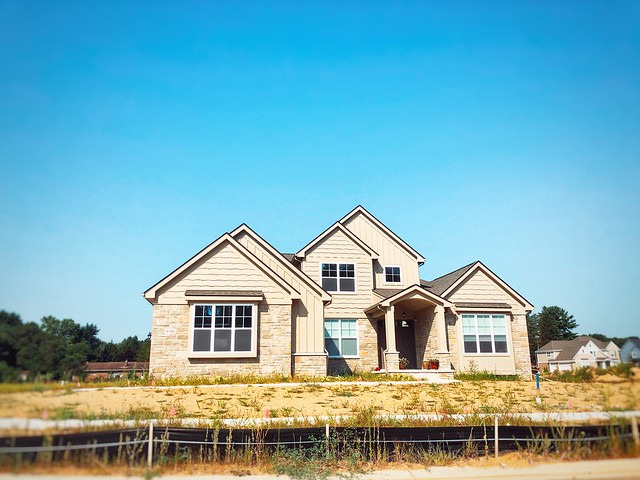
A modern beige house under a clear blue sky in a spacious yard.

Home Seller Tenure Remains Near 10-Year Low


Buying a house isn’t a short-term living arrangement. Typically, if you’re buying, you’re planning to stay a while. But how long should home buyers expect to live in the house they purchase? Well, conventional wisdom says you should expect to live in the house you buy for at least five years. Recently, though, Americans have been staying in their homes longer before selling and moving somewhere new. In fact, between 2019 and 2021, the typical homeownership tenure was cited as being somewhere between eight and 13 years. For comparison, in the early 2000s, it got as low as four and a half years. These days, it’s getting shorter again. In fact, according to ATTOM Data Solutions, home sellers who sold during the fourth quarter of 2022 had owned their homes an average of 5.85 years. That’s the third shortest tenure since 2012 and represents a growing trend, with a majority of metro areas showing tenures down. (source)

Bright blue house exterior with white-trimmed windows under a partly cloudy sky.

Mortgage Rates Decline For Third Straight Week


According to the Mortgage Bankers Association’s Weekly Applications Survey, average mortgage rates fell last week from one week earlier. Rates were down for 30-year fixed-rate loans with both conforming and jumbo balances, loans backed by the Federal Housing Administration, and 15-year fixed-rate loans. Joel Kan, MBA’s vice president and deputy chief economist, says rates have been trending downward lately. “Mortgage rates declined for the third straight week, which is good news for potential home buyers looking ahead to the spring home buying season,†Kan said. “Home buying activity remains tepid, but if rates continue to fall and home prices cool further, we expect to see potential buyers come back into the market. Many have been waiting for affordability challenges to subside.†Last week, demand for loans to buy homes was up 3 percent from the week before. The MBA’s weekly survey has been conducted since 1990 and covers 75 percent of all retail residential mortgage applications. (source)

A framed artwork featuring a red geometric arrow-like symbol on a white background.

Millennial Buyers Plan For Smaller Down Payments


Saving enough money for a down payment can be a hurdle for some home buyers, especially first-time buyers. After all, unlike move-up buyers who can use the proceeds of their previous home’s sale, first-time buyers have to come up with a down payment largely through savings. But saving money’s not always easy. In fact, among recently surveyed millennial home buyers, 41 percent said saving for a down payment was the biggest barrier to buying a home – only mortgage rates and home prices ranked higher. The good news, though, is you don’t have to have a 20 percent down payment saved before you can buy a house. And, according to the survey, most younger buyers won’t. The survey found 62 percent of respondents said they plan to have a smaller down payment when they buy. That’s a big change from last year, when just 34 percent of millennial buyers planned to put down less than 20 percent. (source)

Close-up of various US dollar bills spread out.

Housing Market’s Rebound Tied To Fed


Each month, Fannie Mae’s Economic and Strategic Research Group releases an outlook detailing what it thinks is ahead for the economy and housing market. The forecast covers the group’s expectations for economic growth, home sales, prices, mortgage rates, and other economic factors. According to the most recent release, the group sees a rebound ahead for the housing market but can’t say for sure when it’ll begin. That’s largely due to the fact that where mortgage rates go from here is dependent on the Federal Reserve. The Fed began raising interest rates in 2022 to fight inflation. Doug Duncan, Fannie Mae’s senior vice president and chief economist, says there’s some speculation that the Fed will slow those efforts during the second half of this year. “The market sees the Federal Reserve easing in the second half of the year, which can be interpreted either as a view that the recession is forthcoming or that the slowdown in inflation will lead to a less restrictive monetary posture,†Duncan said. “If the latter occurs, the lower accompanying rates will likely set the stage for a pickup in housing activity going into 2024.†(source)

Upward view of a blue house facade against a clear sky.

Thank you for your upload