

Banner
Menu

Active Listings Are Growing At Record Pace


The number of homes for sale is growing at a record pace, according to new numbers from the National Association of Realtors’ consumer website. Their Monthly Housing Trends Report shows active listings increased 30.7 percent year-over-year in July. It was the third month of gains, and a good sign for home buyers. Why? Because low inventory has been the main thing driving home prices higher and more available homes for sale will help slow future increases. Danielle Hale, the website’s chief economist, says the market is balancing. “The U.S. housing market continues to move toward more evenly balanced supply and demand compared to the 2021 frenzy,†Hale said. “Our July data shows elevated mortgage rates left many buyers tightening their budget and sellers responding with price reductions, while home shoppers who kept searching saw more available options.†More available options is good news but there’s still a ways to go before the market is properly balanced. In fact, the report shows that the number of active listings is still 44.4 percent lower than it was in July 2019. (source)
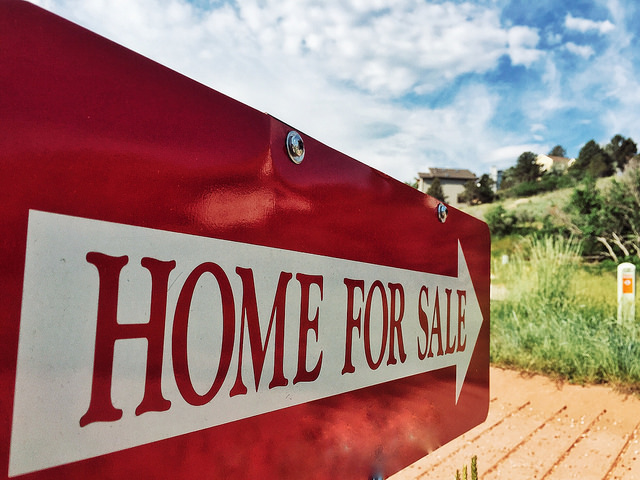

A red 'Home For Sale' sign against a partly cloudy sky.

Americans Have Mixed Feelings About Market


The housing market has shifted and Americans are still adjusting to the change, according to the results of Fannie Mae’s most recent Home Purchase Sentiment Index. The index is based on a survey of Americans which asks them for their perception of the current housing market and their personal financial situation. In July, survey respondents were less optimistic than they’ve been in months past, with fewer participants saying they feel now is a good time to buy or sell a house. But while market sentiment has fallen, respondents say their household income is up from last year and they feel affordability conditions will improve over the next year. Doug Duncan, Fannie Mae’s senior vice president and chief economist, says Americans have mixed feelings about the market. “We believe consumer reaction to current housing conditions is likely to be increasingly mixed: Some homeowners may opt to list their homes sooner to take advantage of perceived high prices, while some potential home buyers may choose to postpone their purchase decision believing that home prices may drop,†Duncan said. (source)

Row of colorful historic townhouses under a clear blue sky.

Nearly Half Of All Homes Are Equity Rich


Equity is the difference between what your home is worth and what you owe on your mortgage. Which means, it’s a good thing to have – and, these days, nearly half of all homeowners do. In fact, according to ATTOM Data Solutions’ second-quarter 2022 U.S Home Equity & Underwater Report, 48.1 percent of mortgaged residential properties are now considered equity rich – meaning the amount homeowners owe on their home is less than 50 percent of the home’s market value. The share of equity-rich homes is up from 34.4 percent last year at the same time and 44.9 percent during the first quarter of this year. Rick Sharga, executive vice president of market intelligence at ATTOM, says homeowners will continue to make gains, even as the market slows. “While home price appreciation appears to be slowing down due to higher interest rates on mortgage loans, it seems likely that homeowners will continue to build on the record amount of equity they have for the rest of 2022,†Sharga said. As it is, the percentage of equity rich homes is now the highest it’s ever been. (source)

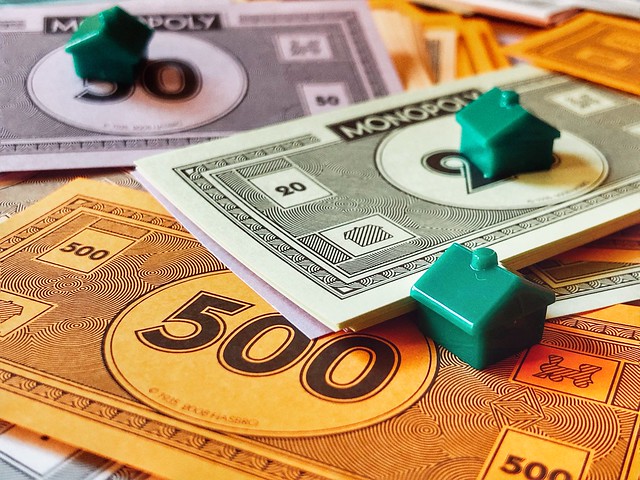
Monopoly game pieces on colorful property and money cards.

How Competitive Is Today’s Housing Market?


A competitive housing market can be stressful for home buyers. When there are more buyers than homes for sale, available homes sell quickly and for more than their asking price. It can put pressure on buyers and their budgets. So how competitive is today’s market? Well, one good measure of competitiveness is showing activity. The higher the number of average showings per listing, the more competition there likely is between buyers. Fortunately for today’s home shoppers, showing activity has been slowing. In fact, the number of housing markets averaging double-digit showings per listing fell to three in June. That’s down from a record high of 121 in March. But while that’s a huge improvement and good news for summer home buyers, showing activity is still higher than its pre-pandemic level. Which means, though competition for available homes has calmed from where it was over the past two years, prospective home buyers should still be prepared to move quickly. (source)

A large house with green shutters and autumn foliage under a bright blue sky.

Mortgage Rates See Biggest Decline Since 2020


According to the Mortgage Bankers Association’s Weekly Applications Survey, average mortgage rates saw their biggest decline in two years last week. Rates fell across all loan categories, including 30-year fixed-rate loans with both conforming and jumbo balances, loans backed by the Federal Housing Administration, and 15-year fixed-rate loans. Joel Kan, MBA’s associate vice president of economic and industry forecasting, says lower rates could help spark more buying activity. “The drop in rates led to increases in both refinance and purchase applications, but compared to a year ago, activity is still depressed,†Kan said. “Lower mortgage rates, combined with signs of more inventory coming to the market, could lead to a rebound in purchase activity.†Last week, mortgage application demand was up 1.2 percent, with a 2 percent increase in refinance activity and a 1 percent bump in demand for loans to buy homes. The MBA’s weekly survey has been conducted since 1990 and covers 75 percent of all retail residential mortgage applications. (source)

A white arrow pointing down on a red background with partial white text.

Inventory Of New Homes For Sale Grows


Home buyers are finally getting some relief from the housing market’s inventory issues. For years now, there have been too few homes available for sale. That can make it difficult for buyers to find a house that fulfills their wishlist and fits their budget. Put simply, it’s frustrating. But recent data has shown the number of homes for sale is beginning to improve. And, according to newly released numbers from the U.S. Census Bureau and the Department of Housing and Urban Development, that’s particularly true in the new home market. Their most recent new home sales report shows there were 457,000 new homes available for sale at the end of June. That represents a 9.3-month supply at the current sales rate. For comparison, there was only about a 4-month supply at the beginning of 2021. So what’s fueling the spike in available new homes? Well, partly, more new homes have been built. The other part, though, is fewer buyers. The report shows new home sales fell 8.1 percent in June and were 17.4 percent lower than last year at the same time. (source)

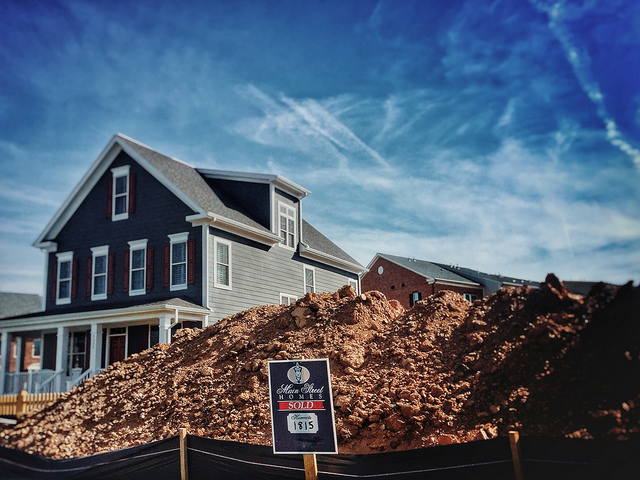
House under construction with a large dirt pile in front.

Is It Still A Good Time To Sell A Home?


The past couple of years have been good to home sellers. A historically low number of homes for sale combined with elevated demand from buyers made conditions perfect to sell a home quickly and for a great price. But this year, things have been changing. The housing market has begun to cool. The number of homes for sale has started to rise while buyer demand has slowed. So is it still a good time to sell a home? Well, according to new numbers from ATTOM Data Solutions it is. Their quarterly 2022 U.S. Home Sales Report found profit margins on median-priced single-family homes hit another record high during the second quarter. In fact, the typical home sold during the second quarter generated a profit of $123,869, that’s up from $103,750 during the first quarter and $90,000 last year at the same time. Rick Sharga, ATTOM’s executive vice president of market intelligence, says it’s still a good time to sell. “Home sellers in the second quarter continued to benefit from the rapid growth in home price appreciation the country has experienced over the past few years,†Sharga said. “While price growth may slow down as higher mortgage rates dampen demand from prospective home buyers, home sellers should continue to profit from the record $27 trillion in homeowner equity in today’s market.†(source)

White building with decorative balcony and clear blue sky.

How Your Credit Score Can Save You Money


It’s easy to ignore your credit score. After all, it’s not something that comes up that often in day-to-day life. But, if you’re thinking about buying a house, it’s important to check yours sooner than later. Why? Well, according to one new analysis, it could save you money. Your credit score is among the factors that determines your mortgage rate, which then determines how much your monthly mortgage payment will be. A better credit score will get you a lower rate and a smaller mortgage bill, which will save you thousands of dollars over the life of your loan. In fact, the data showed a borrower with a credit score between 760 and 850 would pay nearly $300 a month less than a borrower with a score below 640 would for the same house. Over the life of a 30-year fixed-rate loan, that adds up to just over $100,000. In other words, a lot of money. That’s why it’s important for buyers to check their credit score early on in the home buying process. Knowing your score, and fixing any errors on your credit report, can potentially save you a lot of money on your mortgage. (source)

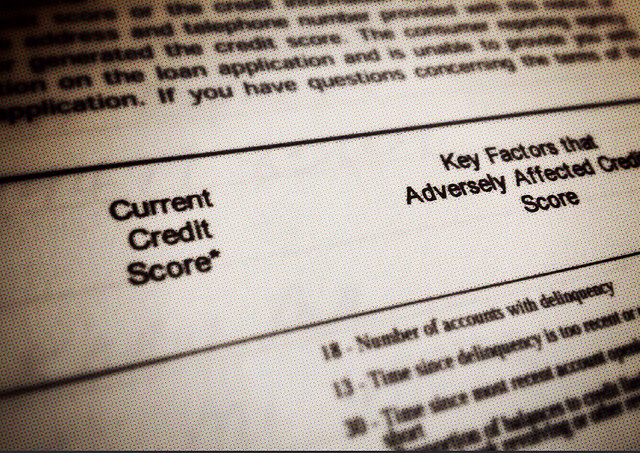
Close-up of a credit score report showing current credit score details.

Contracts To Buy Homes Slide In June


When a buyer has their offer accepted by a home seller, a contract is signed. The transaction isn’t closed, though, until after the details of the home’s sale and financing have been worked through. During that process, the home’s sale is considered pending. Typically, there are several weeks between signing a contract and closing, which is why contract signings are considered an important indicator for the housing market. After all, most signed contracts lead to closed sales, so they’re a good predictor of future sales numbers. That’s why the National Association of Realtors tracks them each month with their Pending Home Sales Index. In June, the index fell 8.6 percent. It’s now down 20 percent from where it was last year at the same time. NAR chief economist, Lawrence Yun, says rising mortgage rates are behind the decline. “Contract signings to buy a home will keep tumbling down as long as mortgage rates keep climbing, as has happened this year to date,†Yun said. “There are indications that mortgage rates may be topping or very close to a cyclical high in July. If so, pending contracts should also begin to stabilize.†Yun expects sales to fall in 2022 but begin rising again next year. (source)

A 'Sale Pending' sign posted outside a house during daylight.

Rates Down For 30-Year Conforming Loans


According to the Mortgage Bankers Association’s Weekly Applications Survey, average mortgage rates for 30-year fixed-rate loans with conforming balances fell last week from the week before. Rates for jumbo loans, loans backed by the Federal Housing Administration, and 15-year fixed-rate loans each saw small increases. Joel Kan, MBA’s associate vice president of economic and industry forecasting, says rates may be stabilizing, which would be good news for buyers. “Weakening purchase applications trends in recent months have been consistent with data showing a slowdown in sales for newly constructed homes and existing homes,†Kan said. “A potential silver lining for the housing market is that stabilizing mortgage rates and increases in for-sale inventory may bring some buyers back to the market during the second half of the year.†Right now, buyers remain cautious. The MBA’s purchase index – which measures demand for home purchase loans – fell 1 percent week over week and is now 18 percent lower than last year at the same time. (source)

A large yellow arrow painted on a dark pavement pointing downward.

Thank you for your upload