

Banner
Menu

Category: Uncategorized

Conditions Help Keep Builder Confidence High


Because home builders have a unique perspective on the housing market, the National Association of Home Builders conducts a monthly survey to gauge how confident they are in the market for newly built homes. Their responses are scored on a scale where any number above 50 indicates more builders view conditions as good than poor. In May, the NAHB’s Housing Market Index held steady at 83, unchanged from the month before. Chuck Fowke, NAHB’s chairman, says there are a few factors that have builders feeling optimistic about the market. “Builder confidence in the market remains strong due to a lack of resale inventory, low mortgage interest rates, and a growing demographic of prospective home buyers,†Fowke said. “However, first-time and first-generation home buyers are particularly at risk for losing a purchase due to cost hikes associated with increasingly scarce material availability.†It’s true. Construction costs – including the price of lumber – have spiked over the past year. That means, home buyers interested in buying a new home should expect rising prices, at least, through the end of 2021. (source)
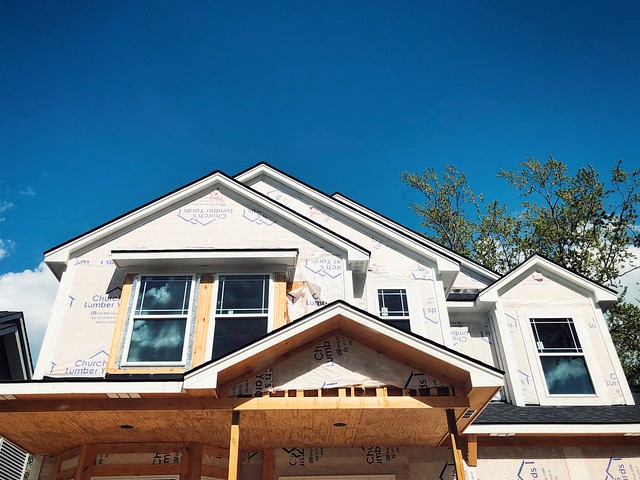

Newly constructed white house under clear blue sky.

Neighbors Have Become More Neighborly


In times of crises, people tend to come together. That’s certainly been true over the past year. The coronavirus pandemic meant we all had to look out for one another a little bit more than usual, and we did. Especially, closer to home. In fact, according to one recent analysis, the pandemic led to an immediate uptick in neighborhood outreach. We started relying more on the people in our own communities for everything from picking up prescriptions to walking dogs and letting each other know where supplies that had suddenly become scarce were still in stock. The increase in neighborhood engagement wasn’t just in certain locations or among certain demographics, either. It was widespread, from urban centers to rural areas and among the young and old. It was so widespread that 75 percent of surveyed neighbors said they had recently been the recipient of a random act of kindness. In short, we’ve all become a bit more neighborly in the past year – and that’s good news, because good neighbors make for safer, happier neighborhoods. (source)

Sunny day with palm trees and houses along the street.

Homeowners Continue To See Equity Gains


When you own a home and its value increases, you build equity. And when the amount of equity you’ve built is more than double what you owe on your mortgage, you’re considered equity rich – at least, according to ATTOM Data Solutions’ 2021 U.S. Home Equity & Underwater Report. The report, which looks at the number of equity-rich properties across the country, found that almost one in three homes qualified during the first quarter. In fact, 31.9 percent of the 55.8 million mortgaged homes included in the analysis were equity-rich. That’s up from 30.2 at the end of last year and nearly 5.5 percent higher than last year at the same time. Todd Teta, ATTOM’s chief product officer, says it’s a great time to be a homeowner. “It continues to be a great time to be a homeowner most everywhere in the country,†Teta said. “The ongoing price spikes we’re seeing help to cut down the number of seriously underwater properties and boost the level of equity-rich properties.†(source)

Red dollar sign on white square paper.

Rates Fall To Lowest Level In Months


According to the Mortgage Bankers Association’s Weekly Applications Survey, average mortgage rates fell last week from the week before. Rates were down across all loan categories, including 30-year fixed-rate loans with both conforming and jumbo balances, loans backed by the Federal Housing Administration, and 15-year fixed-rate mortgages. Joel Kan, MBA’s associate vice president of economic and industry forecasting, says rates are now lower than they’ve been in months. “Mortgage rates fell last week to the lowest levels since February, tracking the dip in Treasury yields,†Kan said. “The decline in rates helped the refinance index reach its highest level in eight weeks … The first week of May was also strong for the purchase market. Applications were up 13 percent from a year ago, which was around the time the housing market awakened from the pandemic-induced stall in activity.†Overall, demand for mortgage applications was up 2.1 percent week-over-week. The MBA’s weekly survey has been conducted since 1990 and covers 75 percent of all retail residential mortgage applications. (source)

White arrow painted on green asphalt pointing downward.

Mortgage Credit Availability Continues To Improve


In order to be approved for a mortgage, borrowers have to meet certain standards. How well they meet those standards not only determines whether they’re approved to borrow but also the terms of the loan they receive, should they be approved. Lending standards aren’t fixed, though. Which means, there are times when they’re stricter and times when they loosen. That’s why the Mortgage Bankers Association tracks mortgage credit availability each month – to help potential borrowers know what to expect. In April, according to their most recent report, lending standards loosened from the month before, making credit more available. Joel Kan, MBA’s associate vice president of economic and industry forecasting, says credit availability has improved as the housing market and economy have made gains. “The uptick in credit supply comes as the housing market and economy continue to strengthen,†Kan said. “One trend that has developed in recent months is the rising demand for ARMs, driven by higher rates for fixed mortgages and faster home-price appreciation.†Still, despite the improvement, credit availability hasn’t yet returned to where it was before the pandemic’s onset last March. (source)

A close-up of a single silver key on a textured surface.

The Single Best Strategy For Winning A Bidding War


In a competitive market, home buyers have to make their offers as attractive as possible. Good homes are in high demand and homeowners will, most likely, have more than one offer to choose from. That means, you have to make a strong case, if you hope to have yours chosen. So what’s the most effective strategy for winning a bidding war in a hot market? Well, according to one recent analysis, the single most effective strategy is an all-cash offer. In fact, 41 percent of surveyed real-estate agents named it as the best route for buyers in a bidding war. But all-cash offers aren’t possible for most buyers, which is why a higher down payment, additional earnest money, escalation clauses, and submitting before the review date were also popular strategies with today’s home shoppers. There are, of course, other ways to make your offer stand out, such as waiving the inspection or financing. However, those come with significant risks, since they remove protections put in place to save buyers from costly consequences. (source)

A stack of US hundred-dollar bills on a red surface.

Gap Widens Between Buying And Selling Sentiment

In April, Fannie Mae’s Home Purchase Sentiment Index found a widening gap between the number of respondents who say it’s a good time to sell a home and those who say it’s a good time to buy one. The index – which is based on a survey that asks Americans for their opinions on the housing market and economy – shows the share of participants who say it’s a good time to buy fell from 53 percent to 47 percent month-over-month. Conversely, the share who said it’s a good time to sell rose from 61 percent to 67 percent. Doug Duncan, Fannie Mae’s senior vice president and chief economist, says there are plenty of Americans who want to buy a home but conditions have made it challenging. “The decrease in home buying sentiment likely indicates that some consumers, potentially flush with savings – perhaps boosted in part by stimulus payments – may be attempting, but failing to buy a home due to heightened competition for relatively few listed homes,” Duncan said. In other words, the growing gap between home-buying and home-selling sentiment isn’t due to a lack of buyer interest. Low inventory has been holding buyers back. But as more homes are listed for sale, the now widening gap between buying and selling sentiment should begin narrow. (source)


Mortgage Report Says Metrics Look Strong


While the housing market outperformed expectations last year, it wasn’t untouched by the economic impact of the pandemic. There were scores of American homeowners who were suddenly without work or a way to cover their mortgage payment. Which is why the most recent Mortgage Monitor from Black Knight Financial is an encouraging sign. The report – which looks at loan-level residential mortgage data – found that, in April, the number of Americans paying their mortgage on time rose to the highest level since the pandemic began. In fact, 91.6 percent of mortgage holders made their monthly payments, up from 91 percent in March. Ben Graboske, Black Knight’s president, said that wasn’t the only metric pointing toward a strong recovery. “Despite mortgage delinquencies tending to trend seasonally upward starting in April, our McDash Flash daily performance dataset instead shows strong early payment activity for the month, †Graboske said. That’s also good news – as is the fact that the number of borrowers with at least one payment past due is now down 34 percent since February. (source)

A two-story house with a spacious green lawn under a clear blue sky.

Loan Demand Falls While Rates Remain Flat


According to the Mortgage Bankers Association’s Weekly Applications Survey, average mortgage rates were mostly flat last week, with slight increases for loans backed by the Federal Housing Administration and 30-year fixed-rate loans with both conforming and jumbo balances. But despite flat rates, demand for loans to buy homes was down for the second week in a row. Joel Kan, MBA’s associate vice president of economic and industry forecasting, says home buying demand is being held back by low inventory and higher prices. “Both conventional and government purchase applications declined, but average loan sizes increased for each loan type,†Kan explained. “This is a sign that the competitive purchase market, driven by low housing inventory and high demand, is pushing prices higher and weighing down on activity.†Still, overall demand for mortgage loans was down just 0.9 percent from the week before and purchase demand remains 24 percent higher than last year at this time. The MBA’s weekly survey has been conducted since 1990 and covers 75 percent of all retail residential mortgage applications. (source)

Close-up of the word 'MORTGAGE' on a financial document.

Month Of May Is Best For Seller Premiums


Everybody with a home to sell wants to get as much as they can for it. But beyond sprucing it up and making sure it looks its best, what else can you do to be certain you get a good offer? Well, according to a new analysis from ATTOM Data Solutions, you can also choose the right day to sell. ATTOM looked at 40.1 million home sales between 2011 and 2020 to determine which days of the year brought sellers the biggest premiums. The results show the month of May gives homeowners their best shot to sell their home above its estimated market value. Todd Teta, ATTOM’s chief product officer, says May – which had 10 of the best days to sell – also had the single best day based on premiums. “The month of May is particularly poised to garner the greatest sale premiums,†Teta said. “Among the top five days fetching the biggest home seller premiums, May 23 is the best day of the year to sell a home, producing a premium of 19.3 percent above market value.†Overall, May sales were found to be 13.4 percent above estimated values. However, if you have to wait until June, don’t despair. Premiums are still nearly 12 percent as the spring market rolls into summer. (source)

Close-up of various US dollar bills including $100, $1, and $20 notes.

Thank you for your upload