

Banner
Menu

Category: Uncategorized

Housing Market Outlook Grows Rosier


At the end of last year, the housing market looked like it might stall. Higher home prices and rising mortgage rates were making affordability conditions more challenging for buyers, especially first-time buyers and those looking for a suitable starter home. Since then, though, things have taken a turn for the better. The number of homes available to buyers has risen, which has caused prices to moderate somewhat. Additionally, mortgage rates have come back down and don’t look like they’re going to rise significantly any time soon. In fact, according to Fannie Mae’s Economic and Strategic Research Group, there is no expectation the Fed will raise rates again this year, or next. Doug Duncan, Fannie Mae’s chief economist, says that’s one of a combination of factors helping market conditions right now. “We revised upward our 2019 purchase and refinance mortgage origination forecasts amid continued strong demand and a boost to entry-level inventory, the pullback in mortgage rates, and slowing home price appreciation,†Duncan said. In other words, things are trending in the right direction for buyers and improving the outlook for the overall market. More here.

A vibrant red rose blooming amidst green foliage.

The New Home Market Is Trending Upward


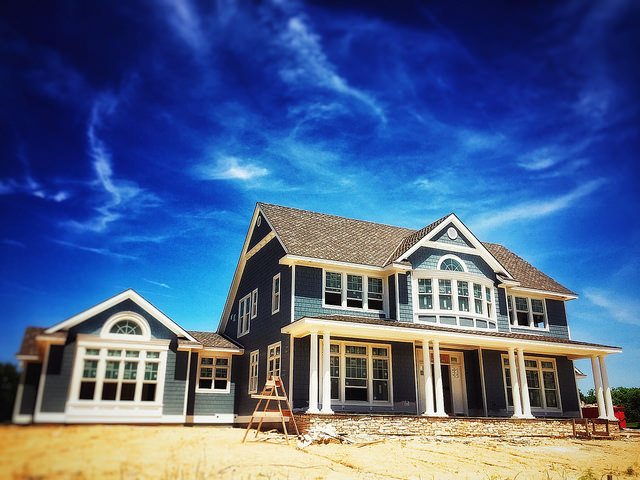
Newly released numbers from the U.S. Census Bureau and the Department of Housing and Urban Development show new home sales fell nearly 7 percent in April. But the month-over-month results only tell part of the story. That’s because some of the reason sales were down from the month before is that the March estimate was revised much higher than originally reported. And, after the revision, the data showed new home sales reached their highest level since 2007 in March. Additionally, even after coming down from that high, new home sales are still up 7 percent from where they were at the same time last year. In other words, the new home sales market is trending upward and that’s good news for the housing market overall. Why? Well, when new home sales increase, builders are more likely to build more new homes. And, as more homes are built and for-sale inventory increases, home prices moderate and help affordability levels for all buyers. More here.

A large modern house under a vibrant blue sky.

30-Year Rate Now At Lowest Level In Over A Year


According to the Mortgage Bankers Association’s Weekly Applications Survey, average rates for 30-year fixed-rate mortgages with conforming loan balances fell again last week. Rates for jumbo loans, loans backed by the FHA, and 15-year fixed-rate mortgages remained mostly flat from the week before. Joel Kan, MBA’s associate vice president of economic and industry forecasting, said the average 30-year fixed-rate is now at its lowest point in more than a year. “Mortgage rates fell for the fourth straight week, with the 30-year fixed-rate mortgage hitting its lowest level since January 2018, leading to a rebound in refinances,†Kan said. And while it’s true that there was an 8 percent increase in refinance activity last week due to decreasing rates, purchase activity was actually down from the week before. Kan says home buyers may be delaying their search due to economic uncertainty. But though demand for loans to buy homes was down from the week before, it remains 7 percent higher than at the same time last year. The MBA’s weekly survey has been conducted since 1990 and covers 75 percent of all retail residential mortgage applications.

Yellow house roof with partial 'MORTGAGE' text on dark background.

Report Shows Buying Conditions Are Improving

The National Association of Realtors most recent existing-home sales report shows sales were essentially flat in April, falling 0.4 percent from the month before. But though flat sales to begin the spring selling season may seem like trouble, a closer look at the data shows conditions are gradually improving for home buyers and may lead to more activity. Lawrence Yun, NAR’s chief economist, says he believes the improvements will soon help spur more sales. “First, we are seeing historically low mortgage rates combined with a pent-up demand to buy, so buyers will look to take advantage of these conditions,” Yun said. “Also, job creation is improving, causing wage growth to align with home price growth, which helps affordability and will help spur more home sales.” Additionally, inventory continues to improve, with the number of homes available for sale up nearly 2 percent from last year at the same time. However, though the market is becoming more favorable for buyers, it’s still competitive. In fact, 53 percent of homes sold in April were on the market for less than a month.


Do Occupied Homes Sell Better Than Empty Ones?


If you’re a homeowner getting ready to sell, you’re likely thinking about how to get the best price for your house. Naturally, getting a good offer is going to be top priority. The other big issue is timing. Homeowners who are using the sale of their home to fund the down payment on their next place have to time it right. But could the timing of your move affect the price your home gets? Well, according to new research that compared the sale price of occupied versus vacant homes, it might. In fact, the research showed that homes whose owners had already moved out sold for $11,000 less and spent six more days on the market than comparable homes that were still occupied. Why would this be? Well, one reason is that buyers looking at an empty house assume its owners aren’t as eager to sell, since they’ve already moved on. Another reason is furnishings can sometimes help a home show better. However, there are a lot of factors to consider. For example, a home with less attractive décor can sometimes drag its price down just as much as being vacant. More here.

Colorful row of townhouses under a partly cloudy sky.

Homeowners With Equity Influence Renters To Buy


It’s hard not to be influenced by your family and friends. After all, their opinions hold more weight because you trust them. When someone you love recommends something, you’re probably more likely to consider it than had you heard it from another source. It doesn’t matter if it’s a restaurant, a new movie, or a vacation destination, if a friend tells you it’s good, you’ll likely believe them. This is also true when deciding to buy a house. At a panel convened by the National Association of Realtors, Dr. Johannes Stroebel – an associate professor of finance at New York University – talked about why that is. According to Stroebel, a recent paper looked at how the positive experiences of people close to us can influence our decision to buy. The research showed that having a Facebook friend who experienced a 5 percent increase in their home’s value over the past two years increased the probability that a current renter would purchase a home over the next two years. “Individuals do discuss property value with their friends, and this changes behavior,†Stroebel said. In short, if you have a friend who’s seen their home’s value rise, you’re more likely to believe buying a house is a good investment. More here.

Close-up of U.S. coins and a dollar bill on a white surface.

Builders Say Conditions Are Good For Buyers


The number of new homes being built can be a good gauge of the housing market’s health. After all, home builders wouldn’t be building homes unless they felt confident that those homes would sell. And buyers wouldn’t be interested in buying a new home unless the housing market and economy were doing well. For this reason, the National Association of Home Builders’ Housing Market Index is an important indicator. Released monthly, the survey measures builders’ confidence in the new home market on a scale where any number above 50 indicates more builders view conditions as good than poor. In May, the index was up, rising three points to 66. Among its components, those measuring current sales conditions and expectations for the next six months were both at 72. Robert Dietz, NAHB’s chief economist, says conditions are improving for home buyers, with lower mortgage rates and a strong economy leading the way. “This lower-interest rate environment, along with ongoing job growth and rising wages, is contributing to a gradual improvement in the marketplace,†Dietz said.

A house under construction with a large orange SkyTrak forklift in front.

Mortgage Rates Fall For 3rd Consecutive Week


According to the Mortgage Bankers Association’s Weekly Applications Survey, average mortgage rates fell again last week. In fact, rates were down for 30-year fixed-rate loans with both conforming and jumbo balances, loans backed by the Federal Housing Administration, and 15-year fixed-rate mortgages. It was the third consecutive decline. It also comes at a good time for home buyers. Joel Kan, MBA’s associate vice president of economic and industry forecasting, says demand for loans to buy homes is now nearly 7 percent higher than at the same time last year. “Purchase applications declined slightly last week but still remained almost 7 percent higher than a year ago,†Kan said. “Despite the third straight decline in mortgage rates, refinance applications decreased for the fifth time in six weeks, albeit by less than 1 percent.†Falling rates have largely been due to global economic concerns. Whether or not it spurs more home buyers to enter the market will determine how busy the spring and summer season will be for home sales. More here.

Scrabble tiles spelling the word 'LOANS' on a red background.

Recent Buyers Reveal Biggest Wish List Regrets


There’s a reason they’re called wish lists. After all, home buyers can’t expect to get every single thing they want in a house unless they have one custom built. Which is to say, you’re, undoubtedly, going have to make some sacrifices and some of your wishes are going to go unfulfilled. For that reason, a recent survey took a look at what new homeowners say are the things they most wish their home had. According to the results, a walk-in pantry was the most common response. Around a third of respondents said it was the thing their home didn’t have that they regretted most. Other popular answers included granite countertops, kitchen islands, tankless water heaters, and hardwood floors. But though that might make it sound like recent buyers are dissatisfied with their new homes, the survey found that 95 percent of participants said they like or love the house they purchased. Which should be encouraging to prospective home buyers who worry that they’ll get it wrong and end up in a house they dislike. More here.

A yellow pencil resting diagonally on a lined notepad.

Number Of Starter Homes For Sale Is Rising

Recently, there has been a growing number of young Americans interested in buying homes. But though there’s been increasing demand, the number of affordable homes available to these buyers has lagged behind in many markets. In short, there are more potential first-time buyers than entry-level homes available for sale. This is a problem for the housing market, since it means many buyers get priced out or simply can’t find a home to buy. Fortunately, inventory is beginning to rebound. And, according to one recent report, the number of starter homes available for sale rose 3.5 percent over the last year. That’s the fastest pace in more than 6 years. It’s also good news for younger home buyers and the market overall. But though the news is good, the data also suggests inventory is growing fastest in more expensive markets. That means, some of the inventory growth is due to homes remaining on the market longer due to higher prices. More here

Thank you for your upload