

Banner
Menu

Category: Uncategorized

Mortgage Rates Higher In Latest Survey


According to the Mortgage Bankers Association’s Weekly Applications Survey, average mortgage rates moved higher last week. Rates increased from the week before across all loan categories, including 30-year fixed-rate loans with both conforming and jumbo balances, loans backed by the Federal Housing Administration, 15-year fixed-rate loans, and 5/1 ARMs. The increases contributed to a 2 percent decline in demand for home purchase loans. Mike Fratantoni, MBA’s senior vice president and chief economist, says higher rates have slowed demand. “Application volumes for both refinancing and home purchases declined and continue to fall further behind last year’s record levels,†Fratantoni said. “The news that job growth and wage growth continued in September is positive for the housing market, as higher incomes support housing demand.†Last week, overall demand for mortgage applications was 2 percent lower than the week before. The MBA’s weekly survey covers 75 percent of all retail residential mortgage applications and has been conducted since 1990. (source)
Close-up of a black percentage symbol on a textured beige background.

What Is The Best Day To Buy A House?


Home buyers hoping to buy without busting their budget may be in luck. Because though mortgage rates continue to climb and prices remain high, the best days to buy a home are ahead of us, according to a new analysis from ATTOM Data Solutions. The analysis looked at 39 million single-family home and condo sales over the past nine years in an attempt to narrow down the days buyers get the best deal. The results show buyers who bought on November 28 paid the lowest premium at just 1.1 percent above market value, making it the best day to buy a home. December took five of the next six best days to buy, with premiums of 2 percent or lower on December 5, 26, 19, 12, and 24. Rick Sharga, executive vice president of market intelligence at ATTOM, says seasonality has always had an effect on prices. “Seasonality has always had an impact on home prices, which tend to weaken in the fall and winter months when there’s less buying activity,†Sharga said. “Savvy home buyers can take advantage of those lower prices and less competition from other buyers once the leaves start to turn.†(source)

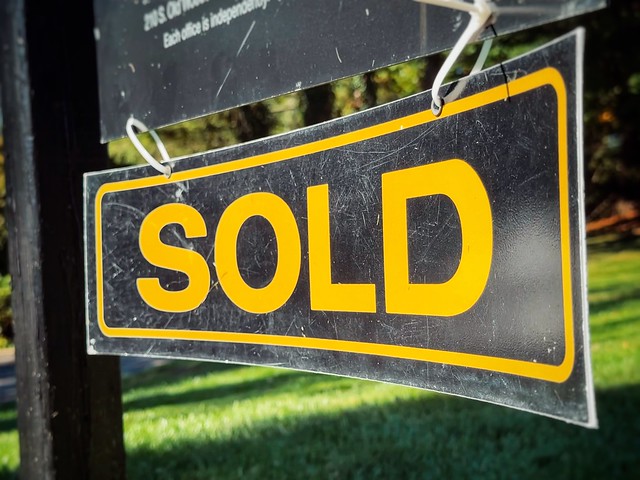
A yellow and black sold sign hanging outdoors.

Inventory Of Homes For Sale Continues To Grow


The home price surge of the past few years was primarily caused by a lack of homes for sale. Too few options led buyers to fight for the homes that were available. Bidding wars and competition made for a challenging housing market, as inventory fell to historic lows. This year, though, things have begun to change. There are more homes available for sale than there were last year. In fact, according to new numbers from the National Association of Realtors’ consumer website, the number of homes for sale was up nearly 27 percent year-over-year in September. That’s about even with August’s rate of improvement. Danielle Hale, the website’s chief economist, says the gains have been fueled, in part, by favorable selling conditions and current homeowners can still benefit. “For homeowners deciding whether to make a move this year, remember that listing prices – while lower than a few months ago – remain higher than in prior years, so you’re still likely to find opportunities to cash-in on record-high levels of equity, particularly if you’ve owned your home for a longer period of time,†Hale said. (source)

Brick house with chimney under a clear blue sky beside a palm tree.

Flood Risk A Consideration For More Buyers


You want to feel safe at home. Which is why it’s important to do some risk assessment when shopping for a house to buy. After all, thinking through some potential worst-case scenarios may help inform your decision-making process and avoid heartache down the road. Fortunately, today’s buyers have access to more information than ever before. And, according to one new analysis, it’s making them particularly aware of one specific risk more than the rest. In fact, the analysis found buyer behavior hasn’t been impacted that much from risks like fire, drought, extreme heat, and storms, but it has been affected by flooding. The data shows the rate of both mortgage denials and buyer withdrawals in areas with a high-flood risk have risen over the past five years. Down payments also tend to be smaller in these areas. But while flood risk may have buyers feeling more cautious, it hasn’t lessened their interest, as homes in areas with flood risk continue to appreciate faster than in other areas. (source)

Calm ocean waves under a colorful sunset sky.

Mortgage Rates Increase Again


According to the Mortgage Bankers Association’s Weekly Applications Survey, average mortgage rates rose again last week, with increases for 30-year fixed-rate loans with both conforming and jumbo balances, loans backed by the Federal Housing Administration, 5/1 ARMs, and 15-year fixed-rate loans. The 30-year fixed rate is now the highest it’s been since 2006. Joel Kan, MBA’s associate vice president of economic and industry forecasting, says higher rates have slowed home buying activity. “The current rate has more than doubled over the past year and has increased 130 basis points in the past seven weeks alone,†Kan said. “The steep increase in rates continued to halt refinance activity and is also impacting purchase applications, which have fallen 37 percent behind last year’s pace.†Demand for loans to buy homes was also down week over week. Results, however, were impacted by Hurricane Ian, which drove demand in Florida down 31 percent. The MBA’s weekly survey has been conducted since 1990 and covers 75 percent of all retail residential mortgage applications. (source)

A yellow arrow on the ground points forward with the words 'THIS WAY'.

New Home Sales See An Unexpected Surge


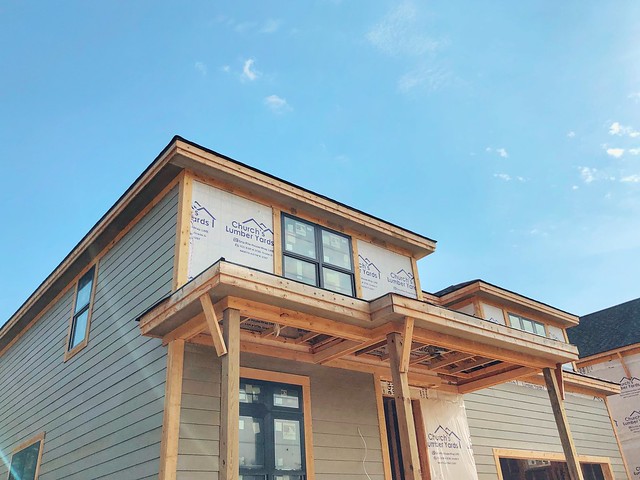
With reports of slower buyer demand, higher mortgage rates, and economic uncertainty in the news, you might expect that sales of newly built single family homes would be falling. Economists polled by Reuters certainly did. Polled before the release of the U.S. Census Bureau and Department of Housing and Urban Development’s New Residential Sales report, economists said they expected sales would decline to an adjusted annual rate of 500,000 units. Instead, the newly released numbers show sales surging to an annual pace of 685,000 units. In other words, sales of new homes spiked 28.8 percent in August from the month before. The improvement seems like encouraging news for the market at a time when buyers are hesitant and traffic is down. However, the gains may be short lived, since mortgage rates, after several weeks of decline, have jumped higher in recent weeks. Also in the report, the median sales price of new homes sold in August was $436,800. The average price was $521,800. (source)

A house under construction with exposed framing and blue sky.

Slower Traffic Offers Benefit To Buyers


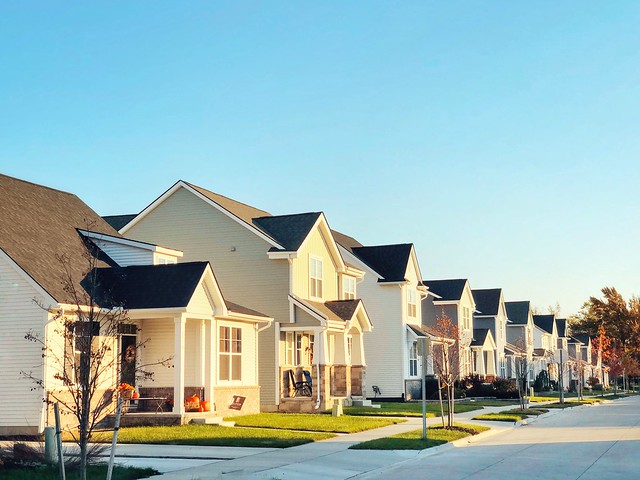
In a fast-paced housing market, buyers have to move quickly. That means making big decisions without much time to think. It can be stressful. Anyone who was active in the market last year knows the feeling. This year, though, the market’s rebalancing and that’s meant changing conditions for buyers. And according to one recent analysis, some of the changes will make it easier for home shoppers in the months ahead. How so? Well, the once fast pace of the housing market has slowed. The data shows buyer traffic – as measured by home showing activity – has fallen 12.2 percent from where it was last year at the same time. And while showings are still above pre-pandemic levels, traffic is undoubtedly slower. That’s welcome news for prospective buyers, as it means less competition, fewer bidding wars, and more time to consider options when looking at homes to buy. After the past two years, that should be a big relief to buyers. (source)

A row of modern suburban houses under a clear blue sky.

What Does Affordability Look Like Now?


Affordability is always a top concern for home buyers. That’s no surprise. Buying a home is a major financial transaction and you want to feel comfortable knowing you’re getting a good deal for your money and that you can afford the monthly mortgage payment. That’s why recent spikes in mortgage rates and home prices have potential buyers more hesitant these days. So where does affordability stand right now? Well, according to the most recent release of the Mortgage Bankers Association’s Purchase Applications Payment Index, the national median monthly mortgage payment actually fell recently, dropping from $1,844 in July to $1,839 in August. That continues a three-month trend of improving affordability. But Edward Seiler, MBA’s associate vice president, housing economics, and executive director, Research Institute for Housing America, says the gains likely stopped in September. “Most of the country saw modest improvements in home buyer affordability for the third straight month because of slightly lower mortgage rates amidst steady income gain growth,†Seiler said. “The recent stretch of modest affordability improvement likely hit a speed bump this month, as mortgage rates have jumped …†It’s true. Average mortgage rates have moved higher in recent weeks and have likely pushed mortgage payments higher as well. (source)

Close-up of various US dollar bills showing different denominations.

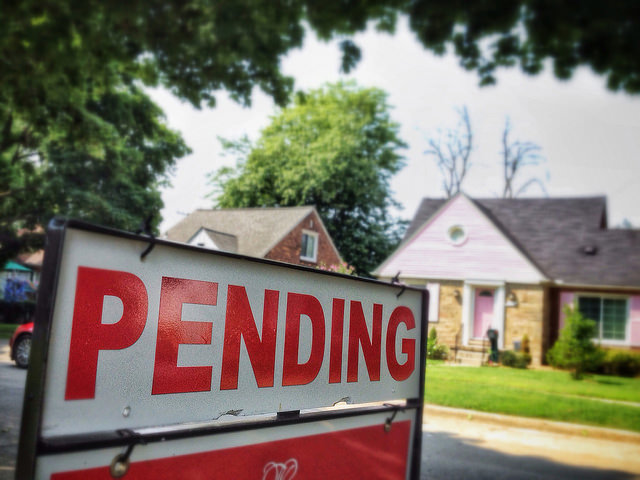
Contract Signings Stall In August


The National Association of Realtors’ Pending Home Sales Index measures the number of contracts to buy homes signed each month. Because it tracks contracts, not closings, it’s considered a good indicator of where home sales are headed. In August, the index registered a 2 percent decrease, marking the third consecutive month of declines. Lawrence Yun, NAR’s chief economist, says mortgage rates are the number one factor with buyers. “The direction of mortgage rates – upward or downward – is the prime mover for home buying, and decade-high rates have deeply cut into contract signings,†Yun said. “If mortgage rates moderate and the economy continues adding jobs, then home buying should also stabilize.†Yun expects mortgage rates to become more steady once inflation calms. That, and slower price appreciation, should lead sales to pick up. Regionally, August’s results show contracts to buy homes were down in the Midwest, Northeast, and South, but rose in the West. (source)

A red and white pending sign in a suburban neighborhood.

Average Mortgage Rates Move Higher


According to the Mortgage Bankers Association’s Weekly Applications Survey, average mortgage rates moved higher last week. Rates increased from the week before across all loan categories, including 30-year fixed-rate loans with both conforming and jumbo balances, loans backed by the Federal Housing Administration, 5/1 ARMs, and 15-year fixed-rate loans. Joel Kan, MBA’s associate vice president of economic and industry forecasting, says while rising rates have made buyers more hesitant, they still have options. “Purchase activity was 29 percent lower than a year ago, with higher rates and economic uncertainty weighing on buyers’ decisions,†Kan said. “With the recent jump in rates, the ARM share reached 10 percent of applications and almost 20 percent of dollar volume. ARM loans remain a viable option for qualified borrowers in this rising rate environment.†Despite higher rates, the purchase index was relatively flat week-over-week. In fact, demand for loans to buy homes was down just 0.4 percent. The MBA’s weekly survey has been conducted since 1990 and covers 75 percent of all retail residential mortgage applications. (source)

Illuminated 'MORTGAGE' sign in a dark setting.

Thank you for your upload