

Banner
Menu

Homes Are Affordable In 49% Of US Counties


In an effort to determine how affordable it is to buy a home, ATTOM Data Solutions looked at how much of the average wage earner’s monthly income is needed to make the mortgage payment on a median-priced home in counties across the country. The results of their recently released Q2 U.S. Home Affordability Report show 49 percent of US counties are now more affordable than their long-term historical average. That’s a significant improvement from last year, when the report found just 31 percent of counties affordable. Todd Teta, ATTOM’s chief product officer, says current market dynamics are encouraging for both buyers and sellers. “The latest affordability numbers reveal a win-win situation for sellers as well as buyers,†Teta said. “Prices are rising again around the country during the current home-buying season, despite worries that the economic impact of the coronavirus pandemic would halt the nine-year run up in home values. But a combination of wage gains and declining mortgage rates are helping to override the increases and make homes more affordable in large swaths of the United State.†The report found the counties where payments required the smallest percentage of wages were in the Midwest, with counties in Ohio, Wisconsin, and Michigan making up the top 5 most affordable. (source)


Close-up of a dollar sign on textured fabric.

What’s Happening In The Luxury Home Market?

Luxury can mean different things to different people. So when you’re talking about the luxury home market, it’s good to define the parameters. After all, a $1 million home in Los Angeles isn’t the same as a $1 million home in Kansas City. Generally speaking, though, the luxury market is categorized as homes in the top 5-to-10 percent based on home value. And naturally, the high end of the market doesn’t always behave the same as other tiers do. So what’s been happening in the luxury market lately? Well, according to one recent analysis, the median home price in luxury markets has fallen 2.3 percent in recent weeks – at the same time the overall market has seen prices go up. Part of the reason for this is that the typical home buyer plans to live in the home they buy for many years, giving them some protection against temporary economic turmoil. Luxury buyers, on the other hand, may be more reluctant to make a large investment in times of uncertainty. Because of this, the ratio of available homes to interested buyers is different in high-end markets and can cause prices to move independent from the overall trend. (source)

Number Of Homes For Sale Down From Last Year


There are a lot of things about a house that might cause a potential buyer to decide against it. Maybe it’s a great house but in the wrong location or it needs more work than they’re willing to do. In some cases, it might just be a bad fit for their lifestyle, needs, or budget. That’s why the typical buyer looks at least a handful of houses before deciding to make an offer on one. In this market, though, buyers may have to be more flexible. That’s because, the number of homes available for sale is lower than normal. In fact, according to new data from the National Association of Realtors’ consumer website, the number of new listings is between 17 and 21 percent lower than last year at the same time. And nationally, housing inventory is down 27.4 percent. Danielle Hale, the website’s chief economist, says new listings have improved but buyer demand is outpacing supply. “Our June data reinforces that buyers are out in force and serious about finding a home,†Hale said. “Although the new listings trend has improved, inventory continues to decline, indicating that what is coming onto the market is selling.†(source)

Colorful row of townhouses under a partly cloudy sky.

Mortgage Rates Fall To Another Record Low


According to the Mortgage Bankers Association’s Weekly Applications Survey, average mortgage rates fell to another record low last week, with rates down for 30-year fixed-rate loans with both conforming and jumbo balances. Rates for loans backed by the Federal Housing Administration were up from the week before. But despite favorable rates, demand for mortgage applications dropped 1.8 percent. Joel Kan, MBA’s associate vice president of economic and industry forecasting, said it was the second consecutive week purchase application demand declined. “After two months of strong growth, purchase applications declined for the second week in a row,†Kan said. “The weakening in activity is potentially a signal that pent-up demand is starting to wane and that low housing supply is limiting prospective buyers’ options.†But while demand was down week-over-week, refinance and purchase activity are both still up from last year. In fact, refinance demand is 74 percent higher than year-ago levels, while demand for loans to buy homes is up 15 percent. The MBA’s weekly survey has been conducted since 1990 and covers 75 percent of all retail residential mortgage applications. (source)

Red surface with a bold white downward arrow and text.

Home Price Report Finds Values Stable


Naturally, home prices are the housing market data most important to potential home buyers and sellers. Before mortgage rates, inventory, time on market, or any other measure, buyers and sellers want to know where prices are and where they’re headed. This makes sense, after all. If you’re selling a house, you want to get the best price. And, if you’re buying one, you also want to get the best price. That’s why the S&P Case-Shiller Indices are closely followed. Considered the leading measure of U.S. home prices, the index has been keeping records for more than 27 years. According to the most recent release, prices remain steady, with small increases seen both month-over-month and annually. Craig J. Lazzara, managing director and global head of index investment strategy at S&P, says home values have been remarkably stable, despite the economic turmoil caused by the coronavirus. “April’s housing price data continue to be remarkably stable,†Lazzara said. “The National Composite Index rose by 4.7 percent in April 2020, with comparable growth in the 10- and 20-City Composites (up 3.4 percent and 4 percent, respectively). In all three cases, April’s year-over-year gains were ahead of March’s, continuing a trend of gently accelerating home prices that began last fall.†(source)

Close-up of multiple US $100 bills featuring Benjamin Franklin.

Contracts To Buy Homes Skyrocket In May


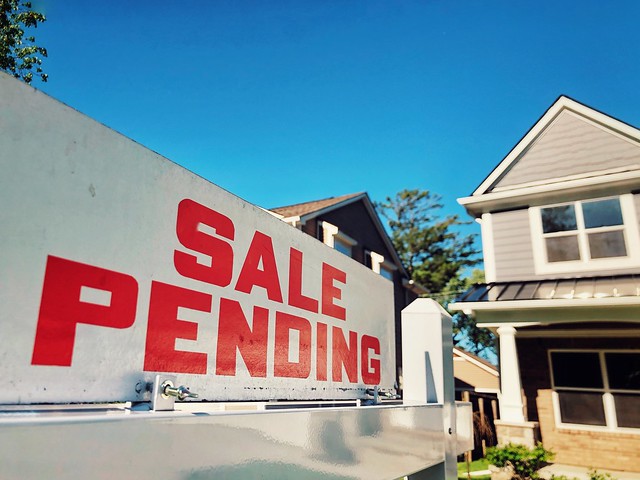
The National Association of Realtors’ monthly Pending Home Sales Index has tracked the number of signed contracts to buy homes since January 2001. In May, the index set an all-time record for month-over-month gains, with a 44.3 percent increase. After the improvement, pending sales are now just 5.1 percent lower than they were last year at the same time. Lawrence Yun, NAR’s chief economist, says the rebound is a good sign for the housing market and the overall economy. “This has been a spectacular recovery for contract signings, and goes to show the resiliency of American consumers and their evergreen desire for homeownership,†Yun said. “This bounce back also speaks to how the housing sector could lead the way for a broader economic recovery.†Every region of the country saw double-digit increases, led by a 56.2 percent gain in the West. Yun says the recovery has significantly improved the outlook for home sales this year. In fact, the NAR now expects total sales to suffer a less than 10 percent decline, despite the typical spring sales season being disrupted by the coronavirus pandemic.

A real estate sign showing 'SALE PENDING' outside a house under clear blue sky.

Buyers Have Returned, But What About Sellers?

In March, when the pandemic took hold and things started shutting down, many home buyers and sellers put their spring plans on hold. The start of the housing market’s typical sales season was delayed indefinitely as Americans took a wait-and-see attitude. Now, three months later, local economies have reopened and consumers have started to adjust to new safety measures. But what has happened to the plans of those home buyers and sellers? Well, according to new numbers from the National Association of Realtors’ consumer website, home buyers have returned to the market much faster than sellers. In fact, buyer demand has bounced back in full, while new listings are down 19 percent from where they were last year at the same time. That means, a lot of homeowners who were planning to sell have yet to put their homes on the market. How many of them eventually do, and when, will help determine where home prices are headed, how much competition buyers face, and how quickly the homes that are for sale end up selling this summer. (source)

House

Homes For Sale Are Selling Quickly


Buying a home takes a while. But though the process takes several weeks, you won’t necessarily have a lot of time to deliberate once you’ve found a house you like. In most cases, you have to make an offer quickly or you’ll risk losing the home to another buyer. That’s because, in the current market, inventory is low. The number of homes for sale was already lower than normal before the coronavirus and, since the onset of the pandemic, it’s fallen further. So, when you’ve found a house that fits your budget and lifestyle, chances are someone else has found it too. And competition from other buyers means you have to be prepared to move fast. How fast? Well, according to one new analysis, the typical home sold in June had an offer accepted within 22 days of it being listed. That’s the fastest homes have sold since the summer of 2018. And, while there are some cities where homes stay on the market longer, 29 of the 35 largest metros are seeing homes sell faster than they were last year at the same time. That means, in most markets, there are more buyers than homes for sale. So, if you’re planning on buying this summer, you should also plan to move quickly when you find the house you want. (source)

A red 'Home For Sale' sign against a partly cloudy sky.

Mortgage Rates Mostly Flat Last Week


According to the Mortgage Bankers Association’s Weekly Applications Survey, average mortgage rates were mostly flat last week. In fact, rates for 30-year fixed-rate loans with conforming loan balances were unchanged from the week before. Rates for jumbo loans and those backed by the Federal Housing Administration saw slight increases. But despite mortgage rates still hovering near record lows, demand for loan applications fell week-over-week. Joel Kan, MBA’s vice president of economic and industry forecasting, says the purchase market remains strong. “Even with high unemployment and economic uncertainty, the purchase market is strong. Activity has climbed above year-ago levels for five straight weeks and was 18 percent higher than a year ago last week,†Kan said. “One factor that may potentially crimp growth in the months ahead is that the release of pent-up demand from earlier this spring is clashing with the tight supply of new and existing homes on the market.†The MBA’s weekly survey has been conducted since 1990 and covers 75 percent of all retail residential mortgage applications. (source)

Close-up of the word 'MORTGAGE' on a financial document.

New Home Buyers Lead Sales Rebound


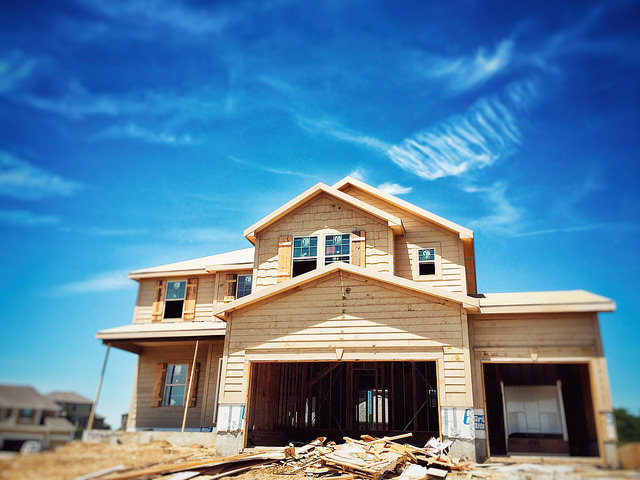
New home sales are a good indicator of what’s currently happening in the housing market. This is due to the fact that they’re counted when a contract to buy is signed, rather than at closing like existing-home sales. That’s also why new numbers from the U.S. Census Bureau and the Department of Housing and Urban Development are good news for the market’s recovery. According to the most recent results, sales of newly built single-family homes rose 16.6 percent in May from the month before and are now 12.7 percent higher than they were last year at the same time. The strength of the rebound was unexpected, as economists were predicting gains but thought sales would rise just 2.9 percent month-over-month. That the improvement was as strong as it was is an indication that home buyers – many of whom were sidelined by coronavirus shutdowns in March and April – became much more active in May. Along with other recent data showing signs of a rebound, May’s new-home sales numbers are reason to be optimistic that the housing market’s recovery will continue to gain strength as the summer goes on. (source)

Newly constructed two-story house under a bright blue sky.

Thank you for your upload