

Banner
Menu

Existing Home Sales Fall In May

Sales of previously owned homes fell in May, according to new numbers from the National Association of Realtors. Completed transactions were down 9.7 percent from the month before and 26.6 percent below last year at the same time. It was the third consecutive month of decreasing sales since the coronavirus’ first impact in March. But despite the declines, Lawrence Yun, NAR’s chief economist, is optimistic that things will rebound soon. “Sales completed in May reflect contract signings in March and April – during the strictest times of the pandemic lockdown and hence the cyclical low point,” Yun said. “Home sales will surely rise in the upcoming months with the economy reopening, and could even surpass one-year ago figures in the second half of the year.” His optimism is most likely based in other recent housing data showing buyers are returning to the market faster than originally expected. But while rebounding buyer interest is encouraging, it could put upward pressure on prices, if it outpaces the number of homes available for sale. As it is, the median existing-home price rose 2.3 percent year-over-year in May.
Sold-16

The Importance Of A Good Credit Score


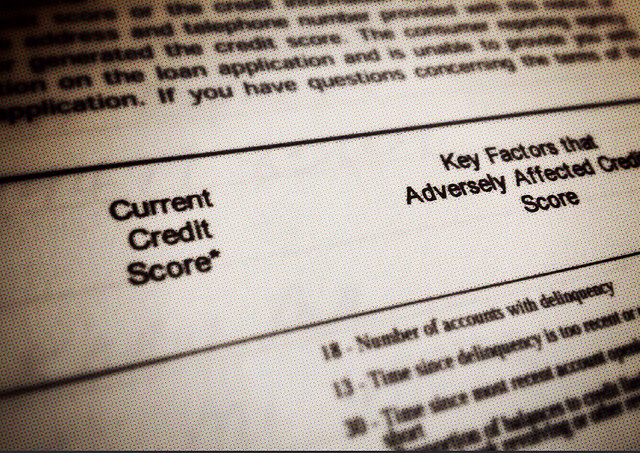
Without credit, buying a house becomes much more difficult. After all, not many of us have enough money in the bank to be able to write a check for a couple hundred thousand dollars. And, if you can’t pay cash, you’ll need a loan. Which is why your credit score is so important. It’s one of the ways a lender gets a feel for your financial habits and how responsible you are with your money. In short, your credit score will affect, not only the terms of the loan and your interest rate, but whether or not you even qualify at all. So you’re going to want to enter the home buying process with as good a score as you can. The first step is knowing what yours is, then checking your history for any errors or issues that can be fixed. But, once you’ve done that, how do you know where you stand? Well, typically a score over 700 is considered good, with anything over 800 considered excellent. Most scores will fall somewhere between 600 and 750. Overall, Americans’ credit has been improving lately. In fact, according to Ellie Mae’s most recent Origination Insight Report, FICO scores on all loans last month increased to 750. (source)

Close-up of a credit score report showing current credit score details.

Home Builders Optimistic After Demand Rebounds


If you want to know how the housing market is doing, ask a home builder. Their livelihood depends on knowing what, where, and when people are ready to buy a home. So they’re generally a pretty good indicator of where things are headed. That’s why the National Association of Home Builders conducts a monthly survey asking builders to score the market on a scale where any number above 50 indicates more builders view conditions as good than poor. In June, their Housing Market Index surged 21 points to 58. Robert Dietz, NAHB’s chief economist, says home builders are seeing signs of momentum. “Housing clearly shows signs of momentum as challenges and opportunities exist in the single-family market,†Dietz said. “Builders report increasing demand for families seeking single-family homes in inner and outer suburbs that feature lower density neighborhoods. At the same time, elevated unemployment and the risk of new, local virus outbreaks remain a risk to the housing market.†Among index components, those measuring buyer traffic and expectations for the next six months saw the biggest improvement. (source)

A rusty claw hammer with a wooden handle.

Mortgage Rates Fall To Another Survey Low

According to the Mortgage Bankers Association’s Weekly Applications Survey, average mortgage rates for 30-year fixed-rate mortgages with conforming loan balances fell to another all-time survey low last week. Rates also declined for jumbo loans, loans backed by the Federal Housing Administration, and 15-year fixed-rate loans. The drop led to an 8 percent increase in mortgage application demand over one week earlier. Both purchase activity and refinance activity were up week-over-week. Joel Kan, MBA’s associate vice president of economic and industry forecasting, says pent-up demand and low mortgage rates are fueling the gains. “Purchase applications increased to the highest level in over 11 years and for the ninth consecutive week. The housing market continues to experience the release of unrealized pent-up demand from earlier this spring, as well as a gradual improvement in consumer confidence,” Kan said. “Mortgage rates dropped to another record low in MBA’s survey, leading to a 10 percent surge in refinance applications.” Refinance demand is now 106 percent higher than it was last year at this time. The MBA’s weekly survey has been conducted since 1990 and covers 75 percent of all retail residential mortgage applications.

Arrow-Down

Housing Market On Track For A Quick Recovery


When the housing market crashed in 2008, the road to recovery was a long and gradual one. But while the market’s current downturn looks to be the worst since then – with home sales predicted to suffer the biggest year-over-year decline in 12 years – expectations for its recovery are far more optimistic. In fact, according to one recent analysis from Nationwide, home sales could be back to 2019 levels as soon as next year. Of course, the speed at which the market rebounds will largely depend on the coronavirus’ spread and available treatments. But real-estate market fundamentals were strong at the beginning of the year and a combination of low mortgage rates, favorable demographics, and solid household formations should help fuel a quick recovery. David W. Berson, Nationwide’s senior vice president and chief economist, says current data is already showing signs of a rebound. “New home sales unexpectedly increased for April, suggesting some consumers continued to shop while on lockdown,†Berson said. “Record-low mortgage rates have also helped to buoy the housing market, and mortgage applications for purchase have surged since bottoming out in early April.†If those trends continue, the market should quickly gain strength and be well positioned for a turnaround. (source)

Railroad tracks extending into the distance with autumn foliage.

Expensive Homes Dominate Available Listings


Housing market conditions can vary from one location to the next. They can also vary depending on the price range you’re shopping in. For example, a prospective buyer looking for an affordable starter home may find more competition and fewer choices than someone shopping for a more expensive house. This is the case in today’s market. Following coronavirus-related shutdowns and stay-at-home orders, the number of homes available for sale declined – as homeowners who were planning on selling their home this spring put their plans on hold. But the economic uncertainty caused by the pandemic affected the market for affordable homes much more than it did more expensive homes. In fact, one of the driving forces behind the current median list price – which, according to one analysis, is now $333,372, up 4.2 percent from last year – is the fact that more expensive listings are now a greater percentage of the overall number of homes available for sale than they were just a few weeks ago. As the market recovers, and more homeowners list their homes for sale, this should begin to even out and bring greater balance to the market. (source)

Historic building with green roof under a bright blue sky and trees.

How Has The Pandemic Affected Buyer Demand?


When stay-at-home orders became widespread in March, it would’ve been safe to assume that the economic shutdown and ensuing uncertainty would cause prospective home buyers to put their plans on hold. And they did, for a while. But now, just a few months later, it looks like staying in has caused buyers to be even more ready for a move. In fact, according to one new survey, 53 percent of home buyers say they are more likely to buy a home in the next year because of the pandemic – compared to 27 percent who said they hadn’t changed their plans and 20 percent who said they’d be less likely to buy. But why would the coronavirus make home buyers more enthusiastic to buy? Well, the vast majority said mortgage rates. Rates were already favorable to start the year but are now at record lows. That makes buying more affordable and presents movers with an opportunity to lock in a historically low rate. Another reason is Americans have been able to save money during lockdown because they’ve been spending less. That means more money set aside for a down payment. Perhaps the most relatable reason survey respondents gave, though, belongs to the 28 percent who said they were ready to make a move because they’d been stuck in their small space for so long. (source)

Chimney on a rooftop under a clear blue sky with faint clouds.

Weekly Recap Finds Market Ripe For Sellers

A new weekly measure of housing market health from the National Association of Realtors’ consumer website compares current traffic, price, new listing, and time on market trends to where they were in January, before the coronavirus’ impact. According to the most recent results, the index improved 1 point last week and is now at 88.8, 11.2 points below the baseline of 100. The index shows home prices are continuing to increase while time on market is beginning to fall. In short, home buyers are returning faster than sellers and it’s causing homes for sale to sell faster and at higher prices. Danielle Hale, chief economist for the site, says homeowners who think this isn’t a good time to sell may be mistaken. “The general sentiment from consumer surveys is that now is not a good time to sell a home because of COVID, economic uncertainty, and social unrest, but the data is saying the opposite,” Hale said. “Home prices are back to their pre-COVID pace and we’re seeing listings spend slightly less time on the market than last week.” Despite conditions, though, the number of active listings is now 25 percent below one year ago at the same time. (source)

Purchase Activity Now 13% Higher Than Last Year


According to the Mortgage Bankers Association’s Weekly Applications Survey, purchase activity continued to climb last week, rising 5 percent from the week before. The improvement marks eight consecutive weeks of increases and puts demand for loans to buy homes 13 percent higher than they were last year at the same time. Joel Kan, MBA’s associate vice president of economic and industry forecasting, says low mortgage rates and pent-up demand are the driving forces behind the rebound. “Fueled again by low mortgage rates, pent-up demand from earlier this spring, and states reopening across the country, purchase mortgage applications and refinances both increased,†Kan said. “The recovery in the purchase market continues to gain steam, with the seasonally adjusted index rising to its highest level since January.†Also in the report, average mortgage rates were mostly up from the previous week, with rates for 30-year fixed-rate mortgages with both conforming and jumbo balances higher than last week. Rates for loans backed by the Federal Housing Administration declined. The MBA’s weekly survey has been conducted since 1990 and covers 75 percent of all retail residential mortgage applications. (source)

Bright orange directional arrow painted on pavement.

Discounted Listings Are A Buying Opportunity


Despite the economic shock caused by the coronavirus pandemic, home prices have remained firm. Mostly that’s because there were already too few homes for sale in many markets and the pandemic only made it worse. In other words, there were more buyers than homes for sale before the coronavirus hit in mid-March and there still are. But despite the market imbalance – which puts upward pressure on prices – many home sellers are listing their homes at a discount. In fact, according to a new analysis from Weiss Analytics, in the top 25 markets with the highest percentages of discounted listings, at least one-quarter of all new listings have been priced lower than pre-pandemic prices. In some areas, listings can be found at as much as 11 percent below where they were in early March. Allan Weiss, CEO of Weiss Analytics, says there are many reasons sellers might price their home lower, even in markets where median prices are rising. “Sellers are discounting their homes for many reasons,†Weiss said. “The sharp decline in April sales motivated many sellers to price their homes to sell. Homeowner equity is at a historic high, and many owe nothing on their homes. They may simply want to sell quickly to trade up or relocate, and that is a choice they can make.†(source)

A US one-dollar bill with three pennies lying on it.

Thank you for your upload