

Banner
Menu

Housing Market Optimism Improves In May


Fannie Mae’s Home Purchase Sentiment Index is a monthly measure of how Americans feel about the housing market, buying and selling a home, the economy, and their personal financial situation. After hitting highs earlier in the year – with Americans optimistic about the market and their money – the index saw big declines after coronavirus mitigation efforts were put in place. But, according to the most recent results, consumer sentiment is starting to rebound. In fact, the overall index was up 4.5 points in May, with an increasing number of respondents who said they felt like now was a good time to buy or sell a home. Doug Duncan, Fannie Mae’s senior vice president and chief economist, says there are still concerns but Americans are gaining confidence. “Low mortgage rates have helped cushion some of the impact of the pandemic on consumer sentiment regarding whether it’s a good time to buy a home, which picked back up this month to late-2018 levels,†Duncan said. “Home-selling sentiment remains severely dampened due primarily to economic concerns, though increased purchase activity may improve the confidence of some potential sellers.†(source)

Historic homes under a clear blue sky with tall trees.

New Home Construction Moves To Outer Suburbs


Before you start looking at homes, you have to make some decisions. Where you’d like to live should be among the first. After all, you can’t begin to calculate the costs and whether or not you can afford them without knowing what areas you’ll be targeting. For example, would you prefer a place in the city or a house in the suburbs? Well, if new home construction is any indicator, many Americans are making the decision to move further away from city centers and into the inner and outer suburbs. According to a new report from the National Association of Home Builders, construction activity has been increasing in low-density markets for a while now. For example, their Home Building Geography Index recently showed the strongest growth in the outlying suburbs of small metro areas. And that trend is likely to be exacerbated by the effects of the coronavirus. For one, the pandemic hit high-density areas the hardest, which may lead people to want a home away from the densely populated urban core. Another factor is the increasing number of people working from home. Americans who no longer have to consider their commute to work are more likely to be comfortable living further from the city. Whatever the case, the trend is clear. Americans are ready to spread out and home builders have noticed. (source)

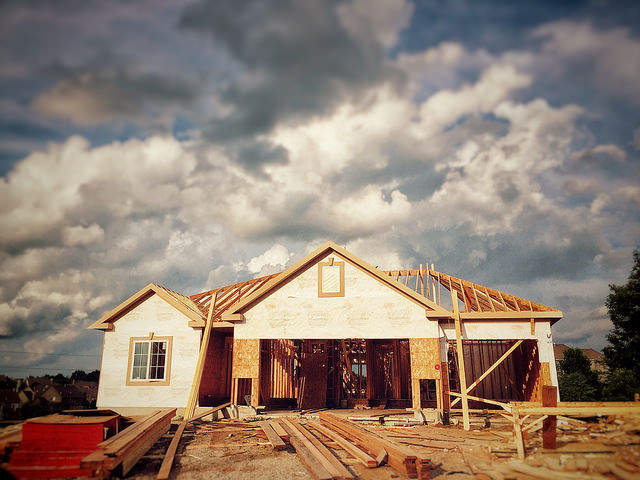
House construction in progress under a cloudy sky.

Home Sellers Are Starting To Come Back


The number of homes for sale has been lagging for years. It’s been among the housing market’s main challenges. That’s because a lack of available homes combined with rising buyer demand leads to steady price increases and declining affordability. But while that can be good for homeowner equity, it’s bad for buyers – especially first-time buyers who don’t have the benefit of cashing in their equity to help fund a home purchase. This continuing imbalance only got worse when the coronavirus led to stay-at-home orders across the country. That caused some buyers to delay their plans but, more than that, it led homeowners to think twice before putting their home up for sale. This caused new listings to plummet. In fact, according to one recent analysis, the national inventory of homes for sale is down nearly 20 percent from last year. The good news, though, is things are starting to get better. By the end of May, the number of new listings had improved in 45 of the 50 largest U.S. markets compared to the month before. And while they’re still down, the fact that the rate of decline has gotten smaller is an indication that home sellers are starting to return to the market. If the trend continues, it’ll lead to a better balanced, and healthier, housing market. (source)

Close-up of a 'For Sale' sign with a blurred background.

Mortgage Rates Hit Another Low


According to the Mortgage Bankers Association’s Weekly Applications Survey, average mortgage rates hit another low last week. Rates were down week-over-week for most loan categories, including 30-year fixed-rate loans with conforming and jumbo balances and 15-year fixed-rate loans. The declines helped push demand for home purchase loans higher. In fact, requests for loan applications to buy homes rose another 5 percent from last week and are now 18 percent higher than they were at the same time last year. Joel Kan, MBA’s associate vice president of economic and industry forecasting, says the numbers are encouraging but challenges remain. “Purchase applications continued their recent ascent, increasing 5 percent last week and 18 percent compared to a year ago. The pent-up demand from home buyers returning to the market continues to support a recovery from the weekly declines observed earlier this spring,†Kan said. “However, there are still many households affected by the widespread job losses and current economic downturn. High unemployment and low housing supply may restrain a more meaningful rebound in purchase applications in the coming months.†The MBA’s weekly survey has been conducted since 1990 and covers 75 percent of all retail residential mortgage applications. (source)

A large white downward arrow painted on a green textured surface.

Home Prices Increase 5.4% In April


The housing market, like any market, is a balance of supply and demand. That means, conditions are a reflection of how many buyers and sellers there are, rather than the strength or weakness of the overall economy. For example, when coronavirus mitigation efforts shut down much of the country’s economy, there was a lot of speculation about what would happen to prices. But, though the economy suffered, home prices didn’t. In fact, they rose. According to the most recent CoreLogic Home Price Index Report, home prices increased 5.4 percent in April over last year at the same time. And, not only did they improve, they did so at a stronger pace than last April, when they were up just 3.6 percent. So why did home price gains accelerate while the economy was suffering a severe downturn? Well, it’s pretty simple, actually. When stay-at-home orders went into place, many home sellers pulled their listings and decided to wait a while before selling. The corresponding drop in for-sale inventory meant there were more home buyers than homes for sale, which led to more competition for available homes, bidding wars, and higher prices. (source)

A series of white price tags with dollar signs on a black background.

Pets Play A Role When Buyers Look For Homes


If you’ve ever had a pet, you know that they quickly become a member of the family. And, for most pet owners, keeping them healthy, happy, and comfortable is important. That much isn’t a surprise. What may be, though, is just how much pet owners make them a priority. For example, a recent survey found that 95 percent of prospective home buyers who owned a pet said their furry friends would be at least somewhat important when choosing a home to buy. The vast majority ranked their pets’ needs as “extremely†or “very important,†with 84 percent saying so. That’s nearly unanimous. But, if you’re thinking they’d change their minds if they found an otherwise perfect home that wasn’t a fit for their animal companions, you’d be wrong. In fact, 68 percent of participants said they’d pass on a perfect house, if it didn’t meet the needs of their pet. The survey, based on responses from more than 2,000 people, also found that it wasn’t just dog and cat owners who were so devoted to their pets. Among bird owners, 89 percent said their needs were extremely or very important, with almost as many fish, reptile, rodent, and horse owners saying the same. (source)

Close-up of a small dog resting its head with soulful eyes.

Home Office Space Added To More Wishlists


The coronavirus and efforts to slow its spread have caused big changes to Americans’ day-to-day routine. From becoming more reliant on delivery services to doing more of our own cooking, we’ve had to rethink the way we live our lives and get things done. Among those changes, working from home has been a big one. Modern technology has made it easier for more people to work from wherever they are. And now that the pandemic has more of us working remotely, it’s beginning to change the way we think about our living space and what we need. For example, one recent analysis found an increasing number of Americans who would make a move if allowed to work remotely long term. But it isn’t only our ideas about where we’d like to live that have changed, it’s also the features we look for in a house. The survey found the majority of respondents who are working from home said they’re working from a room that isn’t a dedicated office. That’s led to an increase in interest in homes that have an office, or at least enough extra space to find a quiet spot to get some work done. (source)

Open silver MacBook Air laptop with black keyboard and screen.

Contract Signings Fall But Expectations Improve


The number of contracts to buy homes fell significantly in April from the month before, according to new numbers from the National Association of Realtors’ Pending Home Sales report. But despite the double-digit decline, Lawrence Yun, NAR’s chief economist, says he sees improvement just around the corner. In fact, he thinks April may be the low point for contract signings. “While coronavirus mitigation efforts have disrupted contract signings, the real estate industry is ‘hot’ in affordable price points with the wide prevalence of bidding wars for the limited inventory,†Yun said. “In the coming months, buying activity will rise as states reopen and more consumers feel comfortable about home buying in the midst of the social distancing measures.†With states reopening, new listings rising, and Realtors reporting that they’re able to complete transactions while adhering to new safety precautions, there is increasing optimism that the housing market will be even more resilient than expected. As evidence of that, the NAR has recently revised their forecast to reflect that optimism. Their latest outlook sees home sales falling less than originally forecast and prices increasing, rather than remaining flat.

A house with an 'Under Contract' sign in front on a sunny day.

Purchase Loan Demand Up 54% In Six Weeks


According to the Mortgage Bankers Association’s Weekly Applications Survey – which covers 75 percent of all retail residential mortgage applications – demand for loans to buy homes was up 9 percent last week from the week before and is now 9 percent higher than the same week one year ago. The improvement is the sixth consecutive weekly gain and puts demand 54 percent higher than it was in early April. Joel Kan, MBA’s associate vice president of economic and industry forecasting, says home buyers are coming back as states reopen. “The housing market is continuing its path to recovery as various states reopen, leading to more buyers resuming their home search,†Kan said. “Purchase applications increased 9 percent last week – the sixth consecutive weekly increase and a jump of 54 percent since early April. Additionally, the purchase loan amount has increased steadily in recent weeks and is now at its highest level since mid-March.†Also in the report, mortgage rates were up and down from the week before, though they remain just above all-time survey lows. Favorable rates have resulted in a 176 percent year-over-year increase in refinancing demand.

Red surface with a gold arrow and text "THIS SIDE UP".

New Home Sales Rise Unexpectedly In April


Coronavirus-related lockdowns began in mid-March and affected most of the country by April. So, naturally, expectations were that sales of new homes would tumble even further in April than the nearly 14 percent drop they posted in March. But surprisingly, new numbers from the U.S. Census Bureau and the Department of Housing and Urban Development show sales actually increased month-over-month. In fact, sales of newly built single-family homes rose 0.6 percent to a seasonally adjusted annual rate of 623,000 units – which is 6.2 percent lower than last year at the same time. Economists polled by Reuters predicted a 21.9 percent drop to 480,000 units. Regionally, only the West saw declining sales last month. In the South and Midwest, sales were up 2.4 percent, while the Northeast saw a gain of 8.7 percent. Also in the report, the median sales price of new houses sold in April was $309,900. The average sales price was $364,500. The numbers are the latest housing data to come in unexpectedly strong. Industry experts say record-low mortgage rates are helping to keep buyers interested despite the economic turmoil caused by the pandemic and mitigation efforts designed to slow its spread. (source)

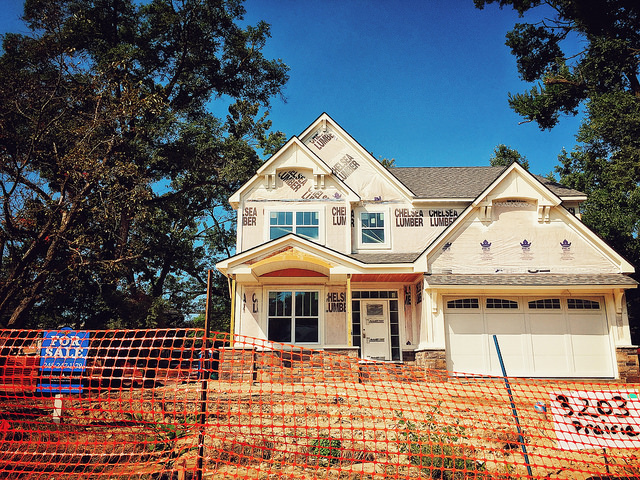
Newly constructed house with a spacious porch and garage under a clear sky.

Thank you for your upload