

Banner
Menu

What Do Americans Think About Real Estate?

Americans value homeownership. It has long been seen as part of achieving the American dream and, when asked, large majorities of those who don’t currently own a home say they’d like to one day. In short, buying a home is popular. But when thinking about whether or not now is the right time to do it, perceptions of the market can sway your decision. After all, nobody wants to buy at the wrong time. So what do Americans think about the housing market these days? Well, according to Fannie Mae’s most recent Home Purchase Sentiment Index, they’re feeling confident financially and see conditions improving over the next year. Doug Duncan, Fannie Mae’s senior vice president and chief economist, says optimism fell in March but overall results were encouraging. “While home selling confidence remains strong and more consumers on net expect mortgage rates to decline over the next year, respondents walked back some of their buying optimism in March,†Duncan said. “Improving perceptions of income gains and a softening home price growth outlook should help support housing demand.†More here.


Colorful historic houses under a bright blue sky with large trees.

Majority Of Markets Are Still Affordable For Buyers

After the housing crash, home prices and mortgage rates were low and the market was ripe for buyers. Americans who were in position to buy could be confident that they’d find a good deal. These days, things have changed. The market has largely rebounded and hopeful home shoppers have more concerns about affordability than they did even just a few years ago. Fortunately though, according to one recent report, most housing markets are still within reach. In fact, buyers earning the median income – which is typically quoted somewhere around $60,000 – can still afford a median-priced home in the majority of markets. Additionally, lower-middle class families are able to afford a median-priced home in 34 of the nation’s largest metros. And while it’s true that buying a home isn’t as affordable as it once was, most housing markets have simply returned to their historical average, rather than having inflated beyond what’s considered normal. In other words, despite the price recovery, the housing market remains a pretty good deal for buyers. More here.

Close-up of a hundred-dollar bill with Benjamin Franklin's portrait.

Home Price Increases Continue To Slow

Naturally, home prices are important to home buyers. When they’re high, you get less house for your money. And, if you’re a buyer, you’re most likely trying to get as good a deal as you can. That’s why the most recent S&P/Case-Shiller Home Price Indices should be encouraging news. The Index – which is the leading measure of U.S. home prices – found that, on a month-over-month basis, prices are flat and, on an annual basis, the rate of increases has continued to slow. David M. Blitzer, managing director and chairman of the index committee at S&P Dow Jones Indices, says prices have been following a gradual trajectory. “The pace of increases for home prices continues to slow,†Blitzer said. “Homes began their climb in 2012 and accelerated until late 2013 when annual increases reached double digits. Subsequently, increases slowed until now when the National Index is up 4 percent in the last 12 months.†More here.

Close-up of a bright green dollar sign on a dark background.

Summer Is The Best Time To Sell A Home

According to the popular Christmas song, the holidays are the most wonderful time of the year. But not if you’re trying to sell a home. After all, winter is typically not the time home buyers go out shopping for a house. So what is the best time of the year if you’re a homeowner with a house to sell? Well, according to a new analysis from ATTOM Data Solutions, spring and summer are the seasons when sellers see the biggest premiums. In fact, of the nine days of the year that sellers saw a premium of 10 percent or more, eight of them occurred during summer months. Todd Teta, chief product officer with ATTOM, says this is no surprise. “Since Summer is a time for vacations and outings, it’s no surprise that it’s also a time when people are most likely to move,†Teta said. “Families start their home search when they know their kids will be out of school and when the weather is ideal for home viewing and moving, giving home sellers an upper hand in price negotiations.†Specifically, May and June are the best months for selling a house, with homes sold in June selling for an average of 9.2 percent above estimated market value. More here.

Sun setting over the calm ocean, casting golden reflections on the water.

Latest Survey Finds Mortgage Rates Down

According to the Mortgage Bankers Association’s Weekly Applications Survey, average mortgage rates fell last week. They were down for 30-year fixed-rate loans with both conforming and jumbo balances, as well as mortgages backed by the Federal Housing Administration and 15-year fixed-rate loans. Joel Kan, MBA’s associate vice president of economic and industry forecasting, said the decline was due to global economic conditions rather than conditions in the US. “Mortgage rates were lower last week, as concerns over global growth, particularly in Germany, outweighed more positive domestic news on first quarter GDP growth and business investment,†Kan said. But though interest rates fell, so did demand for mortgage applications. In fact, both refinance activity and demand for loans to buy homes fell from the week before. The MBA’s weekly survey has been conducted since 1990 and covers 75 percent of all retail residential mortgage applications. More here.

Illuminated 'MORTGAGE' sign in a dark setting.

How Long Will You Live In The House You Buy?

Choosing a house to buy takes a little bit of vision. After all, it’s easy to know what you want in a home today, but more difficult to know for sure what you’ll want years from now. Things change and your life will undoubtedly take some unexpected twists and turns. But just how long should you expect to live in the house you buy? Well, according to ATTOM Data Solutions’ Q1 2019 U.S. Home Sales Report, homeowners who sold in the first quarter of this year had lived in their home an average of 8.05 years. For comparison, that’s close to double what it was prior to the housing crash, when homeownership tenure averaged 4.21 years. In short, you’re likely going to spend close to a decade in the house you buy. That means, home buyers need to be thinking of, not only what they need from a house today, but also what they hope and plan for over the next several years. More here.

A collection of various vintage clocks showing different times.

Mortgage Rate Increase Slows Demand

According to the Mortgage Bankers Association’s Weekly Applications Survey, average mortgage rates increased last week across all loan categories, including 30-year fixed-rate loans with both conforming and jumbo balances, loans backed by the Federal Housing Administration, and 15-year fixed-rate loans. The increase continues an upward trend that has caused some hesitation among borrowers, especially those looking to refinance. Michael Fratantoni, MBA’s senior vice president and chief economist, says rates have risen over the past three weeks due to fewer geopolitical concerns and a stronger U.S. economy. “Borrowing costs have recently drifted higher because of ebbing geopolitical concerns, as well as signs of strengthening in the U.S. economy, including the recent data pointing to robust retail sales,” Fratantoni said. “The strong economy and job market is keeping buyer interest high, but rising mortgage rates could add pressure to the budgets of some would-be buyers.” Still, though rates are up from where they were a few weeks ago, they remain low by historical standards and even from where they were at the end of last year. The MBA’s weekly survey has been conducted since 1990 and covers 75 percent of all retail residential mortgage applications. 

New Home Sales Improve For The 3rd Straight Month

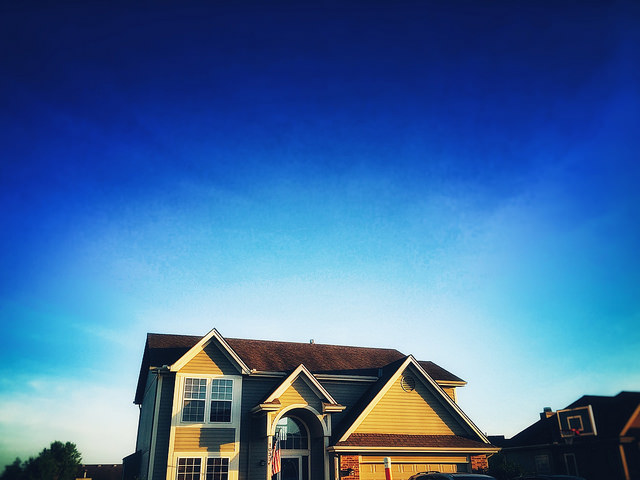
New home sales increased 4.5 percent in March, beating economists’ expectations and hitting a 16-month high. The data, from the U.S. Census Bureau and the Department of Housing and Urban Development, is more evidence that home buying conditions are becoming more favorable just as buyer demand heats up for the season. The combination of a strong job market and low mortgage rates is encouraging buyers and helping steady a housing market that went through its ups-and-downs last year. And, since new-home sales gains build confidence in the market, three consecutive months of improvement may help spur builders to build even more new homes. As it is, growing inventory has led to a 9.7 percent drop in the median sales price of a new house, according to the March report. Overall, the latest new home sales data is encouraging, as the market for newly built homes plays a vital role in balancing supply and demand and keeping affordability conditions manageable for buyers. More here.

A house under a clear blue sky during daylight.

Half Of Homes Sold In Under A Month In March

The spring home sales season is underway and there’s no better proof than new numbers from the National Association of Realtors. According to their most recent existing home sales report, 47 percent of homes sold in March were on the market for less than a month. Additionally, the average number of days properties remained on the market was 36 days, down from 44 days the month before. That’s a significant drop and evidence that buyer demand is heating up and homes are selling more quickly. But, despite the fact that homes are selling faster, the overall sales numbers were down from February. Lawrence Yun, NAR’s chief economist, says that’s to be expected after the previous month’s sales surge. “It is not surprising to see a retreat after a powerful sales surge in the prior month,†Yun said. “Still, current sales activity is underperforming in relation to the strength in the job market. The impact of lower mortgage rates has not yet been fully realized.†In other words, though buyer demand may be increasing and homes are selling quickly, the market should be doing even better. One reason it’s not is low inventory. However, that may be changing. In fact, the number of homes available for sale in March was up 2.4 percent from last year. 

Close-up of a red 'For Sale' sign with realty company details.

Realtors Say Buyers Want Green Homes

When it comes time to decide what type of home you want to buy, there’s a lot to go over. Beyond even the financial considerations, prospective home buyers have to make choices about the style of house, the size, number of rooms, the yard, storage, etc. Then they have to prioritize their wants and needs based on just how important they are and whether any of them are dealbreakers. Because there are so many factors, it’s no small thing when a sizable share of home buyers express an interest in the same feature. That’s why it’s significant that a recent survey of Realtors conducted by the National Association of Realtors found that 70 percent of participants said promoting energy efficiency in a home’s listing was somewhat or very valuable. In short, it means a lot of buyers agree that green and energy-efficient features are important to them. It’s no surprise why. Beyond the benefits to the environment or sustainability, energy efficiency means lower utility bills. And there are few home buyers who won’t like the sound of that. More here.

House facade completely covered in dense green ivy under a bright blue sky.

Thank you for your upload