

Banner
Menu

Mortgage Rates Hold Steady In Latest Survey

According to the Mortgage Bankers Association’s Weekly Applications Survey, average mortgage rates were fairly steady last week from the week before. Rates saw slight increases across all loan categories including 30-year fixed-rate loans with both conforming and jumbo balances, loans backed by the Federal Housing Administration, and 15-year fixed-rate loans. Mike Fratantoni, MBA’s senior vice president and chief economist, says conditions are stabilizing and conventional purchase loans are up. “Slightly higher mortgage rates last week led to a decrease in application volume. Furthermore, the average loan size for purchase applications increased to a record high, led by a rise in the average size of conventional loans. This suggests that move-up and higher-end buyers have so far become a greater share of the spring market,†Fratantoni said. “Overall, conventional purchase loans are up 2.1 percent relative to last year, indicating that home buyers continue to be inspired by the stable rate environment and the modest increase in housing supply.†The MBA’s weekly survey has been conducted since 1990 and covers 75 percent of all retail residential mortgage applications. More here.

Close-up of a red percentage symbol on a white background.

New Home Sales Surprise With December Gains

New home sales data from the end of last year was delayed because of the government shutdown. But, the now released numbers contain an unexpected surprise. That’s because sales of newly built single-family homes rose nearly 4 percent in December from the month before. The gains put 2018 totals 1.5 percent above the year before. It was also a seven-month high. Economists polled before the release predicted a sharp drop in sales, which makes the improvement even more surprising. However, though rising sales are an encouraging sign – especially since a healthy new home market leads to better conditions for all home buyers – new home sales data tends to be volatile and is often revised. For example, part of the reason December numbers increased was that November’s sales were revised downward. Why is this? Well, new home sales data is based on permits, so it can be unreliable. Still, the fact that there was any improvement at the end of last year, when mortgage rates were rising and the market was slow, is a good sign that buyer demand remains healthy. More here.

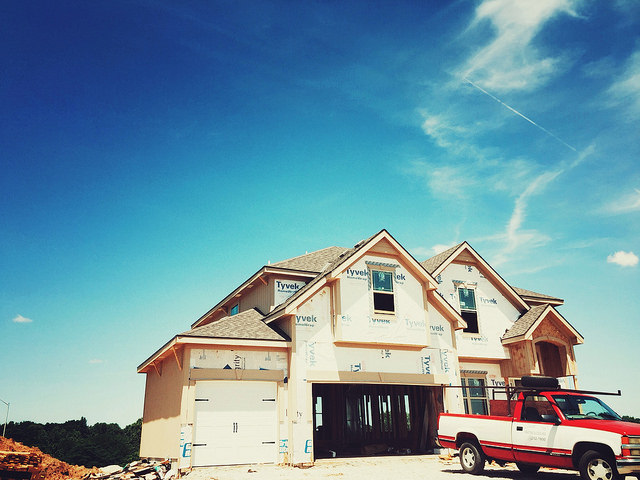
House under construction wrapped in Tyvek HomeWrap.

What Do Young Home Buyers Regret Most?

Buyers remorse is common when making large purchases. After all, if you’ve spent a significant amount on something, you want to be sure you got your money’s worth. And, since buying a home is among the largest purchases you’ll ever make, the risk of remorse runs high. According to a recent survey conducted by the National Association of Realtors’ consumer website, young home buyers are particularly vulnerable. In fact, millennial homeowners expressed the most regret of any generation, with 63% saying there were things they’d do differently the next time around. So what do young homeowners regret most about their home purchase? Well, the top answer was not accounting for the cost of maintenance and repairs. Expenses led the list, followed by the more common complaints about being too small, too big, or not in the right neighborhood. The good news is there are ways to avoid underestimating the costs of owning a home. Planning ahead and setting aside money in case of emergency repairs is one. Another good way of knowing what you’re getting into is to have the home inspected before closing the deal. More here.

Close-up of a red and white danger sign.

Suburbs And Storage Most Popular With Buyers

Every year, Americans are surveyed about the things they most want in their next home. And while some things change, like the preferred type of kitchen cabinetry or paint colors, there are other things that remain the same year after year. For example, the National Association of Home Builders recently surveyed nearly 4,000 home buyers who have either just purchased a house or plan to in the near future. They then ranked 175 features based on how important they are to buyers. Not surprisingly, the most popular features, once again, were storage related. Buyers want garage storage, walk-in pantries, and laundry rooms. Having a place to put things isn’t the most flashy home feature but it is a necessity. Which is why storage is a perennial favorite. Another favorite is energy-efficient features. In short, home buyers want a home that’s efficient enough to keep their utility bills low and spacious enough to keep their things neat and tidy. They also overwhelmingly want a house in the suburbs. In fact, 64 percent of survey participants said they’d prefer to buy in a suburban location, while 24 percent wanted something rural, and 11 percent wanted a place in the city. More here.

Large suburban house with a bright blue sky background.

Contracts To Buy Homes Spike 4.6% In January

When a contract is signed to buy a house, that home’s sale is considered pending. It isn’t final until closing, which typically happens a few weeks later. However, since contract signings usually lead to final sales, they’re a good way of measuring current buyer interest and an indicator of what home purchase activity will look like a month or so down the road. That’s why January’s Pending Home Sales Index from the National Association of Realtors is encouraging. The report shows a 4.6 percent increase in the number of signed contracts in January compared to the month before. All four major regions of the country saw growth. Lawrence Yun, NAR’s chief economist, says there are a number of factors that are driving the improvement. “A change in Federal Reserve policy and the reopening of the government were very beneficial to the market,†Yun said. “Home buyers are now returning and taking advantage of lower interest rates, while a boost in inventory is also providing more choices for consumers.†According to Yun, there’s reason to believe the gains will continue. Income is rising faster than home prices in many areas, job creation continues to be strong, and mortgage rates look like they’ll be steady in the near term. In short, conditions are stabilizing just as the market readies itself for spring. More here.

A wooden sign reading "UNDER CONTRACT" hangs among blooming pink flowers.

Mortgage Rates Fall As Buyers Hit The Market

According to the Mortgage Bankers Association’s Weekly Applications Survey, average mortgage rates fell last week across all loan categories, including 30-year fixed-rate loans with both conforming and jumbo balances, loans backed by the Federal Housing Administration, and 15-year mortgages. The drop coincided with a surge in home buyers applying for loans to buy homes. In fact, the purchase index was up 6 percent from the week before and is now 3 percent higher than last year at the same time. Michael Fratantoni, MBA’s senior vice president and chief economist, said rates are stabilizing and it’s helping spur demand for loans. “Mortgage rates were little changed last week, but as we anticipated, home buyers are responding favorably to this more stable rate environment,†Fratantoni said. “Purchase applications for both conventional and government loans rose last week, with the government gain led by a 14 percent increase in applications for VA purchase loans.†Along with home price increases beginning to slow, favorable rates and growing inventory have combined to make this spring’s housing market a better deal for buyers. The MBA’s weekly survey has been conducted since 1990 and covers 75 percent of all retail residential mortgages. 

Large white percentage symbol on a red background.

Number Of New Homes Built Increased in 2018

During times when the housing market has more buyers than homes for sale, the quickest remedy is to build more new homes. Adding inventory to the market gives buyers more options, helps balance supply and demand, and keeps home prices in check. In short, new home construction plays a vital role in housing market health and affordability conditions. That’s why it’s good news that recently released numbers from the U.S. Census Bureau and the Department of Housing and Urban Development show a 3.6 percent increase in the number of new homes that began construction in 2018. The year-over-year improvement put the number of completed new homes last year at nearly 1.2 million. Unfortunately, toward the end of the year, rising mortgage rates and stock market volatility slowed the pace of new home construction. However, with buying conditions becoming more favorable and builder confidence on the rise, there is reason to believe new construction of single-family homes will begin to climb again this spring. That’s encouraging, not just for buyers interested in finding a new home this year, but all potential home buyers. More here.

A suburban house with a clear blue sky.

Millennials Responsible For 45% Of New Mortgages

To understand housing demand, it helps to break it down generationally. For example, baby boomers – because they are older and more likely to be settled somewhere – are the least active in the market. Generation X, on the other hand, are in the prime of their professional life and, since they are making more money and have growing families, they account for a large share of buyers looking to upgrade from their first home into something more spacious. Finally, there are millennials. Born between 1982 and 2000, millennials are now at, or will soon reach, the age of the typical first-time home buyer. So, naturally, they should represent an increasing share of the demand for homes. But do they? Well, the short answer is yes. According to a new report from the National Association of Realtors’ consumer website, millennials are now the age group responsible for the most new mortgages. In fact, in 2018, millennials accounted for 45 percent of all new mortgages. By comparison, Generation X home buyers were responsible for 36 percent of new mortgages and baby boomers represented 17 percent of purchase loans. More here.

Scrabble tiles spelling 'MORTGAGE' on U.S. dollar bills.

Another Sunny Spring Forecast For Home Buyers

Fannie Mae’s Economic and Strategic Research Group puts out a monthly outlook covering economic and housing conditions and their expectations for the coming months. According to their February forecast, home buyers may have something to look forward to as spring approaches. That’s because, this year’s real estate market looks to be more favorable than it has been in the recent past. Doug Duncan, Fannie Mae’s chief economist, says many indicators are pointing toward a good spring for buyers. “On housing, a reduction in our forecast of existing home sales has our team projecting fewer 2019 purchase mortgage originations,†Duncan said. “However, falling – or at least not rising – interest rates, strong employment, continued wage growth, and a deceleration in home price appreciation should support more favorable home buying conditions heading into the spring, along with improved affordability.†In other words, things are trending in a more balanced direction and this year’s home buyers stand to benefit. More here.

Modern house with large windows under a bright blue sky.

Slow January Home Sales Only Half The Story

New numbers from the National Association of Realtors show sales of previously owned homes fell 1.2 percent in January from the month before. It was the third consecutive monthly decline and, among the country’s four major regions, only the Northeast saw an increase in sales activity. But, though that sounds like the housing market may be headed in the wrong direction, it doesn’t tell the whole story. Why? Well, market fundamentals are actually improving for anyone who may be considering a move this year. In addition to lower mortgage rates and rising inventory, home price increases were the slowest in six years and homes were on the market for an average of 49 days – which is considerably longer than it was last summer, when most listed homes were selling in under a month. In short, spring home buyers may find buying conditions more favorable than expected. “Decelerated sales and increases in inventory will work in favor of potential home buyers, putting them in a better negotiating position heading into the spring months,” NAR president, John Smaby, said. “On top of that, low interest rates will bring an additional $80 per month savings compared to the rates of just a few months ago.” In other words, slow January sales may just be a lull before the market begins to heat up again this spring. 

Thank you for your upload