

Banner
Menu

Average Home Seller Profit Hits 12-Year High

Homeowners who sold a house in 2018 saw an average gain since purchase of $61,000, according to new numbers from ATTOM Data Solutions. ATTOM’s Year-End 2018 U.S. Home Sales Report found that home sellers averaged a 32.6 percent return on investment when comparing the price their home sold for with the original purchase price. The improvement was an $11,000 increase from the year before. But though that’s good news for anyone thinking about selling a home sometime soon, ATTOM’s chief product officer, Todd Teta, says changes may be on the way. “The economy is still going strong and home loan rates remain historically low,†Teta said. “But there are potential clouds on the horizon. The effects of last year’s tax cuts are wearing off as limits on homeowner tax deductions are in place and mortgage rates are ticking up ever so slowly, so this could dampen the potential for home price gains in 2019.†But though market conditions are beginning to change, home prices are still expected to rise this year and, with home seller profits at a 12-year high, that means it’s still a good time to sell a house. More here.


Red dollar sign symbol on a textured background.

Lenders Say More Homes For Sale Are Needed

Fannie Mae’s quarterly Mortgage Lender Sentiment Survey asks senior mortgage executives for their perceptions of the market and forecast for the future. According to the most recent release, lenders point to an “insufficient supply of homes available for sale” as the primary reason for slow home sales growth last year. In fact, 48 percent of responding lenders said that too few homes for sale held buyers back, while rising interest rates and higher prices were also commonly cited factors. Similarly, when asked for suggestions for what could be done to improve affordability in the months ahead, increasing the housing stock led the list. In short, mortgage execs see low inventory as the market’s biggest issue. This isn’t a surprise. The fact that there’s been a lower-than-typical number of homes for sale has been pushing home prices upward and keeping competition for affordable homes high. The good news, however, is that recent data shows inventory has been rising and, if the trend continues, it could help provide some relief to buyers this year. More here.

Fewer Buyers Pay Above Asking Price In December

Potential spring home buyers may find that they’ve regained some negotiating power when they head out to shop for a house to buy. That’s because, after a few years where sellers held all the cards, buyers are beginning to see conditions shift in a more favorable direction. For example, new data shows that the number of home buyers who paid above asking price in December saw its biggest month-over-month decline in six years. In fact, just 19 percent of homes sold during the month went for a price above what their owner had it listed for. That’s a five percent decline from its peak in May of last year. Simply put, continued home price increases have motivated more homeowners to put their homes up for sale. And, as the number of homes for sale has risen, it’s reduced the amount of competition among buyers. But, while competition may have begun to slow down, it isn’t quite a buyer’s market just yet. So, if you’re looking to buy a home in the months ahead, you should still be prepared, prequalified, and ready to move fast. Good homes will be in high demand, even if the competition isn’t quite as heavy as it has been in years past. More here.

Close-up of various US dollar bills spread out.

Pending Sales Slow But Inventory Improves

The National Association of Realtors’ Pending Home Sales Index measures the number of contracts signed to buy homes during a given month. Since it measures signings, and not closings, it can be an important indicator of future home sales. In December, the index fell 2.2 percent from the month before. But, Lawrence Yun, NAR’s chief economist, sees some encouraging signs amid the end-of-the-year slowdown. “The longer-term growth potential is high,†Yun says. “The Federal Reserve announced a change in its stance on monetary policy. Rather than four rate hikes, there will likely be only one increase or even no increase at all. This has already spurred a noticeable fall in the 30-year, fixed-rate for mortgages. As a result, the forecast for home transactions has greatly improved.†In addition to good news about rates, there is also an increasing number of homes for sale. And, since more available inventory helps keep prices down, that’s good for home buyers. Cities in the West saw the largest increase in active listings year-over-year, with Denver-Aurora-Lakewood, Seattle-Tacoma-Bellevue, San Francisco-Oakland-Hayward, San Diego-Carlsbad, and Portland-Vancouver-Hillsboro seeing the biggest improvement compared to the year before. More here.

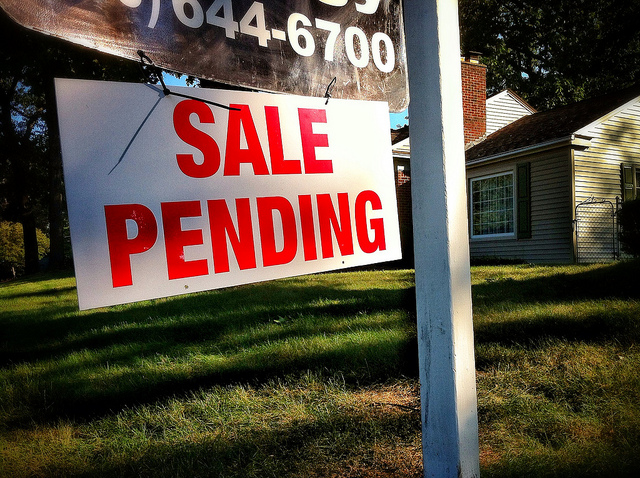
A 'Sale Pending' sign posted outside a house during daylight.

Average Mortgage Rates Moved Up Last Week

According to the Mortgage Bankers Association’s Weekly Applications Survey, average mortgage rates increased last week from the week before. Rates were up for 30-year fixed-rate mortgages with both conforming and jumbo balances, as well as 15-year fixed-rate loans. Mortgage rates on loans backed by the Federal Housing Administration declined. Joel Kan, MBA’s vice president of industry surveys and forecasts, says the increase caused application demand to dip, though overall interest remains high. “Mortgage applications for purchase and refinances were lower over the past week, as rates nudged higher,†Kan said. “After two weeks of decreases, the purchase index still remained roughly 6 percent above its long-run average, which is good news with spring buying and selling season almost underway. Despite ongoing supply and affordability constraints, the healthy job market and underlying demographic fundamentals both point to gradual purchase growth in the coming months.†In other words, though the market still has some challenges, Americans feel secure financially and are interested in buying. That indicates a busy spring for the housing market. The MBA’s weekly survey has been conducted since 1990 and covers 75 percent of all retail residential mortgage applications. 

Bright yellow arrow pointing upward on a blue background.

Knowing Your Market Will Make You A Savvier Buyer

Buying a home is mostly a personal decision. Generally, the right time for you to buy has more to do with something happening in your life than it does a shift in market conditions. Maybe it’s a good time to buy because you’ve recently gotten married or have taken a new job in a different part of town. Perhaps you’ve decided to start a family or are approaching retirement. Whatever your reasons, they, most likely, aren’t based on a thorough reading of the housing market and its prospects for a healthy future. But, despite the fact that buyers are going to be more focused on getting a house that fits their lifestyle and has the right number of bedrooms and a good amount of storage, that doesn’t mean they shouldn’t take some time to familiarize themselves with where their local market is heading. Mark Fleming, chief economist at First American, says it can help you make a more informed decision. “When considering the right time to buy or sell a home, an important factor in the decision should be the market’s overall health, which is largely a function of supply and demand,†Fleming says. “Knowing how close the market is to a healthy level of activity can help consumers determine if it is a good time to buy or sell, and what might happen to the market in the future.†More here.

A large two-story blue house under a cloudy sky.

Where Are The Most Affordable Cities To Retire?

When asked, most Americans indicate that they’d rather stay in their current house once they retire. After all, the comforts of home and a community that you know well and have lived in for many years are hard to replace. But not everyone wants to stay where they are once they’ve retired. And there are no shortage of options for Americans looking for a new living arrangement. For example, they can choose to cash in their equity and downsize into a loft, condo, or apartment. They can also look for a place in a retirement community or even move out of state. But, if you’re feeling adventurous and looking to move far from home, where are the most affordable communities for retirees to move to? Well, according to one recent ranking, a lot of them are in places already popular with older Americans. In fact, nearly half of the top 20 are cities in Florida, including Orlando, Tampa, Ocala, Lakeland, and Jacksonville. Other areas that feature a warmer climate, in addition to their affordability, include Phoenix, San Antonio, and Birmingham, Ala. But all of the most affordable communities aren’t located in sunny, southern locations. The number one most affordable place to retire is Sioux Falls, South Dakota and cities in Indiana, Michigan, Delaware, and Tennessee also make the list. More here.

Three tall palm trees under a clear blue sky.

Forecast Calls For Steadier Mortgage Rates In 2019

When prospective home buyers think about whether or not they can afford to buy a home, the first thing they look at is prices. But, after that, mortgage rates run a close second. That’s because they are a significant factor in determining overall affordability and, more specifically, the house you’ll ultimately end up purchasing. For that reason, having an idea about where rates might be heading can help you think about your plans and potential budget. Take Fannie Mae’s most recent Economic and Housing Outlook, for example. The monthly forecast – which projects economic growth and housing market conditions – says that they expect the Federal Reserve to only raise interest rates once in 2019. And, after last year’s rate volatility, that is good news for home buyers, since it would mean little change to current rates. Doug Duncan, Fannie Mae’s chief economist, says steady rates should end up providing some stability in housing conditions this year. “We believe that contained price pressures should afford the Fed sufficient latitude to slow or pause rate hikes this year,†Duncan says. “This will allow the economy to continue growing, albeit at a slower pace, and housing to regain its footing.†More here.

Close-up of percentage symbols illustrating mortgage rates.

New Numbers Show Home Prices Slowing

Home buyers hoping for some good news heading into the spring buying season may find it in the Federal Housing Finance Agency’s most recent House Price Index. That’s because, after increasing for the past few years, it looks like home prices are finally starting to slow. In fact, according to the FHFA’s most recent numbers, prices were essentially flat in November from the month before. And, when comparing regional data, some areas may have even seen declines. But while slowing month-over-month increases are a good indication that short-term trends are heading in a more favorable direction, it doesn’t mean prices aren’t still up. In fact, the report shows year-over-year home values were higher than the year before across all nine census divisions – but at varying rates. For example, states in the West South Central division – which includes Texas, Oklahoma, Arkansas, and Louisiana – were up 4.5 percent from one year earlier while Mountain states like Colorado, Arizona, Montana and Utah saw increases closer to 7 percent. All in all, the report is in line with other recent releases suggesting that home prices are no longer moving upward quite as quickly as they were before. More here.

Close-up of a twenty-dollar bill featuring Andrew Jackson's portrait.

Mortgage Loan Demand 13% Higher Than Last Year

According to the Mortgage Bankers Association’s Weekly Applications Survey, demand for loans to buy homes was 13 percent higher last week than it was during the same week one year ago. The improvement follows a period of declining mortgage rates and two straight weeks of surging application demand. But though the year has been off to a strong start, it cooled a bit last week. Joel Kan, MBA’s associate vice president of economic and industry forecasting, says activity slowed but is still at healthy levels. “Mortgage application activity cooled off last week after two consecutive weeks of sizeable increases,†Kan said. “Both purchase and refinance applications saw declines but remained at healthy levels, with the purchase index remaining close to a nine-year high, and the refinance index hovering near its highest level since last spring.†Also in the report, average mortgage rates were up for 30-year fixed-rate loans with both conforming and jumbo balances, as well as loans backed by the Federal Housing Administration. The increase interrupts a downward trend that began at the end of last year. The MBA’s weekly survey has been conducted since 1990 and covers 75 percent of all retail residential mortgage applications. 

Up arrow key on a keyboard with a vintage look.

Thank you for your upload