

Banner
Menu

New Home Market Rebounds After Weak October


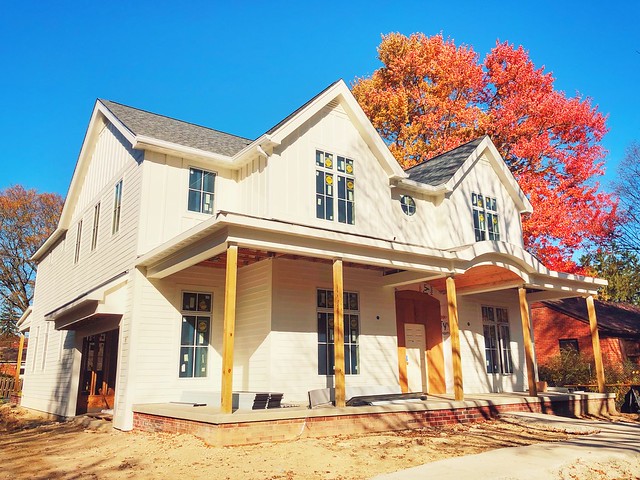
In October, a mix of regional factors, higher mortgage rates, and extreme weather caused sales of newly built single-family homes to tumble. At the time, it was thought to be a temporary setback rather than the start of a downward trend. That now looks to be true. In fact, new numbers from the U.S. Census Bureau and the Department of Housing and Urban Development show new home sales charged back in November, increasing 5.9 percent from October’s level and 8.7 percent from a year ago. The rebound helped reset the previous month’s declines. For example, November data shows the South bounced back 13.9 percent from October, when sales were down sharply due to the hurricanes that affected the region. The results also continue a long-term trend in the new home market, which has been outperforming the market for existing homes for some time now. With new home sales and inventory both rising, newly built homes are increasingly an option for home buyers frustrated by a lack of available older homes for sale. (source)

Newly constructed house with autumn trees in the background.

Affordability Levels Unchanged In 4th Quarter


According to ATTOM Data Solutions’ fourth-quarter 2024 U.S. Home Affordability Report, median homeownership costs in 556 of 566 analyzed counties were less affordable than their historical average. After years of rising prices and elevated mortgage rates, that should come as no surprise. It also shouldn’t be surprising that the number of counties that are more expensive than they’ve been historically was virtually unchanged in the fourth quarter from the previous quarter, or even the previous year. Market conditions have been relatively steady for a while now. Rob Barber, ATTOM’s CEO, says it presents a challenge for home buyers. “The U.S. housing market continues to generate great profits for most home sellers but also more and more financial stress for would-be buyers,†Barber said. “Despite recent declines in mortgage rates, down payments on typical home purchases have reached four times the average national wage.†Still, there are areas where major expenses on a median-priced home are affordable, including counties in Chicago, Houston, Detroit, Philadelphia, and Cleveland. (source)

A pile of assorted U.S. pennies, nickels, dimes, and quarters.

Existing Home Sales Up Nearly 5% In November


Sales of previously owned homes rose nearly 5 percent in November, according to new numbers from the National Association of Realtors. The month-over-month improvement pushed home sales 6.1 percent higher than they were last year at the same time and matched the fastest sales pace since March. Lawrence Yun, NAR’s chief economist, says momentum is building. “Home sales momentum is building,†Yun said. “Existing homeowners are capitalizing on the collective $15 trillion rise in housing equity over the past four years to look for homes better suited to their changing life circumstances.†Home shoppers are also benefiting from an increasing number of homes for sale. Available inventory is now up 17.7 percent from last year, which helps keep home prices in check. Inventory gains are keeping homes on the market longer too. In November, properties typically remained on the market for 32 days, up from 25 days last year. (source)

Close-up of a 'For Sale' sign with warm lighting.

Home Builders See Bright Future Ahead

The National Association of Home Builders’ Housing Market Index is a monthly measure of builder confidence in the market for newly built homes. Based on a survey of home builders, the index is scored on a scale where any number above 50 indicates more builders view conditions as good than poor. In December, the index was unmoved from the month before, holding steady at 46. Carl Harris, NAHB’s chairman, says builders continue to have concerns but are optimistic about the future. “While builders are expressing concerns that high interest rates, elevated construction costs, and a lack of buildable lots continue to act as headwinds, they are also anticipating future regulatory relief in the aftermath of the election,” Harris said. “This is reflected in the fact that future sales expectations have increased to a nearly three-year high.” It’s true. The index component measuring expectations for the next six months was up another three points in December, matching its highest level since April 2022. (source)

Construction-11

Mortgage Rate Increase Leads To Flat Demand


According to the Mortgage Bankers Association’s Weekly Application Survey, average mortgage rates moved higher last week from one week earlier. Increases were seen for 30-year fixed-rate loans with both conforming and jumbo balances, loans backed by the Federal Housing Administration, 15-year fixed-rate loans, and 5/1 ARMs. Joel Kan, MBA’s vice president and deputy chief economist, says the increases slowed demand, though home buyers remained active. “Buyers remained active in the purchase market, helped by gradually improving inventory conditions and a more positive outlook on the economy and job market,†Kan said. “Refinance applications declined last week, largely driven by VA refinances that were down 17 percent after two weeks of gains.†Overall, demand for mortgage applications was down 0.7 percent week-over-week. The MBA’s weekly survey has been conducted since 1990 and covers 75 percent of all retail residential mortgage applications. (source)

Close-up of a blue percentage symbol on a textured beige surface.

Outlook Sees Housing Market Conditions Continuing


Home buyers and sellers shouldn’t expect to see too much change in the months ahead, according to a new forecast from Fannie Mae’s Economic and Strategic Research Group. The group’s monthly forecast – which covers their thoughts on where the housing market and economy are headed – says there will be little change in the new year. In fact, the group says, though mortgage rates will decline and prices will decelerate, both will only fall modestly. They also expect sales of previously owned homes to remain relatively slow, while the new home market will be a “bright spot.†In other words, things may look very much the same in 2025 as they did in 2024. Mark Palim, Fannie Mae’s senior vice president and chief economist, says rate volatility may provide buyers with opportunities. “Heightened mortgage rate volatility may present opportunities for would-be home buyers to take advantage of temporary lows, and we may see stretches where housing activity is boosted by lower rates – but, on average, we expect mortgage rates to remain elevated and a hindrance to activity,†Palim said.†(source)

A rooftop with chimney, greenery, and palm trees under a clear blue sky.

Mortgage Credit Availability Tightened In November


Access to credit isn’t fixed. Depending on current lending standards and loan programs, it can be easier to get a loan at some times than it is at others. That’s why the Mortgage Bankers Association keeps a monthly measure of mortgage credit availability. Any decrease to its Mortgage Credit Availability Index indicates lending standards have tightened and it has become more difficult for borrowers to obtain a loan. If the index increases, it means credit has become more available. In November, the index fell 3.3 percent from the month before. Joel Kan, MBA’s vice president and deputy chief economist, says there were several factors that contributed to the decline. “Part of the decline was attributable to investors pulling back on high LTV and low credit score programs for both fixed and ARM loans, as well as further exits from the broker channel in an originations market that is still challenging for many lenders,†Kan said. (source)

Close-up of George Washington's face on U.S. currency.

What Determines The 30-Year Fixed Mortgage Rate?


Home buyers have a lot of numbers to remember. Among them, the 30-year fixed mortgage rate may be the most important. After all, mortgage rates determine how much your monthly payment will be and, ultimately, how much house you can afford. But how are mortgage rates determined and why don’t they fall when the Fed cuts rates? Well, it’s complicated. The short answer, though, is that the federal funds rate is an interest rate on short-term lending, while a mortgage is a much longer-duration loan. So when the Fed cuts the federal funds rate, it has an influence but isn’t the ultimate determiner of where mortgage rates will head. For a better predictor of where rates are headed, you can look at rates on 10-year Treasury notes. Interest rates on 10-year Treasury notes and 30-year mortgages tend to move together because they both have a longer duration period. In the end, though, what determines interest rates is a combination of investor expectations, the job market, monetary and fiscal policy, the overall economy, inflation, and world events. In other words, they aren’t easy to predict – even for the experts. (source)

Scrabble tiles on a colorful board spelling out mortgage-related words.

Are Pandemic Home Buyers Ready To Sell?


When the pandemic first hit in March 2020, there weren’t many people thinking it would inspire prospective home buyers, but it did. With mortgage rates at historic lows and Americans able to move more freely due to remote work, buyer demand spiked. Now, just under five years later, those same pandemic-era home buyers may already be looking to sell. In fact, according to a new survey, 17.5 percent of current homeowners say they plan to sell their home next year and, among them, 32.2 percent have lived in their home less than five years. That’s a significant share of soon-to-be home sellers who have only been in their house a few years. What’s behind the data? Well, the most active group of would-be home sellers are in their 30s and 40s, which is the right demographic for move-up buyers. That same group of home sellers were also able to build up equity quickly over the past five years, allowing them to use those gains to get in the market sooner than they otherwise may have. (source)

Brick house with steep roof and chimney under a bright blue sky.

Average Mortgage Rates Fall For 3rd Straight Week


According to the Mortgage Bankers Association’s Weekly Applications Survey, average mortgage rates fell last week from the week before. Rates were down across most loan categories, including 30-year fixed-rate loans with both conforming and jumbo balances, loans backed by the Federal Housing Administration, and 5/1 ARMs. Rates for 15-year fixed-rate loans were unchanged week-over-week. With rates down for the third straight week, mortgage application demand moved 5.4 percent higher. The improvement was mostly due to a spike in refinance demand, but Joel Kan, MBA’s vice president and deputy chief economist, says home buyers also remain active. “Purchase applications remained relatively strong and have shown annual gains in all but one week over the past three months,†Kan said. “In addition to lower rates, purchase activity continues to be supported by sustained housing demand and inventory that continues to grow in many markets.†Demand for loans to buy homes is now 4 percent higher than last year at the same time. The MBA’s weekly survey has been conducted since 1990 and covers 75 percent of all retail residential mortgage applications. (source)

White arrow painted on cracked asphalt pointing downward.

Thank you for your upload