

Banner
Menu

Are Prospective Buyers Finally Ready For A Move?


More often than not, home buyers are shopping for a new home because they have to be. Major life changes like marriage, starting a family, or a new job can mean it’s time to move regardless of what’s happening in the housing market. Other times, buyers have some flexibility. Maybe they’d like to move but can wait for more favorable market conditions. These days, there are a lot of buyers who’ve been on the fence for a while. Competition, higher prices, lack of inventory, and rising mortgage rates have had many buyers waiting for the right time. In fact, the vast majority of potential buyers surveyed last spring thought delaying their plans for a few months – or longer – could improve their chances of getting the right place at the right price. Six months ago, for example, a survey of prospective buyers found 85 percent were willing to wait for better conditions. But have they grown tired of waiting? Possibly. A more recent survey asked buyers again whether they’re willing to wait for a more favorable market. This time, however, it found the share of respondents who said yes was almost 25 percent lower than it was in the spring. (source)


A bright suburban neighborhood under a blue sky with fluffy clouds.

Optimistic Outlook Sees Inventory Gains In 2024


December is the time of year when housing market experts release their forecasts predicting what they believe will happen in the year ahead. So far, market experts have generally been optimistic about conditions in 2024. And, according to one newly released forecast, one of the top reasons for their increased optimism is the likelihood that the inventory of homes for sale will improve. Why does that matter? Well, too few homes for sale has been a big frustration for today’s home buyers. Not only has it led to more competition for the homes that are on the market, it’s helped drive up their price. According to the forecast, when mortgage rates began to rise in 2022, many potential home buyers put their plans on hold. Now, with rate increases beginning to calm, homeowners may be ready to list their home and make the move they’ve been delaying over the past year or so. With additional inventory and steadier rates, affordability will improve and home buyers will finally get some relief. (source)

A rooftop with chimney, greenery, and palm trees under a clear blue sky.

Low Supply Continues To Slow Signings


When a contract to buy a home is signed, that home’s sale is considered pending until it closes weeks later. The National Association of Realtors tracks pending sales because they’re considered a good indicator of future home sales numbers. After all, most contract signings will eventually lead to a closed sale. The NAR’s most recent Pending Home Sales Index found signings down 1.5 percent in October from the month before. Lawrence Yun, the group’s chief economist, says low supply is slowing signings. “Home sales are rising in places where more inventory is available,†Yun said. “Sales for properties above $750,000 were higher than a year ago, because there is more inventory at this price point than what we saw last October.†Similarly, newly built homes have also seen year-to-date increases due to rising construction activity. In other words, where there’s inventory, there are buyers, which means the overall lack of available homes for sale remains the primary factor holding home buyers back – even more than affordability challenges. (source)

Close-up of a real estate sign showing 'Sale Pending'.

Will Affordability Turn The Corner Next Year?


Finding a home that fits your needs wouldn’t be difficult if money wasn’t a factor. But since most of us have to consider our budget before buying, finding a home can sometimes be challenging – especially in a housing market where costs are rising. That’s been the case for most of the past two years, as mortgage rates and home prices both continued to climb. So what’s in store for 2024? Well, according to the National Association of Realtors’ consumer website, affordability should start to improve next year, giving home buyers a bit of a break. Danielle Hale, the site’s chief economist, says there’s reason for optimism. “Our 2024 housing forecast reveals the green shoots we’ve been waiting to see in the housing market and should give buyers some optimism after a grueling few years,†Hale said. Among the improvements, the forecast sees lower mortgage rates in the new year, as well as softening prices. Together, that should result in lower costs for buyers. In fact, the typical monthly cost for a median-priced home is expected to be slightly less than $2,200 a month, after reaching almost $2,300 a month in 2023. (source)

Close-up of Benjamin Franklin on a US $100 bill.

Rates Fall For Fourth Time In Five Weeks


According to the Mortgage Bankers Association’s Weekly Applications Survey, average mortgage rates fell last week from one week earlier. It was the fourth decline in five weeks. Rates fell across most loan categories, including 30-year fixed-rate loans with conforming balances, loans backed by the Federal Housing Administration, 5/1 ARMs and 15-year fixed-rate loans. Joel Kan, MBA’s vice president and deputy chief economist, says rates are now at a 10-week low. “Mortgage rates decreased for the fourth time in five weeks, with the 30-year fixed-rate dipping to … the lowest level in 10 weeks,†Kan said. “Rates have declined more than 50 basis points over the past six weeks, which has helped spur a small increase in purchase applications, but activity last week was still around 20 percent lower than a year ago.†Last week, demand for loans to buy homes was up 5 percent week-over-week. The MBA’s weekly survey has been conducted since 1990 and covers 75 percent of all retail residential mortgage applications. (source)

Black arrow-shaped reflective sign against a yellow background.

Fannie Mae Sees Lower Rates, More Sales in 2024


Fannie Mae’s Economic and Strategic Research Group releases a monthly outlook covering what the group believes is ahead for the economy and housing market. According to their most recent forecast, they see some improvement ahead for home buyers. In fact, the ESR group says they believe home sales will bottom out early next year before starting to climb again. The reason behind the rebound? Lower mortgage rates. “Housing has been and continues to be under serious affordability pressure, resulting in recessionary-level home sales activity,†Doug Duncan, Fannie Mae’s senior vice president and chief economist, said. “While many current owners with low mortgage rates will likely continue to be discouraged from listing their homes, we expect mortgage rates to trend modestly downward in 2024, which should help kickstart a gradual recovery in homes sales into 2024.†Fannie Mae also sees the new home market – both construction and sales – remaining resilient into the new year. (source)

Blue house with triangular roof and two small windows.

Home Prices Continue Upward Trend


The S&P Case-Shiller Indices are considered among the leading measures of U.S. home prices. The indices cover all nine census divisions and have been keeping records for more than 30 years. According to their most recent release, S&P remains optimistic about home values. Results show prices have continued to rise since bottoming out in January. In fact, Craig J. Lazzara, managing director at S&P, says home prices have outpaced the typical annual increase. “On a year-to-date basis, the National Composite has risen 5.8 percent, which is well above the median full calendar year increase in more than 35 years of data.†Lazzara said. “Unless higher rates or other events lead to general economic weakness, the breadth and strength of this month’s report are consistent with an optimistic view of future results.†Though prices remain strong, regional differences persist, with the Midwest and Northeast remaining the nation’s strongest regions while the West and Southwest have seen weaker prices this year. (source)

Gold dollar sign on a textured red background.

New Home Construction Rises Again


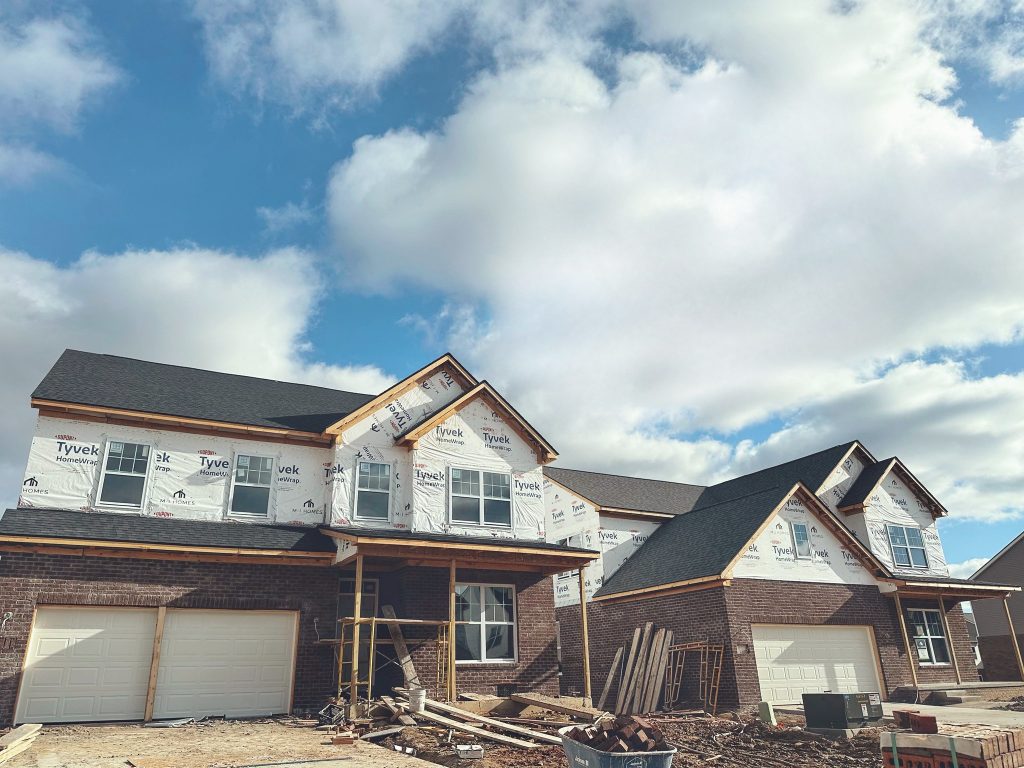
There aren’t as many homes for sale as there used to be. In fact, the inventory of previously owned homes available for sale has seen double-digit decreases over the past few years. That’s produced some challenges for today’s home buyer. It’s also produced opportunities for builders, as more buyers turn to the new home market to find a home that fits their needs. In fact, new home construction – which is considered a good indicator of housing market health – has been increasing lately. It did again in October. New numbers from the U.S. Census Bureau and the Department of Housing and Urban Development show housing starts up 1.9 percent from September and permits to build new homes at the highest level in nearly a year and a half. The October improvements came as mortgage rates were increasing and builders were feeling less optimistic about the market. However, since then, rates have begun to fall. If that trend continues, it could mean more gains for new home construction as we approach spring 2024. (source)

New houses under construction with clear blue sky and clouds.

Average Mortgage Rates Fall To Two Month Low

According to the Mortgage Bankers Association’s Weekly Applications Survey, average mortgage rates fell to a two-month low last week. Rates were down from the week before for 30-year fixed-rate loans with both conforming and jumbo balances, loans backed by the Federal Housing Administration, and 15-year fixed-rate loans. Joel Kan, MBA’s vice president and deputy chief economist, says economic data influenced the decline. “U.S. bond yields continued to move lower as incoming data signaled a softer economy and more signs of cooling inflation,” Kan said. “Most mortgage rates in our survey decreased, with the 30-year fixed mortgage rate decreasing … to the lowest rate in two months.” As a result, demand for mortgage applications rose to its highest level in six weeks, with applications for loans to buy homes up 4 percent from the week before. The MBA’s weekly survey has been conducted since 1990 and covers 75 percent of all retail residential mortgage applications. (source)

Arrow-Down-16

Sales of Existing Homes Slipped In October


Sales of previously owned homes fell 4.1 percent in October from one month earlier, according to new numbers from the National Association of Realtors. The decline came amid rising mortgage rates, low for-sale inventory, and seasonal trends which typically slow sales after the hot summer market begins to cool. But while home sales were slower in October, Lawrence Yun, NAR’s chief economist, says conditions may improve in the months ahead. “Fortunately, mortgage rates have fallen for the third straight week, stirring up buying interest,†Yun said. “Though limited now, expect housing inventory to improve after this winter and heading into the spring. More inventory will result in more home sales.†It’ll also help slow down competition and fast sales. In October, the vast majority of homes still sold in less than a month, with the typical property only remaining on the market for 23 days. (source)

Close-up of a 'For Sale' sign outside a home on a sunny day.

Thank you for your upload