

Banner
Menu

High-End Homes Sell Fast Amid Inventory Crunch


We all know location matters when buying a home. Everything from prices to the amount of competition you face will be different from one zip code to the next. Proof of this can be found in a study of the country’s most affluent areas. The analysis looked at the 100 most exclusive zip codes across the country and found the market for high-end homes is still running hot, even as the housing market overall seems to be cooling. For example, in 23 of the most expensive markets, more than half of properties sold were sold above asking price, with at least one zip code seeing 96 percent of homes go above asking. High-end homes are also selling quickly. In eight of the 100 markets, homes sold in less than a week despite median prices in those areas reaching $4.4 million. Additionally, half of the country’s most affluent areas saw homes sell faster than they did last year at the same time. The reason for the increased competition? Inventory. The market for high-end homes has heated up due to the lack of available properties for sale. (source)
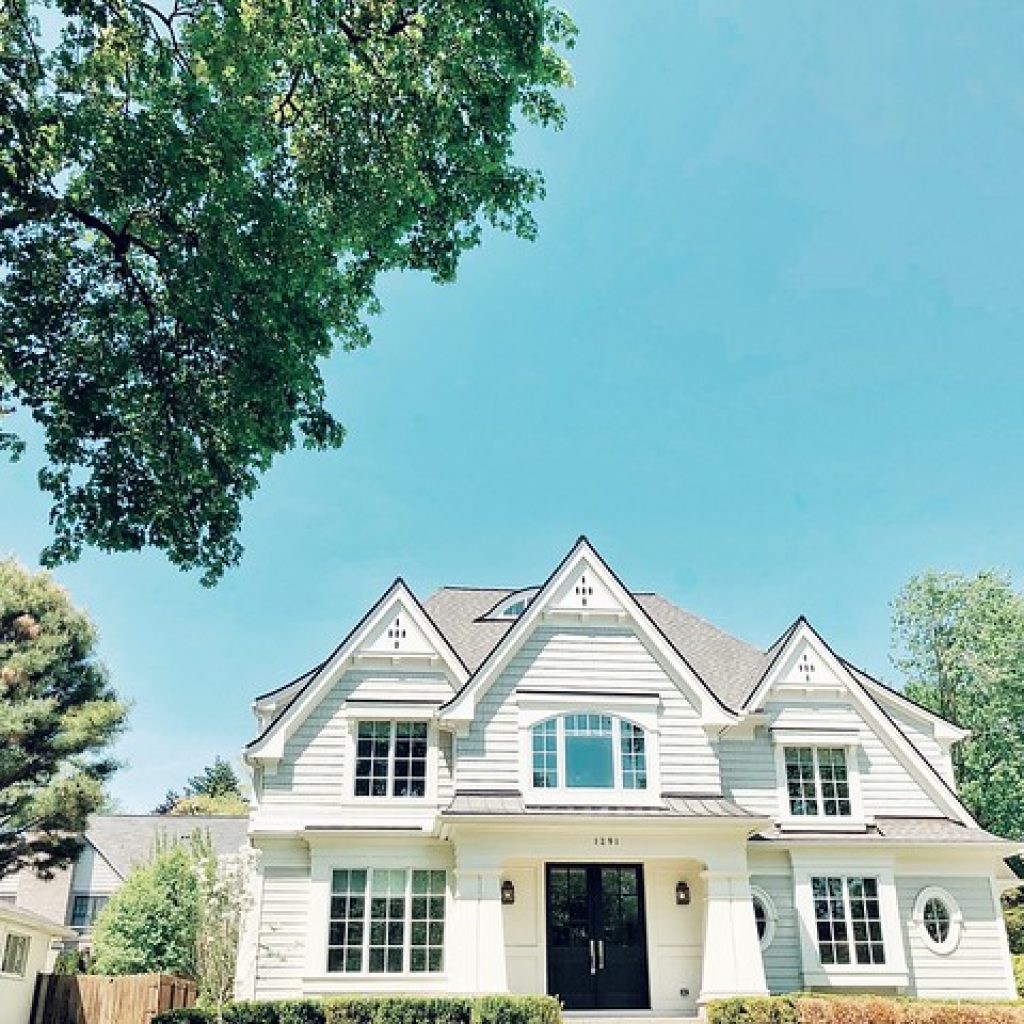
Bright white house with green shutters under a clear blue sky.

Home Builder Survey Sees Better Conditions Ahead

The National Association of Home Builders keeps a monthly measure of how builders view the market for newly built homes. Its Housing Market Index is based on a survey which scores builders’ answers on a scale where any number above 50 indicates more builders view conditions as good than poor. In November, the index fell six points to 34, as rising mortgage rates dampened builder confidence. But Robert Dietz, NAHB’s chief economist, says there are signs that conditions may soon improve. “While builder sentiment was down again in November, recent macroeconomic data point to improving conditions for home construction in the coming months,” Dietz said. “In particular, the 10-year Treasury rate moved back to 4.5 percent for the first time since late September, which will help bring mortgage rates [down].” In the meantime, a rising number of builders say they’ve reduced prices in an effort to entice buyers. Additionally, 60 percent of builders say they’re providing sales incentives. (source)

Construction

Mortgage Credit Availability Increased In October


The standards lenders use to determine whether or not a borrower is eligible for a mortgage aren’t fixed. That means getting approved for a mortgage can be more difficult at times and easier at others. It also means prospective home buyers can better prepare themselves if they have an idea whether standards are loosening or tightening. The Mortgage Bankers Association tracks mortgage credit availability each month with its Mortgage Credit Availability Index. Any increase in the index means credit has become more available, either because of an increase in loan offerings or a loosening of standards. In October, the index showed a 1 percent increase from the month before. Joel Kan, MBA’s vice president and chief economist, says the improvement was mostly in the market for larger loans. “Mortgage credit availability rose in October, but the growth was driven by increased activity in the jumbo market,†Kan said. “The jumbo index increased by 2.7 percent to the highest level in 14 months – its third straight monthly increase.†Credit availability overall remains tighter than it has been in recent years, as loan offerings have narrowed due to lower demand. (source)

Close-up of a US $100 bill showing detailed security features.

Average Mortgage Rates Mostly Flat Last Week


According to the Mortgage Bankers Association’s Weekly Application Survey, average mortgage rates were mostly flat last week from one week earlier. Rates for 30-year fixed-rate loans with conforming loan balances and loans backed by the Federal Housing Administration were both unchanged week-over-week, while jumbo loans and 5/1 ARMs saw slight increases. Joel Kan, MBA’s vice president and deputy chief economist, says rates have fallen over the past few weeks. “Although Treasury rates dipped midweek, mortgage rates were little changed on average through the week,†Kan said. “The 30-year fixed mortgage rate remained … about 30 basis points lower than three weeks ago.†As a result, demand for loan applications rose to the highest weekly pace in five weeks, though it remains at a low level overall. The MBA’s weekly survey has been conducted since 1990 and covers 75 percent of all retail residential mortgage applications. (source)

Scrabble tiles spelling the word 'LOANS' on a red background.

How Far From Home Do You Plan To Move?


At some point, everybody fantasizes about moving far away from home, whether to another city in the same state, a whole different state, or even to another country. It’s normal to sometimes wonder what life would be like if you packed everything up and tried something totally new. The reality, though, is we tend to stay fairly close to home when we make a move. In fact, an analysis of recent buyers found the median distance between the home they purchased and the one they moved from was 20 miles. That’s a decent distance – probably somewhere around a half-hour drive – but not so far that your life would be completely altered. It’s also a distance closer to the long-term norm than it’s been in recent years, as the trend begins to return to normal after the pandemic had Americans moving farther away than normal. The previous norm was about 15 miles but, as recently as 2022, the median moving distance was closer to 50 miles. (source)

A clear highway stretches under a bright blue sky with scattered clouds.

Home Buyers Continue To Compete For Good Homes


When you see a home for sale that looks great, has all the right updates, and is in an desirable neighborhood, chances are you aren’t the only one excited about the prospect of living in it. Especially in a market short of available homes, good ones are going to attract buyers, and that means competition, bidding wars, and quick sales. It can also mean heartbreak, if you’ve grown attached to a home that eventually sells to another buyer. Fortunately for today’s home buyer, competition has eased a bit from its height. But while there’s evidence that higher rates have slowed buyers, homes for sale are still going quickly. How quickly? Well, according to one new analysis of market conditions, homes sold in October typically accepted an offer within 16 days. That’s a day longer than they lasted in September but is a whole two weeks faster than they did in 2019. That means buyers still need to be ready to move fast, especially if the home you’re looking at seems move-in ready. (source)

A sold sign is displayed on a white fence with a tree and blue sky in the background.

How Many Metros Saw 3rd Quarter Price Gains?


Housing market conditions can vary from one location to the next. What’s true in one area may not be in another. That’s certainly the case when looking at home price trends in different cities across the country. The trend in Los Angeles, for example, can be very different from what’s happening in Louisville. So while home prices have been increasing recently, not every metro area has seen the same gains and some may not even have seen gains at all. A new report from the National Association of Realtors addresses these differences in an effort to determine how many metros saw prices up during the third quarter. So what did the report find? Well, according to the NAR, 182 of the 221 cities measured saw increases. That’s 80 percent of the included metros. Additionally, 11 percent saw double-digit increases. Regionally, prices were up most in the Northeast and Midwest. In both regions, prices were up just over 5 percent year-over-year. The South, on the other hand, saw a 1.7 percent increase and the West was up just 0.6 percent. (source)

Aerial view of a city skyline with tall buildings and a lake in the background.

Home Buyer Interest Increases Despite Challenges


Current housing market conditions present some challenges for prospective home buyers. Elevated mortgage rates and home prices – combined with a lower than normal number of homes for sale – have made it more difficult for buyers looking for a home that fits both their needs and their budget. But housing market conditions are never perfect and, despite the ups-and-downs, Americans have consistently expressed a desire to own their own home. That remains true today, according to the latest Housing Trends Report from the National Association of Home Builders. The report found the share of adults who say they plan to purchase a home in the next year climbed 2 percent quarter-over-quarter, rising to 17 percent in the third quarter from 15 percent in the previous quarter. What’s behind the gains? Well, demographics play a part. Most of us buy a house based on what’s happening in our lives, rather than what’s happening in the market. That means the sheer number of Americans who are at a point in their lives when they’re looking to buy their first home, or a larger one to accommodate a growing family, will push demand higher regardless of current affordability trends. (source)

Looking up at a dark blue building against a partly cloudy sky.

Mortgage Rate Drop Biggest Since July 2022


According to the Mortgage Bankers Association’s Weekly Applications Survey, average mortgage rates fell across all loan categories last week, including 30-year fixed-rate loans with both conforming and jumbo balances, loans backed by the Federal Housing Administration, 15-year fixed-rate loans, and 5/1 ARMs. The decline was the biggest week-over-week decrease since July 2022. Joel Kan, MBA’s vice president and deputy chief economist, says there are a few reasons for the improvement. “Last week’s decrease in rates was driven by the U.S. Treasury’s issuance update, the Fed striking a dovish tone in the November FOMC statement, and data indicating a slower job market,†Kan said. Lower rates helped push the Market Composite Index – which measures overall demand for mortgage applications – up 2.5 percent from the week before, including a 3 percent increase in demand for loans to buy homes. The MBA’s weekly survey has been conducted since 1990 and covers 75 percent of all retail residential mortgage applications. (source)

Red surface with a bold white downward arrow and text.

63% Of Americans Say Now’s A Good Time To Sell

Fannie Mae’s monthly Home Purchase Sentiment Index measures how Americans feel about the housing market and overall economy. Based on a survey that asks participants for their view of buying and selling a home, home prices, mortgage rates, their income and job, the survey provides a look into what Americans are thinking and how willing they may be to get into the market. According to the most recent results, Fannie Mae’s survey shows a large majority of respondents feel now is a good time to sell a house. In fact, 63 percent of survey participants said they think it’s time to sell. But while Americans think selling a house is a good idea, they’re still cautious overall. Doug Duncan, Fannie Mae’s senior vice president and chief economist, says inflation has affected sentiment . “Consumers expressed even greater pessimism toward the larger economy this month, in addition to their ongoing frustration with the housing market,” Duncan said. “Via our October National Housing Survey, 78 percent of respondents told us the economy is on the ‘wrong track’ – up from 71 percent last month – and they overwhelmingly cited inflation as the primary reason why.” (source)

For-Sale-26

Thank you for your upload