

Banner
Menu

Construction Costs Dampen Builder Confidence


Home builders are a great gauge of housing market health. When they’re optimistic, chances are the economy is doing well and more new homes are being built. And when more new homes are being built, that helps balance supply and demand and keeps prices from rising too quickly. The National Association of Home Builders’ monthly Housing Market Index measures builder confidence and scores the results on a scale where any number above 50 indicates more builders view conditions as good than poor. In January, the index moved down a point to 83. The decline was the first in months but keeps the index relatively unchanged from where it was last spring. Chuck Fowke, NAHB’s chairman, says the drop is due to rising construction costs, which has made it harder for builders to keep up with buyer demand. “Higher material costs and lack of availability are adding weeks to typical single-family construction times,†Fowke said. “NAHB analysis indicates aggregate cost of residential construction materials has increased almost 19 percent since December 2021.†Despite those challenges, the index remains at a high level, with the gauge measuring current sales conditions holding steady at 90. (source)
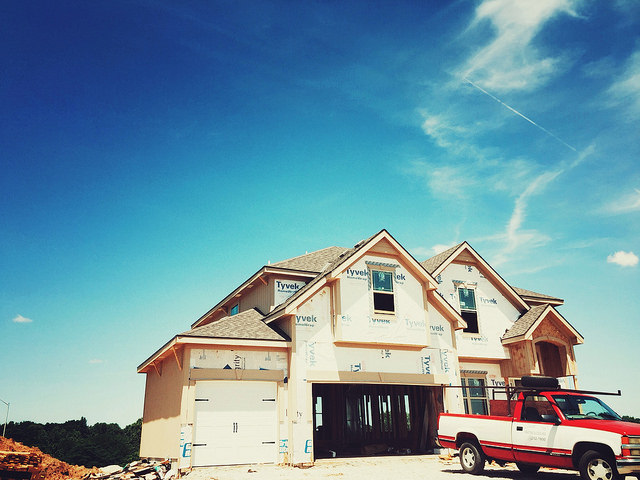
A suburban house with a clear blue sky.

Are Homes Still Selling Above List Price?


In a competitive market, it isn’t uncommon for a home to attract multiple buyers. When this happens, buyers have to make their offer more attractive to the home’s seller in order to have it chosen over other buyers’ offers. Typically, that means more money. This is the primary reason for recent home-price increases. For the past few years, there haven’t been enough homes for sale to satisfy buyer demand, which has caused more competition, bidding wars, and a higher percentage of homes selling above their list price. But, like any market, the housing market has its ups-and-downs. So what should winter buyers expect when out looking at homes? Well, according to one recent analysis of December home sales, there’s still a large percentage of homes selling above list price – though it’s fallen from its summer peak. The numbers show 43 percent of homes sold above list price during the final month of 2021. That’s down 14 percent from its peak last June, but 9 percent higher than one year earlier. That means, winter buyers will likely find the market less competitive than it was last summer, but still competitive enough that they should prepare for the possibility that they’ll have to outbid other buyers. (source)

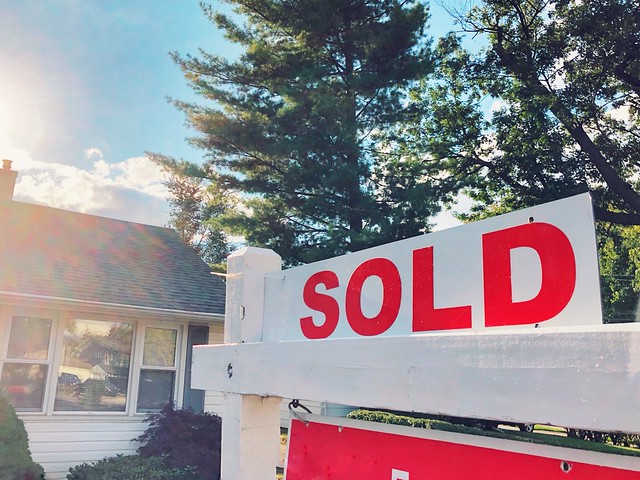
A house with a large "SOLD" sign in front on a sunny day.

Inventory Is Key To Housing Health In 2022


Home prices are always a hot topic among prospective home buyers. The reasons for this are obvious. After all, the price of homes in the neighborhoods you’re targeting will, in large part, determine whether or not you can afford to buy one. So what might happen to prices, and the overall market, in the year ahead? Well, a lot depends on how many homes are available for sale. The main factor pushing home prices higher these days is a lack of inventory. Naturally, if inventory improves – either because more homeowners list their homes for sale or more new homes are built – it will help balance the market and keep prices from spiking. With a healthier supply of homes, home sales will rise and there’ll be less competition between buyers. That’s the best case scenario for the 2022 market. On the other hand, if inventory doesn’t improve and prices continue to climb higher, affordability conditions may begin to suppress buyer demand – which would also bring more balance to the market, albeit in a less positive way. (source)

A single brass key on a plain white background.

Mortgage Credit More Available In December


The standards used to determine whether or not a borrower is approved for a mortgage aren’t fixed. There are times when they tighten and times when they loosen. Because of this, the Mortgage Bankers Association tracks credit availability each month in order to measure how easy or difficult it is for borrowers to get a mortgage. Any increase in their index indicates that credit has become more available, while a decline means standards have tightened. In December, the overall index rose 0.8 percent, pushing it to its highest level since May 2021. Joel Kan, MBA’s associate vice president of economic and industry forecasting, said standards have loosened due to current market challenges. “December’s growth was driven by more ARM and lower credit score loan programs, which was likely due to a combination of the rising rate environment and affordability challenges,†Kan said. “Lenders expanded offerings to qualified borrowers who were the most impacted by these market conditions.†Despite the improvement, credit availability is still 30 percent lower than its pre-pandemic level.

Scrabble tiles spelling the word "CREDIT" on a blue surface.

Purchase Activity Increases Despite Rising Rates


According to the Mortgage Bankers Association’s Weekly Applications Survey, average mortgage rates rose last week across all loan categories, including 30-year fixed-rate loans with both conforming and jumbo balances, loans backed by the Federal Housing Administration, and 15-year fixed-rate loans. The increases, while significant, weren’t enough to slow buyer demand, however. In fact, demand for purchase loan applications increased 2 percent from one week earlier. Joel Kan, MBA’s associate vice president of economic and industry forecasting, says the year has started off strong. “The housing market started 2022 on a strong note. Both conventional and government purchase applications showed increases, with FHA purchase applications increasing almost 9 percent, and VA applications increasing more than 5 percent,†Kan said. “MBA expects solid growth in purchase activity this year, as demographic drivers and the strong economy support housing demand.†The MBA’s weekly survey has been conducted since 1990 and covers 75 percent of all retail residential mortgage applications.

A cracked yellow arrow painted on a dark surface pointing upward.

Climate A Factor When Considering A Move


There a lot of things to consider when thinking about making a move. How close you’ll be to family and friends, affordability, and the local job market are all important factors that play a role when choosing where we’d like to live. But, according to one recent survey, climate is also a factor for homeowners and renters considering a move. In fact, among renters it was the most important factor, ranking higher than both the job market and home prices. Homeowners, on the other hand, ranked it second behind proximity to family and friends. Interestingly, there were also differences when broken down by generation, with Gen-Z homeowners ranking it first, while millennial and Gen-X respondents put it behind both home prices and closeness to family and friends. Ultimately, though, there wasn’t a whole lot of separation between the various priorities offered to survey participants – which is an indication that, in a perfect world, we’d all choose to live somewhere with nice weather, good jobs, and affordable homes close to family, friends, and nature. (source)

Tall palm trees against a bright blue sky on a sunny day.

Homeownership Still More Affordable Than Renting


It’d be easy to get the impression that owning a home is more expensive than renting. After all, home prices have been increasing for years – and especially over the past year. But, according to a recent analysis from ATTOM Data Solutions, homeownership is still more affordable then renting in 58 percent of counties. The analysis compared the cost of owning a median-priced home to the average rent on a three-bedroom property in 1,154 counties and found that homeownership expenses consumed a smaller portion of average local wages than renting. Todd Teta, ATTOM’s chief product officer, says home prices are rising faster than rents but have yet to flip the affordability equation. “Home prices are rising faster than both rents and wages while wages rise faster than rents,†Teta said. “Yet homeownership still remains the more affordable option for average workers in a majority of the country because it still takes up a smaller portion of their pay.†One of the main factors driving homeownership’s continuing affordability is the fact that mortgage rates remain low, which helps to counteract rising prices and keeps mortgage payments manageable. (source)

Close-up of a hundred-dollar bill showing detailed engraving.

Americans Say It’s A Good Time To Sell


The percentage of Americans who say it’s a good time to sell a house rose 26 percent year over year, according to the December results of Fannie Mae’s monthly Home Purchase Sentiment Index. The survey – which asks Americans what they think about buying or selling a home, mortgage rates, home prices, their jobs, and household income – was relatively flat from the month before. However, year-over-year comparisons show a large spike in the number of respondents who think it’s a good time to sell – while the number who believe it’s a good time to buy saw a significant drop. Doug Duncan, Fannie Mae’s senior vice president and chief economist, says the results may be a sign that the housing market will soften this year. “The HPSI’s underlying components changed dramatically in the last 12 months – particularly the two related to home-buying and home-selling sentiment – and we have seen the index drift slightly downward since March 2021, an indication that the housing market may begin to soften in the coming year,†Duncan said. (source)

Colorful row houses under a vibrant blue sky.

New Listings Bounce Back In Many Metros


Shopping for a home to buy can be challenging in markets where there aren’t many homes for sale. For one, it’s more difficult to find an available house in the right neighborhood with the right features. Then, when you do find one, you often have to outbid other prospective buyers who also want it. But, while the number of homes for sale is still lower than normal, you shouldn’t let the current inventory crunch put your home-buying plans on hold. Why? Well, there’s an expectation that this year’s market will see inventory rebound from the declines suffered in 2021. And, according to a new report from the National Association of Realtors’ consumer website, there is already evidence that new listings are beginning to bounce back. In fact, December data shows 20 percent of the 50 largest U.S. metros saw more new sellers enter the market than last year at the same time – and some of those cities saw double-digit increases. That doesn’t mean those markets won’t still be competitive but it does offer hope to home buyers that they’ll have an easier time finding a house that fits their needs. (source)

A close-up of a 'For Sale' sign in red letters.

Mortgage Rates Mostly Flat To End 2021


According to the Mortgage Bankers Association’s Weekly Applications Survey, average mortgage rates were mostly flat during the final two weeks of December. Rates for 30-year fixed-rate loans with both conforming and jumbo balances, loans backed by the Federal Housing Administration, and 15-year fixed-rate loans saw little movement from the week before. But, while rates were relatively unchanged, they remained at their highest level since April 2021, which – along with the holiday season – slowed demand for mortgage applications. Joel Kan, MBA’s associate vice president of economic and industry forecasting, says demand fell for both refinance and purchase loans. “Refinance demand continues to dwindle, as many borrowers refinanced in 2020, and in early 2021 – when mortgage rates were around 40 basis points lower,†Kan said. “The purchase market also finished the year on a slower note, with the final week coming in at the weakest since October 2021.†Still, 2021 was a record year for purchase originations and the MBA expects this year to be even stronger. (source)

Close-up of a red percentage symbol on a blurred background.

Thank you for your upload