

Banner
Menu

Category: Uncategorized

The Feature Millennials Are Most Willing To Go Without


Unless you’re having a house built to your exact specifications, the house you end up buying will likely be a feature or two short of what you’d been fantasizing about. That’s because, you’re going to be choosing only from the homes that are on the market during the time you’re shopping. So the odds of finding each and every thing on your wish list in one home are pretty slim. In other words, you’re going to have to compromise. But how willing you are to compromise may have something to do with your age. In fact, according to one new study, millennial home shoppers are more willing to compromise on home and neighborhood features than Gen X buyers or baby boomers. Among respondents, 89 percent of millennials said they’d be willing to give up a neighborhood feature for their ideal home and 84 percent said they’d be willing to sacrifice a home feature to live in their preferred neighborhood. So what is the feature young home buyers are most willing to forgo? Well, garages top the list, with 34 percent saying they’d be willing to give up having one to live in the right neighborhood. More here.


A black LiftMaster garage door remote with three buttons on a white background.

Homeowners Get A Better Grip On Home Values


The mortgage process is really just about verifying and documenting the various aspects of the home’s sale. Whether it’s verifying the buyer’s income and debts or that the house doesn’t have a major problem with its foundation, there are a number of items that are typically among the checklist of things that need to be done before the deal is closed. The appraisal is one of them. In short, an appraisal provides a professional evaluation of the home’s worth. Based on the size of the home and lot, as well as the prices of similar homes sold in the area, an appraiser will determine whether or not the home’s price is fair. Sometimes, when a homeowner has an unrealistic idea of their home’s value, a lower-than-expected appraisal can be an issue. For that reason, a recent report tracking the difference between homeowners’ perception of their home’s worth and its appraised value is encouraging. That’s because, it found that homeowners’ expectations and actual appraised value are more in line than they have been in more than three years. In fact, nationally, appraised values were just 0.33% off homeowner estimates in April. More here.

A clenched fist holding dollar bills against a red backdrop.

High-End Neighborhoods Make Most Popular List


When searching online listings for homes to buy, it is sometimes difficult not to wander outside of your price range for a look at houses you’d love but can’t afford. This is true no matter what your particular price range might be. There will always be a house just out of your reach that’ll catch your curiosity. And the internet has made it easier than ever to get a glance of the high-end homes you’d previously only be able to see from the road. Proof of this can be found in a recent analysis of the country’s most popular neighborhoods based on page views. The top 20 features the nation’s most desirable addresses in some of the most exclusive zip codes. The Oaks in Los Angeles was the top neighborhood, followed by places like Tuxedo Park in Atlanta, Presidio Heights in San Francisco, and New York’s Crestwood neighborhood. But, in this case, the number of views a particular house or neighborhood receives isn’t likely to reflect an increase in the number of potential buyers. More likely, these neighborhoods reflect – not where Americans are buying homes – but where they dream of buying homes. More here.

A charming white house with a red tile roof under a bright blue sky with scattered clouds.

What Is The Best Time To Sell Your Home?


If you’ve ever sold a house or are currently thinking of selling, you know there are a lot of factors that play a role in deciding when it’s the right time to list your home. Most of the decision-making process will rightly focus on your personal goals, finances, and plans for the future. But there is also the question of what time of year is the best for selling a house. Well, according to an analysis of nearly 15 million home sales that occurred between 2011 and 2017, ATTOM Data Solutions has narrowed the best time to sell down to, not just the month, but the exact date when it’s best to sell a home. Their study shows that homeowners who sold during the month of May realized the biggest premiums over estimated market value. In fact, the average seller premium was 5.9 percent. But, if you’re looking for the single best day to sell a house, the results says it’s June 28. Sellers who sold on that date saw an average premium of 9.1 percent. More here.

A collection of various vintage clocks showing different times.

Loans To Buy Homes Up 5% Over Last Year


According to the Mortgage Bankers Association’s Weekly Applications Survey, the number of Americans requesting loans to buy homes last week was 5 percent higher than the same week one year ago – indicating that there is a high level of buyer demand around the country. But though buyers are active in the market, they are also keeping a close eye on affordability. And last week, mortgage rates were also up. In fact, rates rose across all loan categories, including 30-year fixed-rate loans with both conforming and jumbo balances, loans backed by the Federal Housing Administration, and 15-year fixed-rate mortgages. The increase was driven by confidence in the overall economy. “Market sentiments about strong domestic growth and higher inflation in the U.S. pushed the 10-year Treasury to the 3 percent mark last week, the first time since 2014 that yields have hit that level,†MBA economist, Joel Kan, told CNBC. In other words, continued economic optimism is responsible for increasing rates. The MBA’s weekly survey has been conducted since 1990 and covers 75 percent of all retail residential mortgage applications. More here.

Suburban homes under a clear blue sky with 'mortgage loans' text overlay.

Compromise Isn’t Just For Home Buyers

With buyer demand high and the number of houses for sale low, today’s market is favorable for homeowners who want to sell. But though they’re likely to find interested buyers, homeowners shouldn’t expect that everything will always go their way. In fact, a home’s sale almost always involves a negotiation and home sellers, just like buyers, should expect to have to compromise here and there. For example, 76 percent of sellers said they had to make at least one concession when selling their home, according to one recent survey. That means, even in markets that favor sellers, homeowners should have some flexibility when it comes to working out the details of the final sale. Home sellers should also be prepared to make some pre-sale improvements to their house, as the vast majority of recent home sellers also said they had to fix up their home before listing it. In short, regardless of how hot your local market is, you still have to get your house in shape and work with your home’s buyer to ensure the sale is a success on both ends. More here.

Contract Signings Edge Forward In March

When a homeowner accepts an offer to buy their home, that home’s sale is considered pending until the deal has closed. Because there are usually a few weeks between the contract signing and closing, tracking pending sales can be a good way of forecasting future home sales activity. For that reason, the National Association of Realtors’ Pending Home Sales Index tracks contract signings each month. In March, the index was up slightly from the month before but fell short of last year’s level. Lawrence Yun, NAR’s chief economist, says sales would be higher if there were more homes available for sale. “Healthy economic conditions are creating considerable demand for purchasing a home, but not all buyers are able to sign contracts because of the lack of choices in inventory,” Yun said. “Steady price growth and the swift pace listings are coming off the market are proof that more supply is needed to fully satisfy demand.” In other words, though the economy has improved and Americans are interested in buying, in many markets, there are more buyers than homes for sale, which means buyers must be prepared to act fast, if they’re shopping this spring. More here.

Housing Outlook Says Take The Long View


If you spend any time following the real estate market or economy, you know there’s no shortage of data. Nearly every day there’s a new report detailing some corner of our economic lives, whether it’s consumer spending, mortgage rates, jobs, or home sales. But reading the day-to-day news reports can sometimes give you a distorted view of what’s really happening. That’s because monthly updates on the housing market’s ups-and-downs can be more volatile than a look at annual results. And so it’s important to take a big-picture view of the market from time to time. For example, Fannie Mae’s most recent Economic and Housing Outlook says, despite a slower-than-expected first quarter, the economy will continue to grow. And, according to Doug Duncan, Fannie Mae’s chief economist, home sales will also continue to improve, despite a more challenging environment for buyers. “Soft residential investment last quarter should prove temporary, as home sales resume their slow upward grind, with inventory shortages playing friend to prices but foe to affordability and sales.†More here.

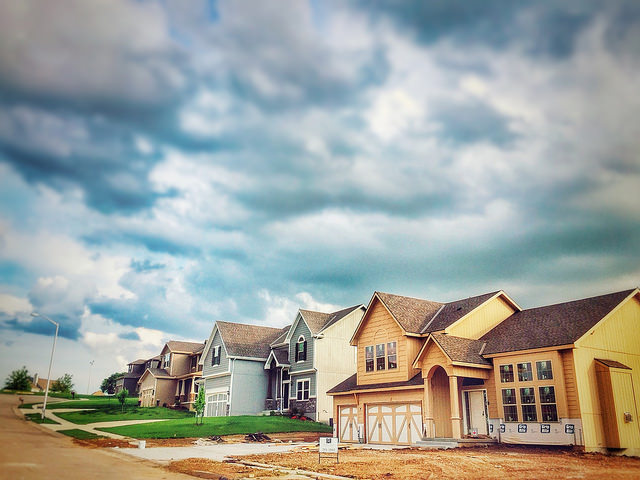
A row of suburban houses under a cloudy sky.

New Home Sales Spike In March


New numbers from the U.S. Census Bureau and the U.S. Department of Housing and Urban Development show sales of new homes rose 4 percent in March and were 8.8 percent above year-before levels. The improvement is a good sign for the spring market and evidence that recent gains in building permits and housing starts are beginning to show results – as those homes are now being finished and put up for sale. It’s also good news for inventory, as growing demand for new homes will help relieve pressure on prices as builders add stock to the market. Not to mention, with an increasing number of hopeful home buyers looking to purchase a house this spring, added inventory means more choices. Still, prospective buyers should know that the new homes that are being built tend to be higher priced. In fact, the median sales price of new homes sold in March was $337,200; the average price was $369,900. That means, though added new home inventory will be good for the overall market, first-time buyers looking for entry-level, affordable homes may still face challenges. More here.

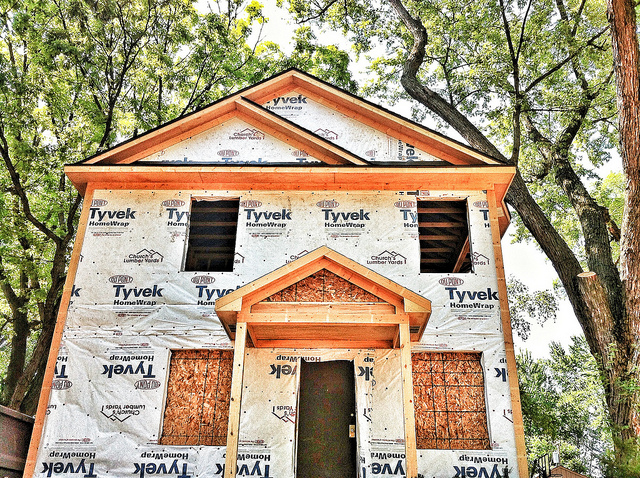
A house under construction wrapped in Tyvek material surrounded by trees.

Positive Economic News Moves Rates Higher


According to the Mortgage Bankers Association’s Weekly Applications Survey, average mortgage rates increased across all loan categories last week. In fact, rates were up for 30-year fixed-rate loans with both conforming and jumbo balances, loans backed by the Federal Housing Administration, and 15-year fixed-rate loans. The increase, according to MBA economist, Joel Kan, was due to positive economic news. “Treasury rates increased significantly last week, partly driven by the market’s reaction to more hawkish comments from key Fed officials and positive economic news on strong retail sales and declining jobless claims,†Kan told CNBC. In other words, when the economy is strong, interest rates move higher. But though mortgage rates are now higher than they’ve been in recent months, they are still low when compared to where they’ve been historically. That means, there are still opportunities for buyers to lock in a lower-than-normal mortgage rate when buying a home this spring. The MBA’s weekly survey has been conducted since 1990 and covers 75 percent of all retail residential mortgage applications. More here.

A rusty metal arrow-shaped object against a blue industrial wall.

Thank you for your upload