

Banner
Menu

Category: Uncategorized

The Most Desired Home Features Of 2016


An end-of-the-year, nationwide survey asked builders to rank a series of home features in order of likelihood they’d be included in the typical single-family home they’d be building this year. On a scale from one to five the builders – surveyed by the National Association of Home Builders – ranked everything from great rooms to media rooms. Naturally, because builders have to be aware of consumers’ preferences and needs in order to be successful, they are a good gauge of the popularity of certain home features. The results show energy efficiency and storage spaces are still the most coveted features among prospective home buyers. In fact, builders ranked master bedroom, walk-in closets the most likely feature to be included in new homes this year, with an average rating of 4.9. Laundry rooms, great rooms, low-e windows, and energy-star rated appliances rounded out the top five. Other highly rated features included programmable thermostats, central islands in the kitchen, and granite countertops. On the other hand, some of the lowest rated features included cork flooring on the main level, a pet washing station, outdoor kitchens and fireplaces, laminate countertops, and two-story family rooms and foyers. More here.


A close-up of a gold key with text about desired home features.

Local Markets Stable In Majority Of Metros


The housing market has come a long way since hitting its bottom in 2010. To prove it, Freddie Mac’s Multi-Indicator Market Index tracks just how far individual states and metropolitan areas have progressed since then. The index takes a look at home purchase applications, payment-to-income ratios, proportion of on-time mortgage payments, and the local employment picture in each market and determines how it compares to their long-term averages. According to the most recent release, 57 of the 100 metro areas included in the survey are within their stable range. At the same time last year, only 28 metros had values in stable range. Len Kiefer, Freddie Mac’s deputy chief economist, says the latest results show a strong year-over-year improvement, though there’s a lot of variation from market to market. “The regional variation of housing activity continues to become more pronounced,†Kiefer said. “For example, we’re still seeing declines in oil-dependent housing markets, whereas the hardest hit metros from the Great Recession continue to see some of the best improvement as they recover. And at the same time, other markets are seeing even stronger improvement because of robust home sales fueled by strong local economies that remain largely affordable for the typical home buyer. In the short term, we expect home buyer affordability to remain strong with mortgage rates continuing to look very attractive to prospective home buyers.†Among the metro areas that were most improved from last month, Orlando, Denver, Portland, Albany, and Phoenix led the way. More here.

A dense urban area with a grid-like street layout and numerous buildings.

Contract Signings Unchanged In December


When a prospective home buyer signs a contract to buy a home, the closing process begins. At that point, the home sale is listed as pending. Each month, the National Association of Realtors tracks the number of contract signings because, among other things, it provides a good indicator of what future sales of existing homes might look like. In December, the Pending Home Sales Index was virtually flat, increasing just 0.1 percent. Lawrence Yun, NAR’s chief economist, says contract activity lost some momentum at the end of the year, though an increase in the Northeast helped stabilize December’s results. “Warmer than average weather and more favorable inventory conditions compared to other parts of the country encouraged more households in the Northeast to make the decision to buy last month,†Yun said. “Overall, while sustained job creation is spurring more activity compared to a year ago, the ability to find available homes in affordable price ranges is difficult for buyers in many job creating areas.†Despite those challenges, however, pending sales ended the year 4.2 percent above year-before levels. More here.

A bright SALE PENDING sign in bold red letters on a window.

New Home Sales End Year On A High


Despite some signs of weakness in the overall economy, the housing market continues to make gains. The latest in a string of positive releases is the U.S. Census Bureau and the Department of Housing and Urban Development’s New Residential Sales Report For December. According to the numbers, sales of newly built single-family homes rose 10.8 percent over the previous month’s estimate. That means, at the end of the year, there had been a total of 501,000 new homes sold in 2015 – a 14.5 percent increase over 2014. Sales in December likely benefited from unseasonably warm weather in areas usually slowed by winter weather. In fact, the Midwest lead all regions with a 31.6 percent rise over the month before. Other regions, such as the West and Northeast, also saw double-digit gains, though the South was virtually flat. Sales were also supported by an increase in the number of new homes available for sale. Rising inventory offers buyers more choices and helps relieve upward pressure on prices. To that point, the median price of a new home dropped in December to $288,000, 4.3 percent lower than one year ago. More here.

A beautiful house with stone facade under a blue sky.

Mortgage Rates Fall For 3rd Straight Week


According to the Mortgage Bankers Association’s Weekly Applications Survey, mortgage rates continue to defy expectations, falling for the third week in a row. In fact, rates were down across all loan categories including 30-year fixed-rate loans with both conforming and jumbo balances, loans backed by the Federal Housing Administration, and 15-year fixed-rate mortgages. The drop led to another bump in home loan demand, with both the refinance and purchase indexes seeing large gains. Refinance activity – which is generally more sensitive to rate fluctuations – was up 11 percent over the previous week, while demand for loans to buy homes rose 5 percent over the week before. Joel Kan, an MBA economist, told CNBC that mortgage rates are being affected by volatility in the financial market. “As a result of more financial market volatility and continued flight to quality by investors, mortgage rates have decreased 18 basis points since the first week of January 2016,†Kan said. That drop has rates at their lowest point since last October. The MBA’s weekly survey has been conducted since 1990 and covers 75 percent of all retail residential mortgage applications. More here.

Close-up of the word 'MORTGAGE' on a financial document.

Home Prices Continue To Show Strength


Following the financial crisis and housing crash, there were many years when analysts wondered when the housing market would, once again, be among the main drivers of the economy. Now, after its best year since home prices plummeted, housing is showing strength just as other parts of the economy seem to have slowed. For example, the latest S&P/Case-Shiller U.S. National Home Price Index shows November home prices were 5.3 percent higher than year-before levels – an improvement over October when they were 5.1 percent higher than one year earlier. David M. Blitzer, managing director and chairman of the index committee at S&P Dow Jones Indices, said the results show housing continues to improve. “Home prices extended their gains, supported by continued low mortgage rates, tight supplies, and an improving labor market,†Blitzer said. “Sales of existing homes were up 6.5 percent in 2015 vs. 2014, and the number of homes on the market averaged about a 4.8 months’ supply during the year; both numbers suggest a seller’s market.†He went on to say that though the consumer portion of the economy, like automobile sales and housing, were strong last year other parts of the economy, such as the oil and energy sector, have slowed. According to Blitzer, housing’s growth will not be “enough to offset all of these weak spots.†More here.

Close-up of a window sign displaying the word 'PRICES'.

Young Buyers Will Shape Tomorrow’s Homes

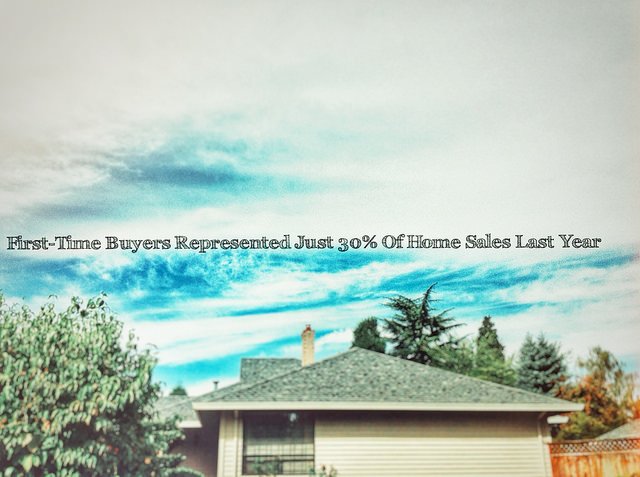
More young Americans between the ages of 25 and 34 are living with a parent than at any time in the past 30 years. In fact, 15 percent of young adults are living with their parents, which is 3 percent above the previous high. That’s approximately 1.3 million people who would normally be forming households of their own, according to Rose Quint, the National Association of Home Builders’ vice president for survey research. Quint, speaking at a conference on housing preferences for millennials, said first-time buyers will make a significant impact on the types of homes that are being built once they return to the market. In recent years, the lack of first-time home buyers active in the housing market has gotten a lot of attention. And despite new mortgage programs and looser requirements aimed at increasing the number of first-time buyers, the new home market continues to be dominated by move-up buyers. Quint believes, because millennials are a generation immersed in technology, they will demand smaller, smarter, more energy efficient homes when they decide to buy. They are also interested in home organization and workspaces, workable kitchens, outdoor living areas, and casual spaces. Typically around 40 percent of home buyers, first-time buyers represented just 30 percent of home sales last year. More here.

First-Time Buyers

December Home Sales Surge Nearly 15%


Sales of previously owned homes surged in December, according to new numbers released by the National Association of Realtors. The 14.7 percent sales spike was caused, in part, by delayed transactions that would normally have closed in November but were slowed by new mortgage disclosure rules. Regardless, Lawrence Yun, NAR’s chief economist, says the two months together show sales ended the year at a healthy pace. “While the carryover of November’s delayed transactions into December contributed greatly to the sharp increase, the overall pace taken together indicates sales these last two months maintained the healthy level of activity seen in most of 2015,†Yun said. “Additionally, the prospect of higher mortgage rates in coming months and warm November and December weather allowed more homes to close before the end of the year.†Totals for 2015 show existing-home sales recorded their best year since 2006 and ended the year 7.7 percent higher than at the close of 2014. Despite the strong end to the year, however, Yun says low for-sale inventory, rising mortgage rates, and tepid economic expansion may mean sales numbers will struggle to replicate this year’s gains in 2016. Also in the report, regional results found large increases in all four regions, with the West leading the way with a 23.2 percent sales improvement in December. More here.

Close-up of a 'For Sale' sign with warm lighting.

Home Construction Has Best Year Since 2007


New numbers from the U.S. Census Bureau and the Department of Housing and Urban Development show that 2015 was new residential construction’s best year since 2007. In fact, housing starts – which refer to the number of groundbreakings – were up nearly 11 percent last year from the year before. That’s good news for the housing market, as low for-sale inventory has been putting upward pressure on home prices and affecting affordability conditions. But despite the fact that both housing starts and permits to build new homes saw double-digit increases over the year before, the month of December saw a slight downturn from November’s pace. Specifically, the number of single-family houses that began construction during the month fell 3.3 percent from the month before. Building permits – which are a good indicator of future home construction – also fell, though the decline was primarily among multi-family housing units. Permits to build new single-family homes, on the the hand, actually rose, climbing 1.8 percent month-over-month. The rise in permits could indicate that, though slow during the winter, housing starts will pick back up in the spring. More here.

Newly constructed green house with large garage doors under a blue sky.

Average Mortgage Rates Hit 3-Month Low


According to the Mortgage Bankers Association’s Weekly Applications Survey, average mortgage rates fell last week across all loan categories, including 30-year fixed-rate mortgages with both conforming and jumbo balances, loans backed by the Federal Housing Administration, and 15-year fixed-rate loans. The drop brought mortgage rates to their lowest level since last October. Michael Fratantoni, MBA’s chief economist, told CNBC rates fell because of volatility in global stock markets. “Global stock markets plunged last week, led by weakness in China, but further weakened by continued sharp drops in oil prices,†Fratantoni said. “Investors drove down Treasury yields in a flight to safety, and mortgage rates fell to their lowest level since last October.†As a result, refinance activity – which is most sensitive to rate fluctuations – spiked, rising 19 percent from the week before. Purchase application demand, on the other hand, slipped 2 percent, though it remains 17 percent higher than the same week one year ago. The MBA’s weekly survey has been conducted since 1990 and covers 75 percent of all retail residential mortgage applications. More here.

Yellow house with a dark blue sky and partial 'MORTGAGE' text.

Thank you for your upload