

Banner
Menu

Mortgage Rates Decline Over COVID Concerns

According to the Mortgage Bankers Association’s Weekly Applications Survey, average mortgage rates fell last week from one week earlier. Rates were down across all loan categories, including 30-year fixed-rate loans with both conforming and jumbo balances, loans backed by the Federal Housing Administration, and 15-year fixed-rate loans. Joel Kan, MBA’s associate vice president of economic and industry forecasting, said rising coronavirus cases were a factor. “Treasury yields fell last week, as investors continue to anxiously monitor if the rise in COVID-19 cases in several states starts to dampen economic activity,” Kan said. “Mortgage rates slightly declined as a result, with the 30-year fixed rate decreasing for the first time in three weeks.” Favorable rates helped push overall demand for mortgage applications 1.6 percent higher than the week before, with refinance activity up 1 percent and the purchase index up 3 percent. The MBA’s weekly survey has been conducted since 1990 and covers 75 percent of all retail residential mortgage applications.
New Home Sales Bounce Back After Slow June


New numbers from the U.S. Census Bureau and the Department of Housing and Urban Development show new home sales up 1 percent in July. The modest gain follows an unexpected drop in June, when sales fell 6.6 percent from the month before. But while rebounding sales are an encouraging sign for the housing market, they come at a time when affordability challenges are making it more difficult for buyers. For example, the median sales price of new homes sold in July was $390,500. The average sales price was $446,000. That’s about $60,000 higher than they were last year at the same time. However, while prices are still headed upward, so is inventory. At the end of the month, there were 367,000 new homes for sale. That represents a supply of 6.2-months at the current sales rate. With continued improvement, increasing for-sale inventory should help slow future price spikes, bringing relief to home buyers in the months ahead. (source)

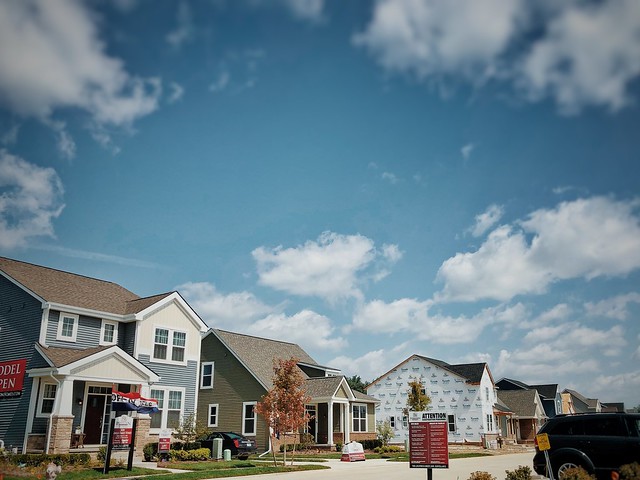
A suburban neighborhood with colorful houses under a partly cloudy sky.

Nearly 90% Of Homes Sell in Under A Month


If you’re a prospective home buyer, the latest existing-home sales data from the National Association of Realtors is a mixed bag. On the one hand, the number of homes for sale was up 7.3 percent in July from the month before. That’s a much needed improvement, since the lack of homes for sale has been driving home prices higher and fueling competition among buyers. But while inventory has improved, it’s still much lower than normal. And, in July, 89 percent of homes sold were on the market for less than a month. That means, while buying conditions may be improving, the market is still hot. Lawrence Yun, NAR’s chief economist, says the supply of entry-level homes remains particularly low. “We see inventory beginning to tick up, which will lessen the intensity of multiple offers,†Yun said. “Much of the home sales growth is still occurring in the upper-end markets, while the mid-to lower-tier areas aren’t seeing as much growth because there are still too few starter homes available.†Overall, sales of previously owned homes were up 2 percent in July, marking the second straight month of gains.

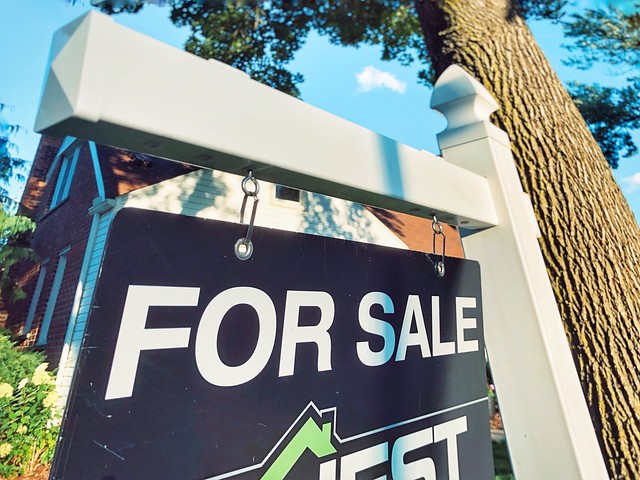
Close-up of a 'For Sale' sign outside a home on a sunny day.

Would You Buy A 3D Printed House?


New technology always take a while before it catches on. People need to warm up to the idea and make sure it can deliver as promised. That’s certainly true of 3D printed homes. At this point, most of us have heard about them but few of us have seen or stepped inside one. According to a new survey from the National Association of Realtors, however, that doesn’t mean home buyers aren’t curious. In fact, results show 66 percent of respondents said they’d consider buying a 3D printed home, with 75 percent of millennials saying they would. George Ratiu, the site’s senior economist, says the time may be right for an alternative. “Over the past decade, as the home building industry focused mainly on the upper-end of housing, expecting younger generations to favor renting, the price of construction has pushed new homes out of reach for many first-time home buyers,†Ratiu said. But while buyers are interested in a lower cost, more efficient house, they have concerns about 3D printing. Among them, many respondents said they don’t yet trust the technology and would want to wait and see before seriously considering it. (source)

Architectural blueprints detailing window and door elevations with measurements.

Forecast Sees Sales Improve From Last Year


Each month, Fannie Mae’s Economic and Strategic Research Group releases a forecast detailing their expectations for the housing market and overall economy. In August, their outlook for single-family home sales was revised downward due to ongoing inventory and supply-chain issues. But while they now expect fewer homes to sell than they previously did, they still expect sales to improve from last year. In fact, they expect a 3.1 percent improvement from 2020. Mark Palim, Fannie Mae’s vice president and deputy chief economist, says home sales are being held back. “For the housing market, at current case levels, the lack of inventories of homes for sale and continued supply chain bottlenecks experienced by home builders remain the primary constraints on home purchase activity,†he said. Palim believes low mortgage rates can help balance inventory and affordability challenges, but until there are more homes for sale, their benefit to buyers will be limited. (source)

Brick house with steep roof and chimney under a bright blue sky.

Vacation Home Sales Surge Starts To Slow


Sales of vacation homes started to surge soon after the pandemic began. With more Americans able to work remotely, demand for second homes skyrocketed. It makes sense. After all, a vacation home is only worth the expense if you’re able to use it regularly. There’s no need for the added financial burden if you’re only able to be there one weekend a year. So, naturally, the flexibility of remote work led more of us to look for a getaway somewhere beautiful. So many of us, in fact, that second-home sales increased every month for 13 consecutive months. But that streak ended in June. Rising home prices and the prospect of more offices reopening and requiring workers onsite slowed sales. And according to new data, sales fell even further in July. The numbers show demand for second homes was down 21 percent year-over-year. But while sales have been falling in recent months, they are still well above pre-pandemic levels and will likely continue to be in the months to come. (source)

Sandy beach pathway with wooden posts and clear blue sky.

Buyers See Fewer Bidding Wars In July


In a competitive market, a good home is likely to draw multiple offers. That means, the home’s seller gets to choose the best one. And more often than not, that means choosing the one that offers the most money. For home sellers, that’s an ideal situation. For buyers, though, it’s stressful. It means figuring out how much more you’re willing to pay for a house you really want. It also means realizing you might lose it to someone willing to pay more. Unfortunately, in today’s market, bidding wars are common. In fact, according to a recent analysis of homes sold in July, 60 percent saw competition. The good news, though, is the rate is falling. By comparison, 67 percent of homes sold in June had a bidding war. That’s a pretty significant drop and a hopeful sign that home buyers will begin to see a more balanced, and less competitive, market in the months ahead. (source)

A stack of one-dollar bills on a white surface.

Has The Housing Market Begun To Cool Off?

When a homeowner lists their home for sale and can’t find an interested buyer, the most obvious thing for them to do is lower their price. After all, their home might garner more attention if it were more affordable. Of course, in this market, home sellers haven’t had to worry too much about that. These days, sellers are more likely to get more than they asked for than they are to have to drop their price. And that’s still true. But while the market is definitely still hot, there are signs that it may be beginning to cool. Even price drops are on the rise. In fact, according to one recent analysis, the number of sellers who’ve lowered their asking price has now increased for 15 consecutive weeks, pushing the share of homes for sale with a price drop to 4.9 percent. That’s the highest it’s been since 2019. Combined with the fact that homes are staying on the market a little longer than they have been, it’s a sign buyers may find more favorable conditions as the summer market heads into fall. (source)

Getting A Mortgage Got Easier In July


For most of us, buying a house means applying for a loan. After all, homes are expensive, so you’re probably going to need to finance your purchase. But the standards used to determine the terms of that loan, or whether or not you’re approved to borrow at all, aren’t fixed. There are times when your financial situation needs to be in better shape than others in order to qualify for a loan. That’s why the Mortgage Bankers Association takes a monthly measure of mortgage credit availability. When lending standards tighten, their Mortgage Credit Availability Index drops. When they loosen, it rises. In July, it was up 0.3 percent over the month before. Joel Kan, MBA’s associate vice president of economic and industry forecasting, says jumbo loan programs saw the most improvement. “Credit availability slightly increased in July, driven by an increase in jumbo loan programs,†Kan said. “The bounce back in jumbo credit availability followed a sharp drop in June, as some investors renewed their interest in jumbo ARM loans for cash-out refinances and investment homes.†(source)

Three different metal keys with unique shapes on a blue background.

Mortgage Application Demand Sees 2.8% Increase


According to the Mortgage Bankers Association’s Weekly Applications Survey, demand for mortgage applications rose 2.8 percent last week from one week earlier. The improvement included a 3 percent increase in refinance activity and a 2 percent gain in the number of buyers looking for loans to buy homes. Joel Kan, MBA’s vice president of economic and industry forecasting, says there are signs that first-time buyers are having more luck in the market. “The higher level of purchase activity last week was driven by more government purchase applications, including a 3.3 percent increase in FHA loans,†Kan said. “With low for-sale inventory keeping home-price appreciation in many markets at record highs, the jump in FHA purchase applications is potentially a sign that more first-time buyers are finding purchase options despite the high prices.†Also in the report, rates saw slight increases last week, except for loans backed by the Federal Housing Administration which fell. The MBA’s weekly survey has been conducted since 1990 and covers 75 percent of all retail residential mortgage applications. (source)
White arrow painted on a textured asphalt road pointing forward.

Thank you for your upload