

Banner
Menu

Number Of Smaller Homes For Sale Improves


There are more home buyers looking for an affordable home than there are affordable homes to buy. That’s been true for awhile now. It’s part of the reason home prices keep rising. But while inventory is still down significantly from last year, the number of new listings has begun to improve. And, according to new numbers from the National Association of Realtors’ consumer website, the number of available smaller homes is now climbing faster than other categories. In fact, the share of homes between 750 and 1,750 square feet rose from 30.2 percent in July 2020 to 36.3 percent in July 2021. By comparison, the share of homes between 3,000 and 6,000 square feet has fallen 4.1 percent during the same period. Overall, new listings are up 6.5 percent over last year. Danielle Hale, the website’s chief economist, says the trend is good for buyers. “This is shifting the housing market balance in a more buyer-friendly direction, but buyers may not see as much price moderation as suggested by the national trend because it’s partly attributed to a shift toward smaller homes for sale,†Hale said. (source)

A white house with black window shutters under a clear blue sky.

Majority Of Americans Say It’s Time To Sell


Fannie Mae’s Home Purchase Sentiment Index is a monthly measure of how Americans feel about the housing market, economy, and their own personal financial situation. The survey asks participants whether they feel now is a good time to buy or sell a home, whether they think mortgage rates and prices will go up or down over the next year, and how they feel about their job and income. In July, the index saw a slight decline. Among respondents, fewer said they thought it was a good time to buy a home, while the number who think it’s a good time to sell remains high. Doug Duncan, Fannie Mae’s senior vice president and chief economist, says home prices are the reason behind both responses. “The percentage of respondents citing high home prices as the top reason for it being a ‘bad time to buy’ also reached an all-time high,†Duncan said. “On the flip side, selling sentiment remains extremely high, and well above pre-pandemic levels, for the same commonly cited reason: high home prices.†(source)

White building with decorative balcony and clear blue sky.

Half Of Homes Sell In Two Weeks Or Less


Homes sell quickly these days. Anyone who’s shopped for a house recently knows this. A quality house listed on a Thursday will sometimes not even last through the weekend. That’s good for home sellers but can be stressful for buyers. Which is why new numbers tracking home sales over the four-week period ending August 1 offer encouragement. The data shows that 49.7 percent of homes had an accepted offer within two weeks of being listed. And while that’s fast – and nearly 6 percent higher than the same time last year – it’s also about the same as it’s been since early July. In other words, homes are still selling quickly but the rate has begun to plateau. That could be a sign that the red-hot housing market is beginning to cool, heading into the second half of summer. And, if the trend continues, it may mean home buyers find more available homes for sale and a little less competition than they did earlier in the year. (source)

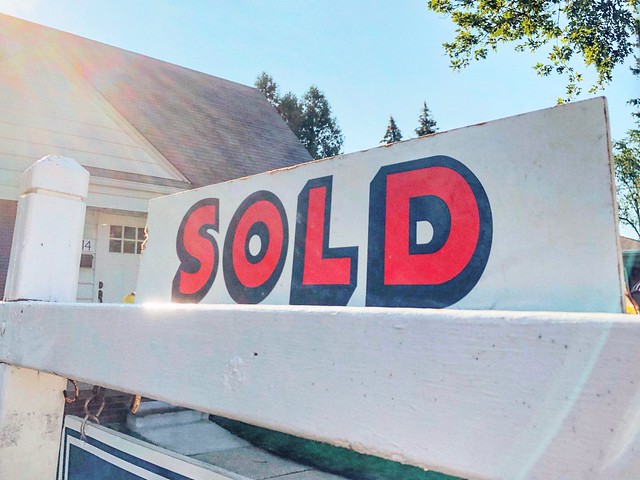
Large colorful SOLD sign on a white surface outdoors.

Rising Equity A Sign Of Healthy Housing Market


When the pandemic began in early 2020, there were fears that it would hurt the housing market and home values. However, those fears were quickly set aside as home buyers returned and prices rose. In short, the housing market survived relatively unscathed as the coronavirus caused volatility and uncertainty nearly everywhere else. Now, more than a year later, a new report shows that it continues to thrive. In fact, according to ATTOM Data Solutions’ U.S. Home Equity & Underwater Report, the number of equity-rich properties – those whose loans are no more than 50 percent of the property’s estimated value – continues to rise, while the number of seriously underwater homes is falling. Todd Teta, ATTOM’s chief product officer, says the pandemic has actually helped homeowners. “Instead of the virus pandemic harming homeowners, it’s helped create conditions that have boosted the balance sheets of households all across the country,†Teta said. (source)

1981 US quarter featuring George Washington's profile.

Survey Says Average Rates Remain Low


According to the Mortgage Bankers Association’s Weekly Applications Survey, average mortgage rates were down last week for both 30-year fixed-rate mortgages with conforming loan balances and 15-year fixed-rate loans. Loans backed by the Federal Housing Administration and jumbo loans both saw increases. Mike Fratantoni, MBA’s senior vice president and chief economist, says coronavirus concerns pushed rates lower. “Interest rates drifted lower globally last week, as markets assessed the latest concerns regarding the delta variant,†Fratantoni said. But despite favorable mortgage rates, application demand was down week-over-week. In fact, both the refinance and purchase index saw 2 percent declines from the week before. Fratantoni says the drop in purchase-application demand is likely being driven by a lack of available homes for sale. The MBA’s weekly survey has been conducted since 1990 and covers 75 percent of all retail residential mortgage applications. (source)

Illuminated 'MORTGAGE' sign in a dark setting.

Rising Share Of Americans Say They Plan To Buy


Buying a house is not something we do very often. Studies show the average American only buys a home three times in their entire life. So it’d make sense that the share of Americans planning to buy at any given time would stay fairly consistent and relatively low. But new numbers from the National Association of Home Builders show buyer demand is actually rising, and quickly. The data – from the NAHB’s most recent Housing Trends Report – found the share of Americans planning to buy in the next 12 months is higher than it’s been in over two years. It’s also nearly twice what it was at the beginning of 2020. In fact, among surveyed adults, 17 percent said they’re planning to buy within the next year, which is a significant jump from 10 percent during the first quarter of 2020. But what’s driving the increases? Well, according to the report, it’s mostly younger Americans – with the biggest gains in buyer interest coming from millennials. (source)

Chimney against a vibrant blue sky with wispy clouds.

Home Seller Profits Hit $94,500 In 2nd Quarter


If you’re a homeowner who is thinking about making a move, ATTOM Data Solution’s most recent U.S. Home Sales Report has good news for you. That’s because the report – which looks at how much profit the typical home sale generated during the second quarter of this year – found that home sellers are seeing bigger profits than they did at the beginning of the year – and significantly more than at the same time last year. In fact, during the second quarter, the typical home sale generated a profit of $94,500. That’s up from $90,000 during the first quarter and $60,572 during the second quarter of 2020. In short, it’s a good time to sell a home. But while home seller profits are up, return on investment saw a slight decline. Todd Teta, ATTOM’s chief product officer, says it may be a sign that the market is finally starting to cool. “While it may just be a momentary thing in today’s volatile market, it’s definitely something to keep an eye on in case it’s a sign that the market is finally cooling or giving in to some of the economic forces connected to the virus pandemic,†Teta said. (source)

Close-up of U.S. one-dollar bills showing George Washington's portrait.

Contracts To Buy Retreat After May’s Big Gains


The number of contracts to buy homes signed in June fell 1.9 percent from the month before, according to new numbers from the National Association of Realtors. In May, they were up 8 percent month-over-month. The dramatic swing continues an up-and-down trend pending sales have followed since the start of the year. Lawrence Yun, NAR’s chief economist, says the volatility is due, in part, to rising home prices. “Buyers are still interested and want to own a home, but record-high home prices are causing some to retreat,†Yun said. But while home prices are rising everywhere, contract signings are doing better in some regions than others. In fact, last month, pending sales were up in the Northeast and Midwest and down in the South and West. “The Midwest region offers the most affordable costs for a home and hence that region has seen better sales activity compared to other areas in recent months,†Yun explained. (source)

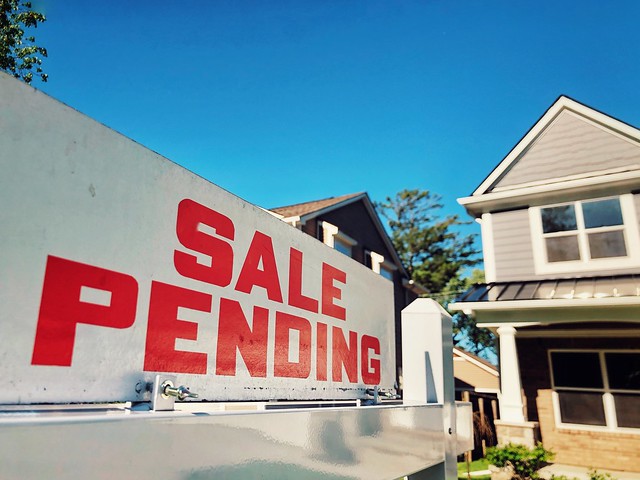
A real estate sign showing 'SALE PENDING' outside a house under clear blue sky.

Outlook Sees A Calmer Housing Market Ahead


The housing market’s breakneck pace this spring may’ve caused, at least, some prospective home buyers to hesitate. Competition, bidding wars, and double-digit price increases will do that. After all, choosing a house to buy is already a big decision without the added pressure of a hot market. But if you’re a buyer who’s been waiting for the market to cool off, Fannie Mae’s Economic and Strategic Research Group may have some encouraging news. The group – which releases a monthly outlook for the housing market and economy – says they expect things to start cooling down. In fact, Mark Palim, Fannie Mae’s vice president and deputy chief economist, says the group sees moderating price increases and improved inventory on the horizon. “While recent home price growth has been historically high, we’re forecasting further home price appreciation to moderate through the remainder of the year and into 2022,†Palim said. “On the supply side, we think home builders will be able to increase production as supply chain disruptions and labor shortages alleviate, which should add to the inventory of new and existing homes available for sale.†(source)

A rooftop chimney with a sunny blue sky and soft clouds.

Rates Fall To Lowest Level Since February


According to the Mortgage Bankers Association’s Weekly Applications Survey, average mortgage rates fell last week from one week earlier. Rates were down across all loan categories, including 30-year fixed-rate loans with both conforming and jumbo balances, loans backed by the Federal Housing Administration, and 15-year fixed-rate loans. Joel Kan, MBA’s associate vice president of economic and industry forecasting, says the drop brought rates to their lowest level in months, and in some cases decades. “The 10-year Treasury yield fell last week, as investors grew concerned about increasing COVID-19 case counts and the downside risks to the current economic recovery,†Kan said. “Refinance applications jumped, as the 30-year fixed mortgage rate declined to its lowest level since February 2021, and the 15-year rate fell to another record low dating back to 1990.†Despite the declines, however, purchase application demand slowed week-over-week, dropping 2 percent from the week before. The MBA’s weekly survey has been conducted since 1990 and covers 75 percent of all retail residential mortgage applications.

Close-up of a percentage symbol on textured paper.

Thank you for your upload