

Banner
Menu

Is Competition For Homes Beginning To Wane?


Because the pandemic interrupted last year’s spring sales season, this year’s was hotly anticipated. It didn’t disappoint. Buyers returned to the market in droves. But while home buyers were out in force, home sellers didn’t return quite as quickly. The result was a market flooded with shoppers but low on homes for sale. Naturally, that led to spiking prices and intense competition for the homes that were available. It got so bad that, according to one analysis, 74 percent of the homes sold in April faced a bidding war. Fortunately, though, there are signs that the market has cooled down since then. In fact, the same analysis found that, in June, the share of homes with multiple offers fell to 65 percent. That, of course, is still quite high. In fact, it’s about 10 percent higher than it was last year at the same time. However, any improvement is welcome, especially for prospective buyers frustrated by super fast sales and surging prices. (source)
Top of a house with a tree and clear blue sky.

First-Time Buyers Face Down Payment Challenges


In today’s market, first-time home buyers face challenges repeat buyers don’t. Among them, saving for a down payment tops the list. Home prices are rising and, while current homeowners who are ready to move can use their increasing equity to cover some of the upfront costs of buying a home, first-time buyers have to save a down payment from scratch. That can be a challenge in a market where prices continue to climb. In fact, according to one recent analysis, to cover a 20 percent down payment on the typical starter home, the average renter would now have to save for a full year longer than they would’ve just five years ago. Fortunately, though, options exist. For one, a 20 percent down payment isn’t required. Most first-time buyers put down less than 20 percent and about a quarter of them put down 5 percent or less. And, with mortgage rates hovering just above historic lows, a smaller down payment doesn’t necessarily mean an unmanageable monthly mortgage bill. It can, however, mean a chance at becoming a homeowner – even in a challenging market. (source)

Fan of fifty-dollar bills spread out in a semi-circle.

Car Dependent Areas See Bigger Price Spikes


Walkable neighborhoods with easy access to public transit have traditionally been attractive to home buyers. After all, who doesn’t like the convenience of having the things you need close by? But while convenience is appealing, it’s not the only thing home buyers weigh when deciding where to look for a new house. And after the pandemic upended our daily routines and changed where and how we work, access to transit began to fall from the top of buyers’ wish lists. In short, the pandemic changed home buyers’ priorities too. That helps explain a new analysis showing car-dependent neighborhoods experiencing sharper home-price increases than areas close to transit. In fact, the analysis found the median-sales price in car-dependent areas has increased 32.8 percent since January 2020. In transit-accessible neighborhoods prices have risen 15.6 percent. The disparity is a reflection of how many buyers have chosen privacy, space, and affordability over convenience and transportation since the beginning of the pandemic. Whether or not this trend continues will depend, in part, on how many remote workers are required to return to offices as the economy’s reopening progresses. (source)

A white car parked on a mountain trail with scenic forest and peaks.

More Americans Say It’s A Good Time To Sell

With fewer homes available for sale and prices on the rise, it’s a great time to sell a house. And, according to Fannie Mae’s most recent Home Purchase Sentiment Index, more Americans are noticing. In fact, their survey – which tracks Americans’ perceptions of the housing market, buying and selling a home, prices, mortgage rates, and their personal financial situation – found that 77 percent of respondents said they feel like it’s a good time to sell. That’s up 10 percent from last month. Doug Duncan, Fannie Mae’s senior vice president and chief economist, says optimism about buying conditions isn’t as high, but demand should remain strong. “Despite the pessimism in home buying conditions, we expect demand for housing to persist at an elevated level through the rest of the year,” Duncan said. “Mortgage rates remain not too far from their historical lows, and consumers are expressing even greater confidence about their household income and job situation compared to this time last year, when the pandemic had shut down wide swaths of the economy.” (source)

Mortgage Rates Fall Below Year-Before Levels


According to the Mortgage Bankers Association’s Weekly Applications Survey, average mortgage rates fell last week from one week earlier. Rates were down across all loan categories, including 30-year fixed-rate loans with both conforming and jumbo balances, loans backed by the Federal Housing Administration, and 15-year fixed-rate loans. Rates are now lower than where they were at the same time last year. Joel Kan, MBA’s associate vice president of economic and industry forecasting, says, current conditions are still challenging for buyers. “Swift home-price growth across much of the country, driven by insufficient housing supply, is weighing on the purchase market and is pushing average loan amounts higher,†Kan said. Overall, mortgage application demand fell 1.8 percent from the week before, with purchase activity down 1 percent from the previous week and 14 percent lower than the same week one year ago. The MBA’s weekly survey has been conducted since 1990 and covers 75 percent of all retail residential mortgage applications. (source)

A weathered street sign with two black arrows pointing left and right.

Typical Home Sells Faster Than Last Year


In this market, homes for sale don’t last very long. Good homes are listed and purchased in a matter of days. In fact, according to new numbers from the National Association of Realtors’ consumer website, properties in June sold 35 days faster than last year and 21 days faster than the average June between 2017 and 2019. Nationally, the typical home was on the market just 37 days – and, in cities like Rochester, Denver, and Nashville, homes sold in two weeks or less. Fortunately, George Ratiu, the website’s senior economist, says relief may be on the way. “The improvement we saw in new listings growth from May to June shows sellers are entering the market historically later in the season, which could mean we’ll see home buying continue into the fall as buyers jump at new opportunities,†Ratiu said. In other words, new listings have been trending higher and it may mean home sellers are returning to the market. If the trend holds – and more homes become available for sale – the market’s current pace will begin to slow and buyers will have more choices and, hopefully, a little more time. (source)

A row of charming suburban houses under a clear blue sky.

Weekly Survey Finds Average Rates Up-And-Down


According to the Mortgage Bankers Association’s Weekly Applications Survey, mortgage rates were volatile last week, with rates up for 30-year fixed-rate loans with conforming balances but down for jumbo loans, loans backed by the Federal Housing Administration, and 15-year fixed-rate loans. The volatility contributed to decreasing refinance and purchase activity, which both fell from one week earlier. Inventory was also a factor and likely played a role in pushing demand for loans to buy homes lower. Joel Kan, MBA’s senior vice president and chief economist, says current conditions are particularly challenging for first-time buyers. “The average loan size for total purchase applications increased, indicating that first-time home buyers, who typically get smaller loans, are likely getting squeezed out of the market due to the lack of entry-level homes for sale,†Kan said. The MBA’s weekly survey has been conducted since 1990 and covers 75 percent of all retail residential mortgage applications. (source)

Close-up of a red percentage symbol on a white background.

Buyer Demand Keeps Home Prices Climbing


There are a lot of Americans looking to buy a home this year. In fact, there are far more home buyers active in the market than there are available homes for sale. That, of course, puts upward pressure on home prices. The latest S&P Case-Shiller Home Price Indices shows just how much. According to the data, which covers the 12 months through the end of April, home prices are up 14.6 percent from last year at the same time. Craig J. Lazzara, managing director and global head of index investment strategy at S&P, says the increases are driven, in part, by demand created by the pandemic. “We have previously suggested that the strength in the U.S. housing market is being driven in part by reaction to the COVID pandemic, as potential buyers move from urban apartments to suburban homes,†Lazzara said. “April’s data continues to be consistent with this hypothesis.†In other words, the pandemic not only caused some of last year’s buyers to wait until this year, it also pushed more of them to look in the same neighborhoods, causing prices to spike in those markets. (source)

A US one-dollar bill with three pennies lying on it.

Hot Summer Market Sees A Needed Improvement


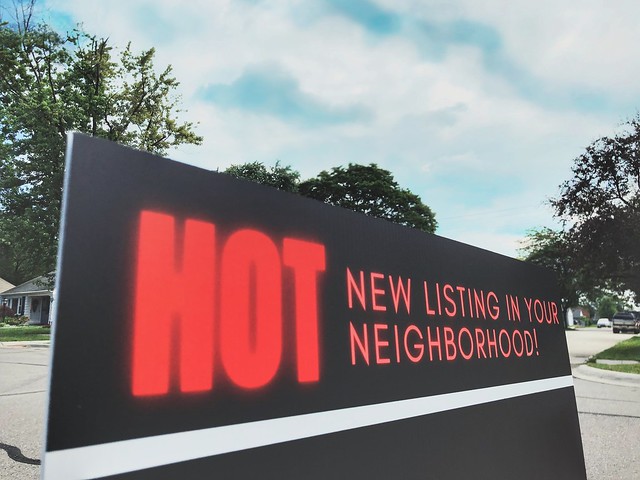
When people talk about the housing market being hot, they’re generally talking about the competition for available homes. A “hot†market, in other words, is one where homes sell quickly and bidding wars are common. That’s where we are today. Hopeful home buyers have to be quick, decisive, and prepared if they want to buy a home in this market. But while there’s definitely an imbalance between supply and demand these days, there are signs that things may be improving. For example, according to one recent analysis, active listings – which refer to the number of homes listed for sale at any given time – have increased 5 percent since hitting their 2021 low in mid-March. Additionally, new listings are up 6 percent from last year. Together, it’s an encouraging sign that more home sellers are returning to the market. And while listings are still down 34 percent from 2020, the upward trend offers hope that homes for sale will continue to rebound and bring needed balance to markets suffering from record-low inventory. (source)

Billboard advertising hot new real estate listings in a neighborhood.

Generation Z Says They’re Almost Ready To Buy


For generations, young Americans have included homeownership among their goals for the future. Its appeal has endured over the decades and through numerous bubbles, crashes, and recessions. Now, according to a new survey from the National Association of Realtors’ consumer website, there’s another generation of young Americans making plans to buy in the near future. The recently released survey of 18-to-25 year olds found that nearly three-quarters of respondents said they’d prefer to buy rather than rent over the long term. Among them, 43 percent said they think they’ll be ready to buy in the next five years – with an almost identical amount saying they think it’ll take them somewhere between five and 10 years. Either way, that means millions of prospective home buyers entering the market over the next decade. And, if survey results are any indication, most of them with be looking to buy in the suburbs – since nearly half of Gen-Z survey participants said they saw themselves buying there rather than in an urban or rural area. (source)

Classic two-story house with a well-kept lawn and clear blue sky.

Thank you for your upload