

Banner
Menu

Rising Material Costs Hinder New Home Sales


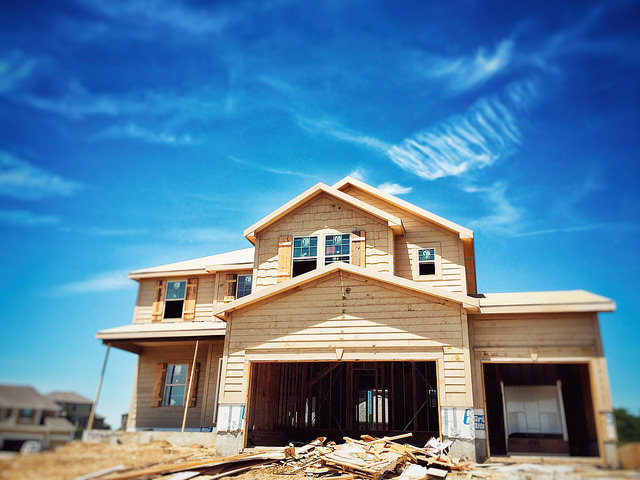
The lack of previously owned homes for sale is an opportunity for home builders. There are, after all, plenty of buyers. So, in a market with low inventory, a builder could be reasonably confident that the homes they built would be purchased, and quickly. So why then do recently released numbers from the U.S. Census Bureau and the Department of Housing and Urban Development show new home sales falling? Well, part of the problem is the rising price of building materials. Costs have skyrocketed over the past year and made it more difficult for builders to build the affordable homes buyers want most. In fact, the median sales price of new homes sold in May was $374,400. The average sales price was $430,600. At the same time, new homes below $200,000 accounted for just 2 percent of all transactions. In other words, it’s getting more expensive to build new homes, which, of course, makes them more expensive to buy. Still, despite the challenges, new home sales are still over 9 percent higher than last year at the same time. (source)


Stacked wooden planks and beams under a cloudy sky.

Mortgage Applications Are Trending Higher


According to the Mortgage Bankers Association’s Weekly Applications Survey, demand for mortgage applications rose 2.1 percent last week from the week before. Refinance activity was up 3 percent and the Purchase Index rose 1 percent. Joel Kan, MBA’s associate vice president of economic and industry forecasting, says demand for loans to buy homes has been increasing lately. “Purchase application have regained an upward trend over the past few weeks,†Kan said. “Activity was slightly higher for the third straight week, but remained lower than the same week a year ago. Government purchase applications drove most of the last week’s increase, which also contributed to a slightly lower overall average purchase loan size.†The improvement came during a week when average mortgage rates were up. In fact, rates were higher across all loan categories, including 30-year fixed-rate loans with both conforming and jumbo balances, FHA loans, and 15-year fixed-rate loans. The MBA’s survey has been conducted weekly and covers 75 percent of all retail residential mortgage applications.

A yellow arrow on the ground points forward with the words 'THIS WAY'.

Existing Home Sales Mostly Flat In May


Sales of previously owned homes fell less than one percent in May, according to new numbers from the National Association of Realtors. The month-over-month decline, though slight, was the fourth consecutive monthly decrease for existing-home sales. Lawrence Yun, NAR’s chief economist, says the issues currently holding sales back are expected to improve in the months ahead. “Lack of inventory continues to be the overwhelming factor holding back home sales, but falling affordability is simply squeezing some first-time buyers out of the market,†Yun said. “The market’s outlook, however, is encouraging. Supply is expected to improve, which will give buyers more options and help tamp down record-high asking prices for existing homes.†In the meantime, home buyers should expect a competitive and fast-moving market. In fact, nearly nine out of ten homes sold in May were on the market less than a month. The typical property was sold in just 17 days. At that pace, buyers need to be prepared and ready to move quickly when they find a home they’d like to buy.

A house silhouette with a 'For Sale' sign in front of a blurry background.

Number Of Available Homes For Sale Remains Low


If you’re shopping for a home to buy and feel like there are fewer options to choose from, you’re not imagining it. The number of homes for sale is lower than normal and has been for a while now. How much lower? Well, a recent report from Black Knight Financial really puts it in perspective. According to the report, the number of active for-sale listings was down 53 percent year-over-year in April. But since the coronavirus’ impact threw the spring market into chaos last year, it’s hard to tell what that means. So Black Knight compared this year’s April inventory to the average number of active listings in 2017-2019. What they found was homes for sale were down about 60 percent from what’s been typical in recent history. That translates to about 750,000 fewer listings than normal. Ben Graboske, Black Knight’s president, says inventory is at a record low. “Data from our Collateral Analytics group showed there was two month’s worth of single-family inventory nationwide in March, the lowest share on record and trending downward,†Graboske said. For comparison, a six-month supply of homes is considered healthy for the market. (source)

Two beige houses with peaked roofs and trees in the background.

Many Home Buyers Look To Move Somewhere New


People tend to choose where to live based on a few basic factors. Traditionally, we want to live somewhere close to our family, our friends, and our job. But with more Americans working remotely, one of those three factors has been eliminated and it’s led to an increase in prospective home buyers who are considering moving to a new area. The trend began shortly after the coronavirus’ onset but has persisted. In fact, according to one new analysis, 31.4 percent of buyers in April and May were looking to move to a new metro. That’s up from 27 percent last year at the same time. It’s also well above pre-pandemic levels. Affordability seems to be the main motivator. Americans who work and live in areas where the cost of living is higher are looking to take their salary and move somewhere more affordable. But while the idea is a good one, it’s also a common one. And in some cases, the influx of home buyers is now threatening to drive prices higher in those once-affordable neighborhoods. (source)

A scenic mountain road flanked by tall pine trees under a clear blue sky.

Housing Outlook Sees Little Change Ahead


Housing market conditions have been pretty consistent over the past few years. Inventory and mortgage rates have remained low while buyer demand and home prices have continued to increase. Even during a global pandemic, conditions remained remarkably steady. There are a number of reasons for this and the latest outlook from Fannie Mae’s Economic and Strategic Research Group highlights a few. But, Doug Duncan, Fannie Mae’s senior vice president and chief economist, says the imbalance between supply and demand is the main issue. “Strong demand for housing continues to run up against a long-running lack of supply,†Duncan said. “We’ve seen this disconnect lead to rapid house price gains over the past year … and many of the supply constraints that home builders face are likely to persist in the near term, so this upward pricing pressure is not likely to be as transitory as many of the current inflation drivers.†In other words, home buyers shouldn’t expect conditions to change too dramatically in the near future. (source)

Classic two-story house with a well-kept lawn and clear blue sky.

Mortgage Rates Fall To Lowest Level In Weeks


According to the Mortgage Bankers Association’s Weekly Applications Survey, average mortgage rates fell last week to their lowest level since early May. Rates were down week-over-week across all loan categories, including 30-year fixed-rate loans with both conforming and jumbo balances, loans backed by the Federal Housing Administration, and 15-year fixed-rate loans. The drop led to an increase in demand for mortgage applications, which rose 4.2 percent from the week before. The improvement was driven by a 6 percent jump in refinance activity. Purchase loan demand, on the other hand, rose 2 percent from the week before. Joel Kan, MBA’s associate vice president of economic and industry forecasting, says FHA loans led the gains. “Purchase activity also rebounded, even as supply constraints continue to slow the housing market,†Kan said. “An almost 5 percent increase in government purchase applications drove most of last week’s gain while also tempering the recent growth in loan sizes.†The MBA’s weekly survey has been conducted since 1990 and covers 75 percent of all retail residential mortgage applications.

Large white percentage symbol on a red background.

New Home Market Strong Despite Challenges


When there are more buyers than available homes for sale, home prices rise. That’s why prices spiked last year and have continued increasing into 2021. An already lower-than-normal number of homes for sale fell even lower after the coronavirus hit last March. The resulting inventory crunch, combined with elevated demand from buyers, has been driving prices upward ever since. But, while low inventory isn’t great for buyers, it’s good news for home builders, since building new homes is the quickest way to balance the market and provide options for buyers. So it’s no surprise that the National Association of Home Builders’ Housing Market Index – which measures how confident builders are in the market for new homes – remains strong. Scored on a scale where any number above 50 indicates more builders view conditions as good than poor, the June Index came in at 81. That’s not far below its all-time high, but it is down two points from last month. Why? Well, according to Chuck Fowke, NAHB’s chairman, builders are facing higher costs for materials and it’s making it more difficult for them to build the affordable new homes the market needs. (source)

Newly constructed two-story house under a bright blue sky.

Getting Approved To Borrow Got Easier In May


Before you can shop for a house to buy, you have to make sure you’ll be able to get a loan. After all, there’s no point in falling in love with a home only to discover it’s out of your price range – or worse, you aren’t able to get approved for a mortgage. That’s why meeting with your lender is the first step of the home buying process. It’s how you know what you can spend on a house and what the terms of your loan will be. But the standards that are used to determine whether and how much you’re able to borrow aren’t fixed. In other words, it can be harder to get approved for a mortgage at some times and easier at others. That’s why the Mortgage Bankers Association tracks mortgage credit availability each month. Their Mortgage Credit Availability Index measures whether lending standards have tightened or loosened. In May, the index found that lending standards loosened, making it easier for prospective home buyers to secure financing. In fact, mortgage credit is now more available than its been since the pandemic began last year. And that’s good news for home buyers, since it means they’re more likely to be approved when applying for a loan. (source)

Close-up of scattered twenty-dollar bills.

Lenders Report Growing Demand From Buyers


Whatever challenges today’s housing market has, they haven’t deterred home buyers. Buyer demand spiked last summer and hasn’t let up since. In fact, a newly released survey of mortgage lenders found an increasing number of them say they’ve seen buyer demand grow over the past three months. Doug Duncan, Fannie Mae’s senior vice president and chief economist, says low mortgage rates have kept buyers interested. “Purchase mortgage applications have trended slightly lower in recent weeks; however, they remain fairly strong, and higher than the pre-pandemic level, likely because of continued low mortgage rates,†Duncan said. “Our June National Housing Survey released early this week showed that consumer demand remains strong since ‘home purchase on next move’ is at a survey high, despite the challenges of accelerated home price appreciation and insufficient supply.†But while they’ve seen more demand over the past few months, lenders are cautious about the next three. In fact, their expectations for buyer demand in the coming months is relatively flat, if not slightly lower than last quarter. (source)

A bright red "For Sale" sign in front of a house.

Thank you for your upload