

Banner
Menu

Has The Second-Home Buying Boom Started To Cool?


Having a second home is a dream for a lot of people. Who doesn’t want somewhere beautiful they can escape to when they need a break or want to flee bad weather? But while we dream about it, owning a second home is expensive and, if you don’t have the ability to use it often enough, might not be worth the cost. Last year, the coronavirus changed that equation for a lot of Americans. The increasing number of us who were able to work remotely could suddenly justify the extra expense, since we could spend more time in our second homes than ever before. For that reason, second-home sales skyrocketed in 2020. At times, rising over 100 percent from year-before levels. But a more recent analysis has found second-home sales falling drastically from last year. Does that mean the second-home sales boom has started to cool? Well, maybe. As things increasingly get back to normal and more of us have to return to the office – at least, part of the time – the lure of vacation homes may fade to pre-pandemic levels. But this most recent analysis is comparing May sales to May 2020, when the pandemic was still in its first wave and demand had yet to rise. That means, while the boom may have cooled, it might not have dropped as drastically as it appears. (source)


Palm trees and a white house under a clear blue sky.

Late Week Drop Drives Mortgage Rates Lower

According to the Mortgage Bankers Association’s Weekly Applications Survey, average mortgage rates fell last week across all loan categories, including 30-year fixed-rate loans with both conforming and jumbo balances, loans backed by the Federal Housing Administration, and 15-year fixed-rate loans. Most of the decline, however, happened later in the week – which helps explain why refinance activity, despite lower rates, still fell from one week earlier. Purchase loan demand, on the other hand, showed a slight week-over-week increase. Joel Kan, MBA’s vice president of economic and industry forecasting, said the average loan size has fallen over the past few months. “The average loan size on a purchase application edged down to $407,000, below the record $418,000 set in February, but is still far above 2020’s average of $353,900,” Kan said. “Home-price growth continues to accelerate, driven by favorable demographics, the recovering job market and economy, and housing demand far outpacing supply.” The MBA’s weekly survey has been conducted weekly since 1990 and covers 75 percent of all retail residential mortgage applications. (source)

Today’s Home Buyers Are Buying Bigger

There are plenty of reasons someone might be considering a move. But among the ones most commonly cited by prospective home buyers, a desire for more space always ranks near the top of the list. This was especially true last year, as the coronavirus kept us inside our homes more than we’d normally be. All that time at home drove many Americans to seek out a bigger house. And, according to one recent analysis, buyers last year bought even bigger than they had in previous years. In fact, last year, buyers who moved to a new location moved where homes were an average of 33 square feet larger than where they were moving from. That’s significantly higher than in recent years, when the typical mover bought a house 9-to-21 square feet bigger. But, not only did they buy bigger homes, last year’s buyers also bought cheaper homes. The same analysis found that the zip codes they moved from were nearly $30,000 more expensive than where they moved to. That means, recent buyers have been getting more home for their money, despite spiking home prices and more competition for available homes. (source)

Housing Market Sentiment Flat As Summer Nears


Fannie Mae’s Home Purchase Sentiment Index measures Americans’ perceptions of the housing market and their personal finances. Each month, participants are asked how they feel about buying and selling a home, mortgage rates, prices, the job market, and their income. In May, the index was relatively flat, increasing one point from the month before. There was a notable increase in the number of respondents who feel more secure in their jobs and money but the number who said they feel now is a good time to buy a house fell. Doug Duncan, Fannie Mae’s senior vice president and chief economist, said market conditions are challenging buyers but haven’t yet curbed enthusiasm for home buying. “Despite the challenging buying conditions, consumers do appear more intent to purchase on their next move, a preference that may be supported by the expectation of continued low mortgage rates, as well as the elevated savings rate during the pandemic, which may have allowed many to afford a down payment,†Duncan said. The results also show a 2 percent decline in the number of participants who believe home prices will rise over the next year. The number who think mortgage rates will fall increased 4 percent. (source)

A large beige house with arched windows and a manicured lawn under a blue sky.

Money Is Motivating More Homeowners To Sell


The things that motivate homeowners to sell stay pretty consistent through the years. Mostly, they’re personal. Whether it’s because they need a bigger house to accommodate a growing family or they want to move into a smaller, more manageable home because the kids have moved out and they no longer need the space, life usually dictates when it’s time for a change. So, it’s no surprise that a recent survey of potential home sellers found the top reason they’re selling is that their home no longer meets the needs of their family. What is surprising is that the second most common answer was profit. The survey, conducted by the National Association of Realtors’ consumer website, found that 24 percent of respondents said they were planning to sell because they thought they could make a profit based on current market conditions. George Ratiu, the site’s senior economist, says Americans know they’re in a seller’s market. “Low mortgage rates and a lack of available homes for sale have created a strong seller’s market, and these survey results show that homeowners think that they have the upper hand if they list their home soon,†Raitu said. (source)

A green house token on stacked coins on a Monopoly board near Luxury Tax.

What Day Of The Week Should You List Your Home?


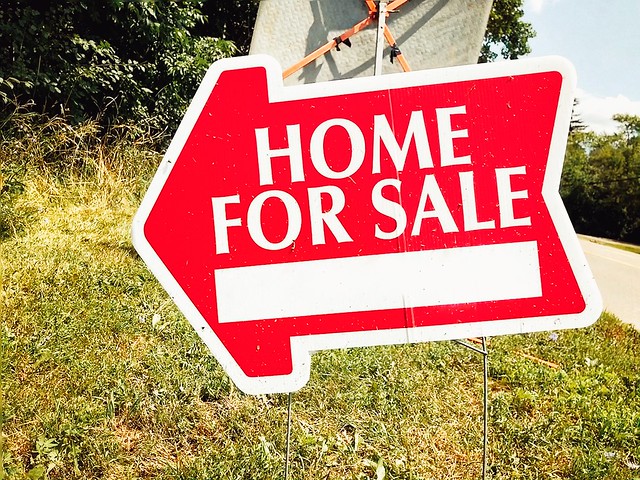
Selling a house comes with a long to-do list. You’ve got to get the house ready for showings, clear out the clutter, and fix any lingering maintenance issues you’ve been neglecting. You also have to think about the price you’d like to get for it and where you’re moving to, when, and how. In other words, there’s a lot to do and think about. Which is why you may’ve never considered which day of the week is the best to list your home. But, according to one new analysis, it makes a difference. In fact, homes that are listed on a Thursday sell faster on average and are more likely to sell above list price compared to homes listed on other days of the week. Homes listed on a Sunday, for example, were found to stay on the market eight days longer than those listed on Thursdays. Homes listed on Saturdays or Mondays took seven days longer to sell. It makes sense, if you think about it. Thursdays are when home buyers are likely beginning to think about their weekend and whether or not there are any available homes they’d like to tour. Which makes it the optimal day for sellers to get their home in front of the most home shoppers. (source)

Red arrow sign indicating a home for sale.

Demand Falls Despite Favorable Mortgage Rates


According to the Mortgage Bankers Association’s Weekly Applications Survey, average mortgage rates were up and down last week. Rates fell week-over-week for 30-year fixed-rate loans with conforming loan balances and those backed by the Federal Housing Administration, but increased for 15-year fixed-rate mortgages and jumbo loans. Despite the movement, however, rates across all loan categories remain low by historical standards – even if they’re higher than the all-time lows seen in 2020. Last week’s rates didn’t boost demand, though. In fact, demand for loans to buy homes dropped 3 percent from the week before. Joel Kan, MBA’s associate vice president of economic and industry forecasting, says there are a few factors holding buyers back. “Mortgage applications decreased for the second week in a row, with the overall index reaching its lowest level since February 2020,†Kan said. “Tight housing inventory, obstacles to a faster rate of new construction, and rapidly rising home prices continue to hold back purchase activity.†The MBA’s weekly survey has been conducted since 1990 and covers 75 percent of all retail residential mortgage applications. (source)

A blue percentage symbol on white paper.

More Than Half Of Homes Sell Above List Price

In most cases, when you buy something, you don’t get to negotiate the price. If you’re buying a refrigerator, for example, you don’t make an offer. You pay whatever the store says it costs. Buying a house works a little bit differently. That’s because, the price a home lists for isn’t necessarily the price it sells for. Depending on market conditions, buyers may be able to get a house for less than its list price or, at other times, they may have to pay more. That’s particularly true in today’s market. A lower-than-normal number of homes for sale means buyers these days often have to compete with other buyers to get their offer chosen. Most often, that means paying more than the homeowner’s asking price. But how often should prospective buyers expect to have sweeten their offer to get the home they want? Well, according to one recent analysis, at the end of May, more than half the homes sold were sold above list price. In fact, 51 percent of homes sold for more than their list price, that’s up from just 26 percent last year at the same time. (source)

Buyers Who Relocated Say They’re Happier Now

Last year, after the coronavirus’ onset, there was a lot of talk about how Americans were looking to move from city centers into the suburbs and exurbs. The pandemic had us staying at home more and more time in the house led to a wave of home buyers with a freshly updated wishlist. Space, privacy, and affordability led the list of features buyers were now focused on finding. In short, they wanted a bigger place with more outdoor space and a lower monthly cost. So how’d they do? Well, according to one recent survey, pretty well. In fact, 80 percent of those buyers said they’re happier now and had no regrets about their decision to move to a new area. Many of them also reported having more disposable income and lower housing costs than they did before they moved. And while about 15 percent said they had some regrets about their move, that’s remarkably low considering these buyers were making an important decision about their future during a chaotic time. Now the question is whether or not the trend will last as the pandemic’s impact begins to recede. (source)

Contract Signings Are Near Pre-Pandemic Levels


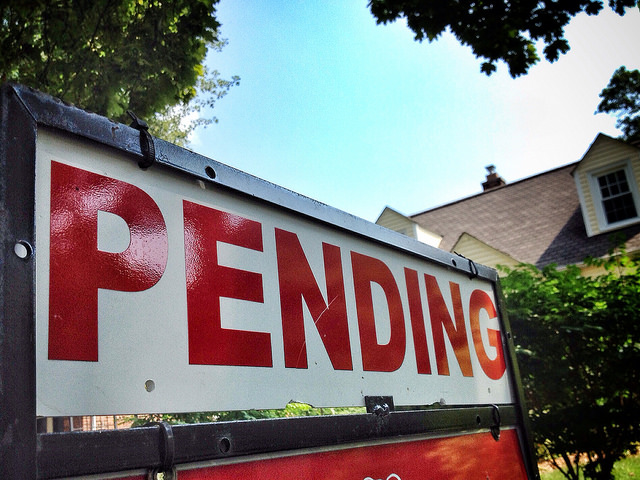
When a buyer’s offer is accepted and a contract to buy is signed, that home’s sale is considered pending until the closing process has finished. Pending sales are considered a good indicator of future home sales, because there are typically weeks between the time when a contract is signed and the sale is finalized. That’s why the National Association of Realtors’ Pending Home Sales Index tracks them each month. In April, signings fell from the month before. Despite the month-over-month dip, however, Lawrence Yun, NAR’s chief economist, says contract signings are almost back to the level they were at before the coronavirus took hold. “Contract signings are approaching pre-pandemic levels after the big surge due to the lack of sufficient supply of affordable homes,†Yun said. “The upper-end market is still moving sharply as inventory is more plentiful there.†Yun expects the number of homes available for sale to improve as the year goes on. And as inventory improves, so should the number of home sales.

Large red letters spelling 'PENDING' on a signboard outdoors.

Thank you for your upload