

Banner
Menu

Mortgage Rates Continue To Fall

According to the Mortgage Bankers Association’s Weekly Applications Survey, average mortgage rates fell again last week. Rates were down across all loan categories, including 30-year fixed-rate loans with both conforming and jumbo balances, loans backed by the Federal Housing Administration, and 15-year fixed-rate loans. The drop marks the third consecutive week rates have fallen. Joel Kan, MBA’s associate vice president of economic and industry forecasting, says declining rates didn’t keep demand for mortgage applications from decreasing. “Mortgage applications decreased last week, even as mortgage rates dropped for the third week in a row,” Kan said. “The purchase market’s recent slide comes despite a strengthening economy and labor market. Activity is still above year-ago levels, but accelerating home-price growth and low inventory has led to a decline in purchase applications in four of the last five weeks.” Last week, demand for loans to buy homes was down 5 percent from one week earlier. It was 34 percent higher than the same week one year ago.


Arrow-Down

Urban Neighborhoods Gaining Buyer Interest


Many home buyers used the coronavirus as an excuse to get away from it all. After the pandemic’s initial onset, interest in small towns and rural areas spiked, as more Americans looked to move somewhere where they could have more space for the same money. The increased interest in suburbs and exurbs pushed price growth in those areas and soon their prices were outpacing urban neighborhoods. But while the trend continued through the end of 2020, the beginning of this year brought a change. Home buyers were, once again, looking to buy in bigger cities. Now, according to one recent analysis, urban single-family homes are showing price increases of almost 20 percent year-over-year. They’re also getting more pageviews online. And, in both cases, they’re outpacing properties in the small towns and rural areas that boomed last year at this time. The newfound interest in urban neighborhoods seems to stem from increasing optimism about the coronavirus vaccines and rebounding economy. But while buyers are looking at properties in the city, they haven’t let go of their need for more space. In fact, single-family homes have been selling faster than condos – not just in cities, but in neighborhoods of all types. (source)

Row of colorful historic townhouses under a clear blue sky.

Housing Market Still Faces Some Pandemic Risk


The coronavirus couldn’t stop a hot market in 2020. After a brief pause, home buyers returned and sales bounced back. But while the housing market was an economic bright spot last year – and vaccinations provide hope that the pandemic’s worst days are behind us – there’s still some risk. That’s why ATTOM Data Solutions’ first-quarter 2021 Special Coronavirus Report looked at which markets were most vulnerable among 552 counties across the country. The report analyzed each county – specifically looking at the percentage of homes facing possible foreclosure, the portion with mortgage balances exceeding the estimated property value, and the percentage of average wages required to pay for homeownership expenses. Todd Teta, ATTOM’s chief product officer says there were some areas that showed more vulnerability than others. “Clearly the housing market continues to surge, and things are looking up, more and more, for the U.S. economy in 2021 …†Teta said. “Our analysis suggests that even as the market remains hot, pockets of the East Coast, Midwest, and South are at higher risk from potential damage connected to the pandemic.†The counties seen as vulnerable included areas in New Jersey, Illinois, Connecticut, North Carolina, and Florida. (source)

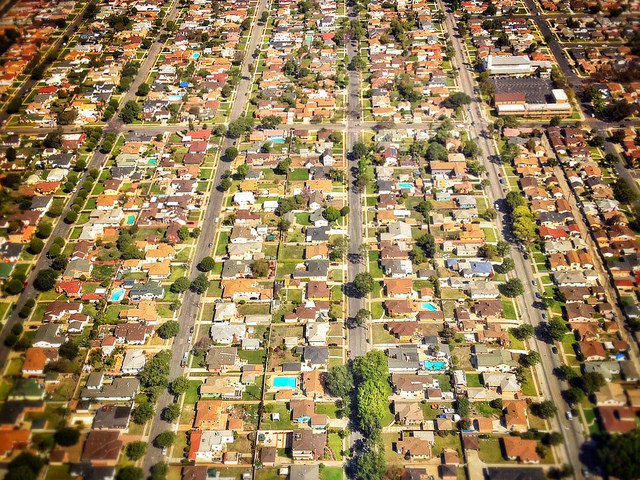
Aerial view of a densely packed suburban neighborhood with many houses and streets.

Booming New Home Market Sees Sales Surge


Today’s market is a seller’s market. But despite the best conditions in years, fewer homeowners are listing their homes for sale. That’s led to a lower-than-normal number of existing homes available on the market. It’s also led to surging new home sales. In fact, according to new numbers from the U.S. Census Bureau and the Department of Housing and Urban Development, March saw a 20.7 percent increase over the previous month. That far exceeded economists’ expectations and pushed sales almost 67 percent higher than last year – when the coronavirus had buyers temporarily sidelined. It’s encouraging news, especially when combined with recent data showing both building permits and housing starts up from the month before. The new home market is booming and, if builders can keep up with demand, it should help relieve upward pressure on home prices. It should also give current homeowners more options and some motivation to sell. (source)

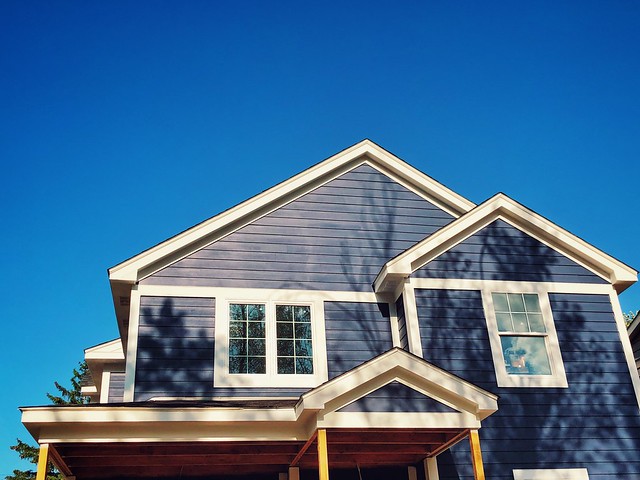
Blue house exterior with white trim under clear sky.

Homes Sell Faster Than Ever In March


The typical home sold in March was on the market for just 18 days, according to the National Association of Realtors’ most recent existing-home sales report. That’s down from 29 days last year at the same time. It’s also a record low. Lawrence Yun, NAR’s chief economist, says buyers remain active despite the market’s fast pace this spring. “Consumers are facing much higher home prices, rising mortgage rates, and falling affordability, however, buyers are still actively in the market,†Yun said. “The sales for March would have been measurably higher, had there been more inventory. Days-on-market are swift, multiple offers are prevalent, and buyer confidence is rising.†There are several reasons home buyers remain active in the market, despite those challenges. Among them, an improved job market, still favorable mortgage rates, and the coronavirus vaccine lead the list. Buyers feel more optimistic about the economy and the pandemic and it’s leading to strong demand for homes. If new home construction can keep up with demand and help hold home-price increases down, sales will only move higher as we head into summer.

Close-up of a green 'For Sale' sign on a textured surface.

Mortgage Rates Fall To Two-Month Low


According to the Mortgage Bankers Association’s Weekly Applications Survey, average mortgage rates fell to their lowest point in two months last week. Rates were down across all loan categories, including 30-year fixed-rate loans with both conforming and jumbo balances, loans backed by the Federal Housing Administration, and 15-year fixed-rate loans. The decline helped boost overall mortgage demand, which rose 8.6 percent from one week earlier. Joel Kan, MBA’s associate vice president of economic and industry forecasting, said demand for loans to buy homes looks strong. “The spring housing market also saw a boost from lower rates, with purchase applications – driven by a jump in conventional applications – increasing over 5 percent,†Kan said. “MBA expects the purchase market to remain strong, with the recovering job market and supportive demographics fueling housing demand in the months ahead.†The MBA’s weekly survey has been conducted since 1990 and cover 75 percent of all retail residential mortgage applications.

Red surface with a bold white downward arrow and text.

When Is The Right Time To List Your Home?


In a normal year, homeowners who want to sell can strategize when the best time for them to list their home might be. For example, it’s generally considered less optimal to put a home up for sale during the dead of winter or the holiday season. But with a pandemic and a lower-than-normal number of homes for sale, when’s the best time for a homeowner to sell this year? Well, according to the National Association of Realtors’ consumer website, the best time might be right now. “Unlike 2020 when COVID upended the spring home-buying season and pushed buyer interest to later in the year, this year’s housing market is following more typical seasonal trends,†Danielle Hale, the website’s chief economist, said. “With half as many homes available for sale this year than last, sellers are well positioned for a quick sale at top dollar.†In other words, buyers have returned to normal but the inventory of available homes has not. That means, home sellers should be in good position until the supply of homes increases. However, with so many unknowns ahead, waiting until later in the year bring its own risks. Which is why now might be the best time to make a move. (source)

A round wall clock showing 5:27 against a red background.

Rates To Remain Steady Amid Economic Rebound


When the coronavirus vaccines were first announced last fall, expectations for the economy began to grow. Economists predicted the economy would rebound as newly vaccinated Americans returned to activities restricted by the pandemic. Now, according to the most recent forecast from Fannie Mae’s Economic and Strategic Research Group, the rebound has started. “The ramp-up we’d previously forecast for the economy is underway, as evidenced by, among other measures, increasing airline passenger reservations and restaurant bookings,†Doug Duncan, Fannie Mae’s senior vice president and chief economist, said. “Vaccinations are continuing to roll out, and consumers appear to be increasingly looking toward post-pandemic life.†So what does this mean for the housing market? Well, for one, the group expects mortgage rates to remain steady in the near term. That means, despite recent increases, rates should stay favorable. That’ll help drive demand from home buyers, which Fannie Mae expects will rise from last year’s level. They also expect prices to continue to climb this year, though they see increases decelerating in 2022. (source)

Upward view of a blue house facade against a clear sky.

March Market Starts The Spring Off Hot


If you’ve been shopping for a house in the past few weeks, you’ve likely already noticed that the spring housing market is off to a hot start. Typically the time of year when home buyers and sellers get active after a long winter, spring is always busy – but this year is different. Not only is it the first spring market following a year of coronavirus restrictions and mitigation efforts, but a lower-than-normal number of homes for sale has led to some record breaking numbers. For example, according to one recent analysis, in March, the number of days the typical home for sale was on the market dropped to 25 days, a record low. At the same time, the number of homes that sold above list price reached an all-time high. In other words, March saw one of the hottest months of housing activity since at least 2012. Homes are selling quickly and competition among buyers means they’re selling for more than homeowners are asking. This means, buyers have to be prepared to act fast and stay flexible when they see a property that fits their needs. (source)

Bright orange flames flickering against a dark background.

Demand From Buyers Keeps Builders Optimistic


Each month, the National Association of Home Builders conducts a survey to gauge how confident builders are in the market for new homes. Their answers are then scored on a scale where any number above 50 indicates more of them view conditions as good than poor. In April, the NAHB’s Housing Market Index scored an 83. The results are an indication that builders are optimistic in the market, despite ongoing supply-side challenges like the skyrocketing price of lumber. Robert Dietz, NAHB’s chief economist, said the reason is the amount of interest they’re seeing from buyers. “While mortgage interest rates have trended higher since February and home prices continue to outstrip inflation, housing demand appears to be unwavering for now as buyer traffic reached its highest level since November,†Dietz said. But while good for builders, elevated buyer demand also puts a lot of pressure on the pace of construction. After all, home building is the quickest way to add inventory to the market and, right now, the supply of homes available for sale is low. That means, the pace of construction has a lot to do with how fast prices rise and how much buyer competition there is this summer. (source)

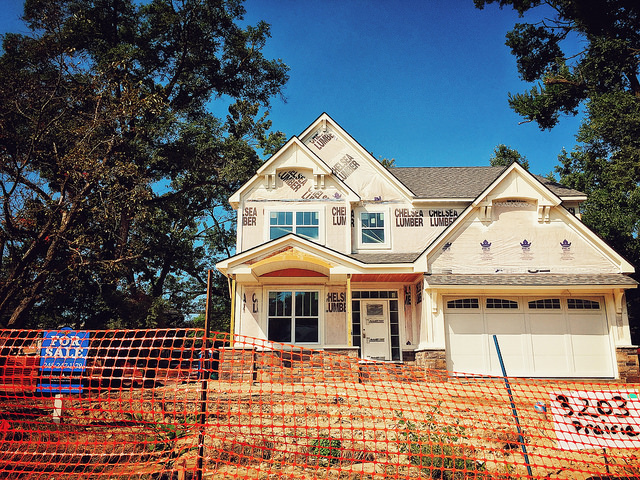
Newly constructed house with a spacious porch and garage under a clear sky.

Thank you for your upload