

Banner
Menu

Builder Confidence Remains Near 2019 Peak


Each month, the National Association of Home Builders surveys builders to gauge their confidence in the market for newly built homes. The NAHB’s Housing Market Index scores responses on a scale where any number above 50 indicates that more builders view conditions as good than poor. In November, the index fell one point to 70 but remains near its 2019 peak of 71. Greg Ugalde, NAHB’s chairman, says builders are reporting positive conditions. “Single-family builders are currently reporting ongoing positive conditions, spurred in part by low mortgage rates and continued job growth,†Ugalde said. “In a further sign of solid demand, this is the fourth consecutive month where at least half of all builders surveyed have reported positive buyer traffic conditions.†Among the surveys three main components, the one measuring sales expectations for the next six months scored the highest at 77. That builders are feeling confident about future sales is a good sign for the housing market, as an increase in new residential construction can help balance inventory levels and further moderate price increases. More here.
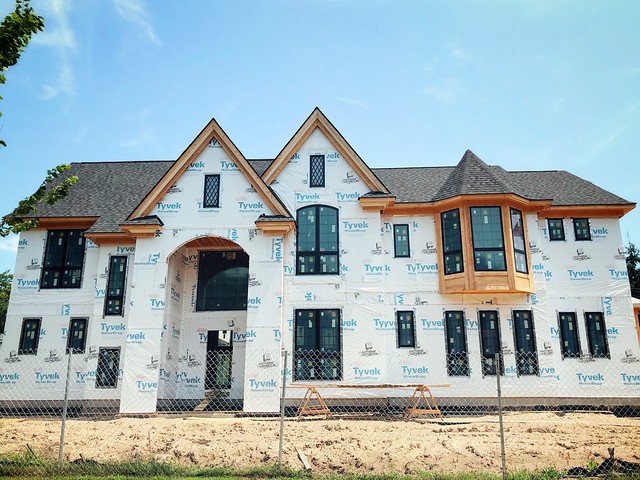
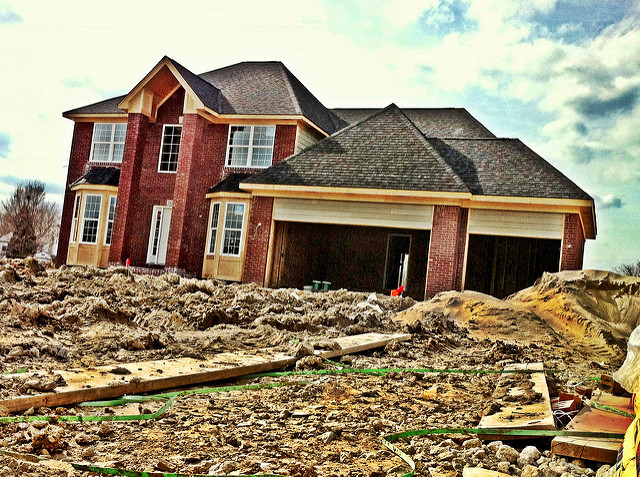
A large house under construction with exposed wall sheathing.

More Than A Quarter Of All Homeowners Are Equity Rich

Over the years, owning a home has been considered a pretty safe investment. In fact, homeownership has generally been considered a good way to build wealth and boost your bottom line. That’s rarely been more true than it is today. That’s because, home prices have been climbing for the past several years and it’s helped millions of homeowners count themselves among the equity rich. For example, a new analysis from ATTOM Data Solutions shows 26.7 percent of the 54 million mortgaged homes in the US are now considered equity rich – meaning the home’s value is 50 percent more than the total amount of the loans used to finance the property. Todd Teta, chief product officer with ATTOM, says more Americans will see their equity increase as home values continue to climb. “There are notable equity gaps between regions and market segments,” Theta said. “But as home values keep climbing, homeowners are seeing their equity building more and more, while those with properties still worth a lot less than their mortgages represent just a small segment of the market.” More here.

Rising Sales To Be Led By New Home Increase


Next year should be a good one for the housing market, according to new remarks from Lawrence Yun, the National Association of Realtors’ chief economist. Yun, speaking at the NAR’s convention in San Francisco, said he expects both existing-and-new home sales to increase next year. In fact, he expects a 3.7 percent year-over-year increase in the number of previously owned homes sold in 2020. That would make it the best year since 2017. But he expects an even bigger increase in new home sales. Yun says he believes new home sales will rise 11 percent to their highest level since 2007. “Some loosening in inventory will happen in 2020, and so we expect home sales to rise,†Yun said. “We’ll see an increase in inventory, but not any oversupply, so home price should continue to move higher – our hope is in a much tamer fashion.†According to Yun, home prices will rise 4.3 percent in 2020. That’s a smaller increase than this year, when prices will end up about 5 percent higher than they were the year before. Between slower price appreciation, low mortgage rates, and improved inventory, 2020 is looking like it could be a good year for buyers. More here.

A house under construction with exposed dirt and building materials.

Is A Buyer Boom On The Horizon?


First-time home buyers typically account for a large share of the houses sold each year. In fact, historically, they’ve represented around 40 percent of all home sales. However, over the past decade – due, in part, to factors such as student loan debt, the housing crash, and a lack of affordable inventory – the number of first-time buyers has fallen. According to a new analysis from TransUnion, that may be about to change. Their analysis projects at least 8.3 million first-time buyers will enter the market over the next three years, which is more than any three-year period in the last decade. Joe Mellman, senior vice president at TransUnion, says there’s reason for optimism. “While we’ve recently seen a boom in refi activity, actual homeownership rates are down,†Mellman said. “But we may be starting to see daylight as slowing home price appreciation, low unemployment, increased wage growth, and low interest rates are helping affordability. As a result, we are optimistic that first-time home buyers will contribute more to homeownership than at any time since the start of the Great Recession.†How an influx of new home buyers affects market conditions will largely depend on how well housing stock can keep up with demand. More here.

Calm ocean waves under a colorful sunset sky.

Americans Remain Confident In Housing Market


Each month, Fannie Mae surveys Americans to gauge their interest in buying a home. Their Home Purchase Sentiment Index asks respondents for their feelings about the housing market, mortgage rates, home prices, their personal financial situation, employment, and whether or not it’s a good time to buy or sell a home. According to the most recent survey, home buying sentiment remains high, though down from the month before. Doug Duncan, Fannie Mae’s senior vice president and chief economist, says a lack of affordable homes for sale is the main factor weighing on prospective home buyers. “The ‘good time to buy’ component has declined notably, despite low mortgage rates, due in part to the persistent challenge of a lack of affordable housing supply,†Duncan said. However, he also noted that the number of Americans expecting home prices to increase over the next year has fallen to a 7-year low. Between that, low mortgage rates and a strong job market, housing sentiment and buyer demand remain strong. In fact, the overall index is now 3.1 points higher than at the same time last year. More here.

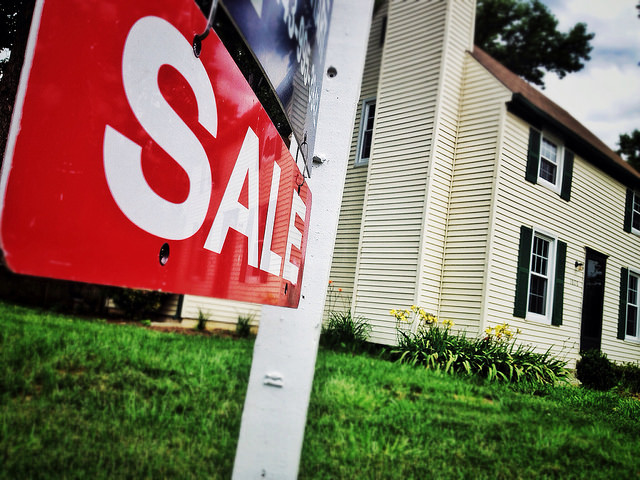
Red sale sign outside a house for sale.

Mortgage Rate Drop Fuels Application Demand


According to the Mortgage Bankers Association’s Weekly Applications Survey, average mortgage rates fell last week across all loan categories, including 30-year fixed-rate loans with both conforming and jumbo balances, loans backed by the Federal Housing Administration, and 15-year fixed-rate loans. Rates are now down significantly from where they were last year at the same time and the improvement has caused increased demand for mortgages. In fact, refinance applications are up 144% percent over year-before levels and demand for loans to buy homes is up 7 percent. But, though that’s encouraging news, there is still imbalance in the market. Joel Kan, MBA’s associate vice president of economic and industry forecasting, says there are too few homes for sale and it may be holding back entry-level buyers. “Amidst persistent supply constraints in the entry-level price range, there’s evidence that high-end home buyers are more active this fall,†Kan said. “The average loan size for purchase applications increased to its highest level since May.†The MBA’s weekly survey has been conducted since 1990 and covers 75 percent of all retail residential mortgage applications. More here.

Large white percentage symbol on a red background.

Homeowners Now Stay In One Place Longer


When you buy a house, there’s really no telling how long you’ll end up living there. Some people buy a home thinking they’ll stay a few years and end up living there decades. Others buy a house thinking it’ll be their long-term home, then find themselves on the market for a new one sooner than later. But how long does the typical homeowner stay in one place? Well, according to a recent survey, the answer is longer than they used to. That’s because, results show American homeowners typically stay in their home for 13 years, which is up from 8 years in 2010. That’s a significant increase, especially since the historical average is 6 years. There are a couple of factors that may be driving homeownership tenure higher. One is demographics. Older Americans are staying homeowners longer than they once did. Another is the current market. After years of rising home prices, many homeowners have built up a good amount of equity and have little motivation to move, as long as their home still fits their needs and lifestyle. More here.

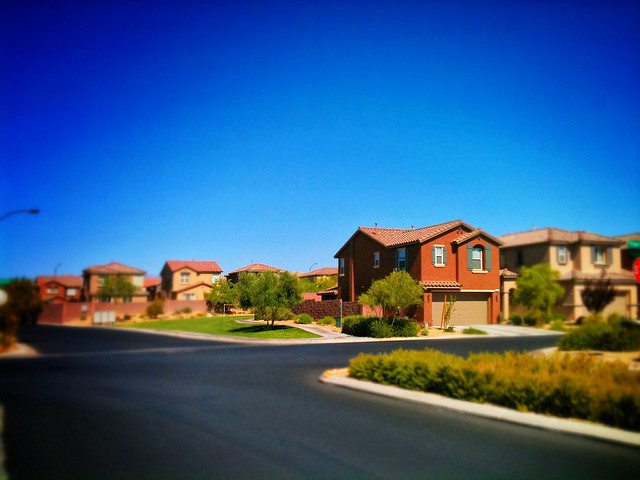
Sunny suburban neighborhood with modern houses and clear blue sky.

Housing Market Expected To Remain Solid In 2020


Forecasting the future isn’t easy. But, at the end of each year, economists, experts, and analysts use various trends and indicators to make their best predictions for what will happen over the next 12 months. So what are they saying about housing market conditions in 2020? Well, the earliest forecasts are positive. In fact, according to Freddie Mac, the housing market is among the only parts of the economy that looks solid. “Economic growth has slowed significantly across the globe, but the slowdown has been more muted domestically,†Sam Khater, Freddie Mac’s chief economist, said. “However, the housing market remains on solid ground with housing starts, building permits, existing home sales, and new home sales all outperforming the broader economy.†That’s good news, but particularly for anyone thinking of buying or selling a home in the next year. Freddie Mac expects mortgage rates to remain low, price increases to continue to slow, and home sales to beat this year’s totals. In short, the housing market should remain on solid ground despite signs that an economic slowdown is on the horizon. More here.

Row of colorful historic townhouses under a clear blue sky.

Number Of New Listings Slows From Last Year


Because building more homes is the easiest way to solve the problem of too few homes for sale, new residential construction gets a lot of attention. But the number of homeowners listing their homes for sale also plays a role in determining current inventory. And, if new numbers from the National Association of Realtors’ consumer website are any indication, there are fewer homeowners selling houses this year than there were last year at the same time. According to the numbers, new listings have fallen 3.4 percent since last year, with entry-level inventory seeing the largest declines. In fact, the number of homes listed for sale under $200,000 has dropped 15.2 percent year-over-year. Homes between $200,000 and $750,000 fared better, with a decline of 4.3 percent. Homes priced above $750,000 saw the only increase, rising 1.3 percent. What this means is that first-time home buyers and those looking for a mid-tier house may face increasing competition in the months ahead. Buyers looking for affordable homes should make sure to be prepared and ready to act when they find a home that meets their needs. More here.

Modern residential building with unique architectural design under clear blue sky.

Latest Report Finds Price Trends Steady


Naturally, home prices are among the first things potential home buyers look at when deciding whether or not it’s time for them to make a move. After all, they are the easiest housing-market barometer to read. It requires no expertise, for example, to look up homes for sale in any area and get a feel for how expensive or affordable they are. So where are home prices today and where might they be headed? Well, according to the S&P CoreLogic Case-Shiller Indices – which is considered a leading measure of U.S. home prices – current home price trends are holding steady. The latest index shows national home prices up 3.2 percent over last year, which is about the same as they were the previous month. Overall, home price trends show increases have been slowing for a while now and there’s little expectation that they’ll change any time soon. “The U.S. National Home Price NSA Index trend remained intact with a year-over-year price change of 3.2 percent,†Philip Murphy, managing director and global head of index governance at S&P Dow Jones Indices, said. Regionally, southeastern cities saw the biggest increases, with Charlotte, Tampa, and Atlanta recording increases of 4-to-4.5 percent. San Francisco was the only city to show a year-over-year decline. More here.

Red dollar sign on white square paper.

Thank you for your upload