

Banner
Menu

Loans To Buy Homes Up 10% From Last Year


According to the Mortgage Bankers Association’s Weekly Applications Survey, demand for home purchase loans is now 10 percent higher than the same week one year ago. The improvement comes after a 1 percent increase week-over-week. Joel Kan, MBA’s associate vice president of economic and industry forecasting, says purchase applications have been gradually increasing since the beginning of the year. “Purchase applications picked up slightly last week, as conventional and government activity were each up around 1 percent. Furthermore, in continuation of the gradual growth trend seen throughout the first half of 2019, purchase activity was almost 10 percent higher than a year ago,†Kan said. “A still-strong job market, improving affordability, and lower mortgage rates continue to support growth.†Also in the report, average mortgage rates were mostly flat last week, showing little change across all loan categories. The 30-year fixed-rate was up slightly but remains just above lows last seen in 2016. The MBA’s weekly survey has been conducted since 1990 and covers 75 percent of all retail residential mortgage applications. More here.


Bright orange directional arrow painted on asphalt pointing forward.

Americans Overestimate Mortgage Requirements


For most potential buyers, thinking about purchasing a home means thinking about applying for a loan. After all, most of us don’t carry around a suitcase full of cash when we’re out shopping houses. So before we start looking at listings, we have to look at things like our finances, credit score, requirements, and minimums to get an idea of whether or not we might be qualified to borrow. But, according to a study from Fannie Mae, though we have more access to information these days, we’re still unsure about what’s required to be approved for a mortgage. The study says, “The lack of mortgage qualification understanding is pervasive, even among current homeowners, those who say they are actively planning to purchase a home in the next three years, and those who successfully answered questions testing general financial literacy.†In other words, a lot of us are mistaken about things like what our credit score needs to be and how much of a down payment is required. Which means, many perfectly qualified buyers may be overestimating the requirements and not pursuing homeownership. If you’re interesting in buying a home, don’t discourage yourself. Talk to your lender about what’s required before giving up on buying a house. More here.

Paper squares spelling out 'MORTGAGE' with a string.

How To Avoid Stress When Selling A Home


Selling a house can seem daunting. Not only do you have to get your home ready for viewings, you also have to worry about getting a good price and selling it within a timeframe that works for you. Add in all the little details and possibly shopping for a new place at the same time and you have a recipe for stress. One recent survey shows just how much. According to the results, 36 percent of recent home sellers said they cried during the process and, among them, 20 percent cried more than once. Overall, younger sellers were more likely to say they cried – which makes sense since they’re also more likely to be going through it for the first time. But, whatever the case, the evidence is clear. Selling a house can be a stressful experience. It doesn’t have to be, though. Having a good team of experienced professionals to guide you through the process is key. As is listing at the right time, having appealing photographs to post online, and staying flexible and ready for anything. It can be overwhelming, but with a good team and appropriate expectations, it will be far more manageable. More here.

Colorful small houses under a cloudy sky.

Renters Spend More Of Their Income On Housing

Whether to rent or buy is a common debate for Americans looking for a new place to live. The arguments are well known. Renters say it’s cheaper, if only because there are no upfront expenses like a down payment or closing costs. Homeowners, on the other hand, will point to the long-term financial benefits of owning a home, including equity and wealth creation. Ultimately, what you choose will be determined by factors specific to your life, goals, and finances. But, according to a new survey from Freddie Mac, on one key issue, homeownership is clearly winning the debate. The survey results found that “34 percent of renters spend more than one-third of their income on rent, while only 25 percent of homeowners spend that much on their mortgage.” In other words, though renters often view renting as the more affordable option, they are also spending a larger percentage of their monthly income on housing. Additionally, the survey found that 62 percent of renters said they’ve had to make spending or housing changes to be able to afford their monthly payment, compared to just under half of homeowners. More here.


Favorable Mortgage Rates Lead To Sales Bump


New numbers from the National Association of Realtors show contracts to buy homes were 1.1 percent higher in May than the month before. Improvement was seen in three of the four major regions, with only the West seeing a slight decline. Lawrence Yun, NAR’s chief economist, says favorable mortgage rates have motivated home buyers. “Buyers, for good reason, are anxious to purchase and lock in at these rates,†Yun said. “The Federal Reserve may cut interest rates one more time this year, but there is no guarantee mortgage rates will fall from these already historically low points. Job creation and a rise in inventory will nonetheless drive more buyers to enter the market.†In short, many of the factors that help affordability and benefit buyers have improved this year, including mortgage rates, home prices, and the job market. Inventory remains the market’s main challenge but, as more homes become available for sale, buyers should see further home price moderation, less competition, and more choices.

A red and white pending sign in a suburban neighborhood.

Average Mortgage Rates Fall Even Further


According to the Mortgage Bankers Association’s Weekly Applications Survey, average mortgage rates fell last week across all loan categories, including 30-year fixed-rate loans with both conforming and jumbo balances, loans backed by the Federal Housing Administration, and 15-year fixed-rate loans. The drop brought the 30-year fixed-rate to its lowest level since September 2017 and continues its overall trend downward. So far this year, mortgage rates have been decreasing and its helped boost demand for loans to buy homes – which are now 9 percent higher than at the same time last year. Joel Kan, MBA’s associate vice president of economic and industry forecasting, says demand remains strong despite the market’s remaining challenges. “Now at almost the half-way mark of 2019, we have generally seen a stronger purchase market than last year, despite still-tight existing inventory and insufficient new construction,†Kan said. But with rates down three of the past four weeks, affordability conditions have improved and helped keep home buyers interested, regardless of the inventory issues still plaguing many markets.

Large black percentage symbol on a textured background.

Home Price Increases Continue To Slow


In order to gauge how affordable it is for you to buy a home, you have to factor in a number of different variables. How much money you’ve saved and how much you earn are part of the equation, as are current mortgage rates. But home prices may be the most important factor. Home prices are an easy-to-understand indicator of where things are headed in the housing market and how it might affect your buying options. So what do home prices look like today? Well, one way to get an accurate read of where prices are is to check the S&P Case-Shiller Home Price Indices. Considered the leading measure of U.S. home prices, the index has been tracking home values for more than 27 years. According to their latest release, the news is good for prospective buyers. That’s because, while home prices are still increasing, they’re moving higher at a slower and slower pace. Philip Murphy, managing director and global head of index governance at S&P Dow Jones Indices, says the trend is pretty consistent. “Home price gains continued in a trend of broad-based moderation,†Murphy said. “Year-over-year price gains remain positive in most cities, though at diminishing rates of change.†In other words, home price increases are becoming smaller and, as long as mortgage rates remain low, summer home buyers should find affordability conditions favorable. More here.

A stack of US hundred-dollar bills on a red surface.

Late Mortgage Payments Hit Record Low


Part of shopping for a house to buy is calculating whether or not you’ll be able to comfortably afford the monthly mortgage payment. Nobody wants to buy a house that causes them financial stress. So figuring out your approximate payment and how that fits into your monthly budget is key to choosing a house that’s right for you. Of course, having a steady job and a consistent income will help make your mortgage payment easier to manage. Which is why the improved job market is among the reasons credited for new numbers showing mortgage delinquencies at record lows. According to the data, late mortgage payments have fallen to a nearly 20-year low. Just in the past year, they’re down 7.5 percent and, combined with foreclosure starts falling to a more than 18-year low, the improvement represents a major turnaround from where things were following the financial crisis and housing crash. But it isn’t really that surprising. After all, the labor market has been stronger in recent years. And with increased job security and growing wages, more homeowners have been able to avoid financial stress and stay on top of their payments. More here.

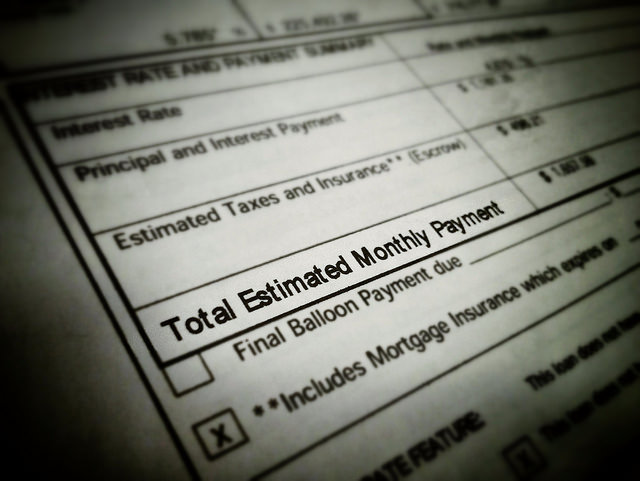
Close-up of a mortgage loan document showing estimated monthly payment details.

Homes Selling Quickly As Buyers Return


Sales of previously owned, single-family homes increased 2.5 percent in May, according to new numbers from the National Association of Realtors. The gains follow two months of declines and are evidence that home buyers are responding to improved affordability conditions. Lawrence Yun, NAR’s chief economist, says, purchase power is up. “The purchasing power to buy a home has been bolstered by falling mortgage rates, and buyers are responding,†he said. But though favorable buying conditions are good for potential house hunters, increasing demand comes with its own set of challenges. For example, the typical property was on the market just 26 days in May. Additionally, 53 percent of homes sold were on the market for less than a month. In other words, good homes are selling fast. That means, home buyers looking for a house this summer need to prepare for competition. Before heading out to look at houses, buyers should make sure their finances are in order, they’re prequalified to borrow, and that they’re ready to make an offer when they find a house that fits their life and budget.

Close-up of a green 'For Sale' sign on a textured surface.

Are More Americans Getting Ready To Sell?


The number of homes for sale is lower than normal in many markets. So, any indication that relief may be on the way is good news for potential home buyers. That’s why the results of a recent survey conducted by the National Association of Realtors are encouraging. The survey found a significant increase in the number of respondents who said they believe now is a good time to sell a home. In fact, 46 percent of participants said they thought so – up from 37 percent in the first quarter. What’s driving the boost in optimism? Well, according to Lawrence Yun, NAR’s chief economist, home price increases have slowed and it might be motivating homeowners. “With home price appreciation slowing, home sellers understand that the days of large price gains from holding an extra year are over,†Yun said. In other words, homeowners who may’ve been waiting to see how much higher home prices would climb may now be ready to sell. If more Americans put their homes up for sale, it will help to relieve inventory shortages and lead to a better balanced housing market. More here.

Chimney on a rooftop under a clear blue sky with faint clouds.

Thank you for your upload