


Banner
Menu

Mortgage Rate Increase Breaks 6-Week Streak


According to the Mortgage Bankers Association’s Weekly Applications Survey, average mortgage rates increased last week following six consecutive weeks of declines. And, while the increase was slight, it was enough to cause a drop in overall mortgage application demand. Joel Kan, MBA’s vice president of economic and industry forecasting, said refinance activity was particularly affected. “After seeing a six-week streak, mortgage rates for 30-year loans increased slightly, which led to a pullback in overall refinance activity,†Kan said. But though week-over-week demand was down, it remains up from one year ago. In fact, applications for loans to buy homes are now four percent higher than they were at the same time last year. Kan says younger buyers are driving the improvement, noting that “strong demand from first-time buyers and low unemployment continue to push this year’s purchase activity above a year ago.†Conducted since 1990, the MBA’s weekly survey covers 75 percent of all retail residential mortgage applications. More here.

A cracked yellow arrow painted on a dark surface pointing upward.

Improving Affordability Boosts Housing Forecast

Obviously, there’s a link between the economy and housing market. When the economy isn’t doing well, it tends to affect people’s money and confidence. And, if people aren’t feeling financially secure, that can lead them to put off making a major purchase like buying a home. After all, no one wants to buy a home right before the economy tanks and prices crash. But, according to the most recent outlook from Fannie Mae’s Economic and Strategic Research Group, there are also times when that link isn’t as direct. For example, the group – who’s monthly forecast covers both the economy and housing market – says softening global economic conditions will lead to slower economic growth this year and in 2020. But though they believe the economy will slow, they are more positive when it comes to the housing market. “We expect housing to add to growth for the foreseeable future, and our projection of a 1.0 percent year-over-year increase in home sales in 2019 remains unchanged,” Doug Duncan, Fannie Mae’s chief economist said. “Moderating home price appreciation and attractive mortgage rates continue to support affordability, particularly as home builders are now paying more attention to the entry-level portion of the housing market.” More here.

Builder Sentiment Holds Steady Despite Concerns


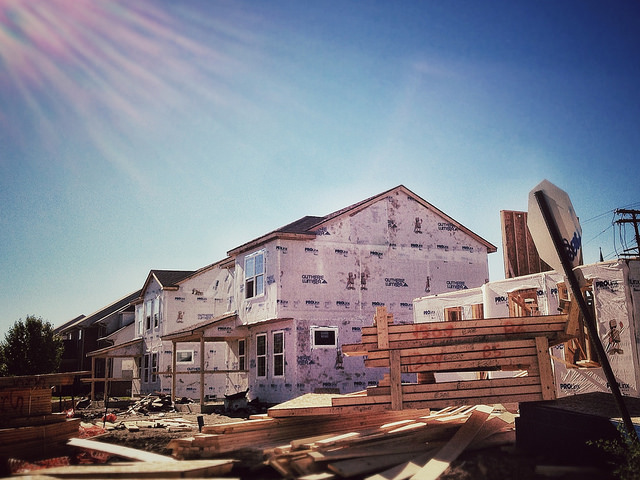
The National Association of Home Builders’ Housing Market Index is a monthly measure of interest in the new home market. The survey asks builders for their view of current conditions and is considered an important indicator, since home builders have an unique perspective on things like buyer demand and foot traffic. According to the most recent survey, home builders remain solidly optimistic about demand for new single-family homes, though there are a number of lingering concerns. Robert Dietz, NAHB’s chief economist, says the market’s current challenges are particularly daunting for first-time and entry-level buyers. “Despite lower mortgage rates, home prices remain somewhat high relative to incomes, which is particularly challenging for entry-level buyers†Dietz said. “And while new home sales picked up in March and April, builders continue to grapple with excessive regulations, a shortage of lots and lack of skilled labor that are hurting affordability and depressing supply.†Still, despite these challenges, regional results show, over the past three months, only the South has seen a drop in confidence, while the Northeast, Midwest, and West have all made gains or remained steady. More here.

A house under construction with wooden materials around.

Older Homeowners Spend Big On Home Improvement

Naturally, when there are more home buyers than homes for sale, prices and competition increase. That’s why, the fact that there are a lower than normal number of homes for sale ranks high among the main issues affecting today’s home buyer. But what are the factors causing for-sale inventory to lag in markets across the country? Well, one of them is that an increasing number of homeowners have decided that, rather than moving, they’d prefer to renovate or remodel the home they have. In fact, according to Harvard’s Joint Center For Housing Studies, home improvement spending is up. Since 2015, it’s risen 10 percent. And when compared to 2010, it’s up 50 percent. According to the report, older homeowners are driving the trend. “Homeowners age 55 and over have dominated the home remodeling market for nearly a decade, overtaking middle-aged owners as the primary source of home improvement spending,” the report says. “Older homeowners are living longer and are increasingly willing and able to spend for home improvements that allow them to remain safely in their current homes.” More here.

Hammer

What Buyers Need To Know About The Inspection


Buying a home involves more than just finding a house you like, making an offer, and moving in. There are many steps along the way and each has an important purpose. Take the inspection, for example. After you’ve had your offer accepted, the home will need to be professionally inspected. This serves a couple of different purposes. First, it provides the home buyer with necessary information about the health of the home and what it’ll take to maintain it. An inspector looks at things like the roof, structural and mechanical issues, plumbing, electrical systems, and the overall condition of the home. Having a professional go through the house can help reveal issues home buyers may’ve missed when walking through the home. And, if there are serious issues with the home’s mechanical systems or structure, it gives the buyer an opportunity to renegotiate their offer to account for the previously undetected problem. For these reasons, it’s a good idea for the home’s buyer to be present during the home inspection. It’s a good opportunity to get to know the home you’re buying and also a chance to ask questions about proper care and maintenance . More here.

Magnifying glass enlarging wood texture on a red surface.

Mortgage Rates Drop To Nearly Two-Year Low

According to the Mortgage Bankers Association’s Weekly Applications Survey, average mortgage rates fell last week across all loan categories, including 30-year fixed-rate loans with both conforming and jumbo balances, loans backed by the Federal Housing Administration, and 15-year fixed-rate loans. With last week’s drop, rates are now at their lowest level since September 2017. Joel Kan, MBA’s associate vice president of economic and industry forecasting, said the decline led to a surge in demand for loans. “With the 30-year fixed-rate mortgage at its lowest level since September 2017, purchase activity was more than 10 percent higher than a year ago,” Kan said. “Demand is still relatively strong, but there is likely restraint from some prospective buyers, driven by some economic uncertainty. Furthermore, housing supply is still very tight for first-time buyers.” Despite those challenges, however, mortgage application demand was up almost 27 percent from one week earlier. The MBA’s weekly survey has been conducted since 1990 and covers 75 percent of all retail residential mortgage applications. More here.
 

Buying A Home Is Becoming More Affordable


Like any market, the housing market has ups-and-downs. There are years when conditions favor buyers and then there are years when sellers have all the negotiating power. Unfortunately, when you need to make a move, you don’t always have the luxury of waiting until market conditions are perfect for you. The good news, though, is that, for today’s home buyer, conditions are trending in the right direction. In fact, according to a new report, nearly three-quarters of the nation’s 100 largest metropolitan areas are now more affordable than they were last year at the same time. What’s driving the improvement? Well, there are a few things helping make conditions more favorable for home buyers. For starters, mortgage rates have recently declined. Combined with higher wages and an increasing number of homes for sale, the drop in mortgage rates has helped counteract the effects of rising home prices. And, though prices are still increasing, the rate at which they are has continued to slow. For example, data from May shows year-over-year price increases were the slowest in three years. In other words, in most markets, home prices are beginning to moderate at the same time other buying conditions have improved. In short, buying a house is becoming more affordable in most markets. More here.

Four $100 bills featuring Benjamin Franklin.

How Valuable Is A Home’s Garage?

Some home features are necessities and others are luxuries. For example, kitchens are a must. You’re not going to find many homes for sale that don’t have a kitchen. On the other hand, garages aren’t. Not all homes come with a garage. But while they might not be an absolute must, garages – depending on where you live – may be a luxury buyers are willing to pay more for. But just how much do buyers value garages? Well, according to one recent analysis, homes with garages sell for nearly $25,000 more than homes without – an approximately 12 percent premium. But, like a lot of things, where you are is a big factor in determining how valuable a garage might be. For example, homes with garages sell for 38 percent more than homes without them in Chicago, where the winters can be harsh and snowy. But in warmer weather areas like Los Angeles or Miami, garages aren’t as desirable. In fact, in some cities, only around half the homes sold last year even had a garage, which is quite a difference from Midwestern cities like Cleveland, where over 90 percent of homes had one. More here.


Rising Share Of Americans Say It’s A Good Time To Buy

Determining when it’s a good time to for you to buy a house means thinking about things like market conditions, your life goals, job security, and personal finances. That’s why Fannie Mae’s monthly Home Purchase Sentiment Index surveys Americans about those things in an effort to gauge perceptions of the current housing market. And, according to the most recent results, Americans are becoming more enthusiastic. In fact, there was a 13 percent month-over-month increase in the number of respondents who said now is a good time to buy a house. Doug Duncan, Fannie Mae’s chief economist, says there are a lot of positive trends currently supporting buying sentiment, though there are also some remaining concerns. “Another sharp rebound in the ‘Good Time To Buy’ component lifted the HPSI nearer its survey high set during last year’s home buying season, though several uncertainties remain,” Duncan said. “While consumers’ more favorable mortgage rate outlook suggests continued support for housing affordability, potential home buyers still face supply constraints. Additionally, while the survey recently resumed its upward trend, consumers’ sense of income growth and job security have moved lower from the highs established earlier in the year, which, if sustained, could weigh on the housing market in the second half of the year.” More here.

A Tale Of Two Housing Markets


Housing market conditions are largely location based. What’s true in one neighborhood might not be true in another. But a lot of what causes those differences is rooted in home values. In other words, conditions on the high end of the market can sometimes look very different than those on the lower end of the market. That’s certainly true today. For example, recent data shows that the number of homes for sale above $750,000 was up 11 percent in April, while, at the same time, the number of available homes below $200,000 fell 8 percent. Combine that with the fact that a significant share of buyer demand is coming from first-time home buyers who are likely looking for something affordable and you can begin to see the problem. The high end of the market is currently cooling off, with an increasing number of available homes and fewer active buyers. At the same time, the market for affordable, starter homes continues to be competitive, with more buyers than homes for sale. This disparity explains why, though recent indicators show improving conditions for buyers, home sales numbers have not yet shown a corresponding increase. As more affordable homes become available, the market will balance and sales will begin to climb. More here.

Brick house with steep roof and chimney under a bright blue sky.

Thank you for your upload