

Banner
Menu

Housing Market Has Momentum To Start The Year


If you look at just about any reading of the current housing market, you’ll find that there are a lot of Americans interested in buying a home right now. Whether it’s because of pent-up demand that built up in the years following the housing crash or a drive to buy now while mortgage rates are still well below their historical norm, the fact is buyer demand is high. The most recent National Association of Realtors’ Pending Home Sales Index provides more evidence of this. That’s because the index – which measures the number of signed contracts to buy homes – ended the year with its third consecutive monthly increase. Lawrence Yun, NAR’s chief economist, says the housing market has started the year with a little bit of momentum. “Another month of modest increases in contract activity is evidence that the housing market has a small trace of momentum at the start of 2018,†Yun said. “Jobs are plentiful, wages are finally climbing and the prospect of higher mortgage rates are perhaps encouraging more aspiring buyers to begin their search now. More here.


Close-up of a red and white 'PENDING' sign outdoors.

Mortgage Rates Move Higher For 2nd Straight Week


According to the Mortgage Bankers Association’s Weekly Applications Survey, average mortgage rates moved higher for the second consecutive week last week. Rates were up across all loan categories, including 30-year fixed-rate mortgages, loans backed by the Federal Housing Administration, and 15-year loans. Joel Kan, an MBA economist, told CNBC that rates are being driven higher by economic conditions. “Rates moved higher last week driven by concerns over a weaker U.S. dollar, signs of more robust growth and rising rates abroad, and moderately strong fourth-quarter domestic growth,†Kan said. With rates rising, there was a decline in mortgage application demand. The number of homeowners looking to refinance and potential buyers requesting applications for loans to buy homes both saw a drop, with total demand falling 2.6 percent from the week before. However, mortgage rates still remain low by historical standards – though there is a belief that, with a strengthening economy, interest rates could rise further this year. The MBA’s weekly survey has been conducted since 1990 and covers 75 percent of all retail residential mortgage applications. More here.

Close-up of a worn dollar bill with the word 'MORTGAGE' stamped across it.

Home Price Climb Means Buyers Need To Prepare


It isn’t news that home prices have been headed upward for awhile now. And, according to the latest S&P Case-Shiller Home Price Indices, they are continuing to climb at around the same pace as they have been in recent months. Which is to say, the price increases haven’t yet slowed. Of course, how quickly prices are increasing depends on where you’re looking to buy. Large metropolitan areas – and especially those in the West – are seeing the sharpest increases, while the price gains are more muted in the Midwest. But, no matter where you are, the best way to prepare for higher prices is to know what you want, what you can afford, and where your limits are. In competitive and higher priced markets, having a firm idea of what you can spend and where you’ll compromise will make it less likely that you’ll end up going over budget because of a bidding war or buying more house than you can comfortably afford. Making sure you’re prepared before heading out to look at homes also means securing financing in advance, so you’ll be ready to make an offer when you find a home you love. More here.

A blue dollar sign with yellow wings on a textured wall.

Forecast Sees Little Change On The Horizon


Depending on the results of the most recent monthly housing report, you might get the impression that the market is horrible or just fine. Mainly, that’s because monthly real-estate reports often show an exaggerated amount of volatility. In other words, month-to-month results are typically far more up-and-down than what you’d see if you took the longer view. According to Fannie Mae’s most recent Economic and Housing Outlook, that’s especially true these days. Conditions have been pretty steady for the last year and will likely remain that way for the upcoming year. Doug Duncan, Fannie Mae’s chief economist, says the real estate market will likely remain unchanged despite changes to tax laws and monetary policy. “The new tax laws are likely to motivate a mixed response in the housing market: Increased disposable household income should lead to greater housing demand, but changes to deductions essentially reduce the subsidy for homeownership,†Duncan said. “On balance, we expect the housing market in 2018 to encounter many of the same challenges as last year, including inventory shortages, particularly in the middle and lower-end of the market, and affordability headwinds.†More here.

Calm ocean waves under a colorful sunset sky.


Improvement In New Home Market Is Good For Buyers


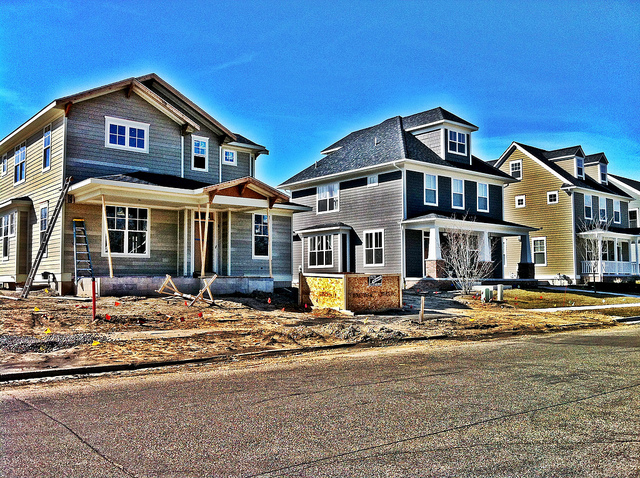
The number of new homes being built and sold has become an important indicator for the housing market in recent years. That’s because, a shortage of homes for sale has caused prices to steadily increase. And, since the quickest way to add inventory to any particular market is to build new homes, there has been a lot of focus lately on the new home market and how it impacts home buyers and sellers. According to the latest numbers, last year saw an 8.3 percent increase in new home sales over the year before. That’s good news for real estate, as an increasing number of sales should lead to an increasing number of new homes being built. And, to that end, there were 295,000 new homes for sale at the end of December, which is the highest level since April 2009. In short, if builders continue to build more homes, the increased inventory should help moderate price increases which will make affordability conditions more favorable for the rising number of Americans who say they’re interested in buying a home. More here.

Newly built suburban houses on a clear day.

Existing Home Sales Reach 11-Year High

According to new numbers from the National Association of Realtors, last year was the best in more than a decade for sales of previously owned homes. Existing home sales ended the year at an estimated 5.51 million sales, surpassing last year’s mark and proving Americans have a strong desire for homeownership. Lawrence Yun, NAR’s chief economist, said sales should’ve been even higher. “Existing sales concluded the year on a softer note, but they were guided higher these last 12 months by a multi-year streak of exceptional job growth, which ignited buyer demand,” Yun said. “At the same time, market conditions were far from perfect. New listings struggled to keep up with what was sold very quickly, and buying became less affordable in a large swath of the country. These two factors ultimately muted what should have been a stronger sales pace.” However, Yun believes rising wages and an expanding economy will help boost housing even further in 2018, helping to push last year’s gains even higher.

Eager Home Buyers Get Jump On Spring Season


Home buyers may be getting an early start on the spring buying season this year, according to new numbers from the Mortgage Bankers Association. In fact, demand for purchase loan applications was up 6 percent last week from one week earlier and at its highest level since April 2010. And the increase comes at a time when mortgage rates are higher than they’ve been since March of last year. So what explains the high level of buyer interest? Lynn Fisher, MBA’s vice president of research and economics, told CNBC she thinks buyers may be trying to get a jump on the competition. “A combination of being left on the sideline last summer due to a lack of inventory for sale and the prospect of slowly rising interest rates over the near term appears to have buyers in a hurry to start the spring buying season,†Fisher said. Whatever the case, the number of potential home buyers requesting loan applications to buy homes last week was 7 percent higher than during the same week last year. More here.

Bright yellow daffodils blooming against a textured wall.

Young Adults Hold Key To This Year’s Market


First-time home buyers are an important demographic when tracking the health of the housing market. That’s because, they typically make up nearly half of all home sales. In recent years, however, young Americans have been buying fewer homes than in the past. In fact, Freddie Mac’s most recent monthly outlook says 15 percent of young adults between the ages of 25 and 35 are living in their parents’ home – a five percent increase from 2000. However, it isn’t because they’re not interested in homeownership. Largely, the economy and a lack of affordable starter homes have been to blame for a lower-than-normal number of first-time home buyers. But with an improved economy and job market, will more young adults become buyers this year? Len Kiefer, Freddie Mac’s deputy chief economist, says there’s reason for optimism. “Starting off the year, things are looking pretty good for the U.S. economy and housing markets,†Kiefer says. “Mortgage rates are low, economic growth has accelerated in recent quarters, and housing is coming off its best year in a decade.†More here.

Three colorful house keys lying on a textured surface.

Showings Up As Home Buyer Interest Remains High


If you had any doubt that there’s been a high level of home buyer interest lately, new data on the number of showings across the country should convince you. That’s because, according to the ShowingTime Showing Index – which tracks the average number of appointments an active listing receives – showings were up 8.5 percent last year. In other words, homes on the market last year received a lot of interest from potential buyers. Daniil Cherkasskiy, ShowingTime’s chief analytics officer, says last year’s numbers may be an indication that 2018’s housing market will feature a high level of home buyer demand. “While, unsurprisingly, December is always the slowest month for showings, activity in December 2017 was substantially higher than the previous year due to lack of inventory,†Cherkasskiy said. “This points toward higher demand in early 2018 because of new buyers and those coming back to the market from last year.†More here.

Sign announcing a new listing coming soon.

What To Do If You Live In A Competitive Market


These days, competition and affordability are two of home buyers’ main concerns. This isn’t surprising, as no one likes to pay more for less. Naturally, we prefer to find a bargain and we certainly don’t want to have to fight off other interested buyers to get it. That’s why recent research looking at the country’s most competitive markets is of interest. The results show the most competitive markets are located in the West, though in just about any desirable neighborhood you could find more buyers than available homes. That means, even if you aren’t living in San Francisco or Seattle, you should be ready for the possibility that you won’t be the only home buyer interested in the house you choose. So what’s the best way to increase your odds of beating the competition and getting the house you want? Preparation. Be prepared and get prequalified before you start shopping. Buyers with financing in place before they start looking at houses are more appealing to sellers. If you’ve got your financing in place and a firm idea of what your price range and budget are, you will be in better position should you find yourself in a bidding war. More here.

Sunlit residential street with palm trees and parked cars.

Thank you for your upload