

Banner
Menu

Builder Confidence Grows As Inventory Lags


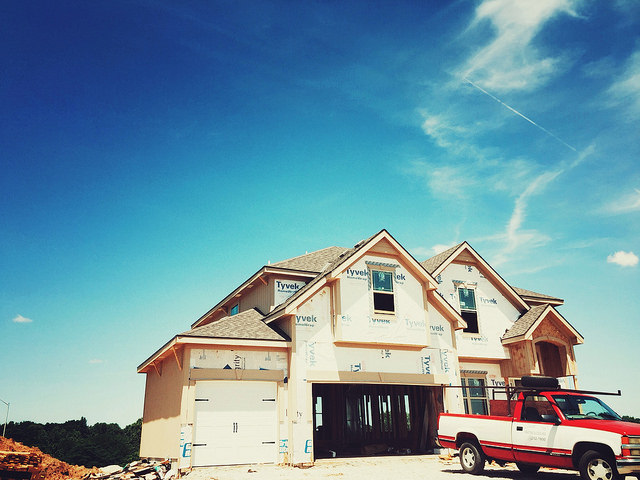
The number of existing homes available for sale is lower than normal right now and that can be frustrating for home buyers. That’s why many of them have been turning to the new home market for additional options. The trend, according to the National Association of Home Builders, has been good for home builders and has driven builder confidence higher in recent months. In fact, the NAHB’s Housing Market Index – a monthly measure of how home builders feel about the market for newly built homes – increased for the fourth consecutive month in April, moving up one point from the month before. It’s now at 45 on a scale where any number above 50 indicates more builders view conditions as good than poor. Robert Dietz, NAHB’s chief economist, says new home inventory is currently high and buyers are interested. “Currently, one-third of housing inventory is new construction, compared to historical norms of a little more than 10 percent,†Dietz said. “More buyers looking at new homes, along with the use of sales incentives, have supported new home sales since the start of 2023.†(source)

A suburban house with a clear blue sky.

Is Housing Inflation Beginning To Cool?


Nobody wants to pay more for things they could’ve gotten for less had they bought them a few months earlier. That’s what happens when inflation is rising, and it’s definitely the case for home buyers in today’s housing market. Housing inflation is one of the primary factors driving the overall inflation rate. In fact, excluding food and energy, housing costs account for more than 60 percent of recent increases. That’s no surprise to anyone who’s shopped for a house to buy over the past few years. Since 2020, the cost of buying a home has increased significantly. There is good news, though. In March, housing inflation experienced its smallest monthly gain since last November. And while that may not sound like much, it is a sign that rising housing costs are beginning to cool as the market calms down. That’s welcome news, especially for spring home buyers getting ready to shop for a house. (source)

Close-up of scattered twenty-dollar bills.

Fixer-Uppers Gain Popularity With 1st-Time Buyers


The appeal of a turnkey home is obvious. After all, buying a house that doesn’t require much, if any, work is a dream come true for most home buyers. But while a house that’s move-in ready has obvious benefits, fixer-uppers have advantages too – and today’s first-time buyers have noticed. In fact, according to one new survey, 59 percent of first-time buyers say they want to find a fixer-upper or starter home. But it’s not because younger buyers just happen to have an abundance of home improvement skills. The reason first-time buyers are looking at fixer-uppers has more to do with finances and the challenges of today’s housing market. The survey found more than 30 percent of first-time buyers who say they want to buy a fixer-upper say it’s because they’re looking for a more affordable option – while 52 percent say current market conditions have impacted their decision. In other words, first-time home buyers are looking at fixer-uppers as a more affordable path to homeownership in a still challenging housing market. (source)

Air compressor and ladder in a room under renovation with protective covering on the floor.

Rates Fall To Lowest Level In Two Months

According to the Mortgage Bankers Association’s Weekly Applications Survey, average mortgage rates fell last week to their lowest level in two months. Rates were down across all loan categories, including 30-year fixed-rate loans with both conforming and jumbo balances, loans backed by the Federal Housing Administration, 5/1 ARMs, and 15-year fixed-rate loans. Mike Fratantoni, MBA’s senior vice president and chief economist, says the decline helped boost demand from buyers. “Incoming data last week showed that the job market is beginning to slow, which led to the 30-year fixed rate decreasing to … the lowest level in two months,” Fratantoni said. “Prospective home buyers this year have been quite sensitive to any drop in mortgage rates, and that played out last week with purchase applications increasing by 8 percent.” The MBA’s weekly survey has been conducted since 1990 and covers 75 percent of all retail residential mortgage applications. (source)

Percentage-1

New Listings Down As Spring Buyers Arrive


In large part, housing market conditions are determined by the balance of buyers and sellers. When there are too many of one and not enough of the other, it affects what home buyers find when they head out looking for a house. These days, the number of homes for sale is low. In fact, according to one new analysis, new listings are down nearly 22 percent from last year at the same time. So what does that mean for spring home buyers? Well, it means there’ll likely still be some competition for available listings, especially move-in ready homes and those in affordable price ranges. Even with buyer demand lower than it was last spring, there are still enough interested buyers to outpace inventory at its current level. For example, so far this spring, homes that go under contract are doing so at an accelerated pace, with nearly half of them selling in fewer than 14 days. That means, spring buyers need to be prepared to move quickly when they find a home that fits their needs. (source)

A house roof with a tall tree against a clear blue sky.

Housing Market Optimism Is Growing


Fannie Mae’s Home Purchase Sentiment Index is based on a monthly survey of Americans. The survey asks participants for their view of the current housing market, whether now’s a good time to buy or sell a home, where they think home prices and mortgage rates are headed, and how comfortable they feel financially. According to the March results, optimism is growing. The index was up 3.3 points from the month before and saw month-over-month increases for four of the six survey components. Among the improvements, there was a significant increase in respondents who say it’s a good time to sell a home, rising 8 percent from one month earlier. Also, an increasing number of participants said they feel secure in their jobs and believe mortgage rates will fall over the next year. Despite rising optimism, Fannie Mae’s vice president and deputy chief economist, Mark Palim, says Americans remain unsure about home prices. “Unsurprisingly, consumers expressed apprehension about the direction of home prices,†Palim said. “In March, there was an even split among respondents who said home prices over the next 12 months will go up compared to those who expect them to go down.†(source)

Three different metal keys with unique shapes on a blue background.

Now Is The Housing Market’s Busiest Season

Whether you’re a homeowner with a home to sell or a buyer hoping to find a home to buy, spring is a good time to do it. It’s the housing market’s busiest season and it’s just getting underway. Mark Fleming, chief economist at First American Data & Analytics, says a large share of the year’s home sales will happen over the next few months. “The spring season is typically the busiest time of the year for the housing market,” Fleming says. “According to data from First American Data & Analytics, historically approximately 36 percent of existing-home sales for the year occur from March through June.” But why is spring the season when Americans traditionally look to make a move? Well, Fleming says the reasons range from better weather to the approaching end of the school year. Whatever the reason, though, it’s the time of year buyers get active and sellers aim to make a deal. (source)

House-17

Survey Says Home Staging Helps Sellers Sell


Everybody wants their home to look great when they put it up for sale. After all, the better it looks, the more likely it’ll sell quickly and for the right price. But how far do homeowners need to go when prepping their home for buyers? Well, according to a new survey from the National Association of Realtors, they may want to consider bringing in a professional. The NAR’s Profile of Home Staging found that nearly half of seller’s agents said having a home professionally staged helped it sell quicker. Among all agents, 20 percent said staging increased the price homes sold for, raising them up to 5 percent higher than similar homes in the area that weren’t staged. Jessica Lautz, NAR’s deputy chief economist and vice president of research, says putting in the extra effort can make a difference in today’s market. “As days on market has lengthened for home sellers, it is not a surprise to see the return of home staging as a tool to attract potential buyers,†Lautz said. “Buyers want to easily envision themselves within a new home and home staging is a way to showcase the property in its best light.†(source)

A sign with bold red letters saying SOLD and a slogan below.

Application Demand Slows After Weeks Of Gains


According to the Mortgage Bankers Association’s Weekly Applications Survey, demand for mortgage loan applications slowed last week from one week earlier. The decline follows four straight weeks of increasing demand from buyers. Mike Fratantoni, MBA’s senior vice president and chief economist, says this time of year typically sees more activity. “Spring has arrived, but the housing market is missing the customary burst in listings and purchase activity that typically mark the season,†Fratantoni said. “After four weeks of increasing purchase activity, volume declined a bit this week even with another small drop in mortgage rates.†Average rates were down, though only for 5/1 ARMs and 30-year fixed-rate loans with conforming balances. Jumbo loans and 15-year fixed-rate loans both saw increases, while loans backed by the Federal Housing Administration were unchanged from one week earlier. The MBA’s weekly survey has been conducted since 1990 and covers 75 percent of all retail residential mortgage applications. (source)

White arrow painted on asphalt pointing downward.

Latest Measure Finds Mortgage Payments Up


There are a lot of numbers to remember when calculating how much it’ll cost to buy a home. There’s the price of the house, your mortgage rate, the amount of your down payment, property tax, closing costs, and insurance. They’re all important, but perhaps the most important number to remember is your prospective monthly mortgage payment. After all, that’s the one you’ll be seeing every month – long after you’ve paid the upfront costs of buying a home. The Mortgage Bankers Association knows this, which is why they keep a monthly measure of median mortgage payments. Their Purchase Applications Payment Index tracks mortgage payments based on the amount applied for by home buyers applying for loans. According to the most recent report, mortgage payments are up. In fact, they hit $2,061 per month in February. Edward Seiler, MBA’s associate vice president and executive director of the Research Institute for Housing America, says mortgage rates contributed to the increase. “Higher mortgage rates and home prices led to continued erosion in home buyer affordability in February,†Seiler said. “Given ongoing economic uncertainty and the likelihood of a recession, MBA expects mortgage rates to decline as this year progresses, which will help affordability.†(source)

Close-up of George Washington's face on U.S. currency.

Thank you for your upload