

Banner
Menu

Category: Uncategorized

Mortgage Rate Bump Leads To Slower Demand


According to the Mortgage Bankers Association’s Weekly Applications Survey, average mortgage rates increased last week from the week before. The increase brought rates to their highest level since June and caused a slight dip in overall demand for mortgage loans. Refinance activity – which is generally more sensitive to rate fluctuations – fell 2 percent, while demand for loans to buy homes was down less than 1 percent from the week before. Michael Fratantoni, MBA’s chief economist, told CNBC there are several factors that point to more rate increases in the near future. “Globally, rates have begun to creep upwards as investors anticipate less aggressive monetary policies from central banks, and U.S. rates are being pushed upwards in response,†Fratantoni said. “Additionally, new data show continued positive signals regarding the job market and rising inflation, indicating the Fed is likely to hike in December and will continue increasing rates next year.†But, though rate increases are expected in the coming months, they are also expected to be gradual – likely keeping rates low by historical standards, at least in the near term. The MBA’s weekly survey has been conducted since 1990 and covers 75 percent of all retail residential mortgage applications. More here.


Rusty industrial metal tool shaped like an arrow on a warehouse floor.

Comparing Home Prices To The Stock Market


Because they are the two markets Americans are most likely to invest in, the stock market and housing market are often compared. Analysts and economists will break down the numbers in an effort to decipher which is the better long-term bet for your bottom line. Most recently, David M. Blitzer, managing director and chairman of the index committee at S&P Dow Jones Indices, took a look at the past several years and compared home price increases and the stock market rebound. “Since the last recession ended in June 2009, the stock market as measured by the S&P 500 rose 136 percent to the end of August while home prices are up 23 percent,†Blitzer said. “However, home prices did not reach bottom until February 2012, almost three years later. Using the 2012 date as the starting point, home prices are up 38 percent compared to 59 percent for stocks.†But, though stock market gains have outpaced price appreciation, real estate has an edge when comparing total value. In fact, Blitzer notes that Americans’ homes are valued at around $22.3 trillion, while the value of stocks and mutual funds is $21.2 trillion. More here.

Close-up of Benjamin Franklin on a US $100 bill.

Home Buyers Stay Active Into Fall


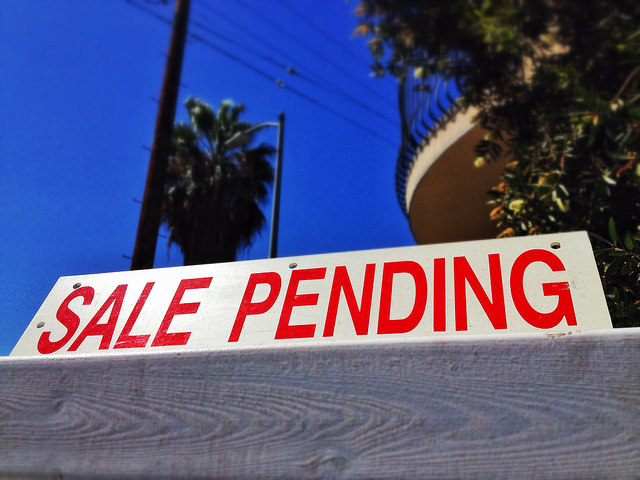
Conventional wisdom has it that after the spring and summer sales season, the real estate market cools off. Home sellers wait until next year and buyers are too busy with the school year, holidays, and winter weather to bother shopping for a home. There is an argument to be made, however, that fall is a great time to shop for a home and, according to new numbers from the National Association of Realtors, many Americans agree. In fact, the NAR’s Pending Home Sales Index – which measures the number of contracts to buy homes signed during the month – was up 1.5 percent in September and is now 2.4 percent higher than last year. Lawrence Yun, NAR’s chief economist, says demand was strong, particularly in the West and South. “Buyer demand is holding up impressively well this fall with Realtors reporting much stronger foot traffic compared to a year ago,†Yun said. “Although depressed inventory levels are keeping home prices elevated in most of the country, steady job gains and growing evidence that wages are finally starting to tick up are encouraging more households to consider buying a home.†The Pending Home Sales Index is considered a good indicator of future home sales because it measures contracts to buy, rather than closings. More here.

Close-up of a 'Sale Pending' sign with palm trees and a building in the background.

Most Homes Will Last More Than 100 Years

Everybody knows buying a house is a long-term commitment. After all, the typical mortgage is paid over 30 years and the typical home seller has been in their home for almost 10 years. In other words, homeownership isn’t for frequent movers or anyone with a strong case of wanderlust. But regardless of how long you stay in one place, you aren’t likely to outlast your house. That’s because most homes will last around 100 years, according to a new analysis from the National Association of Home Builders of numbers from the Department of Housing and Urban Development. In fact, just 0.59 percent of all housing units are lost each year. These homes are lost for various reasons – including demolition, disaster, conversions, mergers, and homes that are put to non-residential uses. And that rate is pretty consistent whether the home was built in 1983 or 1962. In fact, when broken down per decade, the annual loss rate is fairly steady, though it does accelerate to just over 1 percent for homes built before 1950. Overall, the data suggests most of the homes built recently will still be standing 100 years from now and, even if you bought a house built 40 years ago, it’ll likely still be standing strong in 2076. More here.

homes-2

New Home Sales Up 30% Over Last Year


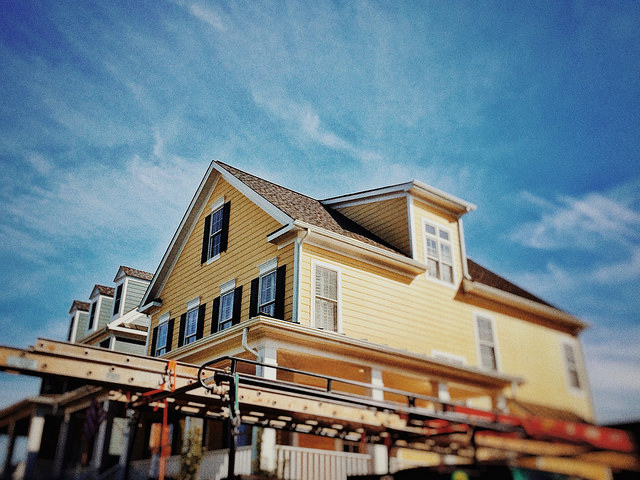
In September, new home sales were 29.8 percent higher than they were at the same time last year, according to new numbers from the U.S. Census Bureau and the Department of Housing and Urban Development. The data shows sales up 3.1 percent from the month before and at their second-highest level since the recovery began. That’s good news for the housing market because any increase in new home sales helps spur more new home construction, which raises for-sale inventory and moderates price increases on all homes up for sale. As it is, the median price of a new home sold in September was $313,500; the average sales price was $377,700. And, with the number of new homes for sale lower than the month before, prices will likely continue to rise in the near term. Still a more favorable labor market and low mortgage rates have helped balance higher prices and kept buyer demand high. As an example, economists and analysts predicted a sales decline for September, making the results both unexpected and a good indication that potential home buyers aren’t being deterred by higher prices. More here.

A yellow house with white trim under a blue sky.

Where Are Mortgage Rates Headed Next Year?


Last week, average mortgage rates fell across

most loan categories, according to the latest survey from the Mortgage Bankers Association. In fact, rates for 30-year fixed-rate loans with both conforming and jumbo balances fell, as did interest rates on 15-year fixed-rate loans. Loans backed by the Federal Housing Administration rose slightly. For most of this year, mortgage rates have hovered near historic lows, providing incentive to buyers who may have otherwise been scared off by higher home prices and increased buyer competition. So what does the future hold for mortgage rates? Well, Michael Fratantoni, MBA’s chief economist and senior vice president for research and industry technology, says any increases over the next few years should be gradual. “Rate increases through 2017 and 2018 will likely be gradual, as Chair Yellen and the Fed have indicated that they are going to be cautious going forward,†Fratantoni said. “Historically low, and in some cases negative, rates around the world continue to put downward pressure on longer-term U.S.

rates … We expect that the 10-year Treasury rate will stay below three percent through the end of 2018, and 30-year mortgage rates will stay below 5 percent over the same period.â€

Close-up of a planner showing January 2, 2017, Monday.

Garage Data Shows Us Where We Park It


Having a car isn’t really a choice for a lot of Americans – and even some of us that are lucky enough to choose whether or not to have a car decide to have one. Put simply, cars are a fact of life for most us. So it comes as no surprise that an analysis of Census Bureau construction data done by the National Association of Home Builders found that an increasing number of new homes have garages and the size of those garages is also on the rise. For example, the share of homes with a three or more car garage jumped from 11 percent in 1992 to 20 percent in 2005. And, in the past decade, new homes built without a garage have become almost non-existent. Robert Dietz, NAHB’s chief economist and senior vice president for economics and housing policy, breaks down the numbers in a recent article. “For new single-family completions in 2015, 61 percent of homes offered a two-car garage,†Dietz writes. “Another 24 percent of homes possessed a garage large enough to hold three or more cars. Just 6 percent of newly-built homes had a one-car garage, and only 1 percent possessed a carport. Another 9 percent of new homes had no garage or carport.†Additionally, of the 9 percent of homes without a garage, 23 percent were townhomes. More here.

A black LiftMaster garage door remote with three buttons.

Housing Outlooks Have Differing Visions


The housing market has been sort of a mixed bag this year. While home sales are expected to exceed last year’s levels and mortgage rates are still hovering near record lows, fewer houses for sale have presented potential home buyers in many markets with increased competition and higher prices. In short, you could look at the numbers and come to a couple of different conclusions. As an example, two recently released forecasts have differing views on what lies ahead for the residential real estate market. Fannie Mae’s Economic & Strategic Research Group’s October 2016 Economic and Housing Outlook sees housing momentum beginning to slow. Doug Duncan, Fannie Mae’s chief economist, says recent declines in sales, construction, and mortgage applications may mean continued weakness in the near term. However, Duncan also acknowledges the fact that improved demand from first-time home buyers is an encouraging sign. On the other side of the fence, Freddie Mac’s most recent forecast calls for continued gains and calls the housing market an economic bright spot. “As the economy sputters along a little bit faster than stall speed, the U.S. housing market continues to be a bright spot, though there’s less room to run than in the prior few years,†Sean Becketti, Freddie Mac’s chief economist, says. “We see new home sales improving some next year driven by increases in single-family housing construction which will push total home sales slightly higher.†More here.

Sunny day with palm trees and charming houses on a quiet street.

The Top Obstacles To Homeownership


Buying a house is a big deal. Not only is it a major financial transaction, it also represents a tremendous responsibility. Because of this, there aren’t too many people that enter the housing market without giving some thought to whether or not it’s the right time for them to buy. So what are some of the top reasons potential buyers give when asked why they might delay their purchase? A recent survey from NeighborWorks America asked and found, for a growing number of buyers, it’s student loan debt. In fact, 30 percent of respondents said they knew someone whose student loans caused them to put off buying a house. That’s a 6 percent increase from two years ago. The survey also found, among people who said they had student loans to pay off, 53 percent said it was an obstacle. Student loan debt is a growing problem for potential buyers and one that may be holding back young adults who may otherwise be active in the market. Rent is another. For many aspiring homeowners, their current rent is too high to put away any meaningful savings toward a down payment. Still, nearly 60 percent of current renters said they hope to one day buy a home. More here.

Sunny day with palm trees and charming houses on a quiet street.

First-Time Buyers Spur Home Sales Gain


September sales of previously owned homes rose 3.2 percent from the month before, according to new numbers released by the National Association of Realtors. The gains were a welcome change after a two-month slide. Lawrence Yun, NAR’s chief economist, said the improvement was due to a boost in the number of first-time home buyers active near the end of summer. “The home search over the past several months for a lot of prospective buyers, and especially for first-time buyers, took longer than usual because of competition for the minimal amount of homes for sale,†Yun said. “Most families and move-up buyers look to close before the new school year starts. Their diminishing presence from the market towards the end of summer created more opportunities for aspiring first-time homeowners to buy last month.†In fact, the share of first-time buyers rose to 34 percent in September. That’s the highest it’s been since July 2012. Historically, new home buyers represent closer to 40 percent of all home sales. Because there have been fewer first timers active in the market recently, an increasing number is seen as good news and vital to housing’s health. Also encouraging, the number of homes available for sale rose in September. At the end of the month, inventory was 1.5 percent higher than the month before. More here.

Signboard with 'SOLD' and slogan 'We can sell yours'.

Thank you for your upload