

Banner
Menu

Category: Uncategorized

Contract Signings Fall But Less Than Month Before


Measuring the number of contracts to buy homes signed in a given month will give you a good idea of what the following month’s home sales numbers will look like. After all, signing a contract to buy is the first step in a closing process that usually lasts a few weeks. Which means a signed contract today will be a closed home sale in about a month. It also means The National Association of Realtors’ Pending Home Sales Index can give us an early insight into what’s happening in the housing market now. The NAR’s most recent release says contract signings fell 1 percent in July. But while the decline indicates the market is still slowing, the rate of decline improved greatly from the previous month, according to the new numbers. In fact, the previous month’s index saw an 8.6 percent drop. Lawrence Yun, NAR’s chief economist, says the market should soon begin to stabilize. “Home prices are still rising by double-digit percentages year-over-year, but annual price appreciation should moderate to the typical rate of 5 percent by the end of this year and into 2023,†Yun said. “With mortgage rates expected to stabilize … alongside steady job creation, home sales should start to rise by early next year.†(source)
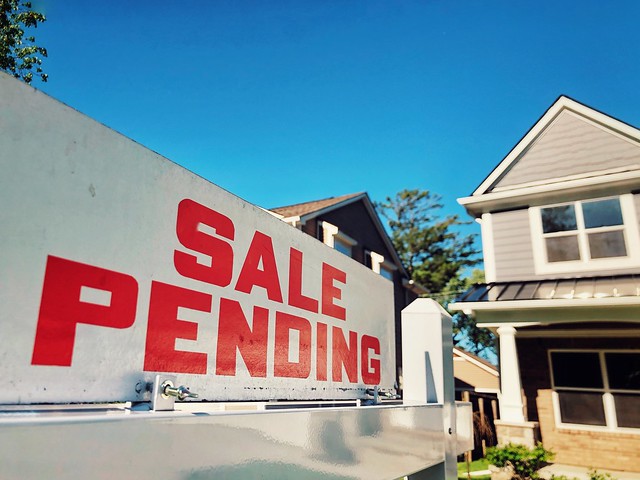
A real estate sign showing 'SALE PENDING' outside a house under clear blue sky.

Housing Market Softens As Economy Shifts


Fannie Mae’s Economic and Strategic Research Group releases a forecast each month detailing their outlook for the economy and housing market in the months ahead. The group looks at things like consumer spending, GDP growth, home sales, and mortgage originations and predicts where they’re headed through the end of this year. Their August release contains few surprises for anyone thinking about buying or selling a house. In short, it says the housing market has been softening due to rapid home price increases and the recent spike in mortgage rates. Fannie Mae believes the shift in affordability conditions will cause home sales to fall 16.2 percent this year from the year before. Doug Duncan, Fannie Mae’s senior vice president and chief economist, says the broader economy, and the Fed’s response to it, will determine how quickly things level off. “The question for many market observers is how quickly, and with home much additional tightening, the core inflation rate will come down to the Fed’s preferred target,†Duncan said. “In our view, the labor market’s continued strength suggests that the Fed is likely to maintain its aggressive posture through the end of the year.†(source)

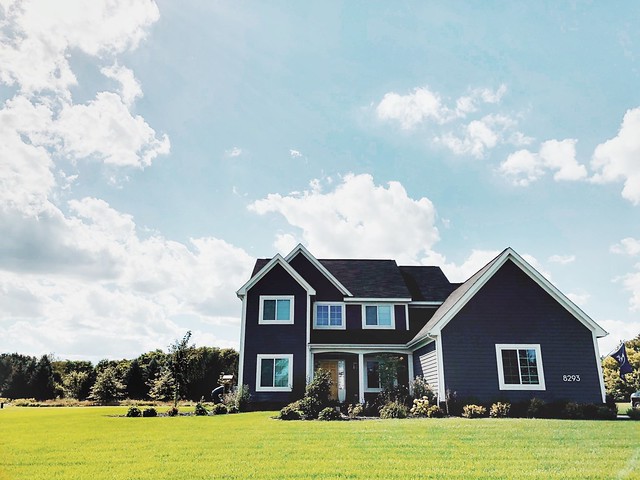
Classic two-story house with a well-kept lawn and clear blue sky.

Mortgage Demand Falls Week Over Week


According to the Mortgage Bankers Association’s Weekly Applications Survey, average mortgage rates increased last week across all loan categories, including 30-year fixed-rate loans with both conforming and jumbo balances, loans backed by the Federal Housing Administration, and 15-year fixed-rate loans. As a result, home purchase activity slowed, dropping 1 percent from the week before. Demand for home purchase loans is now 21 percent lower than last year at the same time. Joel Kan, MBA’s associate vice president of economic and industry forecasting, says last week’s numbers may indicate a shift in who’s buying right now. “Last week’s purchase results varied, with conventional applications declining 2 percent and government applications increasing 4 percent, which is potentially a sign of more first-time home buyer activity,†Kan said. “The average purchase loan size continued to trend lower, as purchase activity at the high end of the market is weakening.†The MBA’s weekly survey has been conducted since 1990 and covers 75 percent of all retail residential mortgage applications. (source)

Yellow traffic sign with a black left arrow on a sunny day.

Market For Smaller Homes Remains Competitive

The housing market has gotten a little easier for buyers lately. Listings are lasting longer and home-price increases have slowed. It’s definitely still a seller’s market, but buyers have it easier than they did last year at this time. Of course, how much easier depends on where and what you’re looking to buy. Conditions can vary from one neighborhood to the next. They can also vary depending on price range. In fact, according to one recent report, if you’re shopping for something smaller and more affordable, you’re going to find more competition among buyers than you would if you were shopping for something larger and more expensive. Why? The answer is inventory. While the number of homes for sale has been growing lately, the inventory of affordable homes has been growing at a slower rate than the inventory of higher priced homes. At the high end of the market, inventory is up 19.3 percent from where it was last year. The inventory of affordable homes, on the other hand, grew just 10.4 percent over the past 12 months. In other words, buyers looking for something more affordable should still prepare for a competitive market, even if it’s slower than last year’s. (source)

House-46

Typical U.S. Home Value Sees Small Decline

U.S. Home values have been rising steadily for years now. The pandemic caused them to accelerate, but it’s not as though they just start increasing two years ago. In fact, according to one monthly measure, there hasn’t been a month when they haven’t increased since 2012. There were times, of course, when the increases would slow, but no month in the past 10 years saw the typical home value decline month over month. It did in July, though, falling 0.1 percent from the month before. The typical home, according to the numbers, now costs $357,107 – $366 less than it did in June. The improvement was small, but still encouraging for buyers shopping for a home in a tight market. It also follows a trend. The typical home value has been slowing for a few months now, after peaking in April. Month-over-month growth was near 2 percent earlier in the year and had slowed to 0.8 percent by June. It’s just another sign that the market is rebalancing, with buyer demand slower than before and the number of available homes rising. (source)

Money75

Existing Home Sales Fall In July

Sales of previously owned homes fell 5.9 percent in July, according to new numbers from the National Association of Realtors. The decline continues a downward trend that began earlier this year, when mortgage rates increased after years of hovering just above, or at, record lows. Lawrence Yun, NAR’s chief economist, says sales have fallen but that doesn’t necessarily mean prices have. “We’re witnessing a housing recession in terms of declining home sales and home building,” Yun said. “However, it’s not a recession in home prices. Inventory remains tight and prices continue to rise nationally with nearly 40 percent of homes still commanding the full list price.” Tight inventory also means prospective home buyers still need to be ready to act fast when they find a home that fits their needs. The NAR says the typical property was on the market just 14 days in July, with 82 percent of homes selling in less than a month. (source)

Sold-16

Buyers Say They Had To Compromise On Wish List


Buying a house means setting priorities. More than likely, you won’t find one that checks off every single item on your wish list. So you’re going to have to prioritize and choose which features are most important to you and which you can live without. You’re also going to have to compromise. According to one recent survey, most home buyers do. In fact, the survey found 80 percent of recent home buyers said they had to compromise on their priorities. That means giving up something that made their wish list and buying a house that had most, but not all, of their desired features. For example, among survey respondents who compromised, 20 percent said they settled on neighborhood and bought in an area that wasn’t their top choice. But despite the vast majority of recent buyers saying they made compromises, their top regrets weren’t about features they had to do without. In fact, recent buyers said their biggest regrets were spending too much and buying too quickly, both common problems during last year’s frenzied market. (source)

A yellow pencil resting diagonally on a lined notepad.

Mortgage Rates Down Significantly Since June

According to the Mortgage Bankers Association’s Weekly Applications Survey, average mortgage rates for 30-year fixed-rate mortgages with conforming loan balances fell last week from the week before. The drop came during a week where rates for FHA, jumbo loans, and 15-year fixed-rate loans all saw slight increases. Overall, though, rates were relatively calm. They’re also down significantly from their peak in June. Joel Kan, MBA’s associate vice president of economic and industry forecasting, says further declines could bring hesitant home buyers back to the market. “If home price growth slows more significantly and mortgage rates move lower, we might see some purchase activity return later in the year,” Kan said. For now, purchase activity remains depressed. Last week, it fell 1 percent from the week before and was 18 percent lower than last year at the same time. The MBA’s weekly survey has been conducted weekly since 1990 and covers 75 percent of all retail residential mortgage applications. (source)

Arrow-Down-15

Housing Starts Slow As Completions Rise

The U.S. Census Bureau and the Department of Housing and Urban Development’s monthly New Residential Construction report tracks the number of new homes that began construction during the month, the number of homes that were finished, and how many building permits were authorized. In July, the report found the number of housing starts down significantly from the month before. In fact, the number of new homes that began construction In July fell 9.6 percent. But while some of that decline is due to slower demand from home buyers, a closer look at the housing completions numbers tells the other half of the story. Put simply, home builders have a lot of homes in the pipeline. Backed up by labor shortages and supply issues, builders are playing catch up right now. That’s why, despite falling housing starts, completions actually rose in July. Housing completions were up 1.1 percent from the month before and 3.5 percent higher than last year at the same time. That means, at least part of July’s slowdown was caused by home builders finishing the homes that had already begun construction. (source)

Hammers

Home Builders Cut Prices On New Homes

New homes are generally more expensive than previously owned homes. That’s not surprising. Anything brand new typically costs more than something used. But if you’re a prospective home buyer who’s been reluctant to consider buying a new house because of the price tag, the latest Housing Market Index from the National Association of Home Builders has good news for you. The index – which is based on a monthly survey of home builders – found one in five say they’ve reduced their prices in the past month. Of course, the reason they’ve cut their prices is because affordability conditions have gotten more challenging this year. Elevated prices and rising mortgage rates reduced the number of buyers active in the market. However, for buyers who’ve remained active, price cuts could be an opportunity. Robert Dietz, NAHB’s chief economist, says buyers may see more stability in the months ahead. “As signs grow that the rate of inflation is near peaking, long-term interest rates have stabilized, which will provide some stability for the demand-side of the market in the coming months,” Dietz says. (source)

Construction-36

Thank you for your upload