

Banner
Menu

Homes Still Selling Quickly As Season Wraps Up


New numbers from the National Association of Realtors show that, even as the summer market looked to be slowing down, homes for sale were still selling quickly. In fact, the typical property was only on the market 17 days in August and 87 percent of homes sold during the month were available less than 30 days. It’s yet another sign that inventory remains the market’s biggest issue. Lawrence Yun, NAR’s chief economist, says home buyers are still looking, despite challenging conditions. “Although there was a decline in home purchases, potential buyers are out and about searching, but much more measured about their financial limits, and simply waiting for more inventory,†Yun said. The lack of homes for sale has made for a competitive and fast-paced summer. It’s also held back sales. In August, sales of previously owned homes fell 2 percent from the month before. The decline came after two consecutive months of gains.
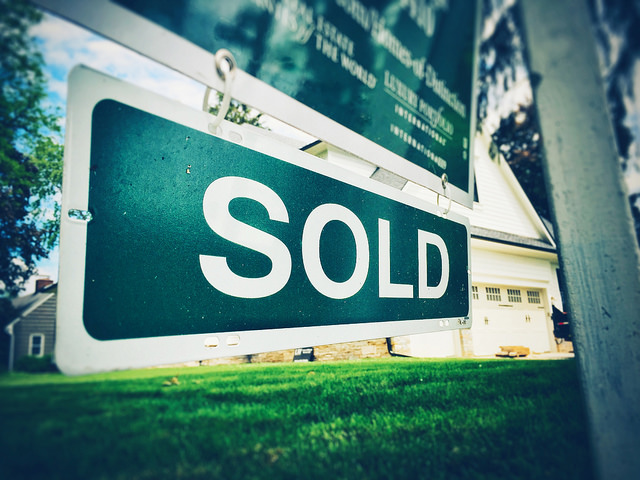

A sold sign in front of a house on a sunny day.

New Home Construction Up 17% Over Last Year


If you’re a prospective home buyer, the pace of new home construction should matter to you. Today’s hot market and rapidly rising prices are largely due to the fact that there are fewer homes for sale these days. Combined with a high level of buyer demand, the lack of inventory has caused a competitive market where homes sell quickly and well over the seller’s asking price. So what’s the answer to this problem? Well, adding to the supply of available homes would help alleviate some of the pressure home buyers are currently feeling. And that’s why the latest New Residential Construction report from the U.S. Census Bureau and the Department of Housing and Urban Development is encouraging news. The report found that the number of new homes that began construction in August was 3.9 percent higher than the month before and 17.4 percent higher than last year at the same time. Additionally, the number of permits to build new homes was also up, rising 6 percent from July. The gains mean more homes for sale and, potentially, less stress for home shoppers. (source)

Close-up of a vintage hammer with a worn wooden handle.

Home Buyers Return After Labor Day


According to the Mortgage Bankers Association’s Weekly Applications Survey, demand for loans to buy homes reached its highest point since April during the week following Labor Day. Home buyers returned and pushed purchase application demand 2 percent higher than the week before. Joel Kan, MBA’s associate vice president of economic and industry forecasting, says demand remains strong. “Housing demand is strong heading into fall, despite fast-rising home prices and low inventory,†Kan said. “The inventory situation is improving, with more new homes under construction and more homeowners listing their home for sale.†Also in the report, average mortgage rates remain low, with little change seen for 30-year fixed-rate loans with both conforming and jumbo balances, loans backed by the FHA, and 15-year fixed-rate loans. The MBA’s weekly survey has been conducted since 1990 and covers 75 percent of all retail residential mortgage applications.

Ornate lion head door knocker on a bright yellow door.

Affordability Conditions Key To Market’s Future


Each month, Fannie Mae’s Economic and Strategic Research Group releases a forecast detailing their outlook for the economy and housing market. According to their most recent release, the group sees some potential challenges ahead that may affect home buyers. Specifically, they believe buyer demand could begin to slow if affordability conditions worsen. Doug Duncan, Fannie Mae’s senior vice president and chief economist, says there are a few factors that will determine whether or not that happens. “Affordability remains a challenge, even with mortgage rates near historic lows; if the pace of income growth doesn’t keep up with inflation and interest rates rise more than expected, we’d expect housing activity to slow from our current projections,†Duncan said. But while their outlook is cautious, they’re still projecting a significant increase in demand next year. In fact, they forecast a 6.3 percent jump in demand for loans to buy homes in 2022. (source)

Sunny suburban neighborhood with modern houses and clear blue sky.

Builder Confidence Bounces Back In September


Builders have to be able to read the market in order to be successful. So it’s no surprise their perspective is closely followed. One measure of how home builders are feeling about the housing market is the National Association of Home Builders’ Housing Market Index. It surveys builders and scores their responses on a scale where any number above 50 indicates more builders view conditions as good than poor. In September, the index moved up one point to 76, ending three months of consecutive declines. Chuck Fowke, NAHB’s chairman, says the improvement is evidence of stability in the market. “The September data show stability as some building material cost challenges ease, particularly for softwood lumber,†Fowke said. “However, delivery times remain extended and the chronic construction labor shortage is expected to persist as the overall labor market recovers.†Despite those challenges, builders remain optimistic about the market. In fact, the index component measuring expectations for the next six months held steady at 81 and the gauge of current sales conditions rose to 82.

House construction in progress under a cloudy sky.


How Many Bathrooms Do Buyers Want In A House?


The number of rooms a house has – and how they’re distributed – is even more important than the overall size of the home. A huge home that packs all the bedrooms and bathrooms into one cramped corner of the house may not serve its owners as well as a smaller house with a better layout. But while determining the number of bedrooms you need is a fairly simple calculation, how many bathrooms you need can be less clear. An analysis of data from the Census Bureau’s latest Survey of Construction offers some insight into what most home shoppers want. The numbers show – based on new homes that began construction in 2020 – the vast majority of newly built single-family homes had two bathrooms. In fact, 65 percent of homes built last year had two full bathrooms. Twenty-five percent of homes had three bathrooms, while 7 percent had four or more. Less than 3 percent had one bathroom. Based on those numbers, it’s pretty clear that most home buyers want, at least, two bathrooms in their house. (source)

Shiny silver faucet and handles on a white tiled bathroom sink.

Mortgage Lenders See Calmer Days Ahead


Your mortgage lender is the first person you should talk to once you’ve decided to buy a home. After a preliminary review of your finances, they can tell you, not only whether you’re qualified to borrow, but also what your potential price range will be. In short, they’re your first step toward buying a house. That’s why Fannie Mae conducts their quarterly Mortgage Lender Sentiment Survey. Positioned at the start of the buying process, lenders are able to get a good read on the market and where it may be headed. So what do they expect in the months ahead? Well, according to the most recent survey, lenders expect buyer demand to continue to grow, though at a slower pace than before. “More lenders than not reported expectations that purchase mortgage demand will continue to grow, though the total share expecting such growth fell substantially compared to the previous quarter,†Mark Palim, Fannie Mae’s deputy chief economist said. In other words, while buyer demand will remain high, the market should be a bit calmer than it’s been in recent months. (source)

Bright white house with green shutters under a clear blue sky.

Demand For Home Purchase Loans Spikes


According to the Mortgage Bankers Association’s Weekly Applications Survey, demand for loans to buy homes started the month off strong. In fact, the MBA’s Purchase Index for the week ending September 10 saw an 8 percent increase from one week earlier. Joel Kan, MBA’s associate vice president of economic and industry forecasting, said the gain pushed purchase application demand higher than it’s been in months. “Purchase applications – after adjusting for the impact of Labor Day – increased over 7 percent last week to their highest level since April 2021,’ Kan said. “Compared to the same week last September, which was right in the middle of a significant upswing in home purchases, applications were down 11 percent – the smallest year-over-year decline in 14 weeks.†The improvement came during a week when average mortgage rates were relatively flat, with slight decreases seen for jumbo loans, loans backed by the FHA, and 15-year fixed-rate loans. The MBA’s weekly survey has been conducted since 1990 and covers 75 percent of all retail residential mortgage applications. (source)

White arrow on pavement indicating a U-turn.

Flexible Work Fuels A Desire To Move


Work has always played a role in where we live. After all, nobody likes a long commute. Which is why we’ve typically looked to live somewhere close to where we worked. But the pandemic changed work routines for many people and now it looks like it’ll be changing how we decide where we want to move. It’s already fueling a desire to make a change. In fact, according to one recent analysis, the number of remote or hybrid workers who say they’re ready to move is about 10 percent higher than the number of in-person workers who say the same. But before workers can look for a bigger, more affordable place somewhere new, they’ll have to know exactly what their future work schedule will look like. And many of them don’t. The same analysis found that nearly 40 percent of employees still don’t know if, or how often, they’ll have to return to their workplace. When they find out, though, it’ll likely lead to a significant shift in where home shoppers are looking to buy. (source)

Close-up of a vintage brass key on a red background.

Early Fall May Be The Best Time To Buy


The best time to buy a house is when you’re ready. But, once you’re ready, picking the right time of year to start the process could be beneficial. It could even save you money. How? Well, when the market slows down and there are fewer active home buyers, price increases, bidding wars, and competition also slow down. That means, buying at the right time of year may mean better deals and less stress. And, according to a recent analysis from the National Association of Realtors’ consumer website, the right time of year may be right now. “Home prices peaked in the summer, and new listings continue to come on the market helping slow the pace of sales – which is good news for homebuyers,†Danielle Hale, the site’s chief economist, said. “As families across the county focus on getting back into school routines, there are fewer buyers in the market, creating a great opportunity especially for first-time home buyers to make a purchase with somewhat less competition.†The analysis found that, between September 12 and October 17, buyers could see prices $10,000 below their seasonal high. (source)

A single red maple leaf on a white background.

Thank you for your upload