

Banner
Menu

Are Low Credit Scores Discouraging Buyers?


A recent review of home loan activity conducted by CoreLogic reveals a significant difference between the average loan applicant today compared with 10 years ago. The analysis looked at possible reasons loan originations have dropped over the past decade. Tighter credit standards are often blamed for keeping potential buyers from entering the housing market. But – though credit availability is tighter today than it was before the financial crisis and recession – there hasn’t been an equivalent increase in the number of applicants who have been denied loans. This indicates that, though credit standards have been raised, they may not be the only reason loan originations have dropped. In fact, CoreLogic’s analysis found that the average borrower credit score last year was nearly 750, while it was closer to 700 in 2005. The fact that average credit scores have increased could point to a drop in the number of loan applications from buyers with lower scores. If potential buyers are being discouraged from applying for a loan because their credit score isn’t optimal, it could be contributing to the overall drop in originations. It also means that loosening credit standards may not be the key to unlocking mortgage demand. Instead, consumers may need to be better informed about lending standards and how to check, correct, and maintain a good credit score. More here.


Close-up of a document showing the phrase 'Your Credit Score'.

Sales Of Existing Homes Up In April


Sales of previously owned homes rose for the second-consecutive month, according to new numbers released by the National Association of Realtors. In April, existing-home sales – which includes single-family homes, townhomes, condominiums, and co-ops – increased 1.7 percent, beating economists’ expectations and pushing sales 6 percent above last year’s level. Lawrence Yun, NAR’s chief economist, said April’s increase is a sign that the housing market is slowly building momentum. “Primarily driven by a convincing jump in the Midwest, where home prices are most affordable, sales activity overall was at a healthy pace last month as very low mortgage rates and modest seasonal inventory gains encouraged more households to search for and close on a home,†Yun said. “Except for in the West – where supply shortages and stark price growth are hampering buyers the most – sales are meaningfully higher than a year ago in much of the country.†A look at regional results shows the South and West both down slightly from the month before, while the Northeast posted a 2.8 percent improvement and the Midwest surged 12.1 percent. Also in the report, the number of homes available for sale rose 9.2 percent. More here.

Close-up of a 'For Sale' sign with a blurred background.

Spring Rebound To Follow Slow 1st Quarter


Much like last year, the first quarter of 2016 was slower than expected. Both the housing market and broader economy showed weakness amid harsh winter weather and global economic uncertainty. But also like last year, Fannie Mae’s Economic & Strategic Research Group says economic growth should rebound in the spring and continue to grow through the remainder of the year. Doug Duncan, Fannie Mae’s chief economist, says an uptick in hours worked and average hourly earnings should help support consumer spending, which will help boost the economy. He also expects home sales to climb. “Home sales are expected to pick up heading into the spring season amid the backdrop of declining mortgage rates, rising pending home sales and purchase mortgage applications, and continued easing of lending standards on residential mortgage loans,†Duncan said. “Meanwhile, the homeownership rate showed signs of stabilizing during the first quarter of this year, as the relatively high homeownership rates among Baby Boomers have helped offset low homeownership rates among Millennials, many of whom remain on the sidelines due to ongoing affordability issues.†More here.

Red house with multiple windows under a blue sky.

Mortgage Rates At Lowest Level In the Year


According to the Mortgage Bankers Association’s Weekly Applications Survey, average mortgage rates were mostly flat last week. In fact, rates for 30-year fixed-rate loans with both conforming and jumbo balances were unchanged from one week earlier while rates for loans backed by the Federal Housing Administration and 15-year fixed-rate mortgages dropped. By the end of the week, average rates were as low as they’d been in nearly a year. That didn’t spur demand for mortgage applications, however, which fell 1.6 percent from the week before. Joel Kan, MBA’s associate vice president of industry surveys and forecasting, told CNBC that the declining demand for home purchase loans was mostly seen at the higher end of the market. “Purchase applications jumped up during the first full week of April and had effectively remained at that level, on an unadjusted basis, before falling this week,†Kan said. “The seasonally adjusted purchase index decreased to the lowest level since February, led by declines in applications for larger home purchase amounts.†Purchase volume was still almost 12 percent higher than one year earlier, despite the decline in jumbo loans. The MBA’s weekly survey has been conducted since 1990 and covers 75 percent of all retail residential mortgage applications. More here.

Wooden tiles spelling 'MORTGAGE' on US dollar bills.

Home Construction, Permits Rise In April


The number of new homes that began construction in April was 6.6 percent higher than the previous month, according to new numbers released by the U.S. Census Bureau and the Department of Housing and Urban Development. The improvement, which included a surge in multi-family construction, also included a 3.3 percent jump in the number of single-family homes that broke ground during the month. That’s good news for home buyers because any increase in new home construction boosts the number of homes available for sale, which helps balance the market and keeps prices from rising too quickly. Buyer demand has been high so far this spring but, because for-sale inventory has been low, prospective buyers have fewer homes to choose from and less room for price negotiation. Also in the report, there was an 1.5 percent increase in the number of authorized building permits to build single-family homes – which is a good sign that new home construction will continue to improve in coming months. The newly released figures outpaced economists’ expectations and were another sign that the economy and housing market, which had slowed to start the year, have begun to pick up. More here.

Wooden scaffolding and beams under clear blue sky.

Builders Expect New Home Sales Bump


Builders are in an unique position to gauge home buyer traffic and demand for newly-built single-family homes. Because of this, their views are considered an important measure of the market’s health and future outlook. Each month, the National Association of Home Builders surveys builders and scores their responses on a scale where any number above 50 indicates more builders view conditions as good than poor. In May, the index was unchanged from the month before – remaining at 58 for the fourth-consecutive month. Robert Dietz, NAHB’s chief economist, says a closer look at the numbers shows there is a lot of optimism about the market going forward. “The fact that future sales expectations rose slightly this month shows that builders are confident that the market will continue to strengthen,†Dietz said. “Job creation, low mortgage interest rates and pent-up demand will also spur growth in the single-family housing sector moving forward.†In fact, builders are so optimistic that the index component measuring sales expectations for the next six months jumped three points to 65, while gauges of buyer traffic and current sales stayed flat. Regionally speaking, three-month moving averages show the Midwest and South up a point, the West unchanged, and the Northeast down slightly. More here.

Close-up of a claw hammer with a wooden handle on a white background.

Home Sales See Best 1st Quarter Since 2007


So far this year, there has been a lot of talk about higher home prices, declining affordability, and a lack of available homes for sale. But, according to the National Association of Realtors, demand remains strong and sales of previously owned homes just had their best first quarter since 2007. Lawrence Yun, NAR’s chief economist, says the housing market continues to make gains despite the challenges facing home buyers this spring. “The housing market continues to expand at a moderate pace in spite of the fact that home prices are rising too fast in some areas because of insufficient supply fueled by the grossly inadequate number of new single-family homes being constructed,†Yun said. “The good news is that pending sales in recent months have remained stable and should support a modest gain in home sales heading into the summer.†Yun is forecasting home sales to finish the year at their strongest pace in a decade. With mortgage rates still historically low and an improved job market, home buyers are showing that they aren’t deterred by higher prices. However, Yun cautions that there needs to be an increase in the number of homes for sale in order to meet the level of demand from buyers and keep prices affordable. More here.

Close-up of a bright red "SOLD" sign outdoors with trees and sky in the background.

Homeownership Remains Goal For Millennials


Housing and Urban Development Secretary Julian Castro says the idea that younger Americans aren’t interested in homeownership is a myth and that it is as much a goal for them as it was previous generations. “The American Dream of homeownership is as strong today as ever,†Castro told the National Association of Realtors Regulatory Issues Forum. “And perhaps the best news of all is that millennials are showing that their generation is just as committed to homeownership as their parents and grandparents.†Long seen as an essential part of achieving the American Dream, homeownership seemed to lose some of its appeal following the housing crash and financial crisis. Since then, a smaller than normal share of younger buyers have been active in the housing market – fueling the notion that they weren’t interested in owning a home. But, according to one recent poll cited by Castro, 40 percent of millennials plan to buy their first home sometime in the next year. That high level of interest, combined with recent improvements to the labor market and economy, should result in more of those potential buyers becoming actual buyers, according to Castro. In his view, student loan debt has been the main obstacle for young Americans hoping to purchase a home. More here.

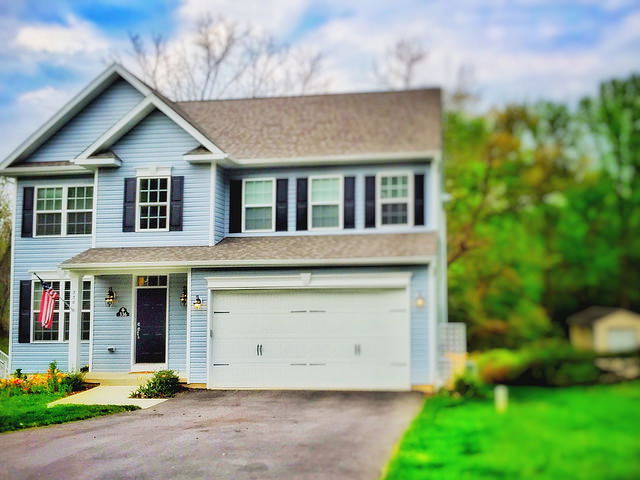
A two-story suburban house with a double garage and well-kept lawn.

Mortgage Rates Hover Near Three-Year Lows

According to the Mortgage Bankers Association’s Weekly Applications Survey, mortgage rates fell across all loan categories last week, including 30-year fixed-rate loans with both conforming and jumbo balances, loans backed by the Federal Housing Administration, and 15-year fixed-rate mortgages. Rates were down from the week before and started the week at their lowest point in three years. Lynn Fisher, MBA’s vice president of research and economics, told CNBC that mortgage rates continue to defy expectations. “Despite expectations that rates would slowly rise this year, the 30-year fixed rate last week was 18 basis points lower than a year ago, continuing to provide a favorable rate environment for the housing market,” Fisher said. Favorable rates, however, failed to spur much demand for mortgage loan applications. In fact, mortgage application demand was essentially flat from the week before, with both the refinance and purchase index up less than one percent. On the other hand, when compared to last year, refinance demand is now up 23 percent and applications for loans to buy homes have increased 14 percent. The MBA’s weekly applications survey has been conducted since 1990 and covers 75 percent of all retail residential mortgage applications. More here.

Percentage 1

More Homeowners See Opportunity To Sell


A combination of higher home prices and strong buyer demand is convincing more current homeowners that selling their house may be a good idea. According to Fannie Mae’s most recent Home Purchase Sentiment Index – which measures Americans attitudes toward buying and selling a home, renting, household finances, mortgage rates, etc. – April saw a 16 percent increase in the number of consumers who said now was a good time to sell a house. Doug Duncan, Fannie Mae’s chief economist, says that could be good news for both current homeowners and prospective buyers. “We can partially attribute the sizable gain in April in home selling optimism both to a correction for last month’s unexpected dip and to typical seasonal strength in housing activity in the spring and summer,†Duncan said. “Even after accounting for these factors, tight housing supply has led to renewed strength in home price appreciation, making selling a home a more attractive prospect this year in particular. This improved sentiment could provide an extra boost of much-needed supply for the spring selling season.†An increase in available homes for sale would help balance the market, slow down the rate of home price increases, and provide house hunters with more homes to choose from. More here.

A bright yellow sign with bold black letters saying 'SELL'.

Thank you for your upload