

Banner
Menu

Bidding Wars Fall To Lowest Level All Year


A competitive housing market can be difficult for home buyers. Not only do they have to prepare for the possibility of a bidding war, they also have to be prepared to lose one. The stress and potential for disappointment is almost enough to make home shoppers feel like giving up. Fortunately, newly released numbers show relief may be on the way for buyers concerned that a bidding war may blow up their budget. According to the data, the number of buyers in September who faced competition fell to the lowest level all year. In fact, 58.9 percent of home offers saw competition during the month. That’s down from 60.8 percent in August and 74.3 percent in April. And while that’s still high, there’s clearly a trend downward. Bidding wars have now fallen for five straight months and are currently right about where they were one year ago at the same time. But while the market is slowing down, buyers still need to be prepared. Inventory is low and the homes that are available are selling faster than they typically do at this time of year. (source)


Close-up of a new $100 bill with Benjamin Franklin's portrait.

Inventory Gains Help Boost September Sales


Sales of previously owned homes spiked 7 percent in September, according to new numbers from the National Association of Realtors. The month-over-month improvement included gains in every region of the country and reversed August’s 2 percent decline. Lawrence Yun, NAR’s chief economist, said the sales rebound was likely helped by the fact that there are more homes available for sale. “Some improvement in supply during prior months helped nudge up sales in September,†Yun said. “Housing demand remains strong as buyers likely want to secure a home before mortgage rates increase even further next year.†But while inventory has improved in recent months, the number of homes available for sale actually fell slightly in September, dropping 0.8 percent from the previous month. At the current sales pace, there is now a 2.4-month supply of available homes. A 6-month supply is considered a healthy housing market. Also in the report, 86 percent of homes sold in September were on the market less than a month. The typical property was on the market just 17 days.

Close-up of a 'For Sale' sign with a blurred background.

Mortgage Rates Increase Again


According to the Mortgage Bankers Association’s Weekly Applications Survey, average mortgage rates increased again last week, moving higher for 30-year fixed-rate loans with both conforming and jumbo balances. Rates for 15-year fixed-rate loans also increased, while the average rate for loans backed by the Federal Housing Administration fell from the week before. With rates rising, demand for mortgage loan applications decreased 6.3 percent week over week. Joel Kan, MBA’s associate vice president of economic and industry forecasting, says rate increases aren’t wholly to blame for the decline in demand. “Purchase activity declined and was 12 percent lower than a year ago, within the annual comparison range that it has been over the past six weeks,†Kan said. “Insufficient housing supply and elevated home-price growth continue to limit options for would-be buyers.†The MBA’s weekly survey has been conducted since 1990 and covers 75 percent of all retail residential mortgage applications.

A close-up of a metallic button with a white right arrow on a black background.

Autumn Market Brings Buyers Cooler Conditions


A seller’s market is one where there are more buyers than there are homes for sale. And this year’s market has been a great example of that. With a historically low number of homes for sale, competition and bidding wars have frustrated buyers and helped drive surging prices even higher. But the market began to cool in late summer and now, in early autumn, there’s evidence that it’s calmed even further. Prospective buyers are now finding more homes available for sale and less competition from other buyers; time on market is increasing and the share of sellers who had to drop their list price has nearly doubled from where it was in April. Additionally, inventory has now risen for four consecutive months. That’s encouraging news for today’s buyers. But while a calmer market should help bring some relief, it is still a seller’s market – just one that has finally begun to slow down. So home shoppers should still make sure to have their finances in order and be ready to act fast when they find a home they love. (source)

A serene autumn street lined with colorful trees and fallen leaves.

Builder Confidence Rebounds In October


Labor shortages and supply-chain disruptions have been an issue for home builders ever since the pandemic’s onset last year. But, despite those challenges, the National Association of Home Builders’ Housing Market Index has remained strong. The index – which surveys builders and scores their responses on a scale where any number above 50 means more builders view conditions as good than poor – has remained high mostly because demand from buyers has kept builders optimistic about the market. That trend continued in October, with the index increasing four points to 80. Chuck Fowke, NAHB’s chairman, says sales are still strong but supply-side issues are putting pressure on prices. “Although demand and home sales remain strong, builders continue to grapple with ongoing supply chain disruptions and labor shortages that are delaying completion times and putting upward pressure on building material and home prices,†Fowke said. The index component gauging current sales conditions saw the biggest improvement in October, though measures of future expectations and buyer traffic also registered gains from the month before. (source)

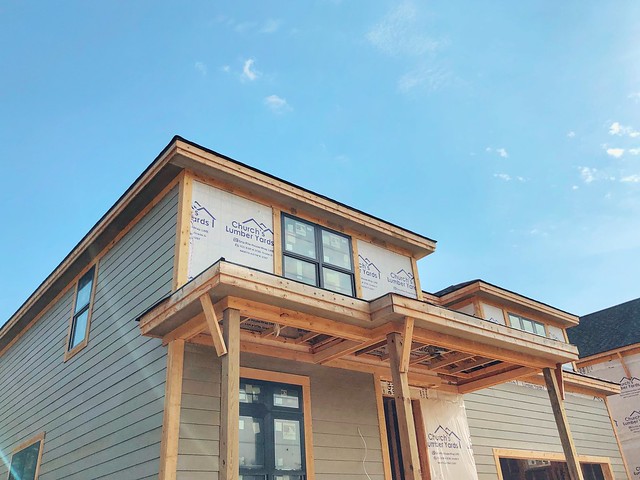
A house under construction with exposed framing and blue sky.

Forecast Sees Low Rates, Slower Prices In 2022


Predictions aren’t easy, but Fannie Mae’s Economic and Strategic Research Group makes them on a monthly basis. The group’s forecasts cover what they see ahead for the housing market and general economy. And, according to their October outlook, they expect inflation and consumer spending concerns to cause monetary policy to tighten in the months ahead. But what does that mean to the average home buyer or seller? Well, Fannie Mae says they should expect mortgage rates to rise slightly but remain low throughout 2022. The ESR Group also expects home price growth to decelerate somewhat from the double-digit spikes seen this year. Doug Duncan, Fannie Mae’s senior vice president and chief economist, says overall, we shouldn’t expect major changes. “Even a modest tightening of monetary policy would of course impact housing, but we expect the effects to be largely muted given current market conditions,†Duncan said. “Mortgage rates may rise in response to the tighter environment, but we expect the severe shortage of homes for sale to remain the primary driver of strong house price appreciation through at least 2022, limiting interest rate effects on home sales and home prices.†(source)

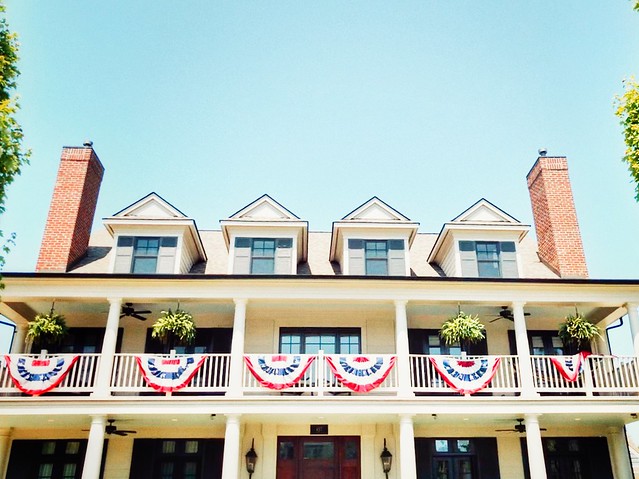
A building decorated with patriotic bunting under a clear sky.

Buyer Demographics Show A Surprising Shift


First-time home buyers used to make up a larger share of the homes sold in any given year. Typically, they’d account for around 40 percent of annual home sales. But younger home buyers, for a multitude of reasons, have been less active in the housing market in recent years. According to one new analysis, for example, the share of buyers between the ages of 18 and 39 fell 13 percent between 2009 and 2019. That wasn’t the only demographic shift during those years, though. In fact, while the share of younger buyers was dropping another demographic was becoming far more active than they’d previously been. The analysis found that buyers 60 years or older grew 47 percent during the same time period. That’s a significant increase, and one that’s pushed the median age of recent home buyers to 44. Another consequence of this surprising demographic shift is that younger home shoppers are facing more competition from older, more financially settled, buyers – which could make a difference in a hot market where bidding wars are common. (source)

Large suburban house with a bright blue sky background.

Mortgage Rates, Purchase Activity Both Rise


According to the Mortgage Bankers Association’s Weekly Applications Survey, average mortgage rates increased last week across all loan categories, including 30-year fixed-rate loans with both conforming and jumbo balances, loans backed by the Federal Housing Administration, and 15-year fixed-rate loans. But while rates moved to their highest level in months, mortgage application demand was relatively unaffected, increasing 0.2 percent week over week. Joel Kan, MBA’s vice president of economic and industry forecasting, says purchase activity helped balance decreasing refinance demand last week. “An increase in home purchase applications offset a slight decline in refinances,†Kan said. “The increase in purchase applications was welcome news, but was primarily driven by a 2 percent gain in conventional purchase applications, which kept the average loan size elevated.†Demand for loans to buy homes is now 10 percent lower than it was last year at the same time. The MBA’s weekly survey has been conducted since 1990 and covers 75 percent of all retail residential mortgage applications. (source)

Various red percentage symbols on a light background.

Affordability Improves For 2nd Straight Month


Owning a home is a dream for a lot of Americans. But no one wants to own a home they struggle to afford. That’s why there’s so much focus on housing affordability right now. Put simply, there’s a shortage of homes for sale and it’s made finding an affordable home more challenging for today’s buyer. New numbers from the National Association of Realtors offer some encouragement, though – especially for Americans who want to buy but worry homeownership may now be out of their financial reach. The numbers, from the NAR’s most recent Housing Affordability Index, show that affordability conditions have actually improved now for the second-consecutive month. In fact, the typical monthly mortgage payment dropped 1.1 percent in August from the month before. The index – which compares median incomes to the income needed to comfortably qualify for a mortgage – found that the Midwest was the country’s most affordable region, with median incomes around $30,000 more than the amount needed to qualify. But, even in the West, where buying is most expensive, the median income is still roughly $12,000 more than what’s needed to qualify for a mortgage. (source)

Close-up of a red dollar sign symbol on a textured background.

Buyers Remain Optimistic Despite Challenges


Market conditions have been difficult for home buyers this year. Rising prices and competition for available listings have made things challenging. But despite those challenges, buyer demand has remained strong, even through the hot spring and summer markets. And now, heading into the fall and winter, it still shows few signs of slowing down. For example, one recent survey found a majority of participants were optimistic about the housing market and agreed that the next three months would be a good time to buy a home. In fact, the results show 52 percent of respondents said they agree or strongly agree that now’s a good time to buy – with an additional 17.8 percent remaining neutral. That leaves just 29.6 percent who feel it’s not the right time to buy. That’s a pretty good sign that buyers will continue to be active in the market in the weeks and months ahead. Regionally, prospective buyers in California, Texas, and Florida were the most optimistic, with home-buying confidence scores surpassing the national average in all three states. (source)

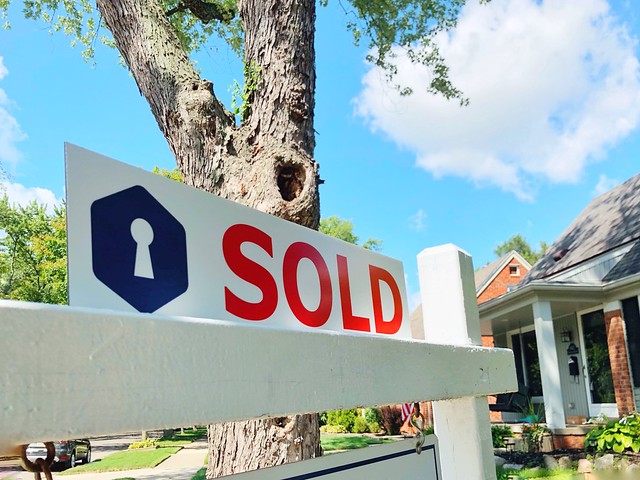
A sold sign is displayed on a white fence with a tree and blue sky in the background.

Thank you for your upload